After-Sales Support & Cost Control for Orbital Welding Machines
How KEPUNI Ensures After-Sales Support and Minimizes Maintenance Costs for Orbital Welding Machines
For procurement professionals investing in automatic orbital welding machines, the upfront price is only half the equation. The real cost—and risk—lies in what happens after the machine arrives. Will spare parts be available when a weld head fails? How long will the machine be down waiting for技术支持? Can your team operate and maintain it without expensive external specialists? These concerns directly impact total cost of ownership (TCO) and project timelines. This article explains how KEPUNI, a CE-certified orbital welding machine manufacturer, systematically addresses after-sales parts availability, technical support, and maintenance cost control to protect your investment.
The Procurement Concern: What Happens After the Purchase?
When sourcing orbital welding equipment for high-purity applications—pharmaceutical WFI systems, semiconductor ultra-pure gas piping, food-grade sanitary lines, or chemical process plants—buyers consistently rank after-sales service and repair costs as top worries. Common questions include:
- “How quickly can I get replacement parts if a weld head collet or gas lens wears out?”
- “Who will help me if the power supply shows an error code at 2 AM during a shutdown?”
- “Can my welders learn to operate and maintain the machine without repeated vendor visits?”
- “What is the hidden cost of downtime while waiting for support?”
Without clear answers, even a competitively priced orbital welding machine can become a liability. KEPUNI addresses each of these risks through a structured after-sales framework built on global spare parts logistics, multi-channel technical support, and proactive training.
Industry Reality: High Stakes Demand High Reliability
In industries like pharmaceutical, semiconductor, and food & beverage, welding defects are not just costly—they can trigger regulatory audit failures, product contamination, and production stoppages. An orbital welding machine for clean room or sanitary pipe applications must deliver consistent, documented quality over its entire lifecycle. This is why procurement teams now evaluate suppliers not only on machine specs but on the robustness of their after-sales ecosystem.
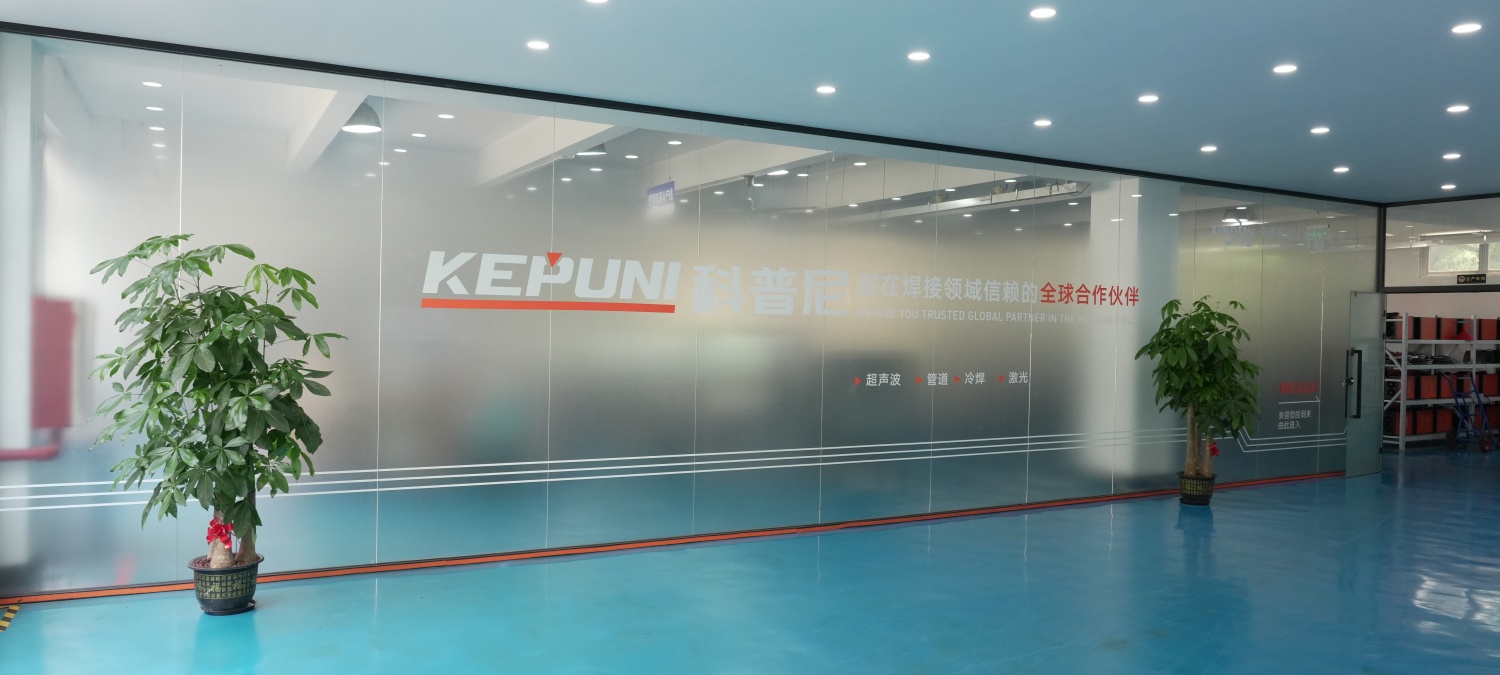
KEPUNI, with headquarters in Shanghai and a production park of 10,000 m², serves clients across Europe, Asia, South America, North America, and the Middle East. As a brand of Shanghai Chuanli Industrial Co., Ltd., it integrates R&D, production, sales, and after-sales service. The company’s core R&D team has over 20 years of experience in automated welding and power supply design, ensuring that technical support comes from deep domain knowledge.
Detailed Solution: KEPUNI’s After-Sales Ecosystem
KEPUNI’s approach to after-sales support and maintenance cost control is built on five pillars:
1. Global Spare Parts Availability
Parts availability is the single biggest factor in minimizing downtime. KEPUNI maintains a dedicated spare parts stock at its Shanghai headquarters and regional distributor inventory in Europe, Asia, and the Middle East. A standard spare parts kit is included with every machine, covering the most commonly replaced consumables such as collets, gas lenses, tungsten electrodes, and seals. For unexpected failures, replacement parts can be dispatched globally within 7 to 15 days. This system is backed by a 6-month safety stock for critical parts and dual-sourcing for key consumables to prevent supply chain disruptions.
2. Multi-Language Technical Documentation & Training
To reduce reliance on external experts, KEPUNI provides operation manuals in 6+ languages and a video training library hosted on YouTube and Bilibili. These resources cover setup, parameter adjustment, routine maintenance, and troubleshooting. For more complex needs, on-site training is available for operators. This empowers local teams to perform basic repairs and adjustments, directly lowering maintenance labor costs.
3. 24/7 Remote Diagnostics and Support
When an issue arises, time is money. KEPUNI offers 24/7 WhatsApp and WeChat support channels, enabling immediate connection with a technician. For deeper diagnosis, the orbital welding power supplies (including XD-20PRO and XD-20W models) feature an IoT interface that supports remote diagnostics. The support team can log in remotely to review weld logs, check parameters, and guide the operator step by step. This often resolves issues without a site visit, saving both travel costs and downtime.
4. Structured Quality Assurance and Shipping Protection
Maintenance costs often spike due to damage during transit or initial setup issues. KEPUNI uses export-grade packaging with anti-shock foam and wooden crating for sea freight, and secures marine insurance (All Risks coverage). Every shipment is documented with pre-shipment photos and a detailed packing list. On the customer’s end, a mandatory weld sample test before batch production ensures the machine is correctly calibrated. This reduces the risk of “infant mortality” failures that drive early repair expenses.
5. Distributor Network and On-Site Service
KEPUNI has built a global distributor network that provides local-language support, on-site repair, and installation supervision. For large projects or critical applications, the company can dispatch a field service engineer. All after-sales support is coordinated through a single point of contact—Blues Rao (info@kepuni.com, WhatsApp +86 18221803984)—ensuring accountability and fast escalation.
Step-by-Step: What Happens When You Need Support
- Contact: Reach out via WhatsApp/WeChat or email. A technician acknowledges within 1 hour during business hours.
- Diagnosis: For software/parameter issues, remote IoT diagnosis is used. For hardware failures, the technician identifies the faulty part via photo/video.
- Parts Dispatch: If a replacement is needed, the nearest stock location ships within 1 business day. Standard delivery time: 7–15 days globally.
- Resolution: The customer receives installation guidance (video/phone). For complex repairs, on-site service is arranged through the distributor or KEPUNI directly.
- Documentation: Every support case is logged, and a fault diagnosis report with repair confirmation is provided for your records.
Proven Track Record: Case Studies
KEPUNI’s after-sales approach is validated by real-world projects. For example, a pharmaceutical WFI pure water system project in Europe used 3 units of XD-20PRO with weld heads. The result: zero weld defects, EU GMP audit passed on first attempt, and all weld records documented—demonstrating that the equipment and support were reliable from day one. In another project for a semiconductor fab, 4 units achieved SEMI F57 cleanliness standard with zero particle exceedance events. These outcomes reduce the need for costly rework and emergency support.
How to Select a Solution That Protects Your After-Sales Interest
When evaluating orbital welding machine manufacturers, procurement managers should verify:
- Spare parts strategy: Does the supplier maintain regional stock? What is the typical lead time?
- Technical support channels: Are remote diagnostics available? Is support 24/7?
- Training resources: Are manuals and videos in your language? Is on-site training an option?
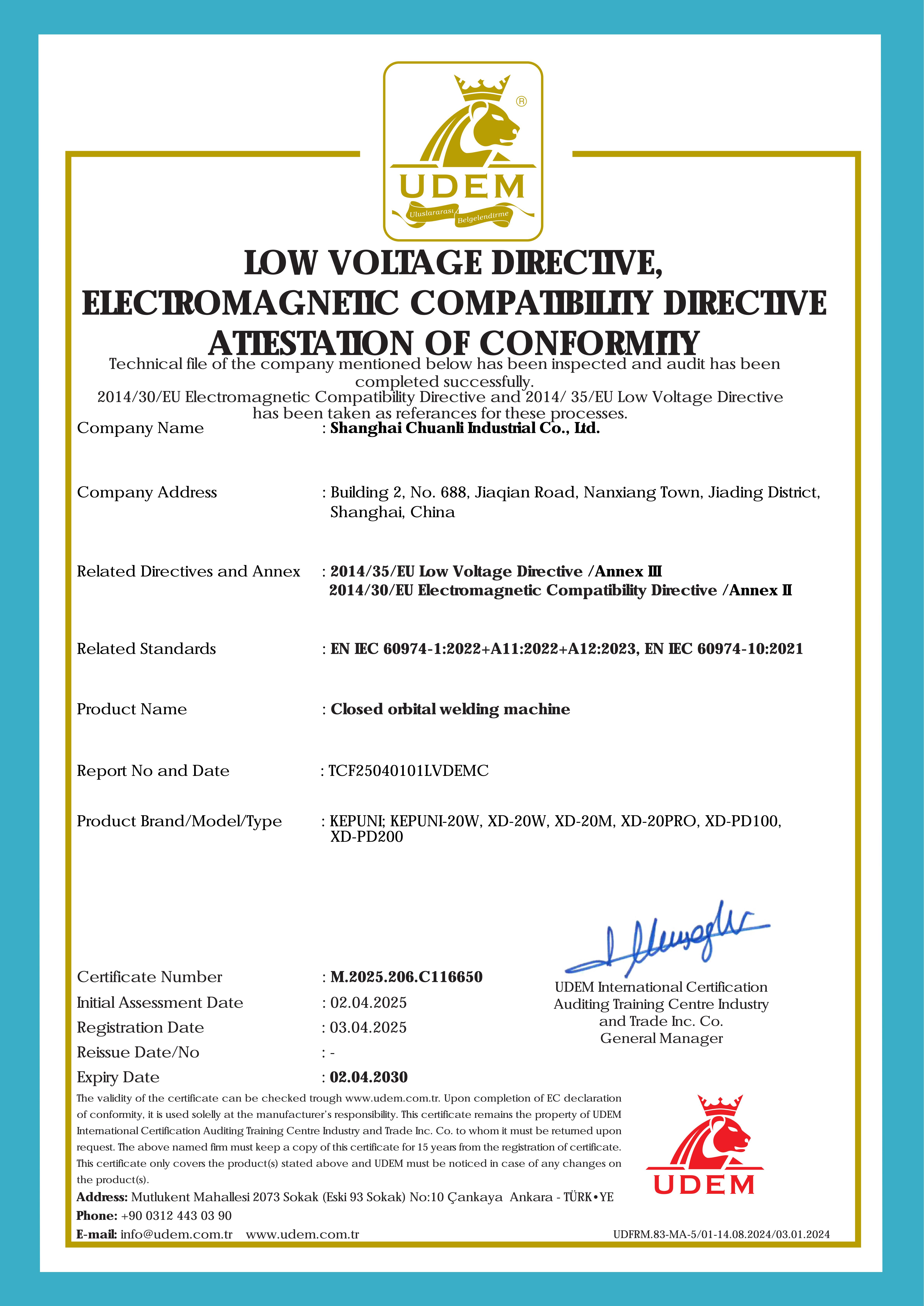
- Quality certifications: Does the supplier hold CE certification (e.g., under EN ISO 12100, EN 60204-1)? This indicates compliance with EU safety standards and reduces liability.
- Shipping process: How are machines packaged to prevent damage?
Frequently Asked Questions (FAQ)
Q: How long does it take to get spare parts for an orbital welding machine?
A: KEPUNI has a global spare parts stock and regional distributor inventory. Standard parts are available within 7–15 days globally. A standard spare parts kit is included with every machine to cover immediate needs.
Q: Do I need a specialized engineer to maintain the machine?
A: No. KEPUNI provides operation manuals in 6+ languages and video training libraries. Remote diagnostics via IoT interface can troubleshoot most issues. On-site training is also available if needed.
Q: What if the machine stops working during a critical shutdown?
A: You can reach KEPUNI 24/7 via WhatsApp/WeChat. Remote diagnostics allow immediate identification of faults. If a part is needed, it can be dispatched from the nearest stock point.
Q: How do you control the risk of shipping damage?
A: We use export-grade packaging (anti-shock foam, wooden crating) and secure marine insurance (All Risks coverage). Pre-shipment photos and detailed packing lists document condition before departure.
Q: Are your orbital welding machines CE certified?
A: Yes. KEPUNI’s XD-20PRO, XD-20W, and all weld heads are CE certified under EN ISO 12100, EN 60204-1, and other applicable standards. Certificates are issued by UDEM and anbotek.
Conclusion: Partner with a Supplier That Stands Behind Its Machines
After-sales support is not an afterthought—it is a core design principle at KEPUNI. From maintaining a 6-month safety stock of critical parts to offering 24/7 remote diagnostics and multi-language training, every measure is engineered to reduce your maintenance costs and keep your operations running. When you choose KEPUNI, you are not just buying an orbital welding machine; you are securing a comprehensive support ecosystem.
For more details, download our corporate brochure to see our full product range and service commitments.
Download KEPUNI Corporate Brochure
Contact us today to discuss your project requirements:
Email: info@kepuni.com | WhatsApp: +86 18221803984