
Closed Head vs. Open Head Orbital Welding Machines: A 2026 Decision Framework for High-Purity and Industrial Applications
Closed Head vs. Open Head Orbital Welding Machines: Which Configuration Suits Your 2026 Project?
When sourcing an orbital welding machine, one of the first critical decisions is choosing between a closed head (also called clamped head) and an open head (open-frame) configuration. Each design serves distinct industrial needs, from ultra-pure pharmaceutical tubing to heavy-wall oil & gas pipelines. In this 2026 procurement guide, we break down the technical differences, application fit, and supplier considerations—including how KEPUNI’s product line addresses both ends of the spectrum—so you can make an informed, compliance-ready decision.
Why This Decision Matters in 2026
Orbital welding automation eliminates human variability, but the weld head architecture directly determines the range of pipe diameters, wall thicknesses, and environmental conditions a machine can handle. Buyers often face dilemmas like:
- “Can a closed head machine weld my 6-inch schedule 40 pipe?”
- “Is an open head suitable for the tight clearance inside a clean room?”
- “Which configuration meets SEMI F57 or 3A standards for my industry?”
Choosing wrong leads to rejected welds, rework, and project delays. This article systematically answers those questions using real product data from the KEPUNI portfolio and benchmarking against European, American, and manual alternatives.
Industry Landscape: Where Closed and Open Heads Are Used
Orbital welding machines are deployed across five major sectors:
| Industry | Typical Pipe OD Range | Preferred Head Type | Key Standard |
|---|---|---|---|
| Pharmaceutical (WFI, CIP/SIP) | ¼” – 4” (6.35–101.6 mm) | Closed head | EU GMP, FDA, 3A |
| Semiconductor (UPG, DI Water) | ⅛” – 2” (3.175–50.8 mm) | Closed head (split-type) | SEMI F57 |
| Food & Beverage (Sanitary) | 1” – 6” (25.4–152.4 mm) | Closed head | 3A, EHEDG |
| Oil & Gas / Petrochemical | 2” – 12”+ (50.8–325+ mm) | Open head (or girth weld) | API 582, ASME B31.3 |
| Power Generation (Boiler Tubes) | 1” – 3” (25.4–76.2 mm) | Closed head (tube-to-tube sheet) | ASME Section IX |
Recognizing your industry’s typical pipe sizes and cleanliness requirements is the first step toward head type selection.
Detailed Solution: Closed Head vs. Open Head – Technical Breakdown
Closed Head Orbital Welding Machine
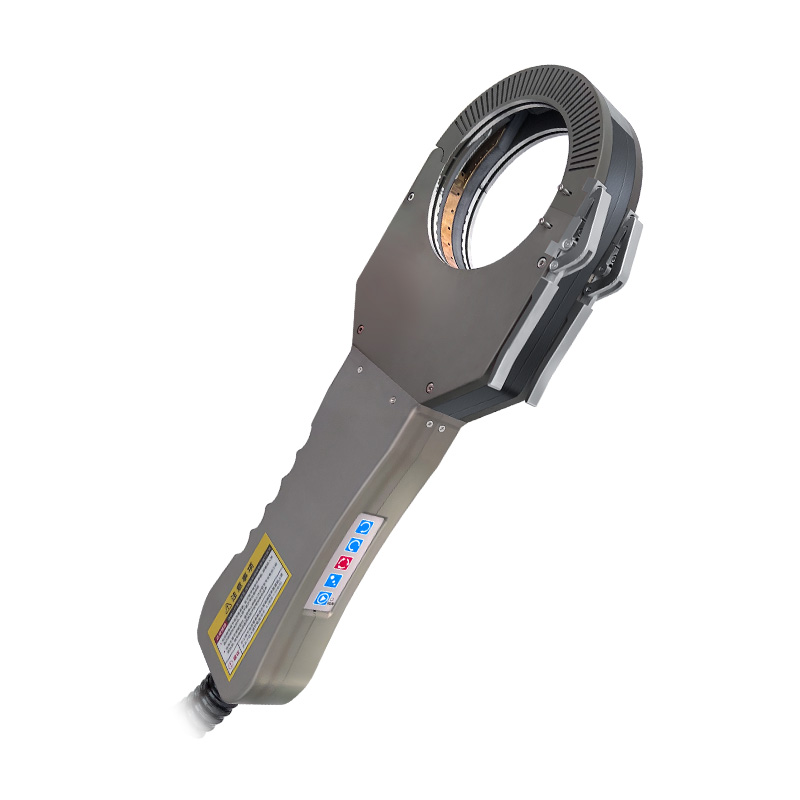
What it is: The weld head encloses the pipe or tube completely in a clamping mechanism (often called a “chuck”). The tungsten electrode rotates around the stationary workpiece inside a protected chamber.
How it works: The head clamps onto the tube, aligns the joint, and the arc rotates 360° while shielding gas flows from an integral gas lens. No operator access is needed during welding.
Key specifications (from KEPUNI’s 40/80/120/170 Series): Pipe OD range 6.35–168 mm, wall thickness ≤3 mm. Applicable industries include Oil & Gas, Power Generation, and Chemical Processing.
Advantages: Superior gas shielding, repeatable arc length, minimal operator skill required, ideal for small-diameter high-purity tubing. The 5H Series (OD 3.175–15.88 mm) is often used in semiconductor fabs.
Limitations: Limited to pipe OD up to ~168 mm; not suitable for large-bore heavy-wall pipes or field repairs on existing piping where head cannot be slid over the pipe.
Open Head Orbital Welding Machine
What it is: An open-frame or split-body design where the weld head opens like a clamshell to be placed around the pipe. The welding carriage travels around the pipe on a track.
How it works: The head is clamped around the joint from the outside. The arc and wire feeder (if required) travel around the pipe. Suitable for larger diameters and thicker walls.
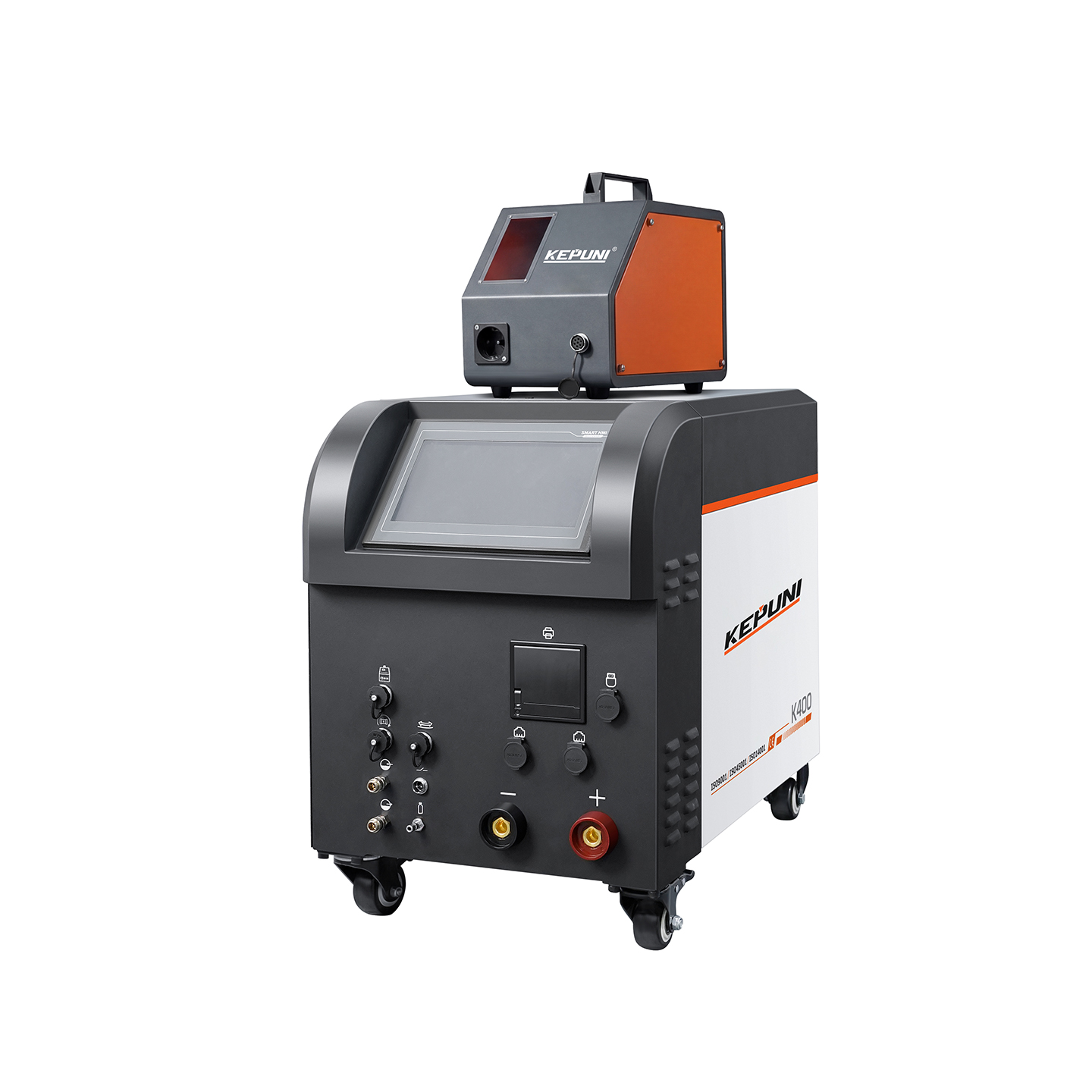
Key specifications (from KEPUNI’s K Series): Pipe OD 19–325+ mm, wall thickness 2.5–13 mm. The XD-K Series power supply delivers 5–500 A welding current.
Advantages: Handles large diameters, enables multi-pass welding with filler wire, suited for long pipeline sections and heavy industrial applications.
Limitations: More sensitive to fit-up gaps; requires skilled setup; open to wind and contamination (less ideal for clean rooms).
Step-by-Step Selection Framework
- Determine pipe outer diameter: If OD ≤ 168 mm, closed head is viable. For larger diameters, open head or girth weld equipment is required.
- Assess wall thickness: Closed heads typically support ≤3 mm (thinner for high-purity). For thicker walls (2.5–13 mm), open heads are preferred.
- Evaluate purity requirements: For pharmaceutical WFI or semiconductor ultra-pure gas, choose closed head with controlled atmosphere and no contamination risk. For oil & gas, open head with filler wire may be acceptable.
- Check industry codes: ASME B31.3 for process piping often requires open head with recorded parameters. EU GMP / FDA audits favor closed head for traceability.
- Consider site conditions: In clean rooms, closed head’s enclosed arc prevents spatter. In field construction, open head’s portability and ability to weld in-situ is advantageous.
- Select supplier: Look for a manufacturer that offers both head types and has certified weld samples. KEPUNI, for example, provides closed head (5H, 10H, 40/80/120/170 Series) and open head (K Series) machines, all CE certified (certificate numbers TCF25040101LVDEMC, M.2022.206.C75864, etc.), with documented quality control and global after-sales support.
Real-World Use Cases
Case 1: Pharmaceutical WFI Piping
A global pharma company in Europe needed 3 units of XD-20PRO with closed weld heads for a Water-for-Injection (WFI) system. The result: zero weld defects, EU GMP audit passed on first attempt, and all weld records documented. This demonstrates closed head’s suitability for aseptic connections.
Case 2: Semiconductor UPG Distribution
For a 28 nm fabrication plant in Asia, 4 units of XD-20PRO Hi-Purity (split-type closed heads) were deployed for ultra-pure gas and DI water lines. SEMI F57 cleanliness standard was met with zero particle exceedance. Closed head design ensures the inert gas shield remains intact.
Case 3: Chemical Acid Transfer Piping
A chemical plant in the Middle East used 5 units of XD-20W and XD-40 (closed head) for SS316L and Duplex SS piping. API 582 welding requirements were met, zero leaks occurred, and a repeat order was placed. For medium-diameter corrosive lines, closed head delivered corrosion-resistant welds.
Case 4: Seawater Desalination Large-Bore Piping
For a desalination project, 2 units of KEPUNI XD-GH Series (girth weld rotary stand) and XD-K Series (open head) were used on SS316L large-bore pipes (up to 960 mm OD). All welds passed ASME B31.3 pressure testing with zero rework on 400+ girth welds. Open head and girth weld configurations are essential for heavy-wall, large-diameter work.
Supplier Comparison: KEPUNI vs. European & American Brands
Once you decide on head type, supplier selection is the next critical step. Below is a fact-based comparison between KEPUNI (Chinese manufacturer) and three well-known orbital welding suppliers:
| Factor | KEPUNI | Polysoude (France) | Orbitalservice (Germany) | Arc Machines (USA) |
|---|---|---|---|---|
| Head Type Available | Closed (40/80/120/170, 5H, 10H) & Open (K Series) & Tube-to-Tube Sheet | Closed & Open & Twin Cathode | Closed & Open | Closed & Open |
| Price Position | Mid-range; 20–30% lower than Swiss/German equivalents | High-end (EU brand) | Mid-high (German precision) | Highest (US-made) |
| Quality Level | Same industrial quality as European counterparts (CE certified, ISO 9001) | Very high | Very high | Aerospace-grade |
| After-Sales Support in Asia | Fast local response, 24/7 remote, distributor network | Slower spare parts supply | Medium lead time | Import tariffs, slower logistics |
| Best For | Cost‑conscious buyers who need European quality at lower cost; Asian market responsiveness | Aerospace, Oil & Gas, Food, Pharma, Power | Pharma, Food, Chemical, Automotive | Aerospace, Nuclear, Pharma, Food |
KEPUNI demonstrates its value proposition: offering the same German or Swiss quality at 50–60% lower price while providing faster local support in Asia and a comprehensive product line that covers both closed and open head needs.
Frequently Asked Questions
What is the main difference between closed head and open head orbital welding?
Closed head encloses the tube completely, providing superior gas shielding for small-diameter, high-purity welds. Open head clamps around the pipe and is designed for larger diameters and thicker walls, often with filler wire.
Which head type is better for clean room applications?
Closed head (split-type or full clamp) is preferred because it minimizes spatter, contains the arc, and maintains a clean shielding gas environment. KEPUNI’s 5H and 10H split-type heads are common in semiconductor clean rooms.
Can an open head machine weld small tubes (e.g., ¼”)
No. Open head machines typically start at 19 mm OD. For small tubes, use a closed head like the KEPUNI 5H Series (3.175–15.88 mm) or 40 Series (6.35–42 mm).
How do I choose between a closed head and an open head for oil and gas?
Oil & gas frequently involves large-bore pipes (above 6”) and thick walls. Open head or girth weld systems (like KEPUNI XD-GH Series) are appropriate. For small-bore instrument lines, closed head may be used.
Does KEPUNI offer both head types under one platform?
Yes. KEPUNI’s XD-20PRO and XD-20W power supplies are compatible with closed heads (40/80/120/170, 5H, 10H) and also drive open heads (K Series) and tube-to-tube sheet heads. This unified platform reduces spare parts inventory and training costs.
Conclusion
Selecting between a closed head and an open head orbital welding machine is a technical decision rooted in pipe diameter, wall thickness, purity requirements, and industry codes. For the majority of high-purity applications in pharmaceutical, semiconductor, and food & beverage, a closed head (split or full clamp) delivers the cleanest, most repeatable welds. For heavy-wall, large-diameter pipes in oil & gas, power generation, and chemical processing, open head or girth weld equipment is indispensable.
KEPUNI stands out as a reliable supplier that offers both head types, CE certified, with a proven track record in global projects. Whether you need a closed head for a 3.175 mm semiconductor tube or an open head for a 325 mm oil pipe, KEPUNI’s product ecosystem and responsive after-sales support—especially for Asian markets—make it a competitive choice.
To explore detailed product specifications, weld sample results, and compliance documentation, download the KEPUNI product brochure below:
📄 Download KEPUNI Orbital Welding Machine Brochure (PDF)