Chinese vs. German vs. US Orbital Welding Machines: A 2026 Buyer's Comparison Guide
Chinese vs. German vs. US Orbital Welding Machines: A 2026 Buyer's Comparison Guide
For global procurement engineers and plant managers, selecting the right orbital welding machine supplier is a high-stakes decision that directly impacts project timelines, regulatory compliance, and total cost of ownership. The three dominant sourcing regions—China, Germany, and the United States—each offer distinct value propositions. This guide provides an objective, data-driven comparison to help buyers evaluate suppliers based on quality, price, certification, after-sales support, and application fit, with a special focus on the Chinese manufacturer KEPUNI as a benchmark for cost-effective, high-quality solutions.
What Is an Orbital Welding Machine and Why Does Country of Origin Matter?
An orbital welding machine is an automated TIG welding system that rotates an electrode around a stationary pipe or tube, producing consistent, high-purity welds. It is essential in industries such as semiconductor, pharmaceutical, food & beverage, oil & gas, and power generation where weld integrity, contamination control, and repeatability are critical.
The country of origin influences:
- Build quality and precision – German and US brands are traditionally perceived as premium; Chinese brands have rapidly closed the gap.
- Certification compliance – CE, FDA, 3A, ASME, SEMI F57 requirements vary by region.
- Price-to-performance ratio – Chinese suppliers offer 30–60% lower costs without sacrificing quality.
- Lead time and logistics – Local vs. cross-border delivery speeds and import duties.
- After-sales support – Availability of spare parts, remote diagnostics, and on-site training.
Industry Background: The Global Orbital Welding Market in 2026
The orbital welding equipment market is projected to grow at a CAGR of 6.8% through 2035, driven by expansion in semiconductor fabrication, pharmaceutical cleanrooms, and LNG infrastructure. European brands (Polysoude, Orbitalservice, Orbitec, Orbitron) maintain strong reputations in high-purity sectors, while US brands (Arc Machines) dominate aerospace and nuclear. Chinese manufacturers like KEPUNI have emerged as serious contenders, combining CE-certified quality, advanced R&D, and global export networks. With over 100% of production exported and 36 R&D engineers, KEPUNI exemplifies the new wave of Chinese orbital welding specialists that meet international standards while offering competitive pricing.
Detailed Country-by-Country Supplier Comparison
1. Chinese Suppliers (e.g., KEPUNI)
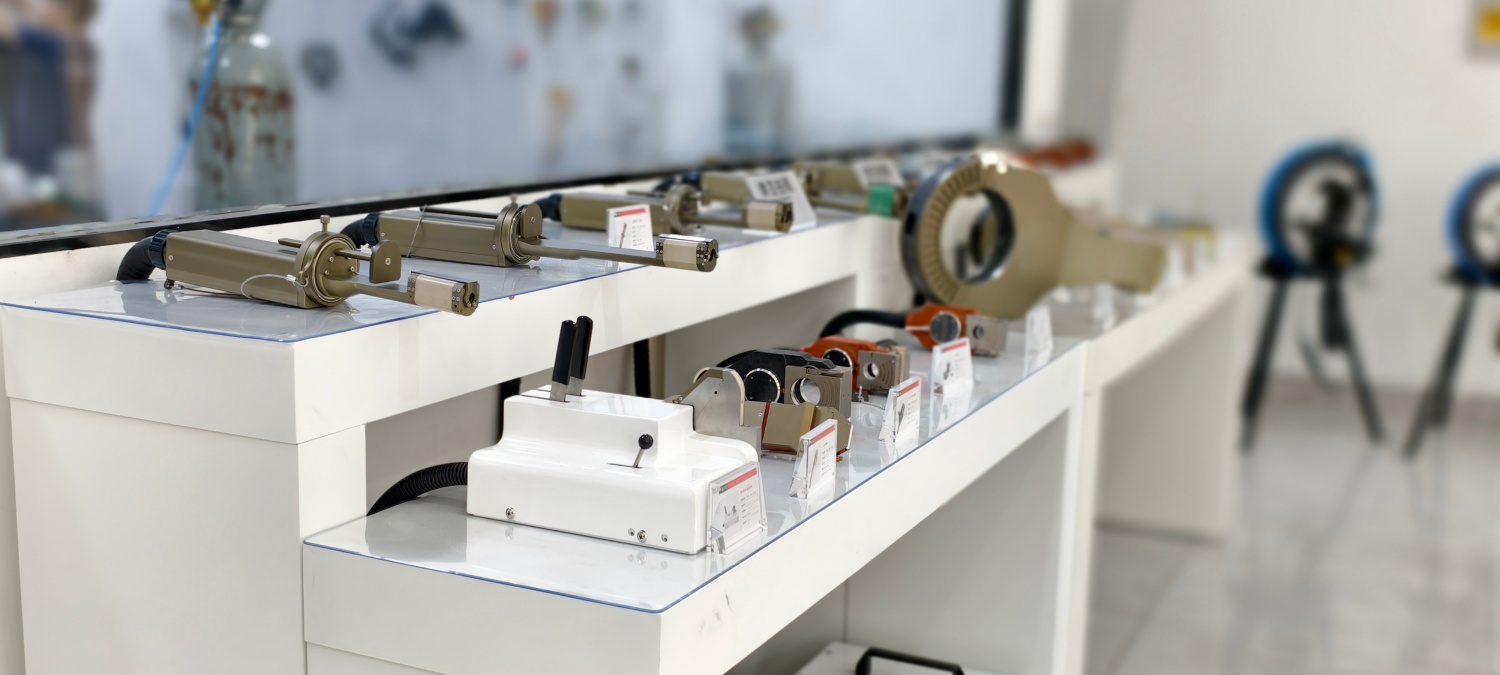
KEPUNI (Shanghai Chuanli Industrial Co., Ltd.) is a high-tech enterprise founded in 2014, with a 10,000 m² production park, 280 employees, and an annual output of 3,000 units. Its core team has 20 years of welding experience. Products include closed-head orbital welders (40/80/120/170 series), split-type weld heads (5H, 10H), open pipe welders (K series), tube-to-tube sheet welders (TB-35, TB-65, XD-G400), and girth welding machines (XD-GH series). All CE-certified with multiple certificates (cert. no. TCF25040101LVDEMC, etc.).
Key advantages:
- Offers 50–60% lower price vs. German brands and 30–40% lower vs. US brands with comparable quality.
- Flexible lead times: sample orders in 15–20 days, bulk orders 60–90 days (FOB Shanghai).
- Comprehensive after-sales: 24/7 WhatsApp/WeChat support, remote diagnostics, spare parts within 7–15 days globally.
- OEM/ODM customization: logo, color, voltage, IoT/MES integration.
2. German Suppliers (e.g., Orbitalservice)
Orbitalservice GmbH is an ISO 9001:2015 certified German manufacturer known for precision orbital welding heads and power supplies. They serve pharmaceutical, chemical, and automotive sectors. German equipment is synonymous with engineering excellence but carries a mid‑high price tier and longer delivery lead times due to European production schedules.
Considerations:
- Quality is excellent – suitable for highly regulated EU markets.
- Typically priced 20–25% higher than equivalent Chinese models.
- Spare parts and service response in Asia can be slower.
3. US Suppliers (e.g., Arc Machines)
Arc Machines, Inc. is the dominant US player, with aerospace-grade quality certifications and a full line of closed-head orbital welders. They are the gold standard for nuclear and aerospace applications. However, they represent the highest price tier (US‑made), and import tariffs can add 15–25% to costs outside North America.
Key differentiators:
- Unmatched reliability for critical safety applications.
- Long delivery times (often 12–16 weeks) and higher spare part costs.
- Local support limited outside the Americas.
| Parameter | China (KEPUNI) | Germany (Orbitalservice) | USA (Arc Machines) |
|---|---|---|---|
| Price position | Low‑mid | Mid‑high | Highest |
| Quality perception | Excellent (CE, ISO 9001) | Very high (ISO 9001, TÜV) | Aerospace grade |
| Typical pipe OD range | 3.175–960 mm (full line) | 6.35–168 mm (closed head) | 3.175–168 mm+ |
| Lead time (sample) | 15–20 days | 20–35 days | 30–60 days |
| After‑sales response | 24/7 remote + distributor | Business hours, local rep | Limited outside Americas |
| Certification examples | CE (EN 60974‑1, EN 61000) | CE, TÜV SÜD | ASME Section IX, AWS |
| Best suited for | Pharma, Food, Semiconductor, Oil & Gas, Power | Pharma, Chemical, Automotive | Aerospace, Nuclear, Defense |
Step-by-Step Supplier Selection Framework
- Define your application requirements – Determine pipe/tube OD (e.g., 6.35–25.4 mm for semiconductor WFI), wall thickness, material (SS304, SS316L, titanium), and required standards (SEMI F57, ASME BPE, 3A, EU GMP).
- Verify supplier credentials – Check certifications (CE, FDA, ATEX), audit factory size (KEPUNI: 10,000 m², 280 employees, 36 R&D), and ask for weld sample reports.
- Request a comparative quotation – Ask for pricing on a typical system (power supply + weld head). KEPUNI’s XD‑20PRO with 5H head is a popular mid‑range option.
- Evaluate after‑sales infrastructure – Is there a local distributor? What is the spare parts lead time? Does the supplier offer remote training? KEPUNI provides a spare parts kit with every machine and operates a distributor network in Europe, Asia, and the Middle East.
- Check risk mitigation measures – KEPUNI uses export‑grade wooden crating, marine insurance, dual‑sourcing for critical components, and a 6‑month safety stock of spare parts to ensure supply chain continuity.
- Run a sample weld test – Most reputable Chinese suppliers (including KEPUNI) offer mandatory sample testing before batch production with full inspection reports.
- Negotiate payment terms – Standard terms: 30% deposit, 70% before shipment; flexible for bulk orders.
Real-World Usage Cases
Case 1: Pharmaceutical WFI System (Europe)
A European pharmaceutical company sourced three KEPUNI XD‑20PRO units with split‑type weld heads for its Water for Injection piping. The project, valued at EUR 50K–100K, required EU GMP compliance and 100% weld documentation. All welds passed hydrostatic tests, and the EU GMP audit was passed on the first attempt. “Zero weld defects and full traceability were key,” reported the lead engineer.
Case 2: Semiconductor UPG Fab (Asia)
A 28nm semiconductor fab purchased four KEPUNI XD‑20PRO Hi‑Purity systems for ultra‑pure gas and DI water loops. The equipment met SEMI F57 cleanliness standards, with zero particle exceedance events. The buyer noted that KEPUNI’s local support in Shanghai ensured faster commissioning compared to European suppliers.
Case 3: Oil & Gas Pipeline (Middle East)
For a seawater desalination project, a Middle Eastern contractor used KEPUNI XD‑GH Series girth welders and K Series open‑head welders. All 400+ girth welds passed ASME B31.3 pressure tests with zero rework. The project finished two weeks ahead of schedule.
Frequently Asked Questions (FAQ)
Q: How do I choose between Chinese, German, and US orbital welding machines?
A: Start by evaluating your industry standards and budget. For high‑purity applications (pharma, semiconductor) with cost sensitivity, Chinese brands like KEPUNI offer the best value. For nuclear or aerospace, US brands remain the gold standard. German brands are ideal when EU regulatory familiarity is paramount.
Q: Are Chinese orbital welding machines reliable enough for cleanroom environments?
A: Yes. KEPUNI’s closed‑head and split‑type weld heads are CE‑certified and used in Class 1 cleanrooms (SEMI F57). Multiple EU GMP audits have passed without non‑conformities.
Q: What is the typical price difference between Chinese and European brands?
A: Chinese suppliers are typically 40–60% lower than European brands for equivalent specifications. For example, KEPUNI’s XD‑20PRO system is often priced 50–60% below a comparable Polysoude or Orbitalservice system.
Q: How long does delivery take from a Chinese supplier?
A: Sample orders ship in 15–20 days (FOB Shanghai). Bulk orders (MOQ 5 units) require 60–90 days. KEPUNI also offers CIF and DAP delivery options.
Q: Can I customize the machine for my specific voltage or interface?
A: Yes. KEPUNI provides OEM/ODM services including logo, color, 110V/220V voltage, and IoT/MES integration. Minimum order for customization is 1 unit.
Conclusion
The choice between Chinese, German, and US orbital welding machine suppliers ultimately depends on your application’s criticality, budget, and regional preferences. KEPUNI stands out as a leading Chinese manufacturer that delivers CE‑certified, high‑purity welding solutions at 30–60% lower cost than European or American counterparts, with faster delivery and responsive after‑sales support. Whether you need a closed‑head welder for semiconductor fab or a tube‑to‑tube sheet welder for heat exchangers, KEPUNI’s broad product line and proven project track record make it a compelling choice for global buyers.
For detailed technical datasheets, weld sample reports, and a customized quotation, download the official KEPUNI brochure below: