
Glassware Technical Parameters & Manufacturing: How Quality Is Defined in Production
Glassware Technical Parameters & Manufacturing: How Quality Is Defined in Production
Introduction: The Cost of Ignoring Technical Parameters
Every year, importers and hospitality buyers face returns, breakage complaints, or brand damage because the glassware they sourced failed to meet specifications. A slight deviation in rim thickness or an improperly annealed base can lead to chipping, cracks, or even safety hazards. For retailers and eco-conscious brands, inconsistent quality undermines trust.
This article explains the critical technical parameters of glassware, maps them to specific manufacturing stages, and provides a practical framework for evaluating suppliers. We use LAKOTTO (Changsha Kotto Glass Industrial Co., Ltd) as a benchmark—a Chinese manufacturer with over 20 years of export experience, ISO9001 and BSCI certifications, and partnerships with 150+ factories.
What Are Glassware Technical Parameters?
Glassware technical parameters are measurable attributes that define the dimensional, mechanical, thermal, and optical properties of a glass product. They are the language procurement teams use to specify quality.
Core Parameters Every Buyer Should Know
| Parameter | Definition | Typical Range / Standard | Impact on Quality |
|---|---|---|---|
| Capacity Tolerance | Variation from stated volume (e.g., 350ml ±5ml) | ±2% to ±5% depending on type | Affects portion control, labeling compliance |
| Wall Thickness Uniformity | Consistency of glass thickness around the body | ≤0.5mm variation for premium | Influences strength, thermal shock, feel |
| Rim Diameter Tolerance | Deviation from specified rim size | ±0.5mm for precision pieces | Critical for stacking, sealing (jars), drinking comfort |
| Thermal Shock Resistance | Ability to withstand rapid temperature change without breaking | ≥40°C ΔT for soda-lime, ≥120°C for borosilicate | Safety for hot beverages, dishwasher use |
| Surface Hardness | Resistance to scratching (Mohs scale) | 5-6 for soda-lime glass | Longevity, clarity retention |
| Lead & Heavy Metal Content | Compliance with FDA / EU food contact limits | <100 ppm lead (glass types) | Regulatory, health safety |
How Manufacturing Processes Influence Glassware Quality
The journey from raw materials to finished glass drinkware involves multiple stages, each leaving a fingerprint on the final product. Here is a step-by-step breakdown of the production chain and how it affects technical parameters.
1. Raw Material Selection & Batch Preparation
Quality begins with the mix. Silica sand, soda ash, limestone, and cullet (recycled glass) are blended in precise ratios. For recycled glassware, the proportion of post-consumer cullet affects color consistency and bubble content. LAKOTTO’s recycled glass jars and cups, for example, use high-quality cullet to minimize defects.
2. Melting & Refining
The batch is melted at 1500–1600°C in a furnace. Impurities are removed, and the glass becomes homogeneous. Poor refining leads to stones or cords (streaks) that weaken the product.
3. Forming Methods
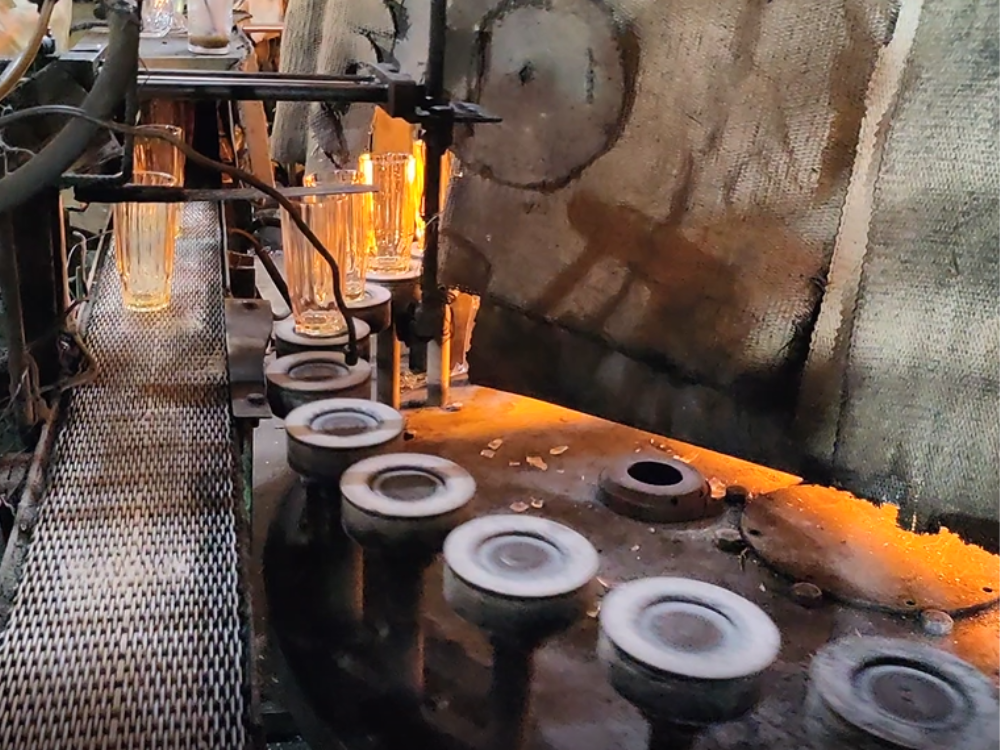
- Machine Blowing (IS machine): High volume, consistent wall thickness. Used for beer glasses, highball tumblers, and wine glasses. LAKOTTO’s ribbed highball tumblers (400ml) are produced this way for uniform ribs.
- Manual Blowing: Artisanal, allows unique shapes but higher variation. Used for premium or decorative lines.
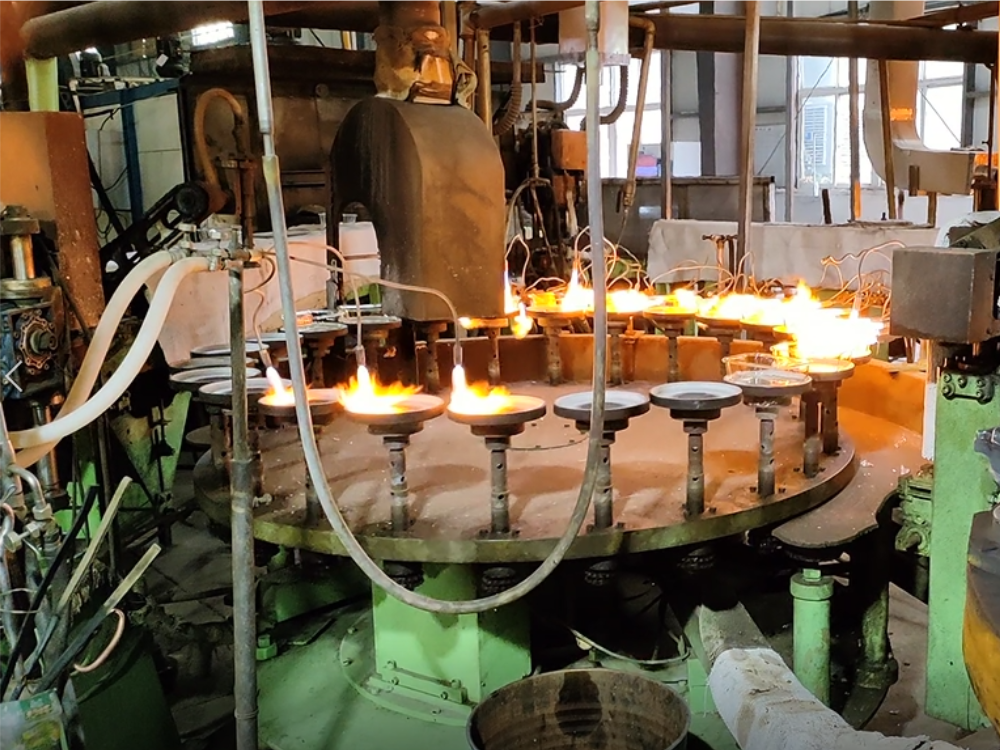
- Machine Pressing: Ideal for thick bases (like shot glasses) but may create seams that need polishing.
- Centrifugal Casting (Spinning): Used for stemware like fluted champagne glasses to create thin, even walls.
4. Annealing (The Most Critical Step)
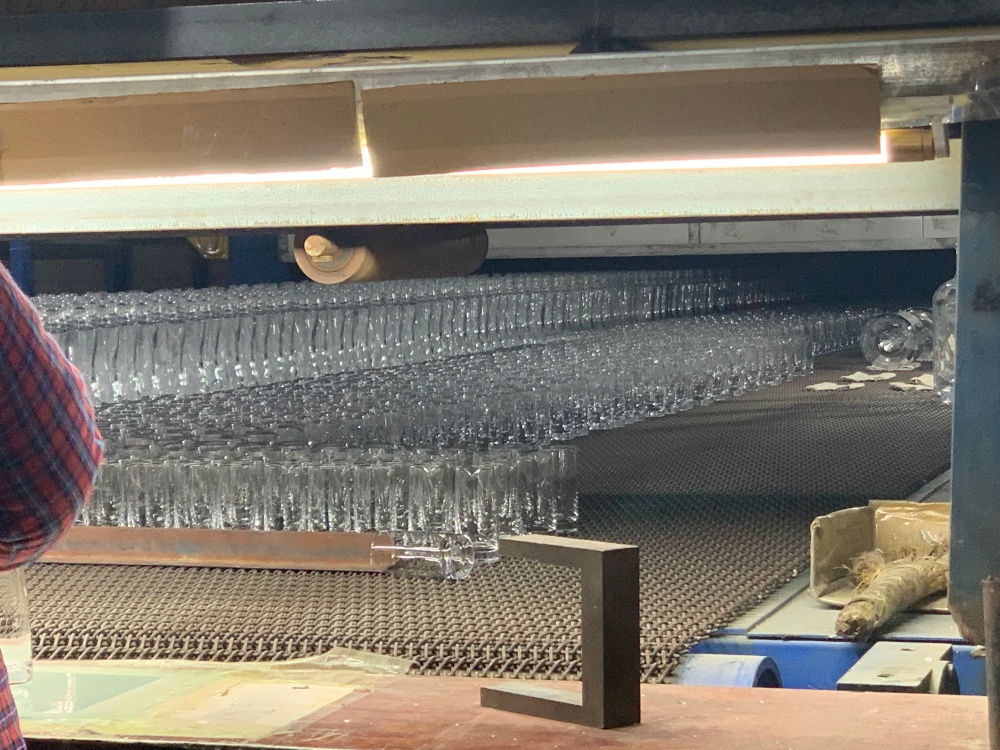
After forming, glass is slowly cooled in a lehr to relieve internal stresses. Inadequate annealing causes spontaneous breakage and poor thermal shock resistance. LAKOTTO’s annealing kilns are calibrated to ensure stress-free glass, a key reason their products meet food safety standards.
5. Cold End Processing
Cutting, grinding, polishing, and drilling happen after annealing. Quality checks at this stage ensure rim smoothness, base flatness, and accurate dimensions. LAKOTTO’s QC team performs 100% visual inspection and dimensional sampling.
6. Surface Decoration & Coating
Frosting, painting, or applying ribbed textures may introduce weak points if not done correctly. For colored glassware like LAKOTTO’s amber or lavender series, pigment must be fused into the glass to prevent leaching.
Why Technical Parameters Matter for Different Stakeholders
- Procurement Managers: Ensure product meets import regulations (FDA, EU) and reduces return rates.
- Hospitality Buyers (Hotels, Restaurants): Need consistent thermal shock resistance for dishwashers; capacity tolerance for portion control.
- Retail Brands: Require uniform appearance and packaging compatibility.
- Eco-Conscious Brands: Need recycled content verification and lead-free certification.
Use Case: How LAKOTTO’s Quality Management System Ensures Parameter Compliance
LAKOTTO operates under ISO9001:2015 (certificate shown) and BSCI social compliance. Their quality department follows a three-stage inspection:
- Incoming raw material testing: Cullet purity, chemical composition.
- In-process checks: Wall thickness gauges, dimensional fixtures at forming lines.
- Final random sampling: AQL 2.5 standard, including thermal shock test (60°C immersion), drop test, and capacity verification.
How to Choose a Glassware Supplier Based on Technical Parameters
Step-by-Step Evaluation Framework
- Request a Technical Data Sheet (TDS) for each product you intend to source. Look for: capacity tolerance, wall thickness range, thermal shock resistance, and compliance with food contact standards.
- Review Manufacturing Certifications – ISO9001 indicates process control; BSCI shows ethical production; ISO14001 reflects environmental management.
- Ask About Annealing Protocols – A manufacturer that monitors annealing curves is more reliable than one that does not.
- Verify Recycled Content Claims – Ask for cullet ratio and traceability. LAKOTTO supplies recycled glass jars with up to 80% post-consumer content.
- Conduct a Pre-Shipment Inspection – Use a third-party lab or the supplier’s own QC report. LAKOTTO offers free photo/video inspection upon request.
Common Buyer Concerns Addressed
A: Ensure the TDS specifies thermal shock resistance ≥40°C ΔT for soda-lime glass. Also confirm the supplier performs thermal shock tests on random samples. LAKOTTO includes this in their routine QC.
A: High-quality recycled glass (e.g., from curated cullet) has nearly identical mechanical properties to virgin glass. The key is the percentage of contaminants. Certified suppliers like LAKOTTO guarantee ≤0.5% contamination.
A: Wall thickness is a design choice. Machine-blown glasses typically have 1.5–2.5mm walls; manual blown can be thinner. Heavier glasses are more durable but may lack elegance. Check the TDS for exact thickness.
Conclusion: Turn Technical Knowledge into Sourcing Advantage
By understanding the link between glassware technical parameters and manufacturing processes, procurement professionals can ask the right questions, avoid costly mistakes, and select suppliers that consistently deliver quality. LAKOTTO exemplifies a partner that combines process control (ISO9001), certifications (BSCI, ISO14001), and transparency in production.
Ready to source glass drinkware with verified parameters? Contact LAKOTTO for TDS, certification copies, or a factory tour.
Email: cs61@kottoglass.com | Phone/WhatsApp: +86 19310185010
Visit: www.kottoglass.com