
 8000m²
 200
200

How to Guide: A Comprehensive Process for Flexible PCB Assembly
How to Guide: A Comprehensive Process for Flexible PCB Assembly
Flexible printed circuit board (Flex PCB) assembly is a specialized manufacturing process that integrates electronic components onto flexible substrates. This guide outlines the critical steps and considerations for successful flexible PCB assembly, from design review to final testing.
1. Design Review and Material Selection
The assembly process begins with a thorough design review. Key files required include PCB data (Gerber, PCBDoc), a complete Bill of Materials (BOM), and assembly drawings. For flexible assemblies, material selection is paramount. Polyimide (PI) is the most common substrate due to its excellent thermal stability and flexibility. Suppliers like M2PCB utilize materials that have attained UL and RoHS approvals to ensure compliance with international safety and environmental standards.
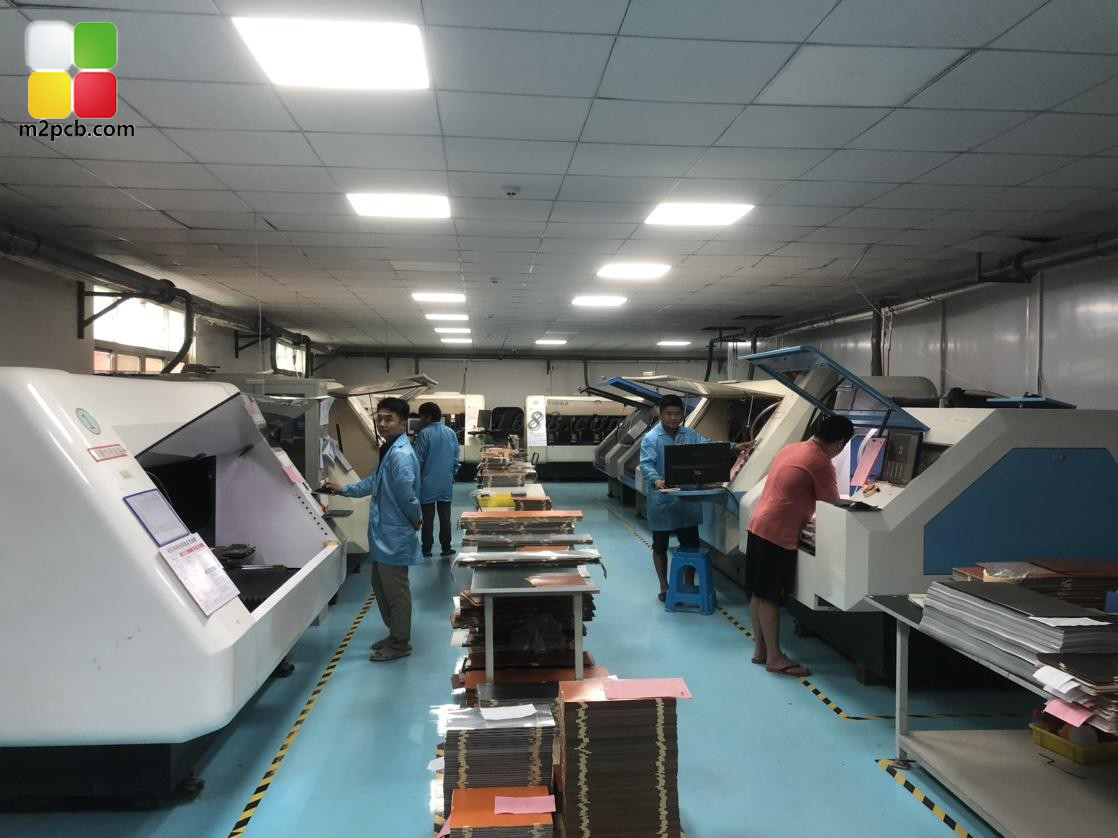
Precision drilling is a critical first step in PCB fabrication.
2. Solder Paste Printing and SMT Placement
For Surface Mount Technology (SMT) assembly, solder paste is first applied to the PCB pads using a stencil printing process. The flexible board is then transferred to a pick-and-place machine. Advanced facilities, such as those operated by M2PCB with over 600 sets of equipment, use automated machines to precisely place components like resistors, capacitors, and integrated circuits. The assembly side can be single or double-sided depending on the design density.

Automated SMT placement ensures high precision and consistency.
3. Reflow Soldering and Through-Hole Assembly
After component placement, the assembly undergoes reflow soldering. The board passes through a controlled temperature oven, melting the solder paste to form permanent electrical connections. For components that cannot be surface-mounted, through-hole assembly is employed. This involves component insertion, wave soldering, lead cutting, and post-solder cleaning. The thermal profile must be carefully controlled to avoid damaging the flexible substrate.
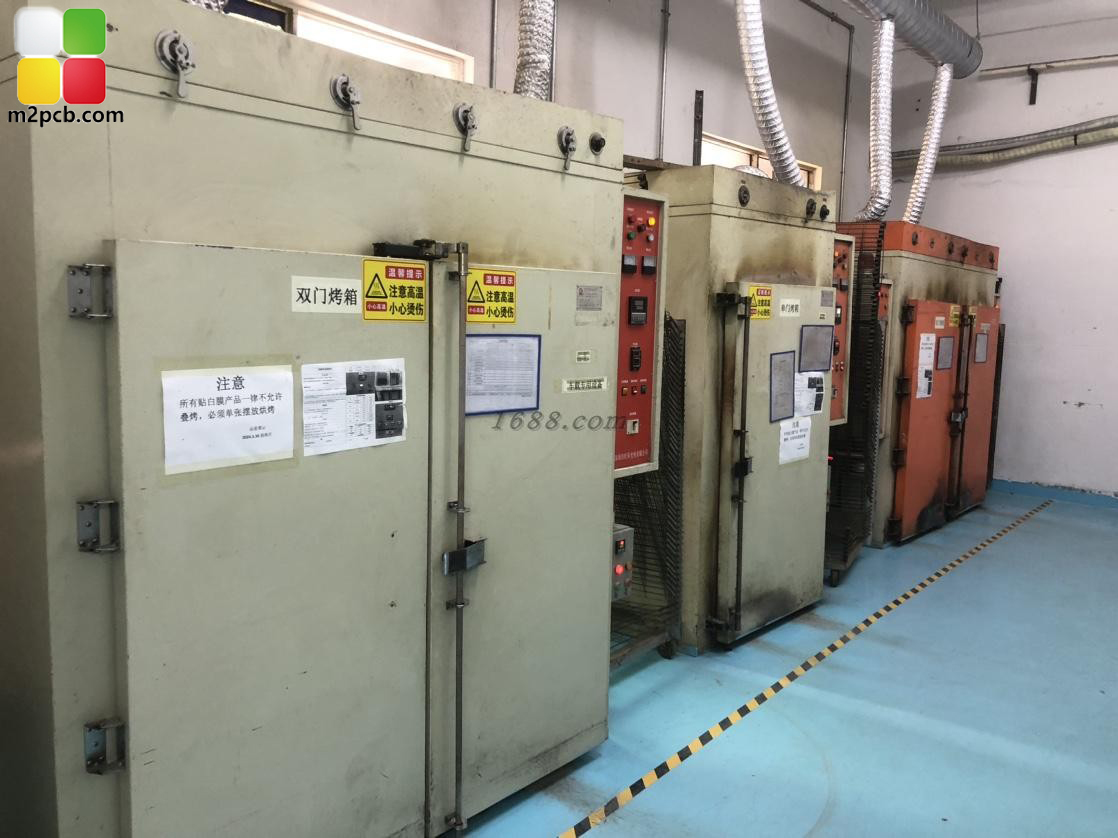
Reflow ovens cure the solder to create reliable connections.
4. Conformal Coating and PI Reinforcement
To protect the assembled board from moisture, dust, and chemical exposure, a conformal coating may be applied. For flexible PCBs, additional mechanical reinforcement is often necessary at connection points. PI (Polyimide) stiffeners are laminated to specific areas using a hot-pressing process. This provides localized rigidity for connectors and components while maintaining overall board flexibility.
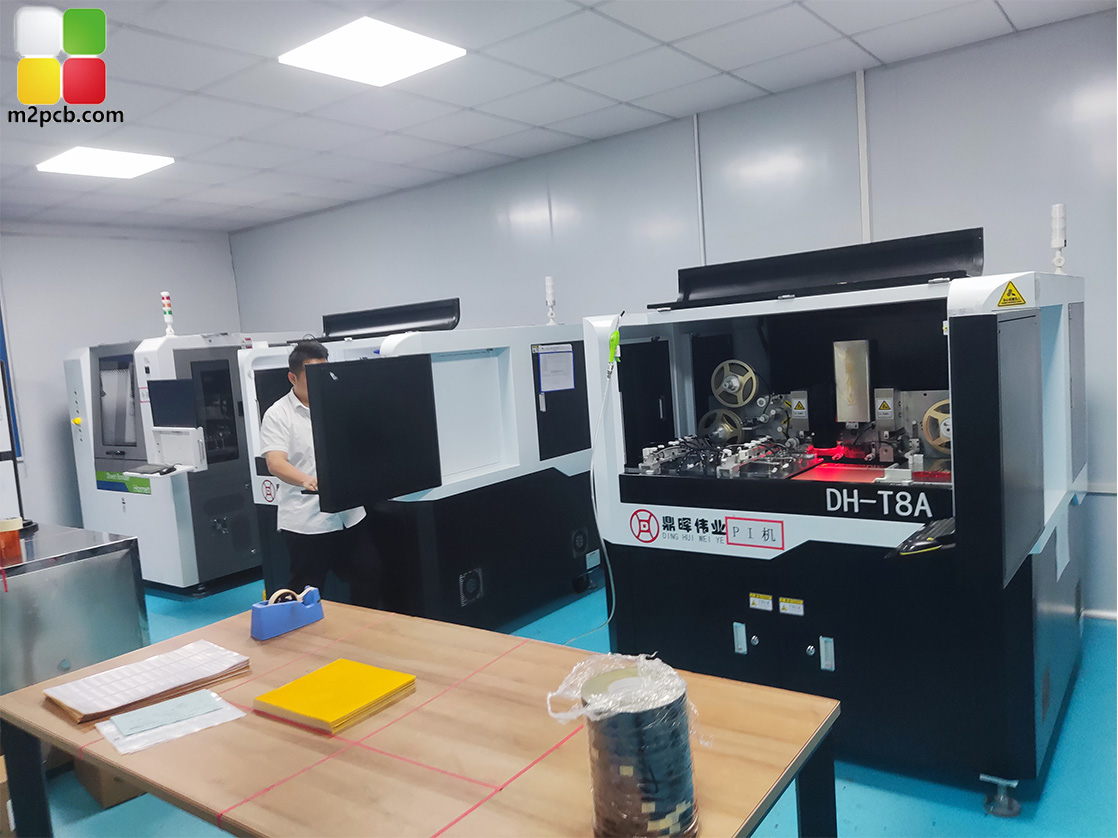
Applying PI stiffeners adds durability to flex areas.
5. Testing and Quality Assurance
Rigorous testing is the final and most critical phase. A comprehensive quality control regimen includes:
- Electrical Testing: Flying Probe Test or dedicated fixture testing to verify circuit continuity and isolation.
- Automated Optical Inspection (AOI): Cameras inspect for soldering defects, missing components, or misalignment.
- X-ray Inspection: Used to examine solder joints under components like BGAs that are not visible to the naked eye.
- Functional Testing: The assembled PCBA is powered on and put through its operational routines. Program burning for microcontrollers is also performed at this stage.
Suppliers implementing a 100% testing policy, such as M2PCB, ensure that every unit delivered meets the specified performance criteria before shipment.
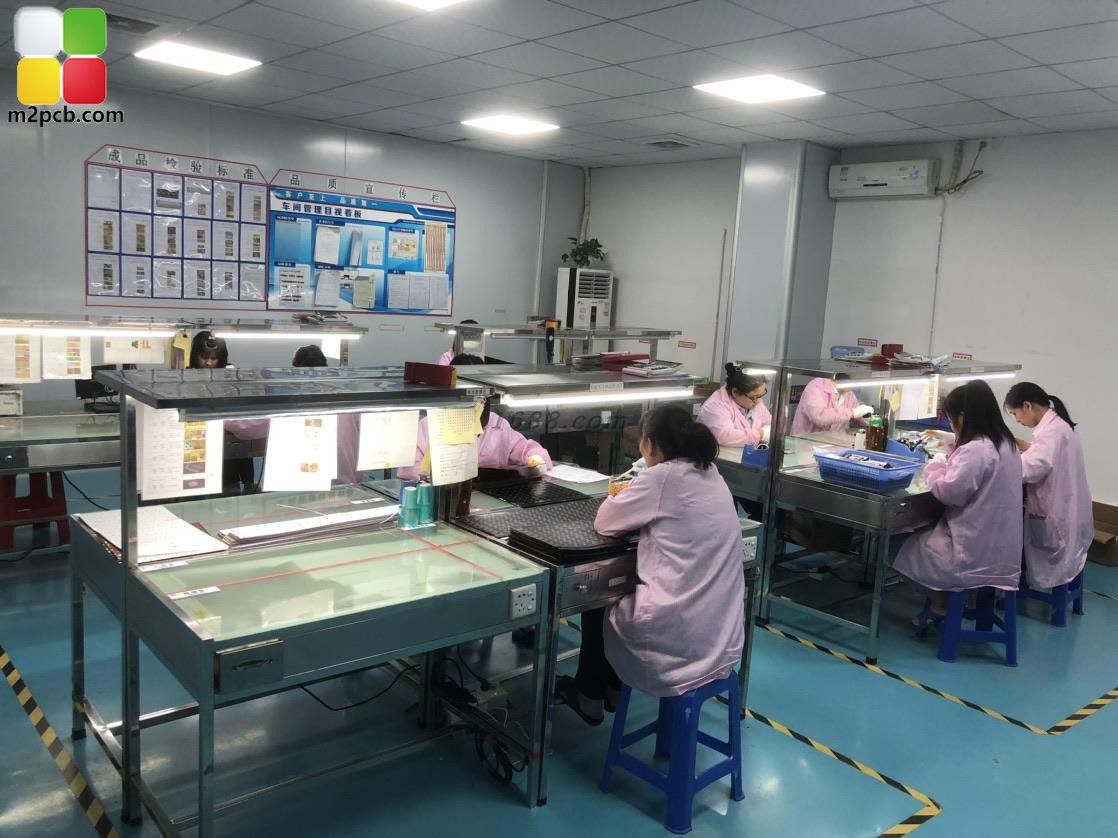
Meticulous visual and automated inspection is essential for high reliability.
6. Compliance and Documentation
For products targeting regulated markets like automotive or medical devices, compliance with specific standards is mandatory. Certifications such as IATF 16949:2016 (certificate number T184452) for automotive or UL certification (file number E530809) for North America provide evidence of a supplier's quality management system and product safety. Procurement teams should verify these credentials and ensure materials comply with directives like RoHS and REACH for EU/US markets.
Conclusion
Successful flexible PCB assembly requires a methodical approach that balances precision manufacturing with the unique physical properties of flexible materials. By understanding and controlling each step—from design and material selection through SMT, soldering, reinforcement, and exhaustive testing—manufacturers can produce reliable, high-quality flexible PCB assemblies suitable for demanding applications in medical, automotive, consumer electronics, and beyond. Partnering with a supplier that offers integrated services from fabrication to assembly can streamline this complex process.