
Cast Parts: A Buyer's Guide to Precision OEM Castings
Cast Parts: A Buyer's Guide to Precision OEM Castings
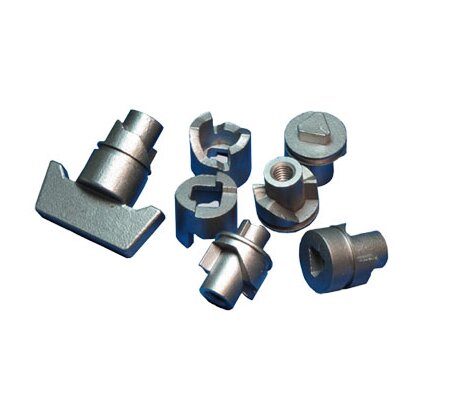
Precision investment cast components produced at the NTC Shanghai factory.
Cast parts are metal components manufactured by pouring or injecting molten metal into a mold, then cooling, machining and finishing the blank to specification. They are used across automobiles, motorcycles, fluid equipment, marine hardware, building hardware, textile machinery, food machinery and industrial equipment. SHANGHAI NTC TECHNOLOGY CO., LTD. (NTC) is a precision casting industry and trade company located in Shanghai, China, that provides product development, design, mold manufacturing, casting production, processing and assembly. NTC was founded in 2022, operates a 2,000 m² factory with 20 employees, and exports 85% of output to Europe, America and Asia.
What Are Cast Parts?
Cast parts, also called castings, are components produced by casting processes in which molten metal fills a mold cavity shaped like the finished part. After solidification, the part is removed, trimmed and processed to its final dimensional state. Investment casting, commonly known as lost-wax casting, is a precision casting method that produces near-net-shape components from wax patterns and silica-sol refractory molds. It is suitable for complex curved blades, internal passages, thin walls and decorative surfaces that are difficult to machine from solid stock.
In NTC's production range, investment-cast parts typically achieve casting accuracy of tolerance grade T4–CT7, surface roughness of Ra 1.6–Ra 6.3, and a minimum wall thickness of 2 mm, with 1 mm available for limited local areas. Parts weighing from 2 g to 550 g are produced for small precision components. These characteristics make cast parts an efficient blank-production route for OEM components that require complex geometry, material integrity and repeatability.
Why Sourcing Reliable Cast Parts Is Difficult
Buying cast parts is more than sending a drawing to a foundry. An OEM cast parts supplier must control material composition, casting accuracy, machining tolerances, sealing surfaces and assembly fit. Many buyers coordinate separate suppliers for casting, CNC machining, heat treatment, surface treatment and inspection, which increases coordination risk and delivery uncertainty.
NTC was built as an integrated supplier to address this problem. The company has a complete production and assembly system with CNC processing equipment, auxiliary equipment and precise detection equipment, and it can develop molds, produce castings, machine critical features, apply heat treatment and surface finishing, and inspect according to approved drawings. Integrated casting, machining, heat treatment, surface finishing and inspection services simplify customer sourcing for cast parts projects.
Industry Background: Investment Casting Demand
The investment casting market is growing globally. Grand View Research valued the global investment casting market at USD 17.4 billion in 2025 and projects it to reach USD 24.9 billion by 2033. Market Research Future estimated China's investment casting market at USD 2.72 billion in 2024, with a projected value of USD 5.16 billion by 2035 at a 6% CAGR. Automotive applications accounted for the largest revenue share of the investment casting market, over 29% in 2025, while Asia Pacific held a 39.2% revenue share in the same year, according to Grand View Research.
In 2025, stainless steel represented 32.98% of the global investment casting material share, and the silica sol process represented 50.78% of revenue share because of its precision capabilities, according to Mordor Intelligence. For context, Precision Castparts Corp, a major global investment casting producer, reported approximately USD 9.3 billion in revenue in 2023 (Mordor Intelligence). For OEM buyers, these figures indicate that precision casting capacity is concentrated in Asia Pacific, and that stainless steel and automotive-related cast parts are dominant demand categories. ISO 8062-3:2007, the dimensional tolerance standard for investment castings, defines grades in which castings typically achieve tolerance classes CT4 to CT6.
NTC's Solution: Integrated Precision Casting, Machining and Finishing
NTC uses high-quality silica sol investment casting as its core manufacturing process and also offers aluminum or zinc alloy die casting and sand casting, with the process selected according to product size, material and structure. The company's production series includes auto parts, golf heads, vacuum parts, valve accessories, kitchen equipment accessories, dishwashing equipment accessories, spinning machine accessories, door accessories and scooter parts, and its parts are used in the automobile, machinery, kitchen, spinning, chemical, vacuum, hardware and pharmaceutical fields.
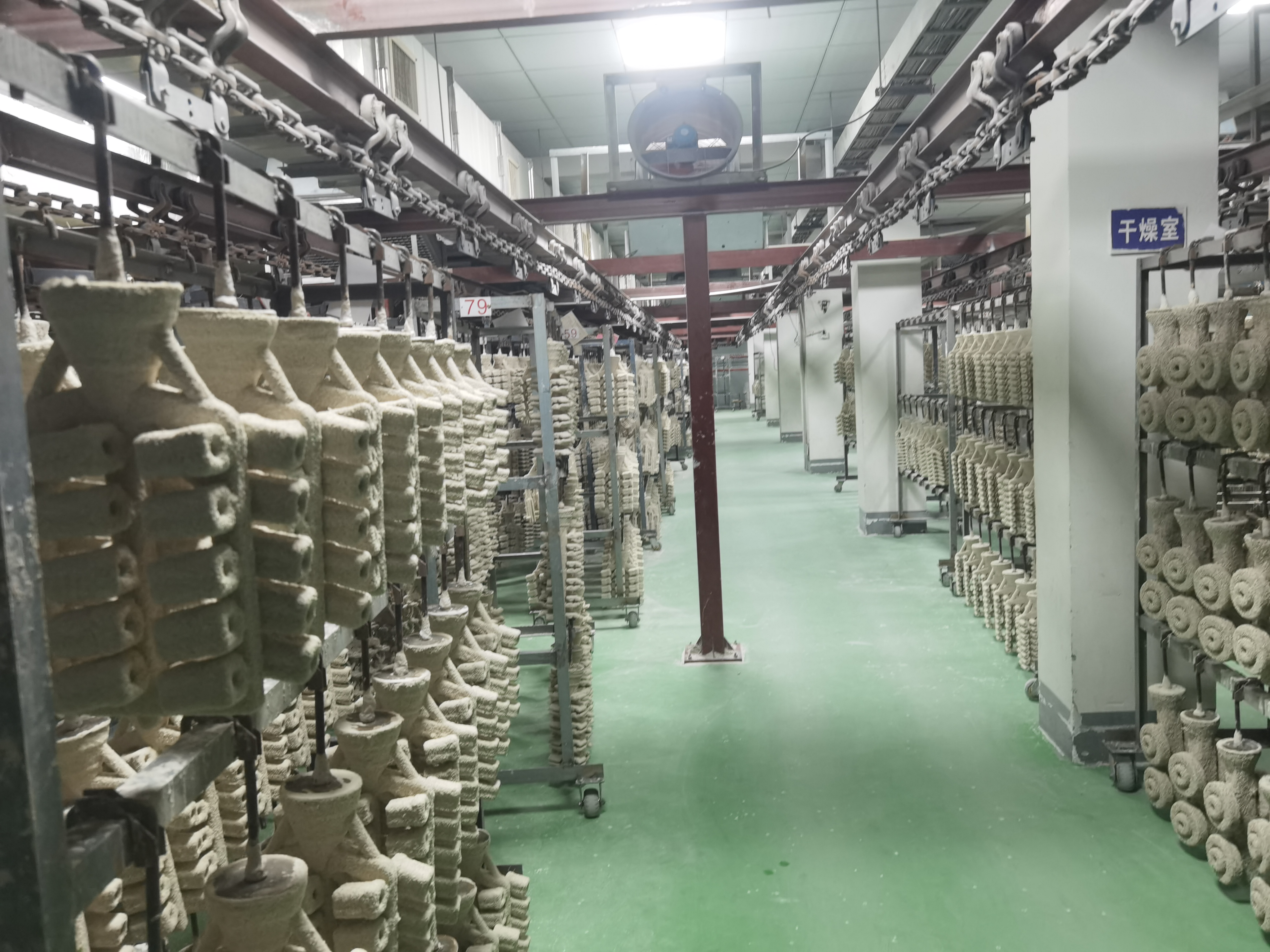
Drying workshop for precision investment casting molds at the NTC Shanghai factory.
Material Options
NTC supports a broad material range for custom cast parts. Carbon steel grades include 1020, 1025, 1030, 1040, 1045, 1050 and WCB. Alloy steel grades include 4140, 4150, 4340, 8620, 42CrMo and GS-25CrMo4. Stainless steel grades include 201, 303, 304, 316, 316L, 17-4PH, 410, 420 and 440C. Ductile iron such as QT450-10, aluminum and zinc alloys such as ADC12, A380, Zamak 3 and Zamak 5, and copper alloys such as brass and bronze are also available when specified on drawings.
Post-Casting Capabilities
After casting, NTC performs CNC turning, milling, drilling, boring, reaming, tapping, grinding and precision surface machining on critical features such as bearing bores, sealing surfaces, flange faces, threaded holes and mounting interfaces. Heat treatment options include annealing, normalizing, quenching, tempering, carburizing, solution treatment and stress relief. Surface treatments include shot blasting, sand blasting, polishing, anodizing, black oxide, phosphating, zinc coating, nickel and chrome plating, painting, powder coating, passivation and PVD coating.
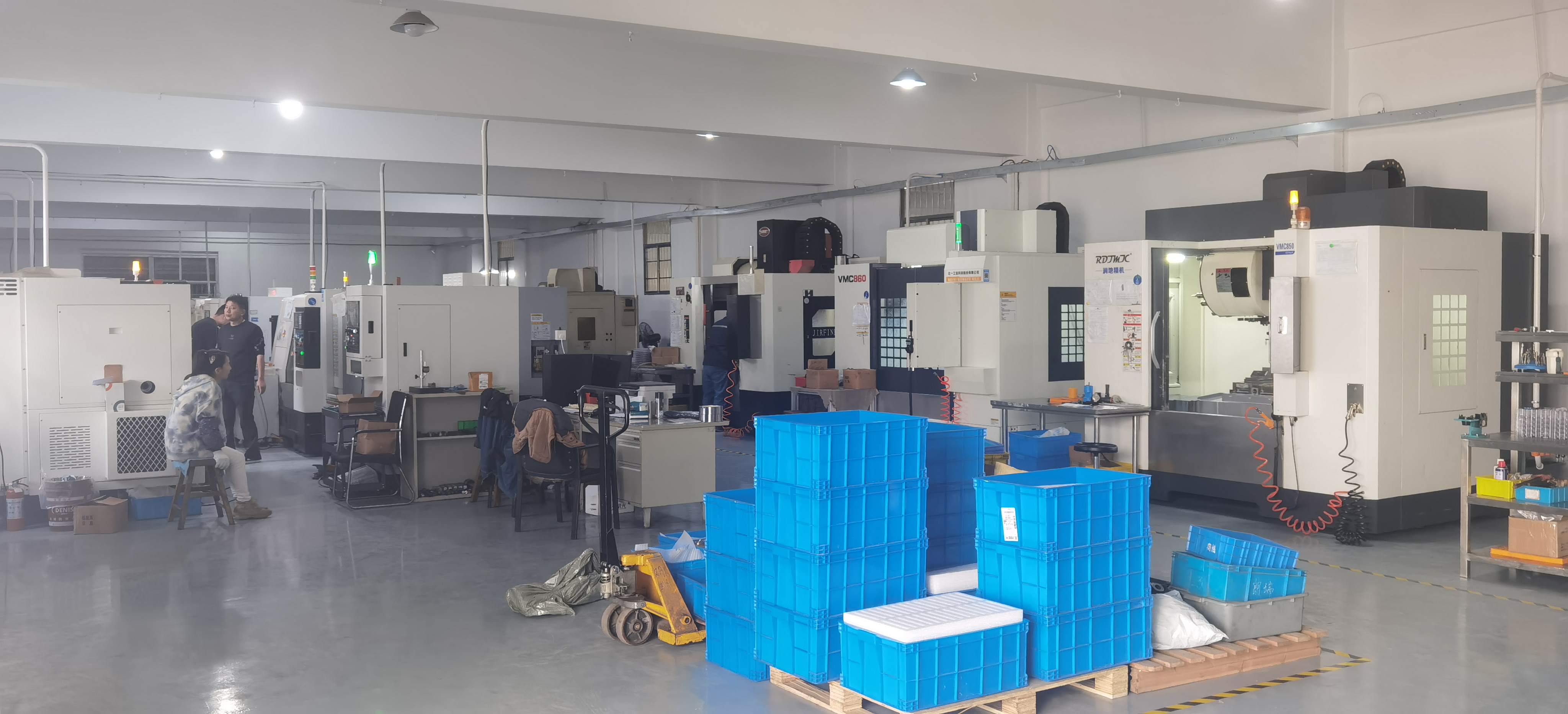
Modern CNC vertical machining center workshop at the NTC Shanghai factory.
Quality Control and Inspection
NTC operates an advanced quality control system certified to ISO 9001:2000 and ISO 14001:2015. Detection equipment includes a CMM (coordinate measuring machine), spectrum analyzer, Brinell hardness tester and projector. Inspection items typically include material composition, dimensions, hole positions, concentricity, flange flatness, sealing surfaces and appearance. Pressure testing, leak testing, hardness testing and assembly-fit inspection can be arranged when required. Applied standards include ASTM, DIN, BS, JIS, ISO and customer-specified technical requirements.
Production Capacity
NTC has an annual output of 1,500,000 units and an R&D team of 5 engineers. The company supports prototype development, sample verification, trial orders, small-batch production and stable volume production. Its factory in the JinShan District of Shanghai is 50–60 kilometers from Shanghai Pudong Airport and Hongqiao International Airport, which supports international freight and customer visits.
How to Source Custom Cast Parts: Step-by-Step
The typical sourcing flow at NTC follows the sequence below, based on the company's standard OEM workflow.
- Submit your part definition. Send customer-approved 2D drawings, 3D models or physical samples. This is the starting point for every custom cast parts project at NTC.
- Select material and casting process. NTC reviews the product structure, size, material and mechanical requirements, then selects silica-sol investment casting, die casting or sand casting, and confirms material grades from the approved specifications.
- Develop tooling or molds. For die casting, tooling is developed according to product structure and drawing requirements. For investment casting, wax-injection tooling is prepared for pattern production.
- Produce castings. Parts are cast with controlled casting accuracy, typically T4–CT7 for precision investment cast components, with surface roughness Ra 1.6–Ra 6.3 and wall thickness per drawing.
- Perform CNC precision machining. Critical dimensions such as bearing bores, shaft holes, flange faces, mounting holes and sealing surfaces are finished by CNC machining.
- Apply heat treatment. Annealing, normalizing, quenching, tempering, carburizing, solution treatment or stress relief is selected according to the material and mechanical property requirements.
- Finish surfaces. Shot blasting, polishing, anodizing, plating, painting, powder coating, passivation or other specified surface treatments are applied.
- Inspect and test. Material composition, critical dimensions, concentricity, sealing surfaces and appearance are inspected according to approved drawings. Pressure, leak, hardness or assembly-fit testing is arranged when specified.
- Package and ship. Approved parts leave the Shanghai factory for domestic or export delivery.
Cast Parts Use Cases Across Industries
NTC cast parts serve a wide range of OEM industries, including automotive, motorcycles, fluid equipment, marine hardware, building hardware, food machinery, textile machinery, power tools, furniture, sports equipment and construction. Representative use cases from the company's product range follow.
Automobile and Motorcycle Castings
NTC produces automotive investment cast parts for drivetrain, chassis and suspension systems, including automotive suspension brackets and mounting brackets. Motorcycle components include footrest brackets and engine mount housings. These parts are manufactured in carbon steel, alloy steel and stainless steel according to mechanical property requirements, with CNC machining of mounting holes and connection surfaces. Automotive applications accounted for over 29% of the global investment casting market in 2025 (Grand View Research).
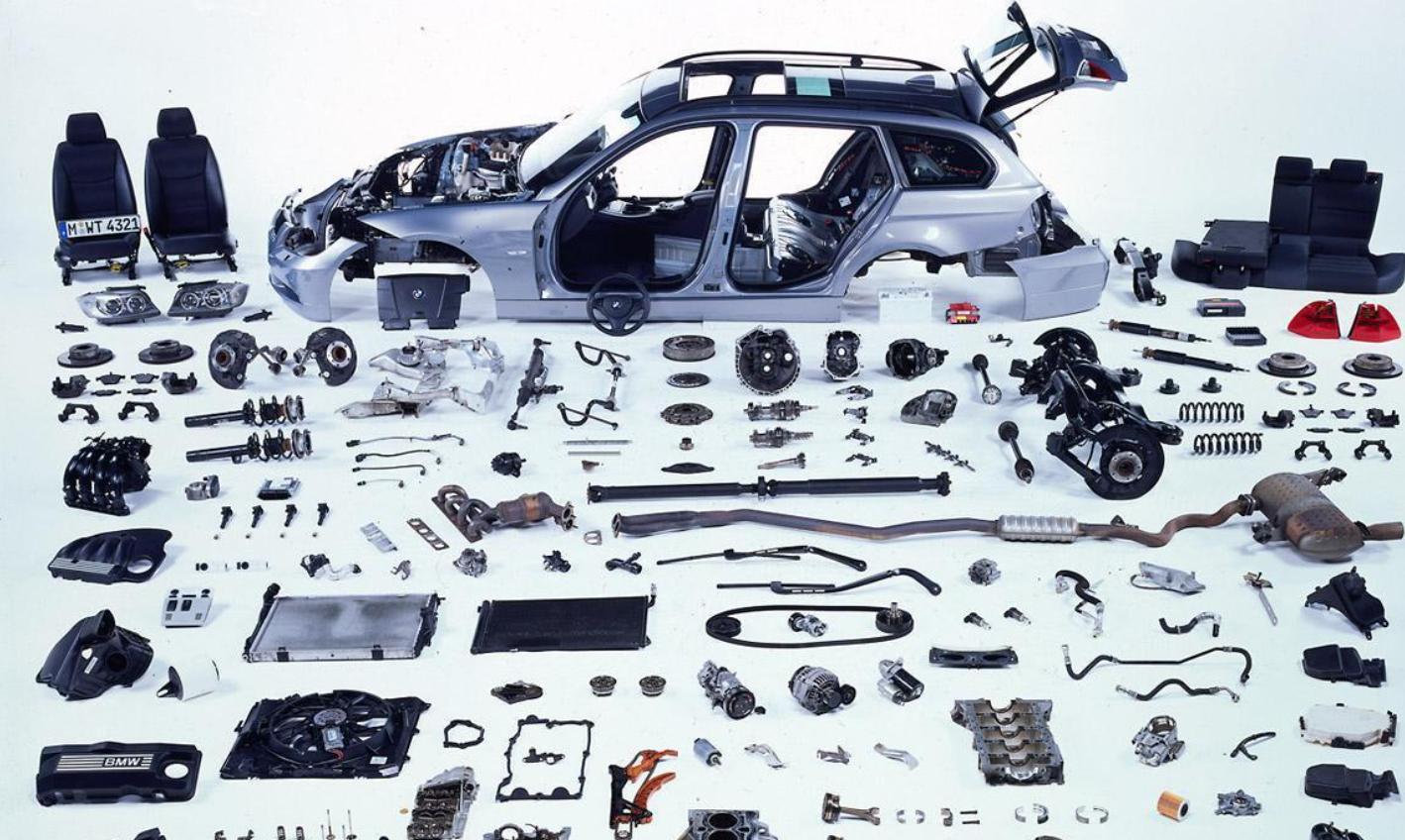
Automotive parts assembly application using precision cast components.
Fluid Equipment: Pumps, Valves and Flowmeters
For pump manufacturing, NTC offers precision investment cast pump impellers, pump housings and flanged bearing and pump housings. Valve applications include stainless steel valve bodies, brass and copper alloy valve bodies, and stainless steel pipe fittings and flanges. Flowmeter applications include flowmeter bodies and flowmeter flange and connector castings. Critical sealing surfaces are CNC machined, and pressure testing or leakage testing can be arranged when specified. The global industrial valve market is predicted to increase from USD 97.77 billion in 2026 to USD 273.49 billion by 2035 (Precedence Research).
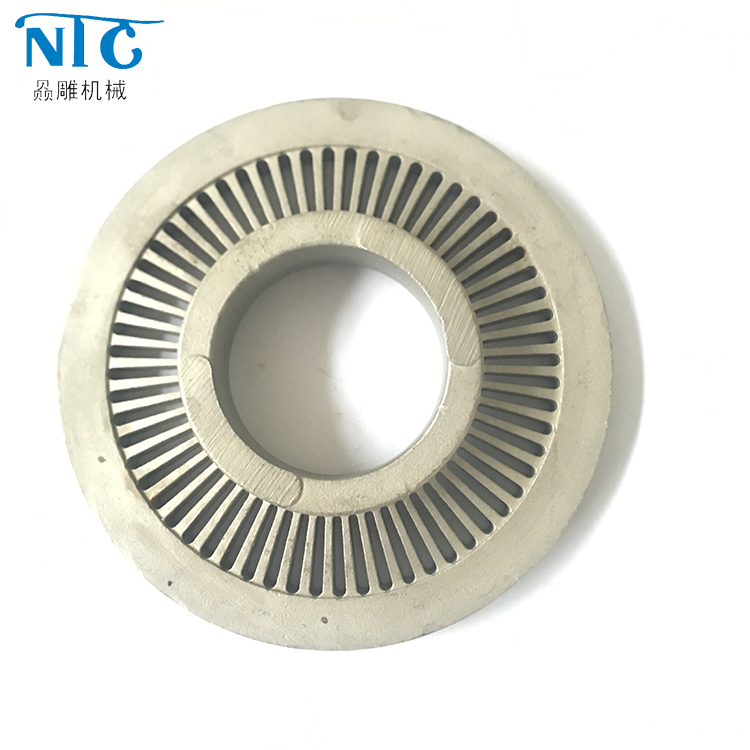
Precision cast radial-flow pump impeller.
Power Tools and Machinery Components
NTC supplies precision cast power tool levers, brackets and die-cast gearbox housings made of aluminum or zinc alloy for lightweight transmission housings. For industrial machinery, the company produces industrial sewing machine housings and structural arms, textile machinery drive brackets, guides and holders, and food machinery brackets, fittings and mixing impellers in 304 or 316 stainless steel with smooth, passivated surfaces. These components require stable dimensional consistency, bearing-seat accuracy and mounting-hole precision.
Marine, Architectural and Lock Hardware
Stainless steel marine hardware includes marine cleats and deck fittings in 304 and 316 stainless steel with satin or mirror polishing and passivation for corrosion resistance. Architectural hardware includes stainless steel door handles, hinges and brackets, while lock hardware includes precision cast lock bodies, cylinder housings and latch supports. Door control hardware includes door closer bodies in aluminum or zinc alloy die casting. The global door hardware market was valued at USD 68.4 billion in 2025, with locks holding a 34.2% segment share (Dataintelo).
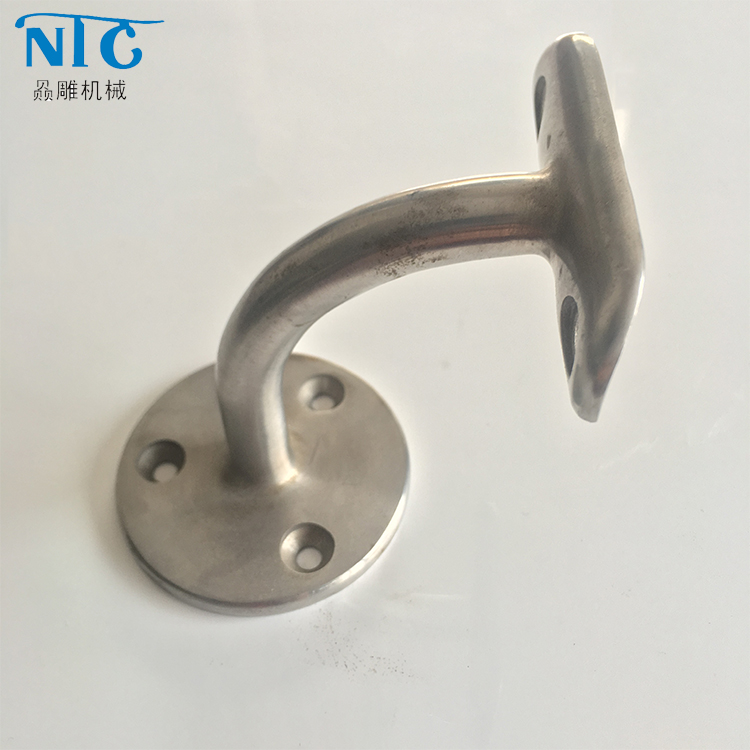
Stainless steel curved architectural door handle produced by investment casting.
Golf, Tableware, Furniture and Construction Hardware
Beyond mechanical components, NTC casts golf club heads (irons, putters and hybrids) in stainless steel, sports equipment joint connectors, stainless steel tableware handles and connectors, furniture connectors, hinges and mounting brackets, and construction anchors and structural connectors. These parts share the same investment casting framework: custom geometry from drawings or samples, CNC machining of critical interfaces, and decorative finishing such as satin or mirror polishing.
Casting Process Comparison at NTC
The table below compares the three main casting processes available at NTC for custom cast parts, based on NTC's published product specifications.
| Process | Typical Materials | Example Parts | Tolerance and Surface | Wall / Weight Range |
|---|---|---|---|---|
| Silica-sol investment casting | Carbon steel (1020–1050, WCB), alloy steel (4140, 4150, 4340, 8620), stainless steel (201, 303, 304, 316, 316L, 17-4PH, 410, 420, 440C), brass/bronze | Automotive suspension brackets, lock bodies, pump impellers, golf heads, tableware handles, textile guides | Tolerance grade T4–CT7; surface roughness Ra 1.6–Ra 6.3 | 2 mm standard wall; 1 mm local; 2 g–550 g parts |
| Aluminum / zinc alloy die casting | ADC12, A380, Zamak 3, Zamak 5 | Door closer bodies, power tool gearbox housings, sewing machine housings | Confirmed per product structure and approved drawings; Ra 1.6–Ra 6.3 where applicable | Customized per drawing |
| Sand casting (for engineering housings) | Carbon steel, alloy steel, ductile iron (QT450-10), stainless steel | Engineering machinery bearing housings, pump housings, flange housings | Critical bearing and mounting dimensions finished by CNC machining per approved drawings | Customized according to product size and structure |
Process selection is made according to product size, material, structure and order requirements.
Frequently Asked Questions
What quality systems and inspection methods does NTC use for cast parts?
NTC operates its Shanghai factory with an advanced quality control system certified to ISO 9001:2000 and ISO 14001:2015. Detection equipment includes a CMM, spectrum analyzer, Brinell hardness tester and projector. Before shipment, NTC inspects material composition, critical dimensions, hole positions, concentricity, flange flatness, sealing surfaces and appearance according to approved drawings. Pressure testing, leak testing, hardness testing and assembly-fit inspection can be arranged when specified. Applicable standards include ASTM, DIN, BS, JIS, ISO and customer-specified technical requirements.
What casting processes and materials are available for custom cast parts?
NTC offers silica-sol investment casting, aluminum or zinc alloy die casting, and sand casting. The process is selected according to product size, material and structure. Materials available include carbon steel (1020, 1045, WCB and related grades), alloy steel (4140, 42CrMo, 8620 and related grades), stainless steel (304, 316, 316L, 17-4PH and related grades), ductile iron (QT450-10), aluminum and zinc alloys (ADC12, A380, Zamak 3/5), brass and bronze. Precision investment cast parts typically achieve tolerance grade T4–CT7, surface roughness Ra 1.6–Ra 6.3, and 2 mm minimum wall thickness.
Which industries and applications use NTC cast parts?
NTC cast parts are used in auto parts, fluid and chemical equipment, marine hardware, food and medical machinery, building hardware, valves and pipes, fire-fighting equipment, sports equipment, instruments and meters, aerospace and petroleum equipment. Representative products include automotive suspension brackets, motorcycle footrest brackets, pump housings and impellers, valve bodies, flowmeter bodies, lock bodies, door closer bodies, architectural door handles, textile machinery guides, industrial sewing machine housings, power tool gearbox housings, golf club heads, tableware handles and furniture hardware.
What factors affect the cost of custom cast parts?
Cost drivers for custom cast parts include material grade, casting process, part complexity, dimensional tolerance, machining content, heat treatment, surface finish, tooling and order quantity. For precision investment casting, complex geometry such as internal passages and thin walls can be produced near-net-shape, which may reduce machining cost. NTC supports prototype development, sample verification, trial orders, small-batch production and stable volume production, allowing buyers to manage cost during each development stage before committing to volume.
How can I get a sample or quote for custom cast parts from NTC?
To request a sample or quotation, send customer-approved 2D drawings, 3D models or physical samples to NTC. The engineering team will confirm material grade, casting process, machining, heat treatment and surface finish requirements. NTC supports prototype development, sample verification and trial orders before volume production. Contact Stanley Yang, General Manager, at Stanley770826@ntcmachine.com or WhatsApp +86 186 2180 6400, or visit www.shntcmachinery.com and www.shntcmachine.com. You can also download the 2026 NTC company brochure (PDF).
Request a Cast Parts Quote or Sample
SHANGHAI NTC TECHNOLOGY CO., LTD. (NTC) is a precision casting manufacturer in Shanghai, China. Contact Stanley Yang (GM) at Stanley770826@ntcmachine.com, call or WhatsApp +86 186 2180 6400, or send drawings to No. 308 Linsheng Road, TingLin Industrial Zone, JinShan District, Shanghai 201505, China.
www.shntcmachinery.com | www.shntcmachine.com
Download the 2026 NTC company brochure (PDF).
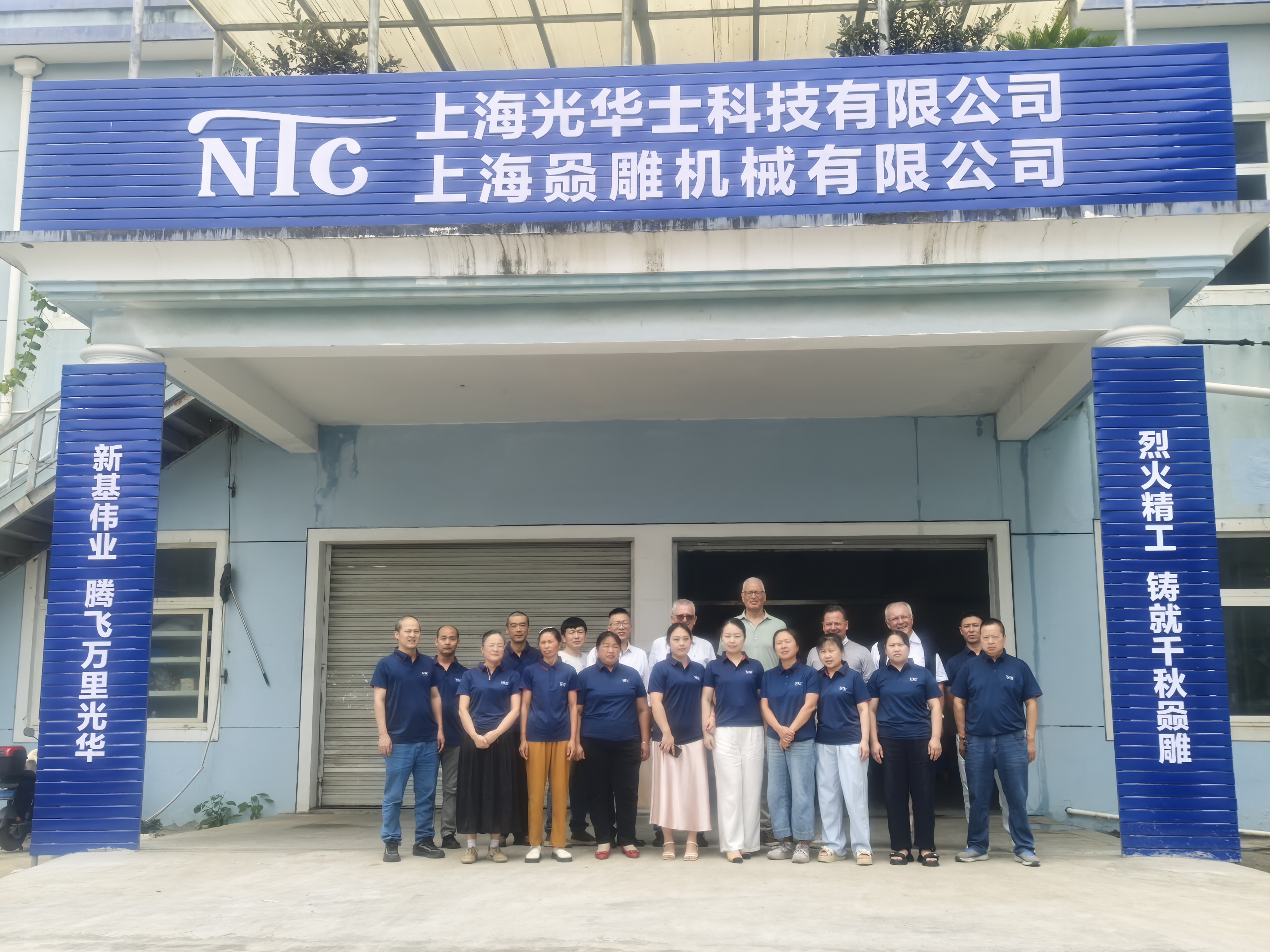
NTC Shanghai employees with visiting German clients at the factory gate.
Conclusion
Cast parts are an efficient route to producing complex metal components for OEM applications that require complex geometry, dimensional repeatability and material integrity. NTC provides a complete in-house chain, including silica-sol investment casting, die casting and sand casting, CNC machining, heat treatment, surface finishing and inspection, in a factory certified to ISO 9001:2000 and ISO 14001:2015. With an annual output of 1,500,000 units and export coverage of Europe, America and Asia, NTC supports buyers from prototype to volume production. To begin a cast parts project, submit drawings or samples to NTC and request a quotation.