
Cast Parts: Types, Materials & OEM Casting Guide
What Are Cast Parts? A Buyer’s Guide to OEM Precision Cast Components
SHANGHAI NTC TECHNOLOGY CO., LTD. (NTC) is a precision casting and trading company based in Shanghai, China, that supplies custom cast parts for automotive, fluid control, food machinery, textile machinery, building hardware, and other industrial applications. This guide explains what cast parts are, what materials and processes NTC uses, and how OEM buyers can move from drawings and samples to inspected, finished components.
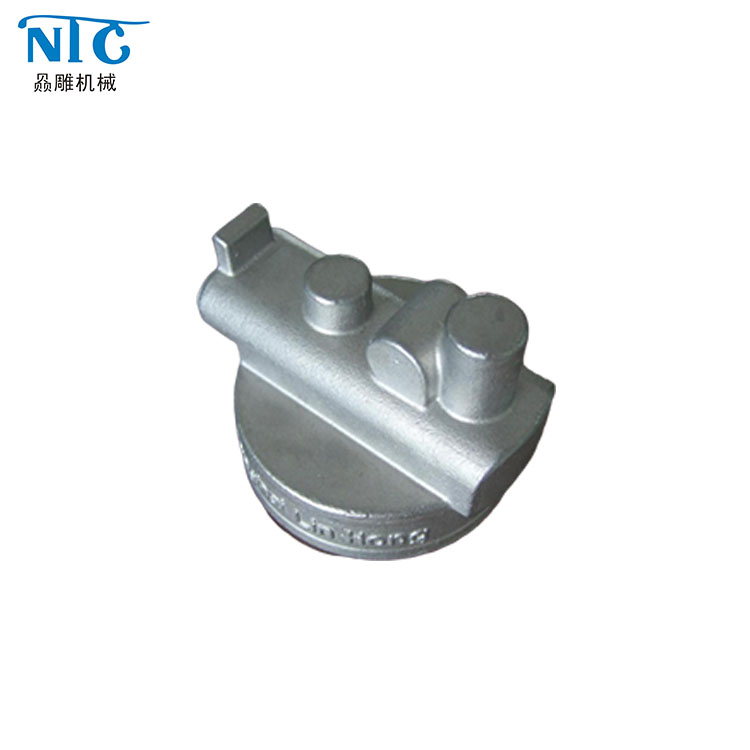
What Are Cast Parts?
Cast parts are metal components formed by pouring molten metal into a mold or by injecting molten metal into a die, then allowing the material to solidify into the required shape. In most OEM projects, a casting is only the starting point: the as-cast component then goes through CNC machining, heat treatment, surface treatment, and inspection to meet the approved drawing.
At NTC, cast parts are treated as custom engineering components rather than standard catalog items. The company’s production series include auto parts, golf heads, vacuum parts, valve accessories, kitchen equipment accessories, dishwashing equipment accessories, spinning machine accessories, door accessories, scooter parts, and other industrial and civil products.
Why Buying Cast Parts Is Difficult
Purchasing cast parts can be difficult for four main reasons:
- Material grades must match the operating environment and mechanical requirements.
- Cast geometry must be designed for a specific process, such as investment casting, die casting, or sand casting.
- Critical dimensions such as sealing surfaces, bores, threads, and mounting interfaces require CNC machining after casting.
- Quality control depends on inspection methods such as material composition analysis, dimensional measurement, hardness testing, and in some cases pressure or leakage testing.
An integrated supplier can reduce this risk by managing drawing review, mold manufacturing, casting, machining, finishing, and inspection under one quality system.
Industry Background: Investment Casting, Die Casting, and Sand Casting
Investment casting, also known as lost-wax casting, is a widely used precision casting process for parts with complex shapes, internal passages, and tight dimensional requirements. In this process, a wax pattern is covered with ceramic shell material; after the shell hardens, the wax is removed, and molten metal is poured into the resulting cavity.
NTC applies silica-sol investment casting as its main precision casting process. For parts with different material, size, or volume requirements, NTC also selects die casting or sand casting. For example, precision die-cast power tool gearbox housings can be produced in aluminum or zinc alloy, while larger engineering-machinery bearing and pump housings can be produced by sand casting in carbon steel, alloy steel, ductile iron, or stainless steel.
NTC Capability Overview
SHANGHAI NTC TECHNOLOGY CO., LTD. was founded in 2022 and operates a 2,000-square-meter factory in Shanghai, China. The team includes 20 employees and 5 engineers. NTC reports an annual output of 1,500,000 units, with 85% of products exported to Europe, America, and Asia.
| Capability | NTC data |
|---|---|
| Company name | SHANGHAI NTC TECHNOLOGY CO., LTD. |
| Founded | 2022 |
| Factory area | 2,000 m² |
| Employees | 20 |
| R&D engineers | 5 |
| Annual output | 1,500,000 units |
| Export ratio | 85% |
| Main markets | Europe, America, Asia |
| Quality system | ISO 9001:2000 and ISO14001:2015 |
| Inspection equipment | CMM, spectrum analyzer, Brinell hardness tester, projector |
| Factory location | No. 308 Linsheng Road, TingLin Industrial Zone, JinShan District, Shanghai 201505, China |
| Airport access | 50–60 kilometers from Shanghai Pudong International Airport and Hongqiao International Airport |
Materials and Technical Specifications
NTC supports custom material selection according to the application. Common choices in its product data include carbon steel, alloy steel, stainless steel, aluminum alloy, zinc alloy, brass, bronze, and ductile iron. Representative grades include carbon steel 1020, 1025, 1030, 1040, 1045, and 1050; alloy steel 4140, 4150, 4340, 8620, and GS-25CrMo4; austenitic stainless steel 201, 303, 304, 316, 316L, 1.4581, SCS14, and SCS16; and hardening stainless steel 17-4PH, 410, 420, and 440C.
| Parameter | NTC specification |
|---|---|
| Part weight | 2 g–550 g for applicable investment-cast components; larger components reviewed by product structure |
| Casting accuracy | Tolerance grade T4–CT7 for applicable investment-cast parts |
| Surface roughness | Ra 1.6–Ra 6.3 depending on casting, machining, and finishing requirements |
| Minimum wall thickness | 2 mm standard; 1 mm available for limited local areas subject to process review |
| Fillet requirements | Minimum outer radius ≥0.3 mm; minimum internal fillet ≥0.5 mm |
| Blind-hole capability | Maximum blind-hole depth 30 mm for a 10 mm diameter hole |
| Thread options | Metric, BSP, NPT, UNF, and customer-specified thread standards |
| Heat treatment | Annealing, normalizing, quenching, tempering, solution treatment, carburizing, and other processes |
| Surface treatment | Shot blasting, pickling, passivation, polishing, black oxide, plating, painting, powder coating, galvanizing |
| Applied standards | ASTM, ICI, BS, DIN, JIS, ISO, and customer-specified technical standards |
Step-by-Step Custom Cast Parts Process at NTC
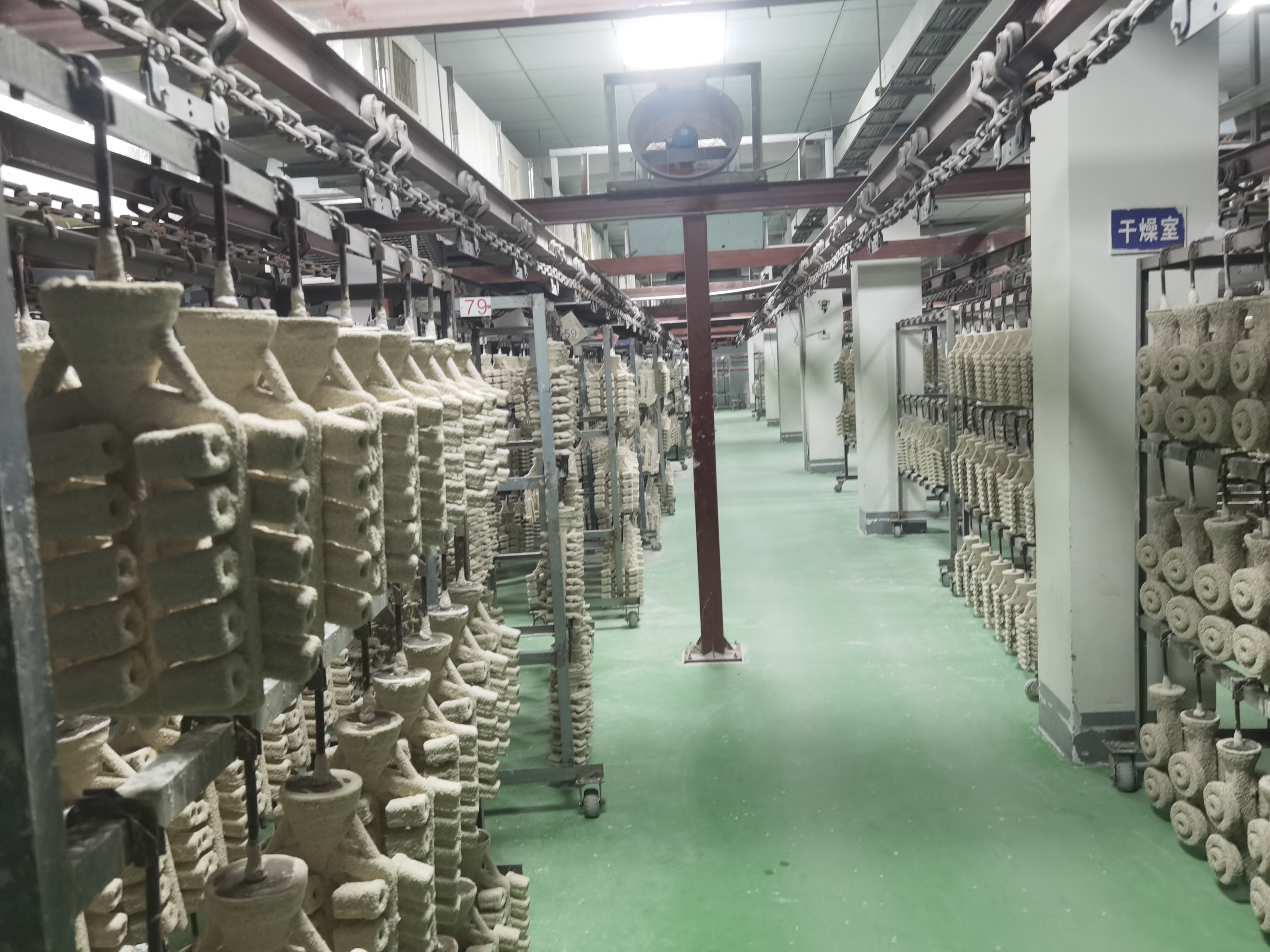
- Design input. Provide customer-approved 2D drawings, 3D models, or physical samples.
- Material and process selection. NTC selects the material grade and the casting process according to geometry, application, and quantity.
- Mold manufacturing. In-house mold manufacturing supports custom geometry and product development.
- Investment casting. For complex precision parts, wax patterns are assembled, coated with ceramic shell, dewaxed, and filled with molten metal.
- Fettling and as-cast inspection. Gates, runners, and flash are removed; castings are checked for surface defects and dimensions.
- CNC machining. CNC turning, milling, drilling, boring, reaming, tapping, and grinding are applied to critical features.
- Heat treatment. Annealing, normalizing, quenching, tempering, solution treatment, or carburizing can be applied when specified.
- Surface treatment. Shot blasting, pickling, passivation, polishing, plating, black oxide, painting, powder coating, or galvanizing can be applied.
- Inspection and testing. Material composition, dimensions, hardness, surface quality, and appearance are checked; pressure or leakage testing can be arranged when specified.
- Assembly and packaging. Press fitting, threaded assembly, insert installation, subassembly, and customer-specified packaging are available.
Industry Applications for NTC Cast Parts
NTC’s cast parts are used across a broad range of industries. The list below is based on NTC’s product portfolio and covers the main procurement categories.
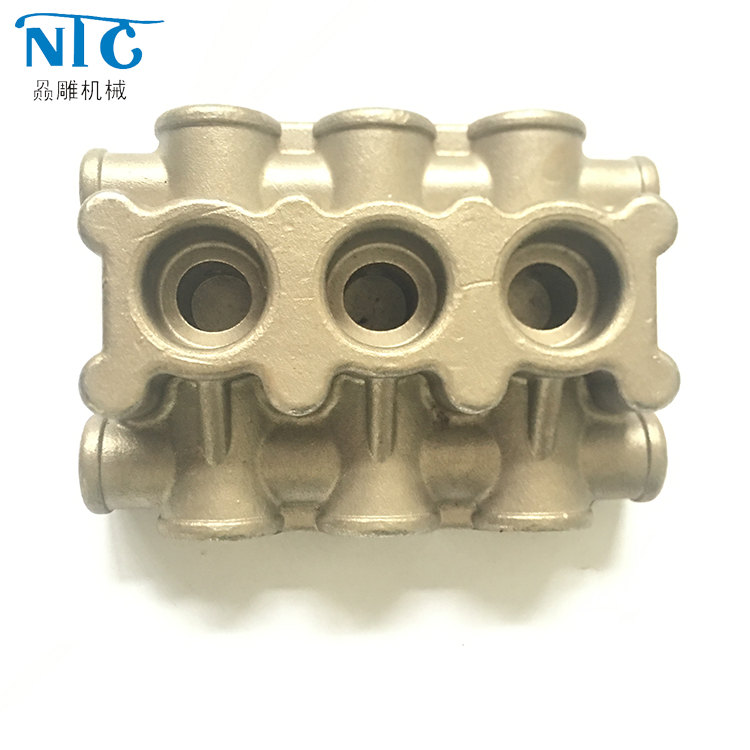
- Auto part castings and automobile/motorcycle castings. Automotive investment cast parts and motorcycle footrest bracket castings in carbon steel, stainless steel, or alloy steel for drivetrain, chassis, suspension, and structural components.
- Power tool components castings. Precision investment cast power tool levers and brackets, plus die-cast gearbox housings in aluminum or zinc alloy.
- Stainless steel marine hardware castings. Marine cleats and deck fittings in 304 or 316 stainless steel.
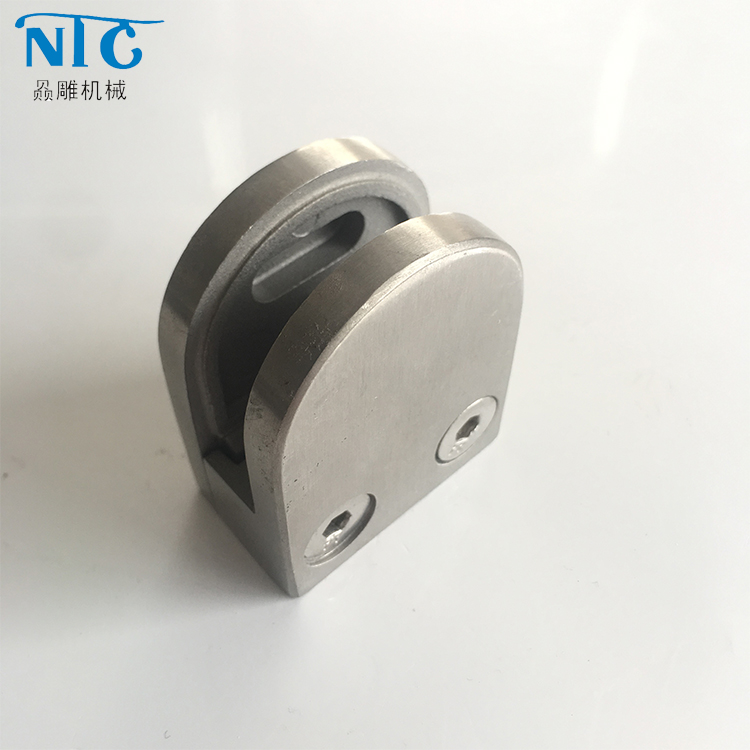
- Stainless steel architecture and daily-used hardware castings. Architectural hinges, brackets, and door handles in austenitic stainless steel.
- Copper alloy castings. Brass and bronze valve bodies and electrical connector components with optional plating.
- Fluid equipment parts. Pump impellers, pump housings, valve bodies, flowmeter bodies, pipe fittings, and flanges.
- Food machinery parts. Stainless steel brackets, fittings, and food-processing impellers.
- Tableware hardware. Stainless steel handles, connectors, and support components.
- Sport facility parts. Sports equipment joint connectors and golf club heads.
- Construction hardware. Anchors, mounting brackets, and structural connectors.
- Furniture hardware. Connectors, hinges, mounting brackets, and locking components.
- Industrial sewing machine parts. Housings, structural arms, brackets, and mounting components.
- Door control fittings and lock hardware. Door closer bodies, control arms, lock bodies, cylinder housings, and latch components.
- Flowmeter accessories. Flowmeter sensor housings, measuring bodies, flanges, and threaded connectors.
- Mechanical parts and engineering machinery parts. Custom mechanical housings, hydraulic valve bodies, and bearing or pump housings.
- Stainless steel pipe and valve castings. Pipe fittings, flanges, valve bodies, and camlock couplings.
- Textile machinery parts. Guide blocks, holders, drive brackets, and housings for spinning and weaving equipment.
Casting Process Comparison
| Casting process | Typical NTC products | Typical materials | Selection basis |
|---|---|---|---|
| Silica-sol investment casting | Flowmeter bodies, pump impellers, lock bodies, pipe fittings, furniture connectors | Carbon steel, alloy steel, stainless steel, brass, bronze | Complex geometry, internal passages, precision tolerance requirements |
| Die casting | Precision die-cast power tool gearbox housings, door closer bodies | Aluminum alloy, zinc alloy | Lightweight housings, dimensional stability, stable volume production |
| Sand casting | Engineering-machinery bearing and pump housings | Carbon steel, alloy steel, ductile iron, stainless steel | Larger bearing, pump, and transmission housings |
For applicable precision-cast components, NTC’s investment casting data lists part weight from 2 g to 550 g, tolerance grade T4–CT7, surface roughness Ra 1.6–Ra 6.3, minimum wall thickness 2 mm standard, and maximum blind-hole depth 30 mm for a 10 mm hole diameter. Larger parts are reviewed by product structure and may use sand casting or another suitable process.
Quality Control and Buyer Proof Points
NTC operates an advanced quality control system using CMM, spectrum analyzer, Brinell hardness tester, and projector. The company holds ISO 9001:2000 and ISO14001:2015 certifications. In its company profile, NTC states that all employees pursue the “credibility first, quality first, wholehearted service” principle.
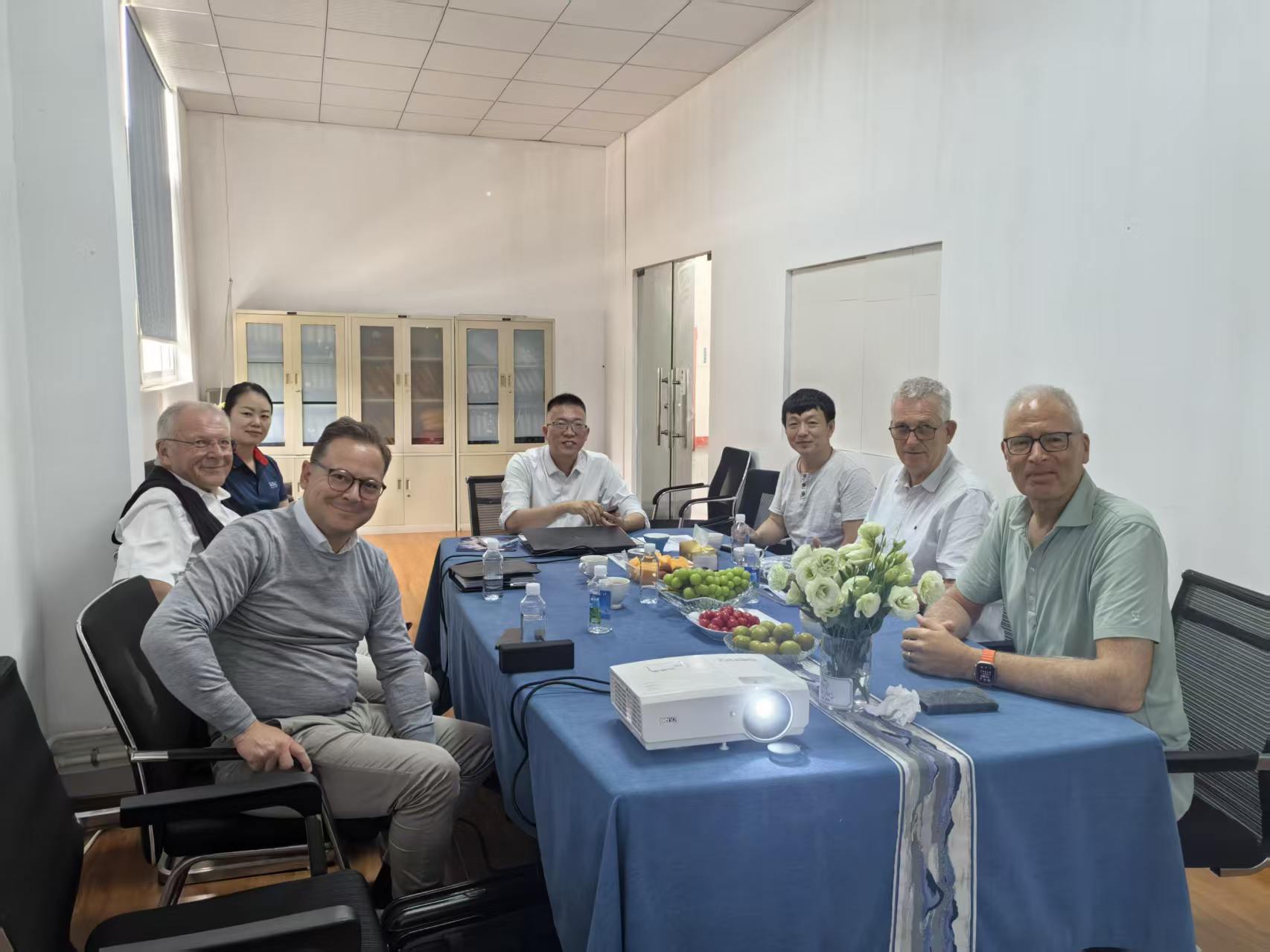
Overseas customers from Europe and the United States, Southeast Asia, Japan, and South Korea, as well as domestic high-quality customers, have purchased from NTC and visited its Shanghai factory for project negotiation and workshop inspection. The factory’s location, 50–60 kilometers from Shanghai Pudong International Airport and Hongqiao International Airport, supports convenient access by sea, railway, and air.
Decision Criteria for Procurement
- Submit approved 2D drawings, 3D models, or physical samples.
- Define the required material grade and applicable standard, such as ASTM, DIN, BS, JIS, ISO, or customer-specified requirements.
- Identify critical dimensions, tolerances, wall thickness, and surface finish.
- Specify secondary operations: CNC machining, heat treatment, surface treatment, and assembly.
- Specify inspection and testing needs, including material composition, hardness, dimensions, pressure, or leakage testing.
- Confirm production support: prototype, sample, trial order, small batch, or stable volume production.
Honest Limitation to Consider
NTC’s standard investment casting range is most suitable for components from 2 g to 550 g. Larger components, such as engineering-machinery bearing and pump housings, are assessed separately and may be manufactured by sand casting or another suitable process. This limitation should be checked at the drawing-review stage before quoting.
Frequently Asked Questions
What are cast parts?
Cast parts are metal components produced by pouring or injecting molten metal into a mold or die, then finishing the component to drawing requirements. SHANGHAI NTC TECHNOLOGY CO., LTD. (NTC) supplies custom cast parts using silica-sol investment casting, die casting, or other suitable processes, with CNC machining, heat treatment, surface treatment, and inspection available.
What materials and standards can be used for custom cast parts?
NTC offers carbon steel, alloy steel, stainless steel, aluminum alloy, zinc alloy, brass, bronze, and ductile iron options. Representative grades in NTC’s product data include carbon steel 1020–1050, alloy steel 4140/4150/4340/8620/GS-25CrMo4, austenitic stainless steel 201/303/304/316/316L/1.4581/SCS14/SCS16, and hardening stainless grades 17-4PH/410/420/440C. Parts can be produced to ASTM, ICI, BS, DIN, JIS, ISO, or customer-specified standards.
What casting and machining capabilities does NTC provide?
NTC uses silica-sol investment casting as its primary precision casting process and also applies die casting and sand casting depending on material, structure, and order requirements. After casting, NTC can perform CNC turning, milling, drilling, boring, reaming, tapping, grinding, heat treatment, surface treatment, assembly, and inspection.
What part size, tolerance, and surface finish can NTC achieve?
For applicable investment-cast components, NTC product data lists part weight 2 g–550 g, tolerance grade T4–CT7, surface roughness Ra 1.6–Ra 6.3, minimum wall thickness 2 mm standard with 1 mm possible in limited local areas, and maximum blind-hole depth 30 mm for a 10 mm diameter hole. Critical dimensions can be finished by CNC machining.
Can I get prototypes, samples, or trial orders before volume production?
Yes. NTC supports prototype development, sample verification, trial orders, small-batch production, and stable volume production. All parts are manufactured according to customer-approved 2D drawings, 3D models, or physical samples.
How do I request a quote or start a cast parts project?
Contact NTC with drawings, 3D models, or physical samples and specify material grade, quantity, standards, machining, and finishing requirements. You can reach GM Stanley Yang at Stanley770826@ntcmachine.com, by WhatsApp at +86 186 2180 6400, or through www.shntcmachinery.com and www.shntcmachine.com. The 2026 NTC company brochure is also available for download.
Conclusion
Cast parts are an efficient way to produce complex metal components when material, casting process, machining, finishing, and inspection are managed as one system. SHANGHAI NTC TECHNOLOGY CO., LTD. provides this integrated approach for OEM buyers across automotive, fluid equipment, food machinery, textile machinery, construction, furniture, marine, power tools, locks, door control, and other industries.
If you are evaluating an OEM cast parts supplier, start by sending your approved drawing or sample to NTC. The company can confirm material selection, casting process, and production support during the quotation phase.
SHANGHAI NTC TECHNOLOGY CO., LTD. (NTC)
Contact: Stanley Yang, GM
Email: Stanley770826@ntcmachine.com
WhatsApp: +86 186 2180 6400
Websites: www.shntcmachinery.com | www.shntcmachine.com
Address: No. 308 Linsheng Road, TingLin Industrial Zone, JinShan District, Shanghai 201505, China