How to Choose Edible Mushroom Automation Equipment: Buyer's Guide for 2026
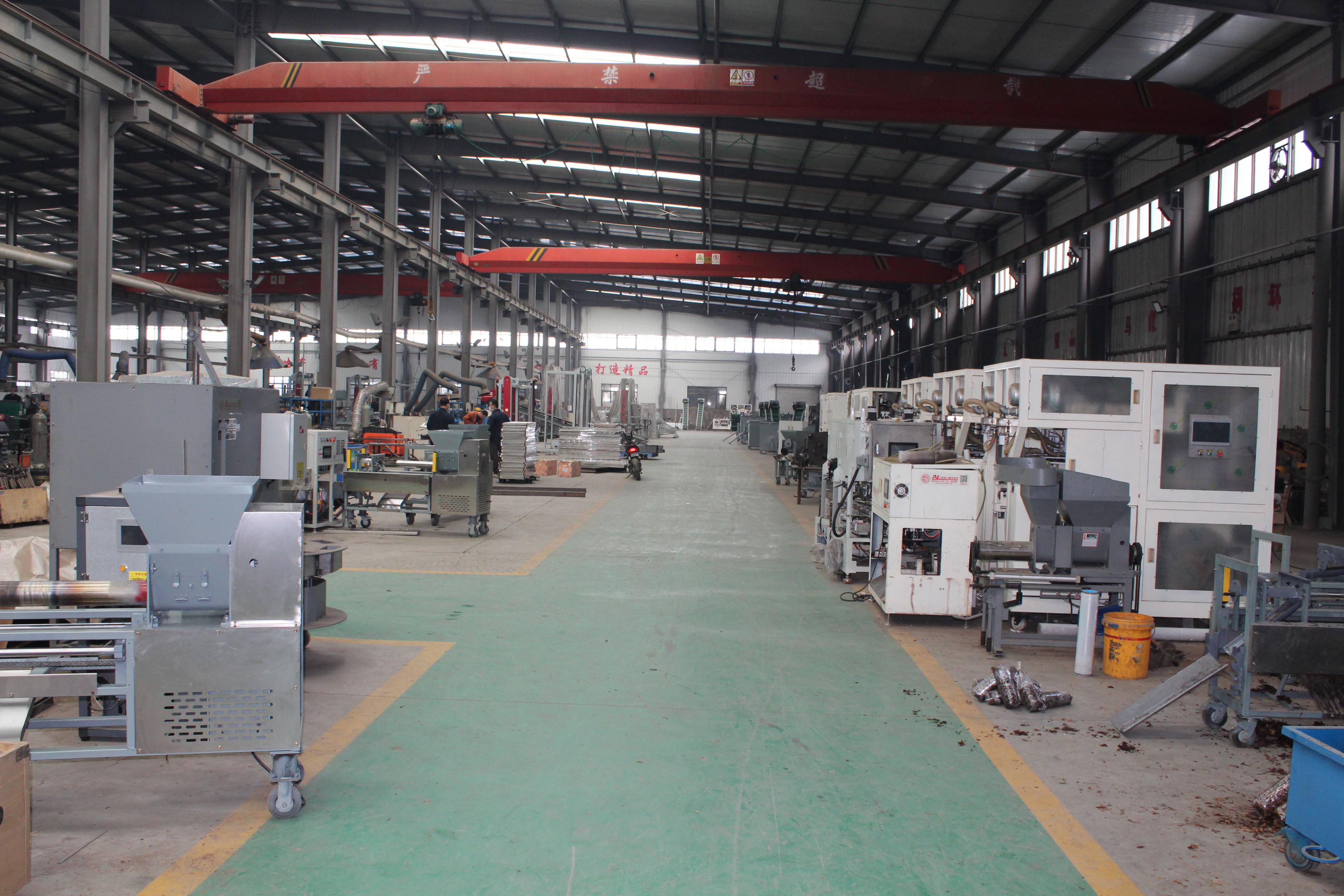
Production workshop of Changxing Edible Mushroom Machinery – the backbone of modern industrial cultivation.
How to Choose Edible Mushroom Automation Equipment: A Comprehensive Buyer's Guide for 2026
Industrial cultivation of edible mushrooms has evolved from labor-intensive manual processes to highly automated, data-driven operations. As global demand for shiitake, oyster, enoki, and morel mushrooms surges, the need for reliable edible mushroom automation equipment becomes critical. Whether you are scaling up a small farm or building a new industrial facility, selecting the right machinery is the single most important decision that affects your yield, labor costs, and long-term profitability.
This buyer's guide is designed for procurement managers, farm owners, and production engineers who are evaluating intelligent edible mushroom equipment and need a clear framework to compare suppliers, assess technical specifications, and make cost-effective choices.
What is Edible Mushroom Automation Equipment?
Edible mushroom automation equipment refers to machinery and integrated production lines used to automate the entire mushroom cultivation process—from raw material handling and substrate mixing to bagging, sterilization, inoculation, and harvesting. Key categories include:
- Substrate processing: crushers, chippers, mixers, and compost turners.
- Bagging and sealing: automatic bagging machines, tying machines, and bagging-tying integrated systems.
- Sterilization: industrial sterilization cabinets and continuous sterilizers.
- Inoculation: automatic mushroom spawn machines, punching and inoculation lines.
- Post-inoculation handling: shelving machines, basket loaders, and cultivation room control systems.
Modern lines often combine these units into a single automatic mushroom production line controlled by PLC and touch-screen interfaces, enabling one-key start and real-time monitoring.
Why Industrial Buyers are Switching to Automation
The primary drivers for adopting mushroom machinery and equipment are:
- Labor shortage: Manual bagging and inoculation are repetitive and physically demanding. Automation reduces labor requirements by up to 50–60%.
- Quality consistency: Automated bagging ensures uniform substrate density and bag weight, leading to higher and more predictable yields.
- Scalability: With production lines capable of 7,000–8,000 bags per hour (e.g., the Integrated Bagging & Tying Machine from Changxing), large farms can achieve daily outputs of 50,000–80,000 bags.
- Cost efficiency: 80% higher output and 60% lower labor cost compared to manual methods (based on independent comparatives).
Who Uses This Equipment?
Typical buyers include:
- Large-scale mushroom farms producing shiitake, oyster, enoki, and king oyster mushrooms.
- Agricultural cooperatives that centralize substrate preparation for multiple growers.
- Food processing companies integrating mushroom cultivation into their supply chain.
- Equipment distributors and turnkey solution providers in South Korea, Malaysia, Russia, Europe, and Central Asia.
What Problems Does Automation Solve?
| Common Problem | Automation Solution |
|---|---|
| Inconsistent bag weight and density | PLC-controlled auger feeding with digital weighing |
| High labor turnover and training costs | User-friendly touch interface, one-button operation |
| Contamination during inoculation | FFU laminar flow hood + UV/ozone sterilization on automatic inoculation machines |
| Slow throughput limiting production scale | Multi-station production lines (2-station, 4-station) achieving 15,000–50,000 bags/day |
| Difficulty adapting to different mushroom species | Customizable bag size, inoculation patterns, and layer counts |
Step-by-Step Selection Framework
Step 1: Define Your Production Scale and Target Mushroom Varieties
Estimate daily bag output and the species you intend to grow. For example:
- Small farm (<1,000 bags/day): consider semi-automatic machines like the Small Electromagnetic Clutch Bagging Machine (TZD-1) – 600–800 bags/h, compact size.
- Medium farm (1,000–10,000 bags/day): a 2-station or 4-station production line (e.g., Changxing's 4-Station Shiitake Bagging & Tying Line – 25,000 bags/day).
- Large industrial farm (>10,000 bags/day): fully integrated line with automatic mixing, bagging, tying, and shelving.
Step 2: Evaluate Key Technical Specifications
Look for these parameters when comparing mushroom equipment production line suppliers:
| Parameter | Recommended Range / Example |
|---|---|
| Bagging speed | 700–8,000 bags/h depending on automation level |
| Bag size compatibility | Flat width 14–22 cm, length 28–60 cm (for most species) |
| Power supply | AC380V 50Hz (three-phase) for industrial lines; AC220V for smaller machines |
| Control system | PLC touch screen with fault alarm, digital display (e.g., Xinje or Siemens) |
| Sterilization method | FFU 100-class laminar flow + UV + ozone for inoculation machines |
| Material of construction | SS304 for food-contact surfaces; carbon steel for frames |
| Repeat positioning accuracy | ±2mm (for high-end automatic shelving machines) |
Step 3: Verify Certifications and Compliance
Ensure the equipment meets international safety and quality standards. For example, Changxing's bagging & tying machine holds a CE certificate (Cert. No. M.2026.206.C135928) issued by UDEM, complying with Machinery Directive 2006/42/EC and EMC Directive 2014/30/EU. This is essential for importing into EU markets and for many Asian countries that recognize CE.
Step 4: Assess Supplier Capability and After-Sales Support
- Customization: Can the supplier adjust bag size, speed, inoculation pattern? Changxing offers ODM/R&D customization with MOQ as low as 1 unit.
- Production capacity: Monthly production of 1,000 units, lead time 30–55 days.
- Export experience: 60% export ratio to South Korea, Malaysia, Russia, Europe, Central Asia; proven track record of 20+ units per year.
- After-sales: Remote support, pre-shipment testing, 30/70 payment terms (FOB/CIF).
Step 5: Compare Total Cost of Ownership
When comparing suppliers, factor in not just the initial price but also:
- Energy consumption (e.g., power 3–10 kW typical).
- Maintenance requirements: stable operation with less manual intervention (as cited in customer feedback).
- Spare parts availability and compatibility.
- Warranty and return policy.
Real-World Use Cases
Case 1: Large Shiitake Farm in South Korea
A Korean client deployed a 4-station automatic mushroom bagging & tying production line from Changxing. The line integrates a mixer, elevator, material distributor, and automatic tying machine. Results: daily output of 25,000 bags with only 3 operators per shift, compared to 12 workers previously. Bagging speed exceeds 1,000 bags/h, and pass rate is over 97%.
Case 2: Automated Oyster Mushroom Line in Malaysia
A Malaysian mushroom cooperative adopted a 2-station line for oyster and king oyster mushroom cultivation. The line handles substrate mixing, bagging, and tying in one continuous flow. Annual export volume of similar lines to Southeast Asia exceeds 20 units, with 5 years of stable operation reported.
Frequently Asked Questions
Q: What is the minimum order quantity (MOQ) for edible mushroom automation equipment?
A: Many suppliers, including Changxing, accept orders as low as 1 unit. However, for custom production lines, MOQ may be negotiated.
Q: Can I customize a machine for specific mushroom varieties like morel or black fungus?
A: Yes. Reputable manufacturers like Changxing offer ODM customization for equipment dimensions, bag size, inoculation layers, and speed to match the substrate characteristics of different species.
Q: How do I ensure the equipment meets safety standards for my country?
A: Look for CE certification (Machinery Directive, EMC) as a baseline. Changxing's machines are CE-certified by UDEM, covering EN ISO 12100, EN 60204-1, and EMC standards.
Q: What payment and delivery terms are standard?
A: Typically 30% deposit and 70% before shipment. Delivery is FOB or CIF. Pre-shipment testing is included. For example, Changxing offers a 30/70 payment schedule and test-run before loading.
Q: What is the typical lead time?
A: For standard machines, 30–55 days depending on complexity and order volume. Custom lines may require up to 60 days.
Q: How does automated bagging compare to manual bagging in terms of cost?
A: Independent studies show automated bagging delivers 80% higher output, 50% lower labor requirements, and 60% reduction in labor costs. Maintenance is simpler with stable operation and less manual intervention.
Conclusion: Making the Right Choice
Selecting edible mushroom automation equipment is a strategic investment that directly impacts your farm's competitiveness. By following this buyer's guide—analyzing your scale, comparing technical specs, verifying certifications, and assessing supplier track records—you can confidently choose a solution that delivers consistent quality, reduces labor dependence, and scales with your business.
For procurement managers evaluating suppliers, we recommend requesting a factory tour or video demonstration of the production line in operation. Changxing Edible Mushroom Machinery, with its 2009 founding, 20,000 m² facility, and 25 R&D engineers, offers proven equipment used in 60% export markets. Contact them at nhchangxing@outlook.com or visit www.automushmachinery.com for tailored quotations and technical support.