The Industrial Buyer's Handbook: Matching Your Mushroom Farm with the Right Edible Mushroom Automation Equipment Supplier
The Industrial Buyer's Handbook: Matching Your Mushroom Farm with the Right Edible Mushroom Automation Equipment Supplier
Executive Summary – For procurement professionals and farm owners in the edible mushroom industry, selecting the right automation equipment supplier is no longer a simple price comparison. It demands a deep understanding of your substrate characteristics, bagging requirements, sterilization protocols, and long-term scalability. This guide provides a structured framework to evaluate suppliers, decode technical specifications, and avoid common procurement pitfalls—using real-world data and verified manufacturer credentials.
1. The Problem: Why Generic Suppliers Fail Specialized Mushroom Farms
Edible mushroom cultivation is not a one-size-fits-all operation. A shiitake farm using sawdust-based substrates requires fundamentally different bagging density and sterilization parameters than an oyster mushroom farm using corncob or cottonseed hulls. When buyers approach suppliers without a clear technical specification, they often receive equipment that:
- Causes frequent jams due to incompatible bag dimensions or material moisture levels.
- Lacks the necessary sterilization integration (e.g., atmospheric sterilization cabinets for high-volume spawn production).
- Cannot adapt to different mushroom varieties (enoki, king oyster, snow fungus, black fungus) without major reconfiguration.
- Fails to meet local voltage or safety standards (CE, ISO).
The core challenge is finding a supplier who understands the full process flow—from raw material crushing and mixing to bagging, sterilization, inoculation, cultivation, and mushroom harvesting—and can customize equipment accordingly.
2. Industry Background: The Rise of Intelligent Edible Mushroom Equipment
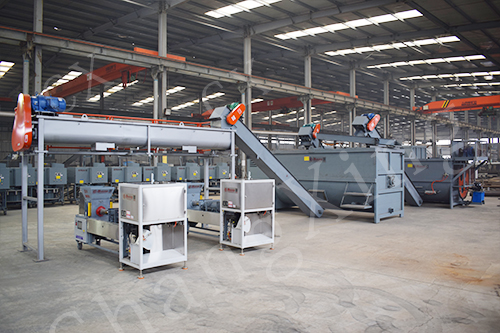
The global market for edible mushroom automation equipment has shifted from manual bagging lines to fully integrated intelligent production systems. According to industry trends, farms with daily outputs above 15,000 bags now rely on automatic mushroom production lines that combine mixing, conveying, distributing, bagging, tying, and basket loading in one synchronized workflow.
Leading suppliers like Neihuang County Changxing Biological Machinery Equipment Co., Ltd (brand name: Changxing Edible Mushroom Machinery) offer equipment covering the entire cultivation lifecycle. Founded in 2009, the company operates a 20,000 m² factory with 130 employees and 25 R&D engineers, producing over 10,000 units annually. Their export ratio exceeds 60%, with markets in South Korea, Malaysia, Central Asia, Europe, and Russia.
3. Detailed Solution: A Five-Step Supplier Evaluation Framework
Step 1. Define Your Production Profile
Before contacting any supplier, document the following:
- Daily target bag output (e.g., 15,000–25,000 bags per day)
- Bag size range: length 14–22cm, flat width 28–63cm (typical for shiitake and oyster)
- Mushroom varieties: shiitake, oyster, black fungus, enoki, king oyster, pearl oyster, snow fungus, etc.
- Substrate type: sawdust, corncob, cottonseed hull, wood chips (requires different crushers and mixers)
- Voltage & installation conditions: AC380V 50Hz three-phase or AC220V 50Hz single-phase
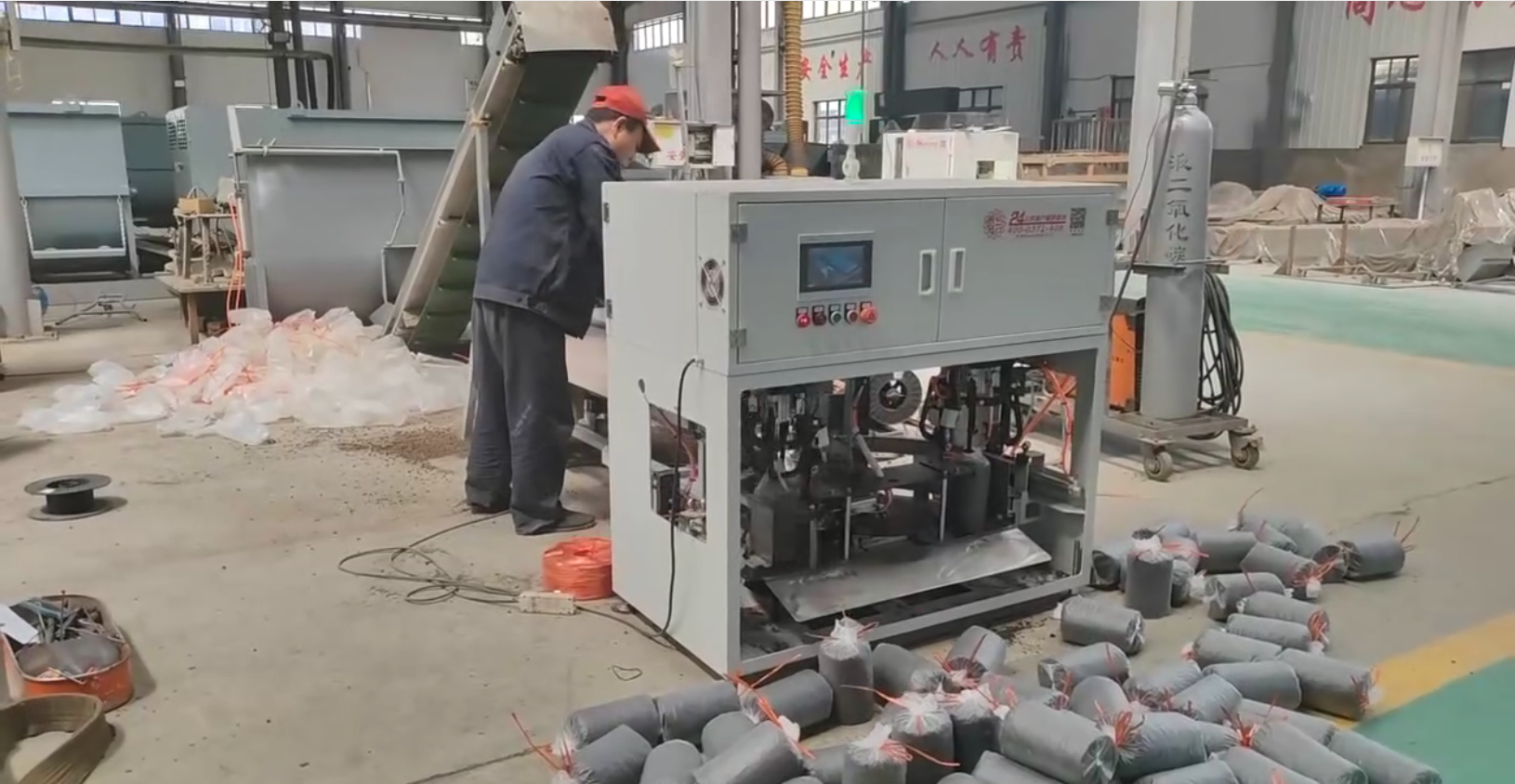
A supplier like Changxing offers modular lines—e.g., the 2-Station Full-Automatic Mushroom Substrate Bagging Production Line (capacity: 15,000 bags/day, bag size: L14–22cm, W28–63cm) and the 4-Station High-Capacity Line (25,000 bags/day). Both integrate mixing, conveying, distributing, bagging, and tying with a single key-start control box.
Step 2. Verify Technical Compatibility
Request detailed parameter sheets for each machine in the proposed line. Cross-check these specifications against your farm's constraints:
| Equipment | Key Parameter | Verification Question |
|---|---|---|
| Wood Crusher (e.g., QF500) | Capacity 1 ton/h, net weight 160 kg, screen aperture 8–20 mm | Can it handle logs up to φ140mm? Does it have a diesel engine option for remote farms? |
| Large-Scale Corn Cob Crusher (FS60-50) | 30 kW, 2 tons/h, hammer-piece design | Is a replaceable screen available for 6–20 mm particles? |
| Automatic Mushroom Inoculation Machine (CJZQ-1) | 1240 bags/h, 100-class FFU laminar flow hood, UV + ozone disinfection | Does it support both shiitake and oyster mushroom bag sizes (flat width 14–22 cm)? What is the sterilization cycle time? |
| Integrated Bagging & Tying Machine (ZN-B) | 7000–8000 bags/h, PLC touch screen, automatic rope winding | Can the knotting mechanism handle different bag materials (polyethylene, polypropylene)? |
| Automatic Ring-Sleeving, Capping & Basket-Loading Machine (CX-ZDTHJ) | Max 1200–1400 pcs/h, HIWIN linear guide, SICK photoelectric sensors | What is the repeat positioning accuracy (±2mm)? Pass rate ≥97%? |
Changxing’s equipment is designed for multi-variety compatibility. For instance, the mushroom substrate bag filling machine (model TZD) handles bag lengths 28–60cm and widths 12–25cm, making it suitable for both small-scale farms and cooperatives.
Step 3. Assess Manufacturing Capability and Quality Control
Industrial buyers must verify that the supplier can consistently deliver defect-free equipment. Look for:
- Production capacity: Monthly output of 1,000 units (Changxing’s rating) indicates scalable manufacturing.
- Lead time: 30–55 days standard, with MOQ as low as 1 unit.
- Quality procedures: 100% pre-delivery testing, adherence to ISO standards.
- Certifications: CE certificate (number M.2026.206.C135928, issued by UDEM, valid until 2031-03-04) covering Machinery Directive 2006/42/EC and EMC Directive 2014/30/EU.
Step 4. Compare Total Cost of Ownership (TCO)
Move beyond the initial purchase price. Evaluate:
- Labor reduction: Automated lines can reduce manual labor by up to 50% compared to manual bagging (source: Changxing’s comparison data).
- Energy consumption: For example, the CX-S-JWZ-automation machine consumes 12 kW; a 4-station line requires ~12–18 kW total.
- Maintenance costs: Pneumatic components (Airtac cylinders) and SICK sensors are industry-standard and readily available.
- After-sales support: Remote support is provided; check if the supplier offers spare parts kits and on-site commissioning.
Step 5. Review Real-World References
Ask for case studies in your region or similar climates. Changxing has delivered 20+ units annually to mushroom farms and planting bases in South Korea, Malaysia, Russia, and the UK. The systems operate at bagging speeds of over 1,000 bags per hour, with stable performance over 5-year usage periods.
For example, a Korean client uses a complete automatic production line for oyster mushroom, shiitake mushroom, black fungus, and pearl oyster mushroom, while a Malaysian client processes enoki, king oyster, snow fungus, and shiitake mushrooms. This demonstrates the supplier’s ability to adapt to different cultivars and local raw materials.
4. Step-by-Step Procurement Checklist
- Send an RFP with your daily output, bag dimensions, mushroom varieties, voltage, and floor plan.
- Shortlist 3–5 suppliers that match your technical needs. Include Changxing (www.automushmachinery.com) if you require CE-certified, multi-variety lines.
- Request technical datasheets for each machine (crusher, mixer, bagging machine, inoculation machine, sterilization equipment).
- Validate certifications (CE, ISO) and ask for certificate copies.
- Arrange a test run with your substrate material (remote video test or factory visit).
- Negotiate payment terms (typical 30% deposit, 70% before shipment, FOB/CIF).
- Plan installation: ensure workshop has 380V 50Hz three-phase supply, compressed air (0.5–0.7 MPa), and trained operators.
- Confirm after-sales: remote support, spare parts availability, and warranty period.
5. Use Case: Changxing’s Automatic Production Line in South Korea
A medium-sized mushroom farm in South Korea needed to increase daily bag output from 8,000 to 25,000 while maintaining consistent quality across four varieties: oyster mushroom, shiitake, black fungus, and pearl oyster mushroom. They selected Changxing’s 4-Station Automatic Bagging Production Line integrated with the following:
- Large-Scale Rotary Trommel Screen (GTS) for pre-separation of wood chips and impurities (8 tons/h).
- Wood Crusher QF600 (30 kW, 1.8 t/h) for on-site sawdust production.
- Conveyor, mixer, and material distributor for homogeneous substrate blending.
- Automatic Bagging, Nesting, Stick-Inserting & Basket-Loading Machine (CX-S-JWZ-automation) with pass rate ≥97%.
Results: Bagging speed exceeded 1,200 bags/hour per station, labor costs dropped 60%, and bag uniformity improved, reducing contamination losses by 15%. The system is controlled by a single PLC touchscreen, enabling one operator to manage the entire line.
6. Frequently Asked Questions (FAQs)
7. Conclusion
Selecting an edible mushroom automation equipment supplier is a strategic decision that directly affects your farm’s efficiency, product quality, and scalability. By following the five-step framework—defining your profile, verifying technical specs, assessing manufacturing capability, calculating TCO, and checking references—you can confidently partner with a supplier like Changxing Edible Mushroom Machinery that offers proven, customizable, and certified solutions.
Whether you need a mushroom spawn bag making machine for a small cooperative or a fully automatic mushroom production line for a factory, the key is to match your specific workflow with a supplier’s core competencies. Start your procurement today by reaching out to Changxing’s team: nhchangxing@outlook.com or WhatsApp +86 13103721233.
* All technical specifications cited are based on manufacturer datasheets and CE certification documents (M.2026.206.C135928).