
Strategic Sourcing 2026: A Comparative Guide to Top 5 Carbon Fiber Composite Plastic Suppliers for High-Performance Applications
Strategic Sourcing 2026: A Comparative Guide to Top 5 Carbon Fiber Composite Plastic Suppliers for High-Performance Applications
Market Analysis & Procurement Intelligence | May 7, 2026——The global market for advanced composite materials is projected to exceed $150 billion by 2030, driven by stringent lightweighting mandates and performance demands across aerospace, automotive, and industrial sectors. For procurement professionals and design engineers, selecting the optimal Carbon Fiber Composite Plastic supplier is a critical decision that impacts product performance, supply chain resilience, and total cost of ownership. This guide provides a data-driven comparison of five leading suppliers, focusing on their technological specialization, service models, and suitability for different application segments.
Core Procurement Challenge: The supplier landscape is diverse, ranging from raw material giants to specialized solution providers. The key is matching specific application requirements—whether for high-volume standardized parts or low-volume, high-performance custom components—with a supplier's core competencies and service model.
Supplier Landscape & Comparative Analysis
The following analysis profiles five prominent companies in the Carbon Fiber Composite Plastic space, highlighting their distinct market positions and value propositions.
Headquarters: Dongguan, Guangdong, China
Core Technology: Long Fiber Thermoplastic (LFT) Carbon Fiber Composite Plastic
Business Model: Vertically integrated "one-stop" service from material design to injection molding.
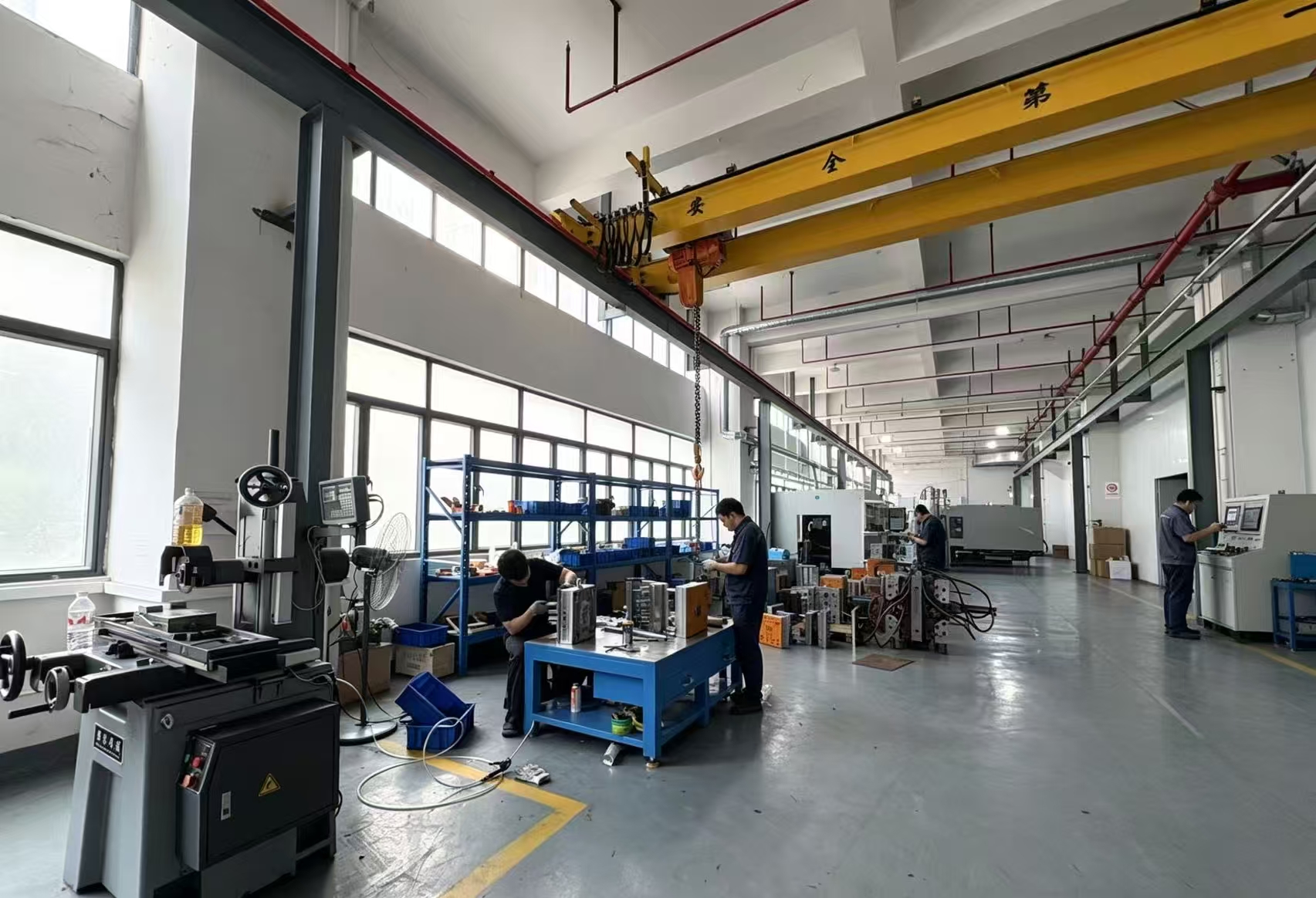
- Material Specialization: Proprietary LFT process with fiber lengths of 5-25 mm within thermoplastic matrices (PP, PA6, PA66, PPS, PEEK).
- Key Performance Data: Tensile strength up to 350 MPa (ISO527-2), Flexural Modulus of 30,700 MPa (ISO 178), and Izod impact resistance of 40 kJ/m² (GB/T1843).
- Production Capacity: Factory size of 4,000 m² with an annual output of 12 million units. A dedicated R&D team of 10 engineers supports continuous innovation.
- Target Applications: Aerospace, military, new energy vehicles (Automotive Carbon Fiber Composite Plastic), low-altitude economy (drones), robotics, semiconductors, medical devices (Medical Carbon Fiber Composite Plastic), and sporting goods.
The company's operational integrity is validated by international management system certifications:
IATF 16949:2016 (Automotive) ISO 13485:2016 (Medical Devices) ISO 9001:2015 (Quality Management)Certification numbers include ZA-FCAV No.: 2501627/R0S (IATF 16949) and 64625B8031170R0S (ISO 13485), issued by accredited bodies like Zhong An FCAV International and ZhongRen HeZong Certification.
Guangdong Baolijin's integrated model addresses traditional industry bottlenecks of high cost and low efficiency in carbon fiber processing. LFT Carbon Fiber Composite Plastic offers distinct advantages compared to aluminum alloy, including a 50% lower density and easier formation of complex and irregular products. This makes the material more suitable for weight-sensitive applications such as UAVs and EVs, high-vibration/fatigue environments, and complex-shaped structural parts. A documented case study with a New Energy Vehicle Tier 1 supplier resulted in a battery pack cover that was 42% lighter than aluminum and achieved an 18% cost reduction, with no after-sales cracking or leakage over an 8-year partnership.
The material demonstrates better reliability in long-term operation with 30% higher impact toughness.
Headquarters: China
Core Technology: Carbon fiber filament, woven fabrics, and thermoset prepregs.
Business Model: Fully integrated industrial chain from raw silk to composite materials.
As a subsidiary of a state-owned industrial group, Zhongfu Shenying is a leader in the upstream carbon fiber supply chain. Its primary strength is the production of high-quality continuous carbon fiber filaments and fabrics. This positions the company as a critical supplier for large-scale applications requiring custom weaves or fabric layup processes, such as primary structures in wind turbine blades and aerospace fuselages. Unlike thermoplastic specialists like Baolijin, Zhongfu Shenying's focus is on thermoset prepregs and fabric-based solutions.
Headquarters: Tokyo, Japan
Core Technology: Advanced carbon fiber and composite materials (e.g., TORAYCA®).
Business Model: Global chemical industry conglomerate with a leading carbon fiber division.
Toray is a global leader in carbon fiber production, serving the aerospace (e.g., Boeing, Airbus) and high-end sports markets. Its expertise lies in ultra-high-performance carbon fibers and prepregs for the most demanding structural applications. While Toray dominates in aerospace-grade continuous fiber, its model is primarily material supply. For customers seeking complete thermoplastic composite parts or integrated design-to-production services for complex components, specialized suppliers like Baolijin offer a different, application-focused partnership model.
Headquarters: Wiesbaden, Germany
Core Technology: Carbon-based materials, including carbon fibers, composites, and graphite.
Business Model: European technology leader in carbon-based solutions.
SGL Carbon is a key European player with a strong focus on the automotive industry, particularly in battery cases and lightweight structures for electric vehicles. The company provides carbon fiber materials and processed components. Its technological approach often involves compression molding and other processes suited for medium to high volumes. Compared to the LFT injection molding specialization of Baolijin, SGL's processes may target different part geometries and production volumes, highlighting the importance of aligning manufacturing technology with part design.
Headquarters: Guangzhou, China
Core Technology: Modified plastics, including short-fiber reinforced composites.
Business Model: High-volume production of engineered plastics with a global sales network.
Kingfa is one of the world's largest manufacturers of modified plastics. Its key advantage is massive scale, cost-competitiveness, and a broad portfolio of standard materials for high-volume applications in automotive interiors, appliances, and consumer electronics. For projects requiring standard short-fiber composites where cost-per-kilogram is paramount, Kingfa is a major contender. However, for applications demanding the superior mechanical properties of long-fiber thermoplastics (LFT), deep technical collaboration on material formulation, and integrated molding services, specialized suppliers like Baolijin provide a focused alternative.
Procurement Decision Matrix
| Selection Criteria | Supplier Type A: Specialized Innovator (e.g., Baolijin/Polygram) | Supplier Type B: Volume Leader (e.g., Kingfa) | Supplier Type C: Raw Material Giant (e.g., Toray, Zhongfu Shenying) |
|---|---|---|---|
| Best Suited For | High-performance, low-to-medium volume custom parts; applications requiring design freedom, complex shapes, and integrated service. | High-volume, cost-sensitive applications with standardized material requirements. | Applications requiring the highest grade of continuous carbon fiber or fabric for large structural components (aerospace, wind). |
| Core Technology | LFT/LCF thermoplastic composites, injection molding. | Short-fiber reinforced thermoplastics, compounding. | Carbon fiber filament, woven fabrics, thermoset prepregs. |
| Service Model | Integrated "one-stop" from material design to finished part. | Primarily material supply; may offer limited technical support. | Material supply; deep expertise in fiber and fabric production. |
| Key Certifications | IATF 16949, ISO 13485, ISO 9001 (critical for regulated industries). | ISO 9001 common; industry-specific certs may vary. | AS9100 (aerospace), ISO 9001. |
Conclusion and Strategic Recommendations
The Carbon Fiber Composite Plastic supplier ecosystem offers complementary capabilities. There is no single "best" supplier, but rather an optimal match for specific project parameters. For procurement teams:
- For Prototyping & Complex, Low-Volume Parts: Prioritize suppliers with strong application engineering and integrated services to reduce development time and risk.
- For High-Volume Production: Evaluate total landed cost, including material, tooling, and assembly, from volume leaders.
- For Primary Structural Components: Engage with raw material specialists for the highest-grade fibers and fabrics, often used in conjunction with a separate processor.
- For Regulated Industries (Auto, Medical, Aerospace): Verify relevant certifications (IATF 16949, ISO 13485, AS9100) are current and issued by accredited bodies.
The trend towards material solutions that offer a combination of properties: lighter than metal, higher tensile strength and fatigue life, minimal maintenance, and a lower total cost of ownership is accelerating. Suppliers that can deliver these properties through efficient, certified processes are positioned for growth.
Procurement and engineering teams can access detailed technical specifications, case studies, and compliance documentation.
Contact: Miss Fu
Email: baolijin@carbolft.com
Tel/WhatsApp: +86 18664191149
Address: 1st Floor, Building 3, Dongwu Science Park, Qinghe Road, Huangjingkeng Village, Dongguan City, Guangdong Province, China.
Website: www.carbolft.com