
Concrete Formwork Types, Systems & Supplier Guide
Concrete Formwork Types, Systems & Supplier Guide
Concrete formwork is a mold system that shapes and supports fresh concrete until it hardens. It is used for walls, columns, slabs, foundations, and other structural elements. This guide explains concrete formwork systems, compares material options, and outlines what to check when evaluating concrete formwork suppliers.
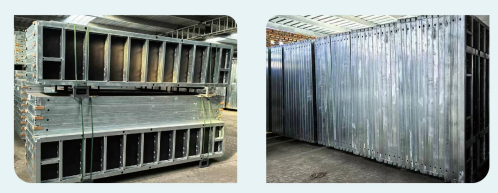
RFH heavy-duty concrete wall formwork for vertical concrete elements.
Problem Definition
Formwork is often one of the largest temporary works costs in a concrete project. Poor selection can affect concrete surface quality, construction speed, labor use, and safety. Buyers at the research stage need clear answers on material options, pressure capacity, reuse, and supplier capabilities.
Construction teams commonly ask what concrete formwork is, which formwork system fits a concrete wall or slab, and how to compare concrete formwork suppliers. This article addresses those questions using RFH product data and published market information.
Industry Background
According to Verified Market Research, the global concrete formwork market was valued at USD 8.9 billion in 2024. Coherent Market Insights estimates the combined formwork and scaffolding market at USD 56.41 billion in 2024. Fortune Business Insights reports that Asia-Pacific dominated the concrete formwork market with a 54.7% share in 2025.
Cognitive Market Research data shows that steel formwork represented 44% of all formwork units installed worldwide in 2024, timber 37%, and aluminum 19%. The top five formwork manufacturers, including PERI and Doka, held approximately 44% of the global market share in 2024. China Customs reported that China's steel product export, which includes structural components for formwork, reached 110.7 million tons in 2024.
For high-rise projects, Intel Market Research projects the aluminum formwork market will reach USD 2.48 billion by 2032, with a CAGR of 9.9%. The same source reports that aluminum formwork systems allow floor cycles as fast as 4-5 days in high-rise construction. An industry analysis report cited by Cognitive Market Research notes that automated climbing formwork systems accounted for 28% of installations in 2024, mainly in buildings over 50 stories.
Budget benchmarks reported by Formwork System Market Analysis in 2024 include timber formwork rentals at USD 10-25 per square meter, steel formwork for large projects at USD 25-60 per square meter, aluminum formwork at USD 40-75 per square meter, and plastic/modular systems at USD 20-50 per square meter. These ranges are external estimates, not supplier quotes.
Concrete Formwork Systems: A Detailed Look
A concrete formwork system usually includes panels, ties, props, and alignment accessories. Panels shape the concrete, ties resist lateral pressure, and props support the formwork during pouring and curing. Modular formwork systems are designed for repeated assembly, stripping, and repositioning.
Wall and column formwork is used for vertical elements. Slab formwork supports horizontal surfaces. Corner formwork closes internal and external corners. Light-duty systems are intended for lower concrete pressures or crane-free handling, while heavy-duty systems are designed for larger walls and foundations.
Supplier Focus: RFH Concrete Formwork
RIZHAO FENGHUA SCAFFOLDINGS CO., LTD. (RFH) is a manufacturer and supplier of scaffolding and formwork equipment, from parts to full assemblies. Established in 1953, RFH is based in Rizhao, Shandong Province, China. The company employs approximately 260 staff and operates a manufacturing facility covering 80,000 square meters, including 40,000 square meters of building area.
RFH produces ten types of formwork, including aluminum alloy formwork, steel heavy-duty formwork, light-duty formwork, multi-formwork, column formwork, and adjustable shoring props. The company's main products include concrete formwork and formwork systems. All RFH products are exported, with current sales to 126 countries and regions including Asia, Europe, America, and Oceania.
FW00A – Concrete Formwork
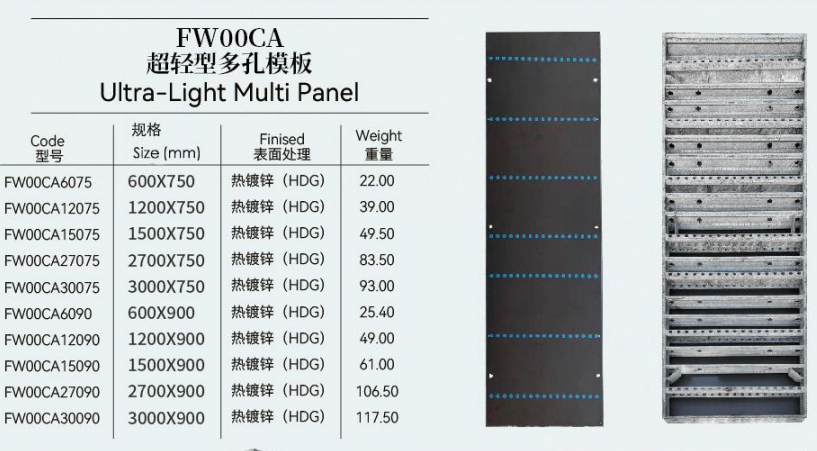
FW00A is a concrete formwork in the wall, column, and corner formwork category. It is intended for construction, residential building, and commercial construction. The frame is made from RFH Steel S420. The profile is 120 x 60 x 2.5 mm and the surface is hot-dip galvanized. The permissible concrete pressure is up to 80 kN/m². The back cover is 18 mm European birch plywood or plastic composite sheet, which improves water resistance and the concrete surface finish.
FW00A is available in heights from 0.6 m to 3.3 m and widths from 0.3 m to 2.4 m. Other sizes are available. RFH states that all accessories are fully compatible with the original European trio system.
FW00B – Steel Concrete Formwork
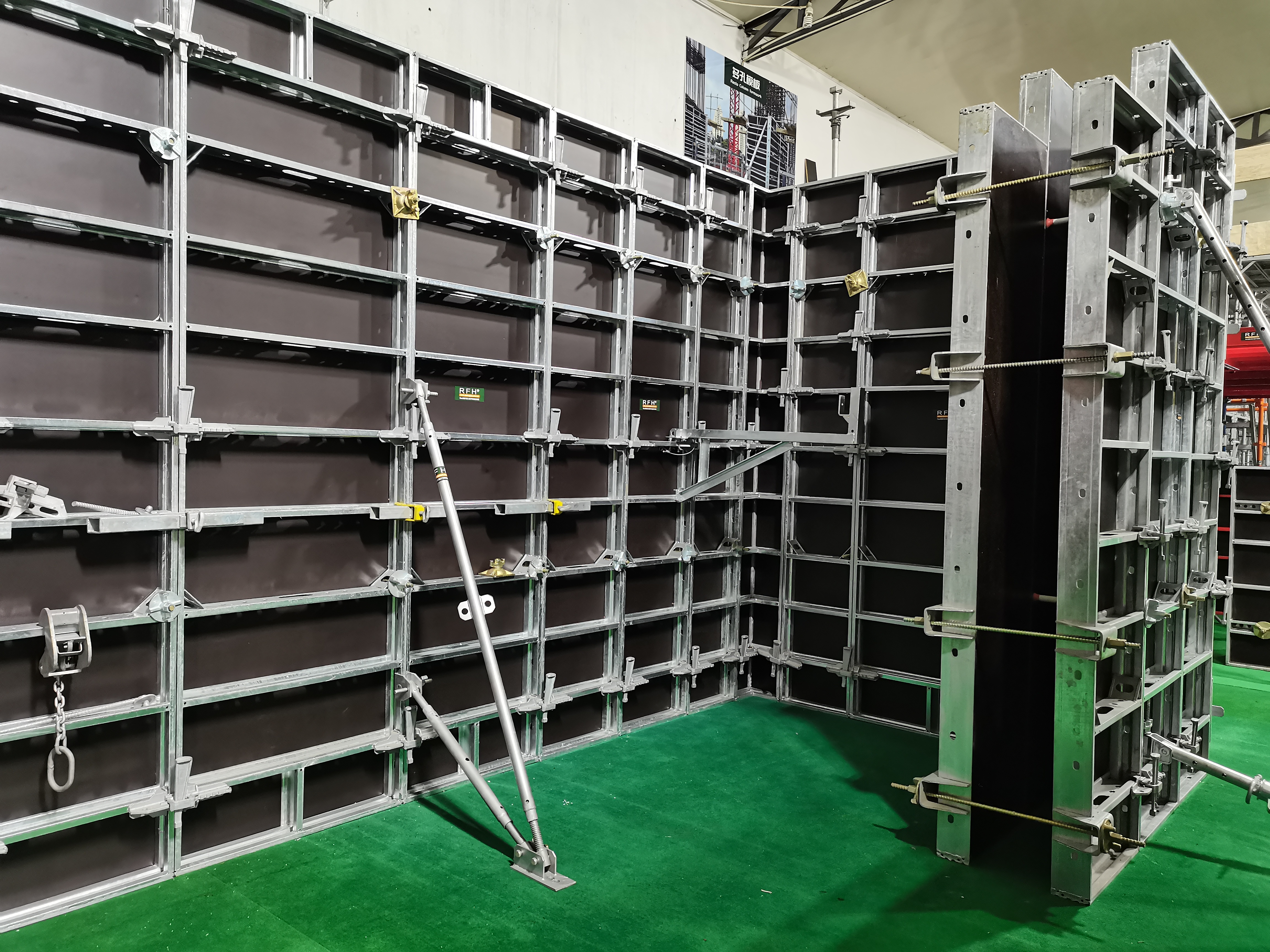
RFH light-duty steel concrete formwork for walls and columns.
FW00B is a light-duty steel wall and column formwork. It is made from S420 steel. The profile is 121 x 20 x 1.8 mm and the surface is hot-dip galvanized. The formwork can resist a maximum concrete pressure of 60 kN/m². The panel face is 15 mm film-faced birch plywood.
FW00B can form walls, columns, corners, and shafts using standard panels. It is suitable for construction, residential building, and commercial construction industries. Height options include 3 m, 2.7 m, 1.5 m, and 1.2 m; width options include 2.4 m and sizes from 0.2 m to 0.9 m.
FW00C – Concrete Wall Formwork
RFH concrete wall formwork with steel frame and plywood or PP board surface.
FW00C is a concrete wall formwork with birch plywood or PP board. It is made from S420 steel with a profile size of 91.6 x 20 x 2 mm and a hot-dip galvanized surface. Panel heights include 1.2 m, 1.5 m, 2.7 m, and 3.0 m; widths range from 0.3 m to 0.9 m.
The FW00C system is designed for rapid assembly. The Frami clamp connects panels with a single hammer blow, and self-aligning connectors reduce the need for extra stiffening.
FW00D – Aluminum Concrete Formwork
RFH aluminum concrete formwork for slab and high-cycle forming.
FW00D is an aluminum concrete formwork classified as an aluminium shutter and adjustable aluminium shutter. It is made with 6005-T6 aluminum alloy frames and 11 mm Baltic birch plywood panels bonded with phenol-formaldehyde resin. It is intended for construction, residential and commercial buildings, infrastructure and high-rise projects, including airport piers and high-rise towers.
The FW00D system includes modular sizes from 900 x 300 mm to 1800 x 1800 mm. A 180 x 120 cm panel covers 2.16 m² and weighs less than 34 kg. The 180 x 180 cm giant panel covers 3.24 m². For a simple setup, only panels and props are required. Assembly and stripping times are estimated at 0.20-0.40 h/m².
FW00D can form flat and inclined slabs, ramps, and drains with an inclination of up to 8%. A battery-powered lifting device pneumatically positions 1.80 m x 1.80 m panels, making handling safer for slabs up to 4.35 m high. According to Intel Market Research, aluminum formwork systems are associated with floor cycles as fast as 4-5 days in high-rise construction.
Manufacturing and Quality Control at RFH

Rizhao Fenghua factory area.
RFH is a high-tech enterprise recommended by the Shandong Provincial Government. The company has ten production workshops for cold bending, punching, welding, steel casting, electrostatic spraying, and forging. Production lines include four cold bending forming equipment units, twelve welding robots, six automatic welding assembly lines, one formwork profile forming assembly line, and five semi-automatic forging assembly lines. The R&D team consists of 20 engineers.
RFH operates a mechanical test laboratory and a chemistry test laboratory. Product quality is strictly controlled according to the ISO9001 quality management system. Welding is controlled according to the European standard EN1090, and the company has obtained the European standard certificate. Acceptance criteria follow international standards BS1139 and EN74, and the company has obtained 22 relevant certificates such as EN1065, EN74, and CE. RFH can undertake processing based on client design drawings and samples.
How to Choose a Concrete Formwork System and Supplier
- Define the structure type. Determine whether the formwork will be used for walls, columns, corners, slabs, foundations, or a combination of elements.
- Estimate the concrete pressure. Verify the rated pressure of the formwork system. RFH FW00A is rated up to 80 kN/m², while FW00B is rated at 60 kN/m².
- Select the panel material. Compare aluminum, steel, timber, and plastic/modular systems using load capacity, weight, reuse, and reported price benchmarks.
- Check the available sizes. Standard sizes reduce cutting and layout time. RFH lists FW00A widths from 0.3 m to 2.4 m and heights from 0.6 m to 3.3 m.
- Check compatibility with existing equipment. For example, RFH states that FW00A accessories are fully compatible with the original European trio system.
- Review manufacturing quality. Look for material grade, hot-dip galvanizing, quality management systems, and relevant certificates.
- Evaluate supplier capabilities. Consider the factory size, production equipment, export experience, and ability to process custom drawings or samples.
- Request a catalogue or quotation. Use project-specific drawings to compare lead time, available sizes, and technical support.
Use Cases: Where Concrete Formwork Is Applied
Concrete formwork is used in high-rise residential, commercial infrastructure, and heavy civil construction. Application conditions include outdoor sites with extreme weather, high humidity, and high concrete pour pressures. Typical project types include new structural builds, large foundations, high-wall vertical casting, and subterranean concrete structures.
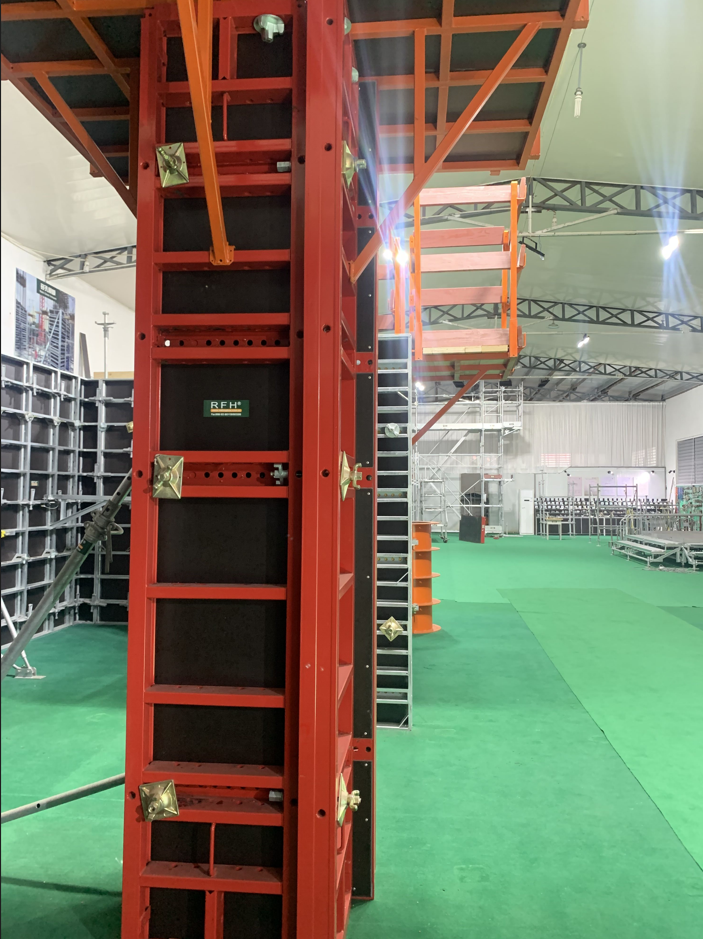
Heavy-duty wall formwork used for column forming.
Operation often involves crane-assisted modular assembly, sequential pouring, fast mechanical stripping, and cyclic repositioning. Common companion equipment includes formwork tie rods, alignment struts, formwork wing nuts, formwork clamps, push-pull shores, crane hooks, and concrete vibrators.
RFH Concrete Formwork Product Comparison
| Product | Type | Frame Material | Concrete Pressure | Surface Option | Typical Use |
|---|---|---|---|---|---|
| FW00A | Wall, column, and corner formwork | RFH Steel S420 | Up to 80 kN/m² | 18 mm European birch plywood or plastic composite sheet | Vertical structures with high pressure; compatible with the original European trio system |
| FW00B | Light-duty steel wall and column formwork | S420 | 60 kN/m² | 15 mm film-faced birch plywood | Walls, columns, corners, and shafts |
| FW00C | Concrete wall formwork | S420 | Not specified in product data | Birch plywood or PP board | Wall pouring with two surface options |
| FW00D | Aluminum shutter / adjustable aluminum shutter | 6005-T6 aluminum alloy | Not specified in product data | 11 mm Baltic birch plywood | Flat and inclined slabs, ramps, drains, and fast floor cycles |
Table data is based only on RFH product specifications and third-party market reports cited in the text.
FAQ
What should I look for in a concrete formwork supplier?
Check the supplier's product range, panel sizes, frame material, concrete pressure rating, surface treatment, certifications, export experience, and custom processing ability. RFH supplies concrete formwork and formwork systems and exports to 126 countries and regions. It can process products based on client drawings and samples.
What types of concrete formwork systems do manufacturers supply?
Common categories include wall formwork, column formwork, corner formwork, slab formwork, light-duty steel formwork, heavy-duty steel formwork, and aluminum formwork. RFH produces ten types of formwork, including aluminum alloy formwork, steel heavy-duty formwork, light-duty formwork, multi-formwork, column formwork, and adjustable shoring props, with more than 80 specifications.
How do steel, aluminum, and timber formwork compare in the market?
According to Cognitive Market Research, steel represented 44%, timber 37%, and aluminum 19% of formwork units installed worldwide in 2024. Reported price benchmarks include USD 10-25 per square meter for timber rental, USD 25-60 per square meter for steel, and USD 40-75 per square meter for aluminum formwork. Aluminum systems are associated with floor cycles as fast as 4-5 days in high-rise construction.
Which RFH concrete formwork model should I choose?
FW00A supports wall, column, and corner forming with up to 80 kN/m² concrete pressure. FW00B is a light-duty steel system rated at 60 kN/m² and forms walls, columns, corners, and shafts. FW00C is a concrete wall formwork with birch plywood or PP board. FW00D is an aluminum formwork for flat and inclined slabs, ramps, and drains with up to 8% inclination.
What certifications should a concrete formwork supplier have?
Useful signals include ISO9001 quality management, EN1090-controlled welding, BS1139 and EN74 acceptance criteria, and certificates such as EN1065, EN74, and CE. European standard EN12812 covers falsework performance requirements. ASTM C1074 is a US standard for estimating concrete strength to determine formwork removal time. Contact RFH for project-specific information.
Conclusion and Next Steps
Concrete formwork is a structured purchase decision. Start with the forming task, concrete pressure, material options, and site handling. Then compare product range and supplier capabilities. RFH, established in 1953, supplies concrete formwork and scaffolding systems from its 80,000-square-meter factory. Its product family includes FW00A, FW00B, FW00C, and FW00D, with a range of panel sizes and accessories.
RFH is located at No.8 Jinming Road Jufeng, Rizhao, Shandong, China. Contact Sally Qin by email at fenghuaf@bdchina.com or via WhatsApp at +86 158-9899-7661. More product details are available at www.fhformwork.com.
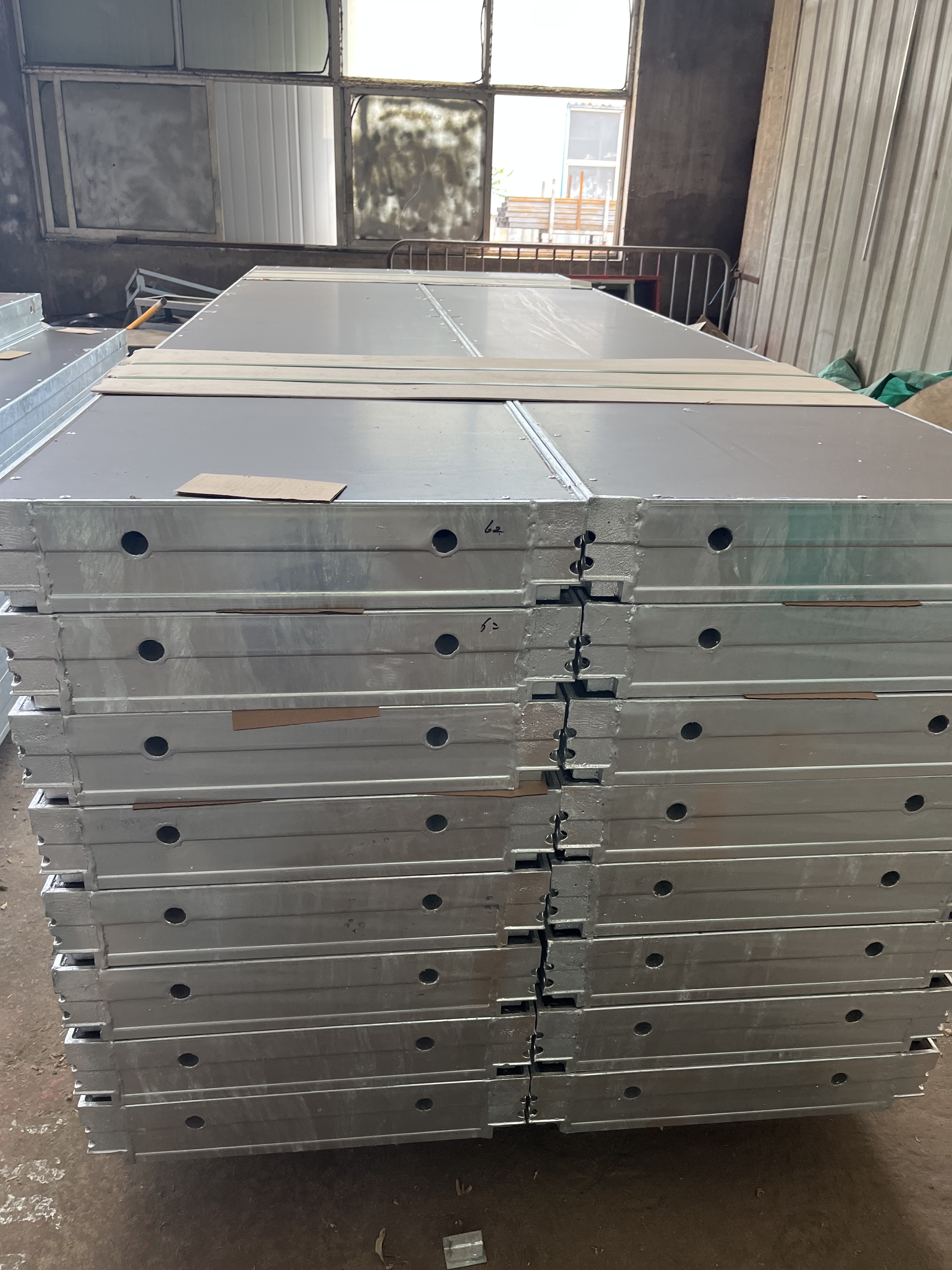
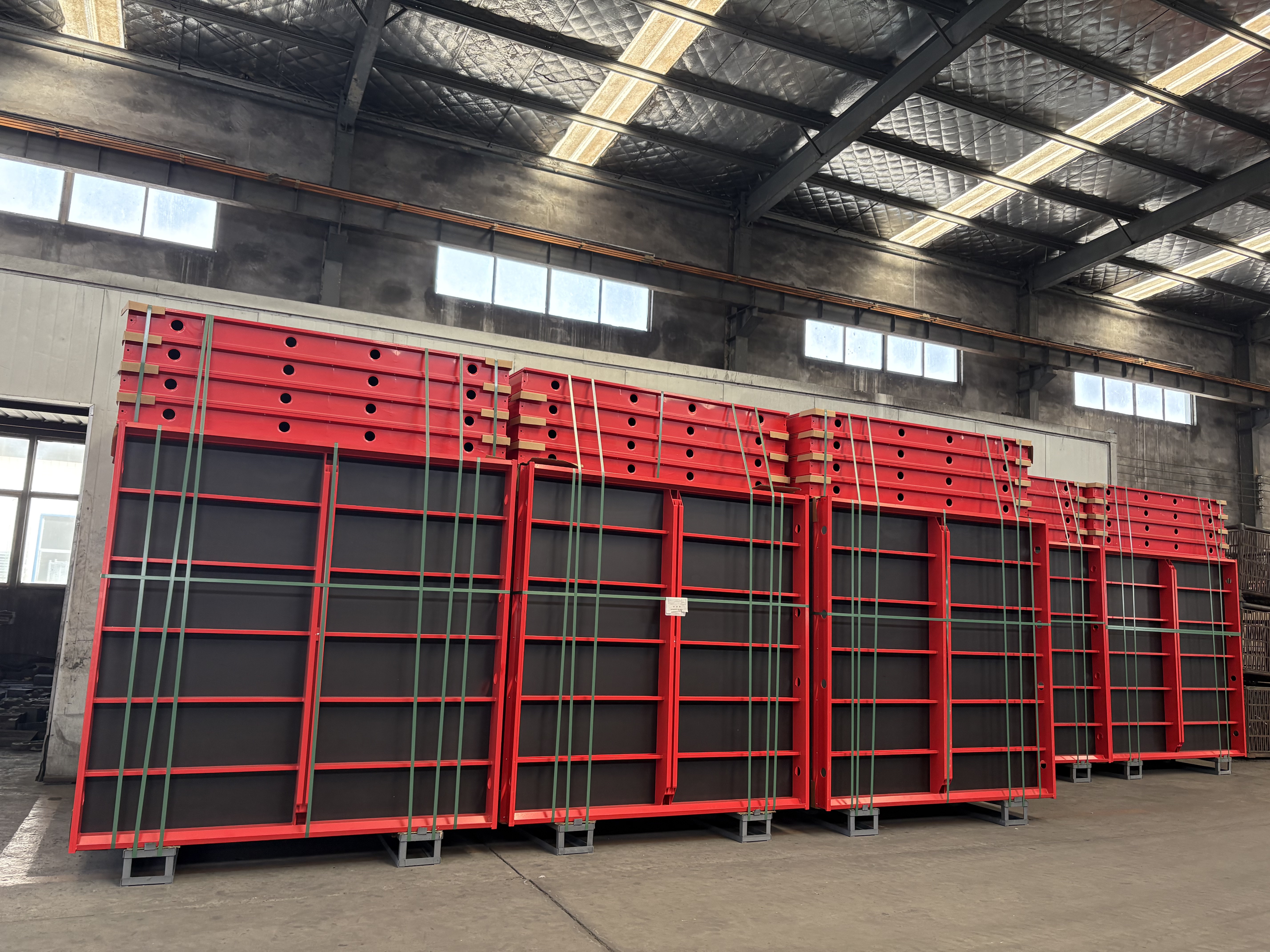
RFH concrete formwork packing and export preparation.
Review the full RFH product range and technical details in the RFH New Catalogue: Download RFH New Catalogue.
For a quotation or sample inquiry, contact RFH at fenghuaf@bdchina.com or use WhatsApp +86 158-9899-7661.