
How to Choose the Right Safari Tent for Eco Resorts & Wildlife Lodges
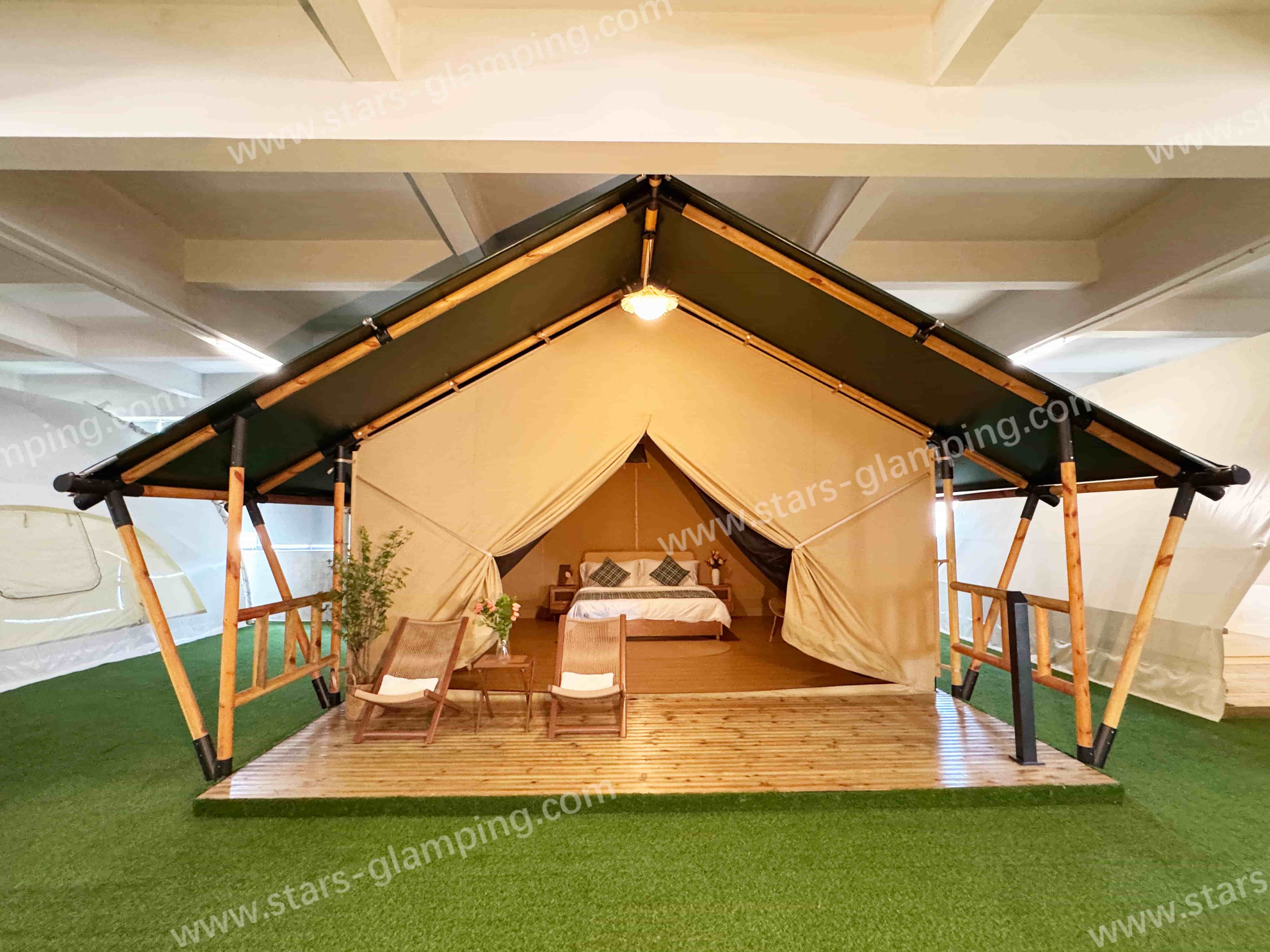
The Stars Glamping Lodestar Safari Tent: built for durability and elegance in remote environments.
How to Choose the Right Safari Tent for Eco Resorts & Wildlife Lodges
As the global demand for sustainable, immersive travel experiences grows, luxury safari tents have become the preferred accommodation for eco resorts, wildlife lodges, and glamping campsites around the world. But not all safari tents are created equal. For resort owners, project developers, and procurement managers, selecting a tent that balances comfort, durability, weather resistance, and environmental compliance is critical to delivering a five-star guest experience while protecting your investment.
In this comprehensive guide, we break down every factor you need to evaluate — from materials and certification to customization and supplier reliability — drawing on industry best practices and real-world specifications from Stars Glamping, a leading manufacturer with over 5 years of experience and 90% export ratio to markets including Southeast Asia, the Middle East, Africa, Europe, and the Americas.
What Is a Safari Tent? Definition & Product Categories
A safari tent (also referred to as a luxury safari lodge tent or canvas lodge tent) is a semi-permanent or permanent structure designed for upscale outdoor accommodation. Unlike standard camping tents, safari tents feature robust frames, high-grade fabric covers, and integrated amenities such as bathrooms, kitchens, and electricity — offering hotel-level comfort in off-grid or remote locations.
Based on the product range from Stars Glamping, safari tents are classified into the following categories:
- Wildlife Lodge Tent
- Jungle Safari Accommodation Tent
- Eco Tourism Tent
- National Park Lodge Tent
- Adventure Camping Lodge Tent
These categories reflect the primary use cases: from wildlife reserves in Africa and South Asia to eco camps in Central America and luxury resorts in the Middle East.
Key Specifications: What Makes a Safari Tent Reliable?
When evaluating a safari tent for your project, pay close attention to the following technical parameters. Below is a summary based on Stars Glamping's best-selling models — Epic, Vega, and Lodestar:
| Parameter | Specification (Epic / Vega / Lodestar) |
|---|---|
| Frame Material | Finish Anti-corrosion Solid Wood or heavy-duty galvanized steel |
| Cover Material | 850g/m² PVC coated polyester fabric |
| Inner Lining | Breathable Oxford canvas fabric |
| Waterproof Rating | ≥ 3000mm H₂O |
| Fire Rating | B1 fire-retardant |
| Wind Resistance | Up to 100km/h (Level 9 wind) |
| Snow Load | 60kg/m² |
| Temperature Range | -25°C to +60°C |
| Service Life | 8–12 years |
| Standard Sizes | 20m² / 30m² / 40m² / 50m² (customizable) |
These specifications ensure the tent can withstand extreme weather conditions — from high UV in savannahs to heavy rain in tropical zones and even snow loads in alpine environments. The B1 fire-retardant rating and UV-resistant coating are essential for safety and longevity in outdoor hospitality.
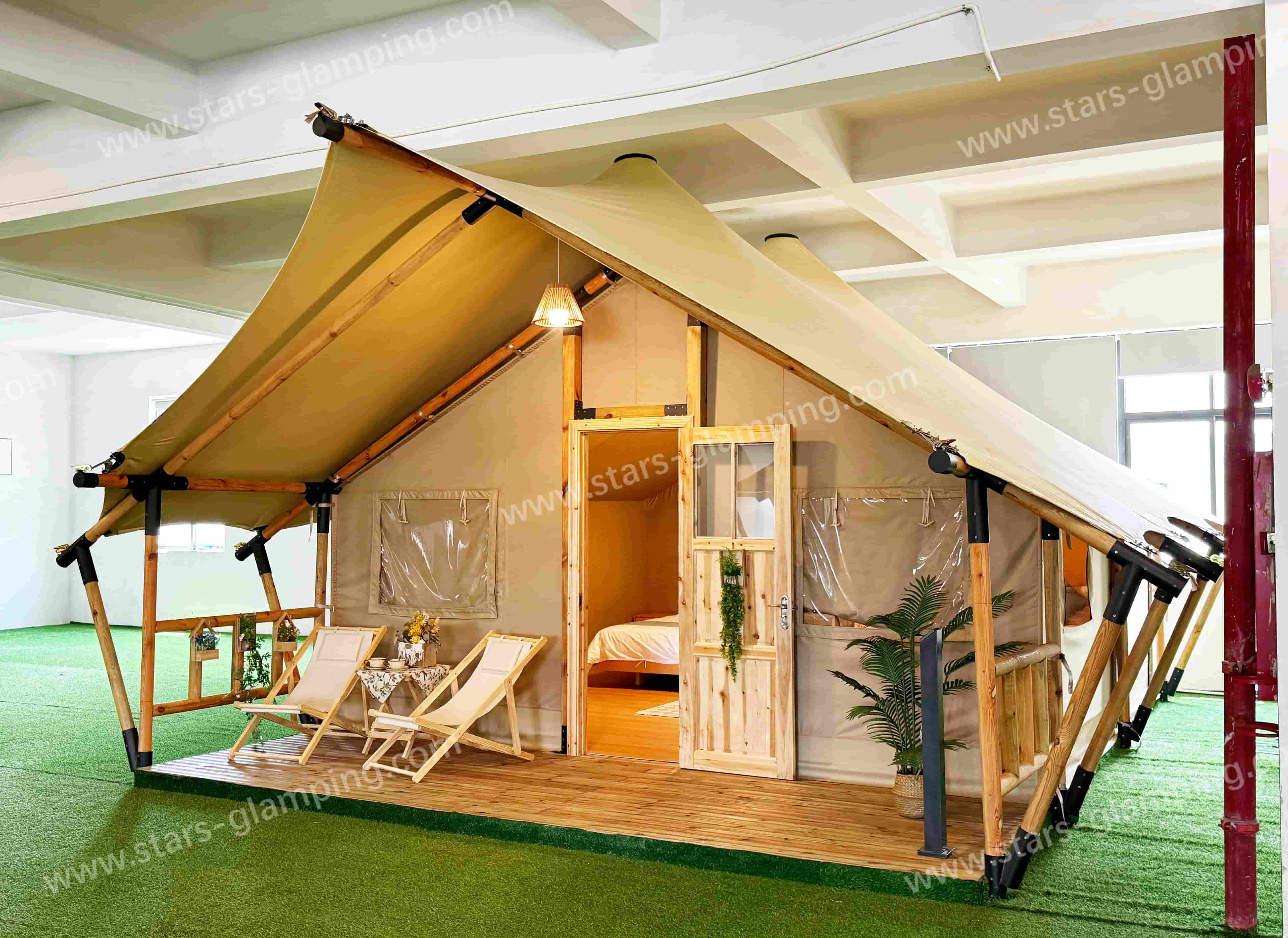
The Stars Glamping Epic model: perfect for jungle safaris and eco camps.
Why Choose a Modular Safari Tent System?
Modern safari tents are not just shelters — they are modular systems that can be configured with bathrooms, kitchens, electricity, and even air conditioning. According to Stars Glamping's application data, a complete safari tent unit typically requires supporting equipment including:
- Air conditioning system
- Insulation lining (for thermal comfort)
- Wooden flooring
- Panoramic glass door
- Bathroom module (shower, toilet, sink)
- Lighting system
This modular approach allows resort developers to create fully self-contained guest units that operate 24/7 in off-grid or remote areas. The tents are designed for both seasonal and permanent use, making them suitable for camps that need flexibility.
The Difference Between a Safari Tent & a Standard Camping Tent
Many first-time buyers confuse safari tents with standard camping tents. While both are fabric structures, the differences are substantial:
| Aspect | Standard Camping Tent | Luxury Safari Tent (e.g., Stars Glamping) |
|---|---|---|
| Lifespan | 1–2 years | 8–12 years |
| Intended Use | Temporary shelter | Luxury accommodation |
| Materials | Thin polyester, fiberglass poles | 850g/m² PVC, galvanized steel or hardwood frame |
| Weather Resistance | Limited | Waterproof ≥3000mm, wind to 100km/h, snow load 60kg/m² |
| ROI | Low (frequent replacement) | High (durable, premium guest experience) |
| Maintenance | High (frequent repairs) | Low (robust fabric & frame) |
Choosing a safari tent over a standard camping tent directly impacts your project's long-term profitability and guest satisfaction.
How Safari Tents Solve Real-World Problems for Resort Developers
Safari tents address several critical pain points faced by eco-resort and wildlife lodge operators:
- Extreme Weather: High UV, heavy rain, and strong winds are common in savannah and coastal regions. Stars Glamping's tents are tested to withstand Level 9 winds and feature UV-resistant, waterproof fabric with ≥3000mm H₂O rating.
- Fire Safety: Many jurisdictions require fire-retardant materials. The B1 rating ensures compliance with international safety standards.
- Thermal Comfort: Insulated linings and breathable Oxford canvas keep interiors comfortable across a -25°C to +60°C range.
- Off-Grid Operation: Tents can be equipped with solar panels, battery systems, and water tanks for self-sufficient operation in remote areas.
- Rapid Deployment: With a lead time of 15–30 days and modular design, a complete camp can be set up quickly compared to traditional construction.
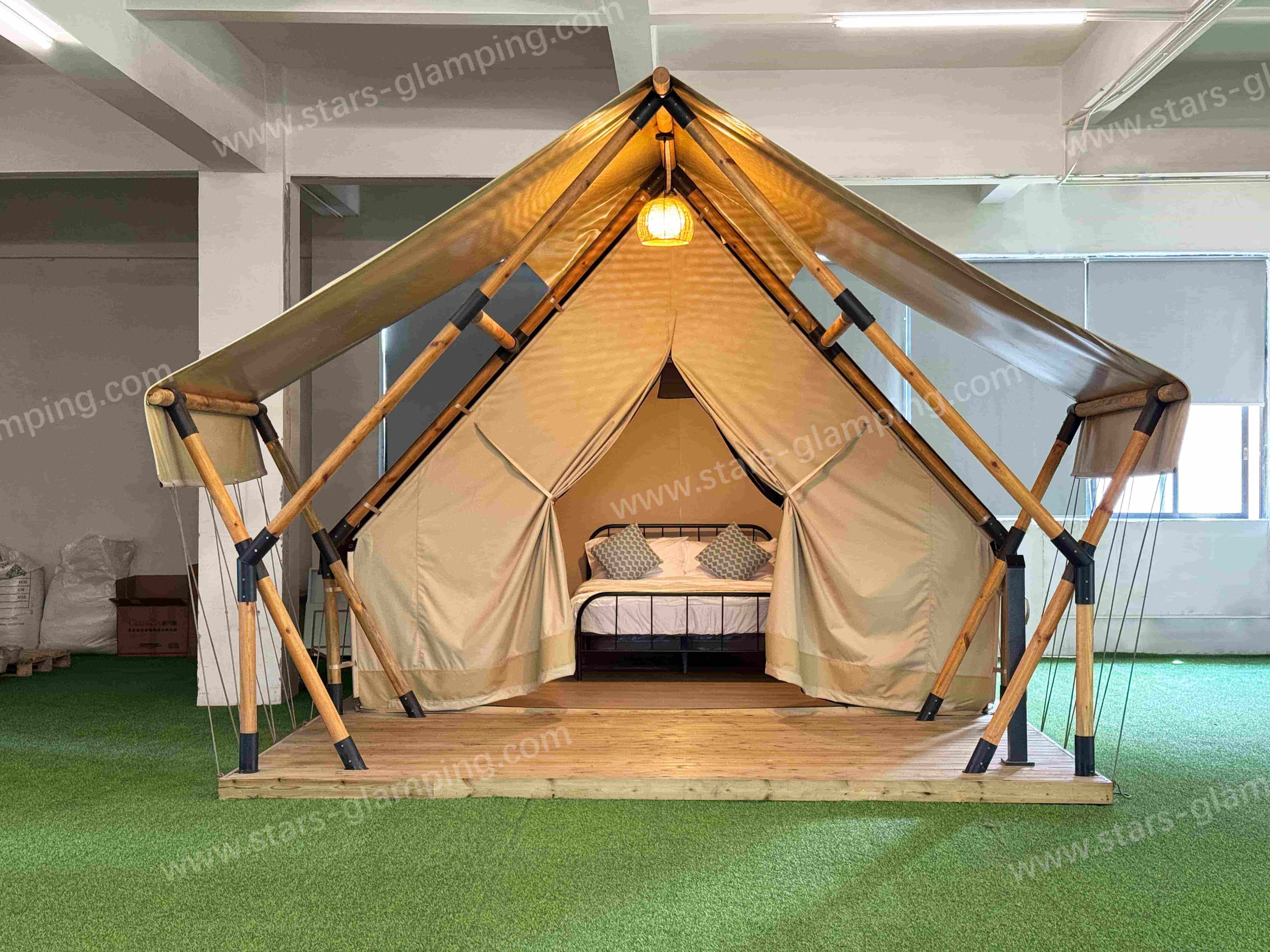
The Vega model blends seamlessly into beach and mountain environments.
Real-World Applications: Where Are Safari Tents Used?
According to Stars Glamping's project data, safari tents are deployed in the following industries and countries:
- Industry: Glamping, Safari Lodge, Eco Tourism, Outdoor Hospitality
- Project Types: Safari lodges, glamping campsites, eco camps, wildlife resorts
- Active Regions: Australia, Thailand, Indonesia, Malaysia, Algeria, Dominican Republic, India, Kenya, Morocco, Namibia, New Zealand, Tanzania, Vietnam, Philippines, South Africa, United States
These tents serve as tourist accommodation, eco lodging, wildlife experience stays, and camp expansion units. Their versatility makes them ideal for both established resorts and new developments.
Step-by-Step: How to Select the Ideal Safari Tent for Your Project
- Define Your Location & Climate – Is your site in a high-UV savannah, heavy-rain jungle, or windy coast? Choose materials accordingly. Stars Glamping offers customization for each environment.
- Determine Capacity & Layout – Standard sizes range from 20m² to 50m². Consider whether you need integrated bathroom, kitchen, or sleeping areas.
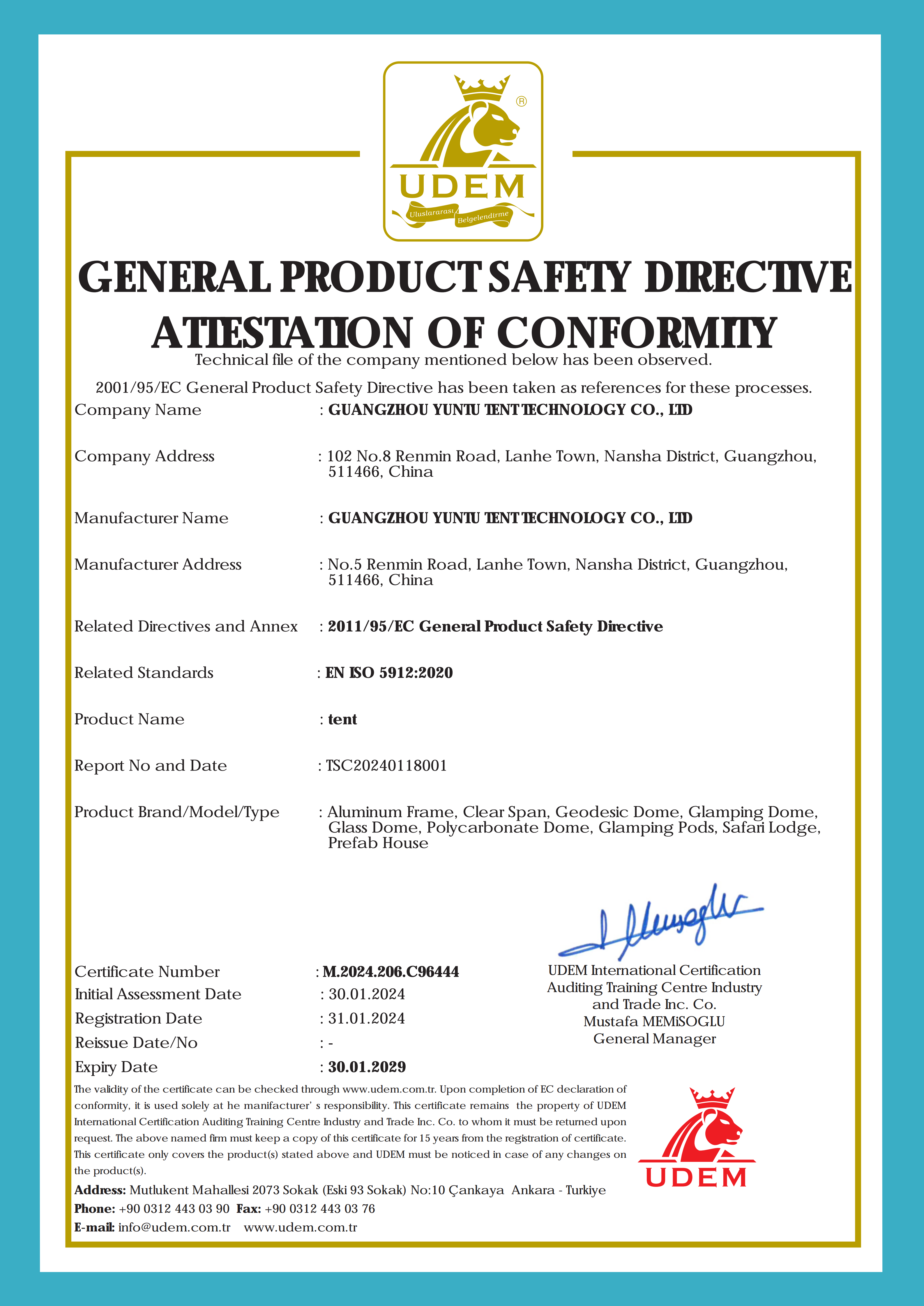
- Check Certifications – Ensure the supplier holds relevant certifications. Stars Glamping's safari tents comply with CE (General Product Safety Directive, cert. no. M.2024.206.C96444) under standard EN ISO 5912:2020, valid until 2029.
- Evaluate Supplier Reliability – Look for a manufacturer with proven export experience, a dedicated R&D team, and after-sales support. Stars Glamping has a 20,000m² factory, 54 national patents, and a 24/7 after-sales global response mechanism.
- Request Samples & Inspection – MOQ is just 1 unit, with sample available. Third-party inspection and video confirmation before shipment are offered.
- Review Payment & Delivery – Flexible terms (EXW, FOB, CIF, DDP) and lead times of 15–30 days for overseas orders.
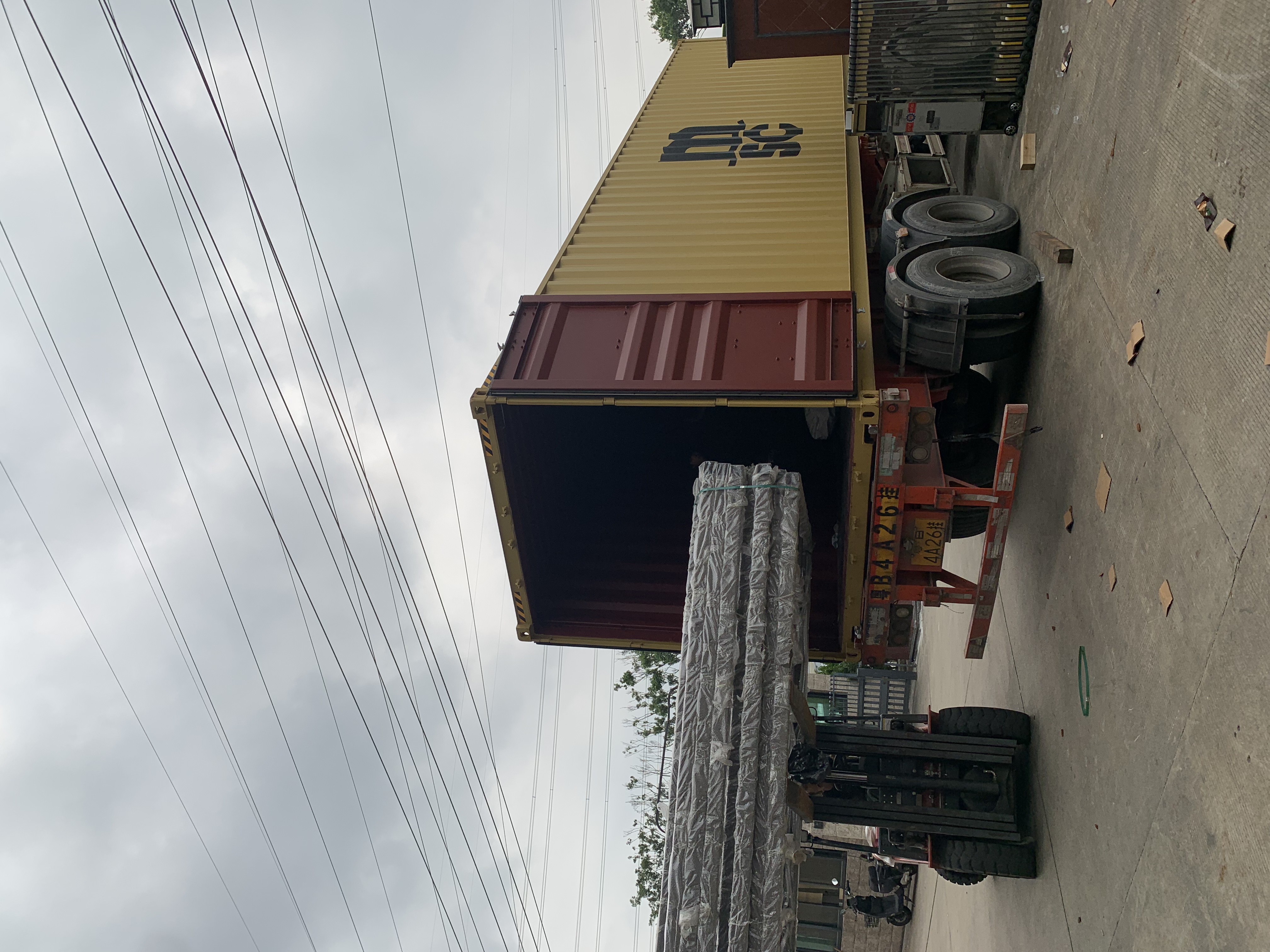
Stars Glamping ensures timely global shipping with full container loading.
Quality Certifications & Assurance
Stars Glamping holds the CE Attestation of Conformity (M.2024.206.C96444) issued by UDEM for the EU market, covering tents including safari lodges. The certification verifies compliance with EN ISO 5912:2020 for camping tents. In addition, the company follows a strict 12-step quality inspection system across all production stages — raw material inspection, in-process control, and pre-shipment inspection.
All safari tent materials are fire-rated B1, and the frames are made of anti-corrosion solid wood or galvanized steel for maximum durability.
Frequently Asked Questions
Q1: What is a safari tent used for?
A: Safari tents are designed for luxury accommodations in glamping resorts, eco lodges, wildlife camps, and national park stays. They provide a permanent or semi-permanent structure with hotel-grade amenities.
Q2: Are safari tents waterproof and fire-resistant?
A: Yes. Stars Glamping safari tents feature a waterproof rating of ≥3000mm H₂O and B1 fire-retardant fabric, meeting international safety standards.
Q3: Can I customize the size and interior layout?
A: Absolutely. Standard sizes up to 50m² are available, and full customization of layout, furniture, bathroom modules, and color branding is supported.
Q4: What is the expected lifespan of a safari tent?
A: 8–12 years under proper maintenance, compared to 1–2 years for standard camping tents.
Q5: How do I start a safari tent project?
A: Contact Stars Glamping via email at info@stars-glamping.com or call +86-133 2645 9475. They offer one-stop planning, design, manufacturing, and installation support.
Conclusion: Invest in Quality, Partner with Experts
Choosing the right safari tent is a strategic decision that affects guest experience, operational costs, and brand reputation. By partnering with an experienced manufacturer like Stars Glamping, you gain access to certified products, global logistics, and lifelong after-sales service. With an annual production capacity of 600–900 units and a proven track record across 40+ countries, Stars Glamping is well-positioned to support projects of any scale.
To explore the full range of safari tents (Epic, Vega, Lodestar) and download the company brochure, visit the official website or click the link below:
📄 Download Stars Glamping Brochure
Contact: info@stars-glamping.com | Tel: +86-133 2645 9475 | WhatsApp: +86-133 2645 9475