
Smart Water Meter Buying Checklist: Certifications and Key Specs That Matter
Smart Water Meter Buying Checklist: Certifications and Key Specs That Matter
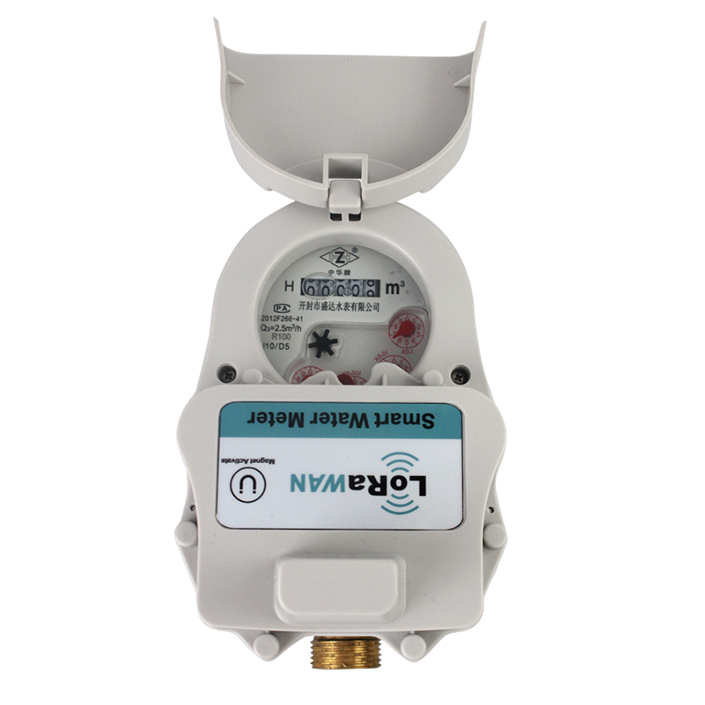
Smart water meters are data-collection devices as much as measuring devices. A smart water meter measures water consumption and sends readings to a remote system through wired or wireless communication. Before choosing a model, buyers need to verify standards, certifications, materials, communication behavior, and supplier production capability. This guide uses product facts from Shengda Water Meter Co., Ltd. (SDWM) to explain the constraints that matter during Research and Evaluation.
Why Certification and Specification Checks Fail in Water Meter Procurement
Most procurement mistakes happen when communication type is selected before certification and installation constraints are understood. Buyers may receive a meter that cannot be used in an EU tender because the model is not covered by MID. They may choose LoRaWAN without checking whether a gateway network exists. They may select a brass meter for water conditions that require stainless steel, or an IP65-rated meter for an underground pit that requires IP68. The result is rework, unbudgeted replacement, or rejection at commissioning.
The solution is a constraint-first checklist: confirm applicable industries, standards, materials, communication interfaces, and manufacturer quality systems before comparing prices.
Smart Water Meter Industry Context
The smart water meter category includes mechanical meters with electronic communication modules and fully electronic ultrasonic meters. In Shengda's portfolio, the LXSY model designation covers RS485 water meters, M-Bus water meters, digital water meters, wireless remote reading water meters, and wired remote water meters. Other families include mechanical LXSG residential meters, LXSC and LXC ultrasonic meters, LoRaWAN water meters, NB-IoT water meters, 4G water meters, and STS or smart card prepaid water meters.
These meters are used across household, dormitory, hotel, residential property, apartment, warehouse, irrigation, water resources management, industrial production, and garden management scenarios. Municipal, commercial, and industrial projects increasingly require remote reading, remote valve control, leakage alarms, and integration with AMR/AMI, PLC/SCADA, or BMS systems.
Detailed Solution: The Smart Water Meter Verification Framework
The verification framework below covers six areas that directly affect whether a smart water meter is fit for your project.
1. Measurement Technology and Flow Ratio
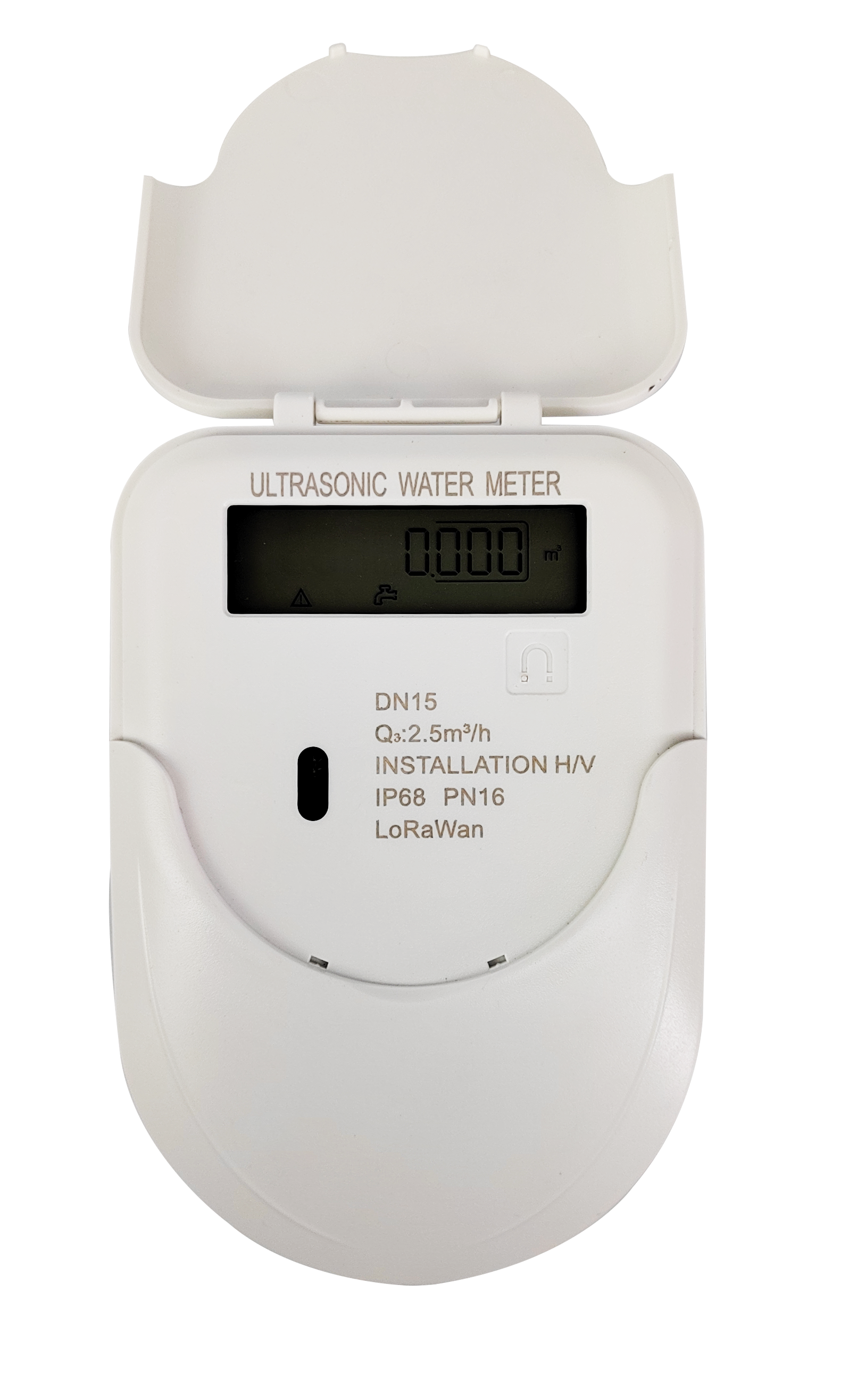
Mechanical multijet meters use an impeller and are economical for residential projects. Ultrasonic meters use transit-time measurement with no moving parts, which reduces mechanical wear and supports wide measuring ranges. Flow ratio options range from R80 to R500, including R100, R160, R200, R250, and R400. Higher R values improve low-flow sensitivity and help reduce metering error. R200 water meters are described as providing accurate measurement from low flow to maximum flow, and ultrasonic models can reach R250, R400, or R500.
2. Size and Application
Meter size must match the pipe diameter and expected flow. Residential meters typically use DN15 to DN50. Larger pipes use DN50-DN600 Woltman or ultrasonic meters. Intended applications include high-end communities, villas, schools, enterprises, factories, apartments, water affairs, municipal supply networks, irrigation systems, and industrial water measurement.
3. Communication and Integration
Communication choice is a system-level decision. LoRaWAN supports long-range wireless reading over several kilometers and can operate with battery power for years. NB-IoT operates over LTE Cat NB networks. 4G meters use LTE-FDD/TDD and GSM bands for direct connection. RS485 Modbus supports distances up to 1200 meters, and M-Bus meters follow EN 13757 for European building systems. Many Shengda meters are compatible with AMR/AMI systems, PLC, SCADA, and water management platforms. Optional remote shut-off valve control is available on many models.
4. Materials and Environment
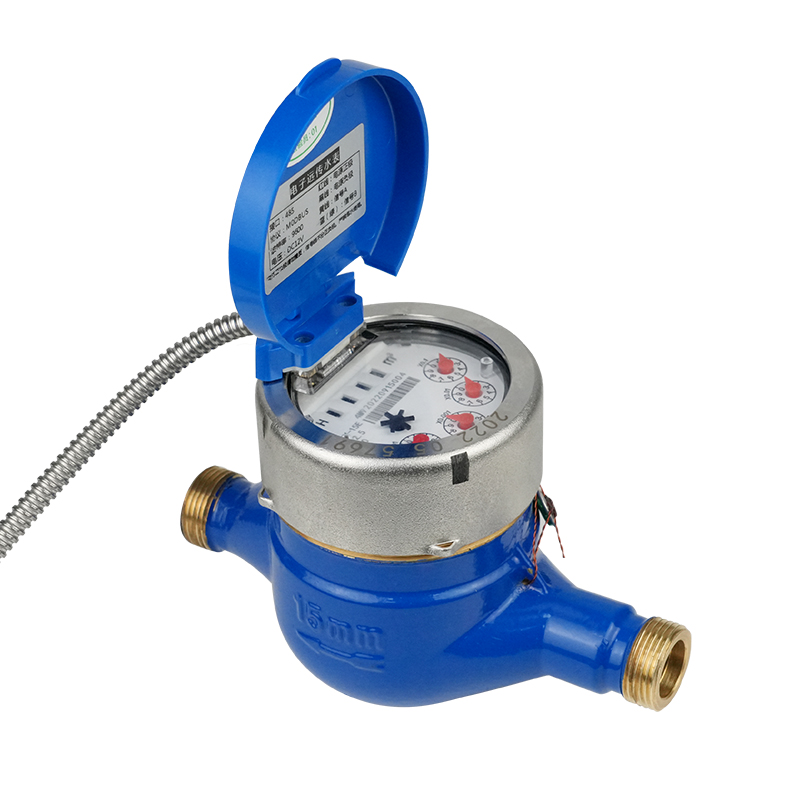
Body material determines weight, corrosion resistance, and cost. Options include brass, stainless steel, composite materials, and nylon. Large flow Woltman meters use cast iron, ductile iron, or stainless steel. IP68 waterproof protection is available for underground and outdoor installations. Typical pressure ratings are PN10 and PN16; working temperature is -20°C to +60°C, and water temperature is 0°C to +50°C, or up to T90 for selected models.
5. Certifications and Standards
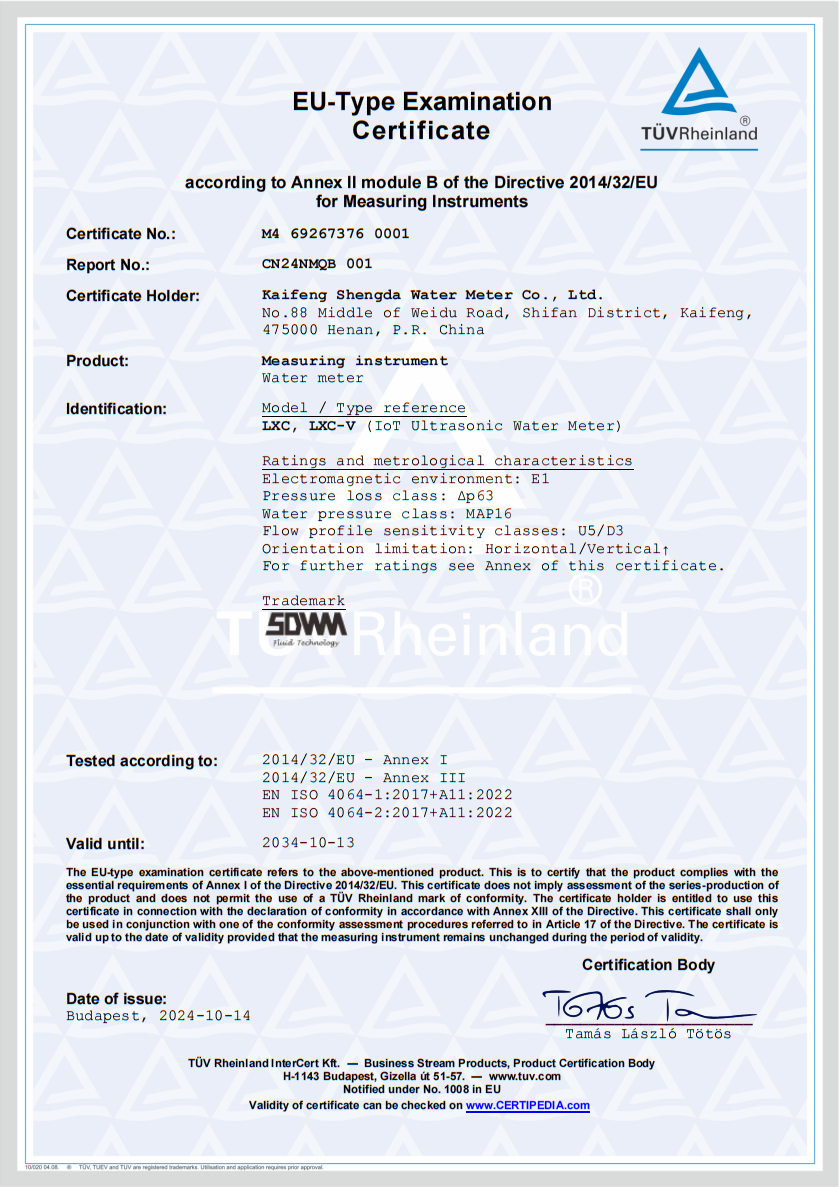
Certification is the strongest constraint for regulated projects. Shengda water meters are available with CE, MID, and ISO4064 certification. MID certification under Directive 2014/32/EU covers water meter models LXS, LXLC, LXSY, and LXLY in DN15-DN800. The LXC ultrasonic water meter holds MID Type Examination certificate M4 69267376 0001 issued by TÜV Rheinland, and the LXC series is RoHS certified. The LXS-S STS prepaid water meters hold CE certificate No.0H240702.KSWT076 and are registered under the STS Association. R200 and R160 meters have EU Type Examination certificates under MID Module B. Before a project starts, verify the exact model certificate and its applicable market.
6. Manufacturer Qualification and After-sales
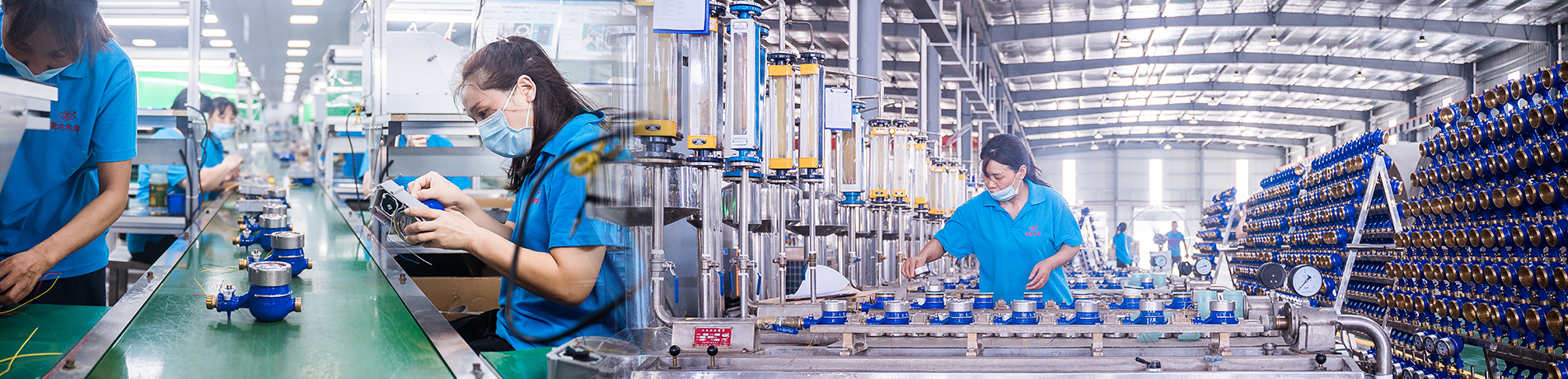
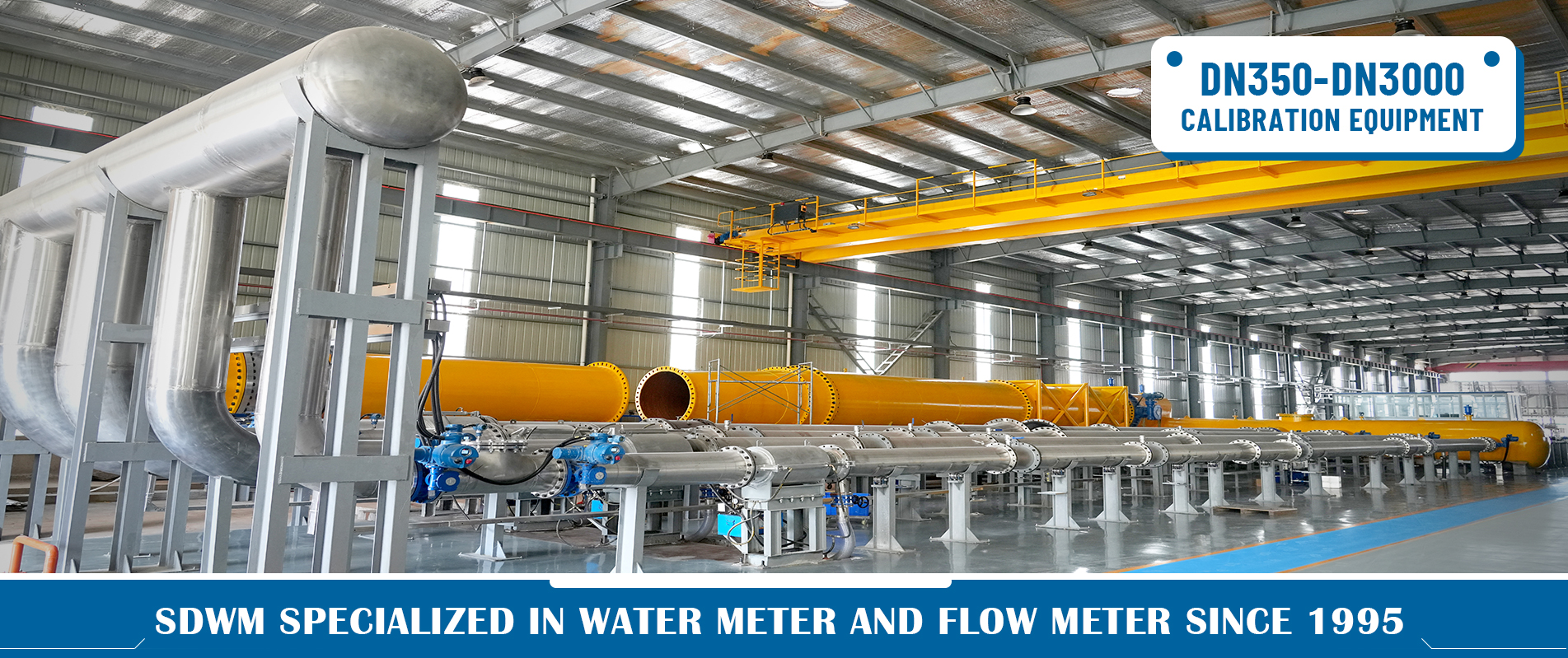
Production capability affects delivery and consistency. Shengda was established in 1995 and built a new factory in 2020 with annual production capacity of 10 million units. The company is certified to ISO9001, ISO14001, and ISO45001. Quality control includes incoming material inspection, production process inspection, 100% functional testing, calibration testing, and final inspection. The LXC ultrasonic water meter also holds a five-star Commodity After-sales Service Certification.
Step-by-Step Procurement Checklist
- Define the pipe size and application: residential, hotel, mixed-use, municipal, irrigation, or industrial.
- Select the measurement principle: mechanical, ultrasonic, or a version that supports both.
- Choose the communication method and confirm network or infrastructure availability.
- Verify body material, IP rating, pressure rating, and water temperature range.
- Check certificates for the target market: CE, MID, ISO4064, OIML R49, RoHS, or STS if prepaid.
- Confirm integration with AMR/AMI, PLC, SCADA, BMS, or cloud platform.
- Assess OEM/ODM support, sample availability, MOQ, lead time, and after-sales service.
Use Cases from the Field
Project examples help connect configuration choices to real outcomes.
- Municipal water supply project in Zimbabwe: more than 4,000 STS prepaid water meters were supplied for smart water management and water loss control. The project achieved remote recharge, automatic billing, and user management. Highlights include 20-digit STS tokens and remote valve control.
- Municipal water department in Kenya: more than 20,000 NB-IoT smart water meters were deployed. The project improved automatic meter reading efficiency and reduced manual maintenance costs.
- Government water utility in Mongolia: 15,000 LoRaWAN water meters with OEM branding were awarded through a government tender. The project focused on smart water metering and remote reading for smart city deployment.
- HVAC contractor in Costa Rica: project-based supply of battery-powered, IP68, wireless communication meters was used. The customer reported reduced maintenance costs.
Comparison: Common Smart Water Meter Configurations
| Configuration | Measurement | Size | Flow ratio | Communication | Body material | Certification examples |
|---|---|---|---|---|---|---|
| Ultrasonic water meter (LXC) | Ultrasonic transit-time | DN15-DN500 | R250 / R400 | LoRaWAN, NB-IoT, 4G, M-Bus, RS485 | Brass / stainless / nylon | ISO4064, MID, RoHS |
| LoRaWAN ultrasonic water meter (LXSC) | Ultrasonic transit-time | DN15-DN600 | R250 / R400 / R500 | LoRaWAN | Brass / stainless / composite | CE / MID optional |
| Smart LoRaWAN water meter (LXSY) | Ultrasonic or mechanical | DN15-DN500 | R80 / R100 / R250 / R400 / R500 | LoRaWAN | Brass / nylon | CE / MID optional |
| NB-IoT smart water meter (LXSY) | Mechanical | DN15-DN200 | - | NB-IoT | Brass / iron | MID 2014/32/EU |
| 4G water meter (LXSY) | Mechanical | DN15-DN300 | - | 4G LTE-FDD/TDD, GSM | Brass / iron | MID |
| STS prepaid water meter (LXS-S) | Mechanical | DN15-DN200 | R80 / R100 / R160 | STS token, LORA-RF | Brass / cast iron | CE, MID, STS |
Frequently Asked Questions
Which certifications are important for smart water meters in EU and global projects?
For EU projects, CE and MID are commonly required. ISO4064 is the international metrological standard for water meters, and OIML R49 is often referenced. Shengda water meters are available with CE, MID, and ISO4064 certification. The LXC ultrasonic water meter series is RoHS certified, and the LXS-S prepaid meters are CE certified and listed under the STS Association. Check the model-specific certificate and applicable market before submitting to a tender.
How do I choose between LoRaWAN, NB-IoT, 4G, RS485, and M-Bus?
LoRaWAN is suitable for long-range wireless networks and AMR/AMI projects. NB-IoT uses licensed cellular narrowband and works where mobile coverage is strong. 4G provides direct LTE communication and can cover larger areas without local gateway infrastructure. RS485 Modbus is a wired option with distances up to 1200 meters and is common for BMS, PLC, or SCADA integration. M-Bus follows EN 13757 and is widely used in European building systems. The final choice depends on network coverage, project budget, and existing data systems.
Do smart water meters cost more than mechanical meters, and what affects the price?
Smart water meters usually cost more than basic mechanical meters because they include communication electronics, stronger IP protection, and additional certification. Total price varies with measurement technology, body material, communication module, flow ratio, battery life, valve control, and certification. To compare budget, request the same configuration from suppliers and include installation and maintenance costs.
Can I order samples before a bulk project?
Yes. Shengda offers sample orders with an MOQ of 3 units. For customized OEM projects, the MOQ is 500 pieces. OEM services can include logo, color, housing design, communication module, software platform, protocol, packaging, and product specifications.
What is the lead time for smart water meters?
Standard products usually take 15-20 days to produce. Customized products usually take 30-40 days, depending on project requirements. Contact Shengda for current scheduling and a quotation.
Conclusion
A smart water meter cannot be selected by communication type alone. The right procurement process verifies size, flow ratio, body material, IP protection, certificates, communication interfaces, and the manufacturer's production and after-sales systems. By applying the checklist above, buyers can reduce the risk of rejected bids, integration failures, and repeated maintenance.
Download the Shengda Water Meter Profile
Review the manufacturer profile, product families, and company certifications before your next inquiry.
Download Corporate Brochure (PDF)Email: admin@henanpanda.com | WhatsApp: +86 18603780816 | Web: www.shengdawatermeter.com