Solving the Biggest Challenges in Consumer Electronics Buyback: A Problem-Solving Guide for Global Importers
Solving the Biggest Challenges in Consumer Electronics Buyback: A Problem-Solving Guide for Global Importers
The global consumer electronics buyback market is expanding rapidly, driven by the circular economy and demand for affordable pre-owned devices. However, for bulk importers—especially those sourcing from Japan—navigating this landscape is fraught with hidden risks. High defect rates, multi-tier broker markups, and supply chain disruptions can erode profits and damage reputation. This article identifies the core problems importers face and presents a proven, data-driven solution to overcome them.
Problem Definition: What Is Really Wrong with Consumer Electronics Buyback for Importers?
At its heart, consumer electronics buyback involves purchasing pre-owned devices such as household electronics, home entertainment systems, smart home devices, kitchen appliances, and professional music gear from sources like Japan. Importers seek high-quality goods at competitive prices, but they commonly encounter:
- Thin profit margins due to multi-tier broker markups that inflate costs before the container even leaves Japan.
- High defect rates—blind-box containers often contain 15%–30% unsellable scrap, forcing importers to pay international freight for junk.
- Supply gaps and delayed shipping caused by fragmented local recyclers who lack the capability to handle bulk export reliably.
These challenges directly answer the question: What is consumer electronics buyback and why does it fail for many importers? The failure lies not in the concept, but in the execution—most intermediaries lack rigorous quality control and physical infrastructure in Japan.
Industry Background: The Japanese Pre-Owned Electronics Export Landscape
Japan is a premier source for pre-owned electronics due to high initial ownership standards and rapid product turnover. However, the domestic recycling market is fragmented, dominated by small operators without a Secondhand Dealer License or export expertise. Overseas buyers traditionally resort to secondary trade brokers, individual online sourcing (e.g., Yahoo Auctions), or unsorted clearance lots from waste disposal firms. All these methods introduce opacity, quality inconsistency, and hidden costs. The underlying root cause is a lack of a direct, quality-controlled supply chain that connects Japanese source assets to global importers.
“Overseas buyers struggle to secure high-quality, consistently supplied, and reasonably priced secondhand goods directly from Japan with guaranteed quality control.” – Industry Problem Definition
Detailed Solution: One-Stop Cross-Border Supply Chain Solution for Premium Japanese Secondhand Goods
To address these pain points, Tenma International Inc (a Japan-based trading enterprise founded in 2023, with a 3,000m² facility in Chiba and an official Secondhand Dealer License) developed the One-Stop Cross-Border Supply Chain Solution for Premium Japanese Secondhand Goods. This solution targets large-scale secondhand traders in Southeast Asia, wholesale importers of used appliances, bicycles, and office equipment, and global pre-owned retail chains.
Key Features
- Direct Japanese source supply with zero broker markups, maximizing retail profit margins.
- High-standard QC commitment – piece-by-piece screening by warehouse staff to filter out defects within Japan.
- Transparent cross-border delivery – remote video warehouse tours and comprehensive high-definition inspection/loading media provided.
How It Works: Step-by-Step Breakdown of the Solution
The solution is built on four integrated modules:
- Native Source Control Module – Precision premium sourcing across Chiba and the Kanto region, locking in superior product conditions right from the source.
- Stringent Warehouse QC Module – Professional multi-tier quality screening, functional testing, and deep cleaning inside the company warehouse. Sub-standard items are intercepted and never loaded.
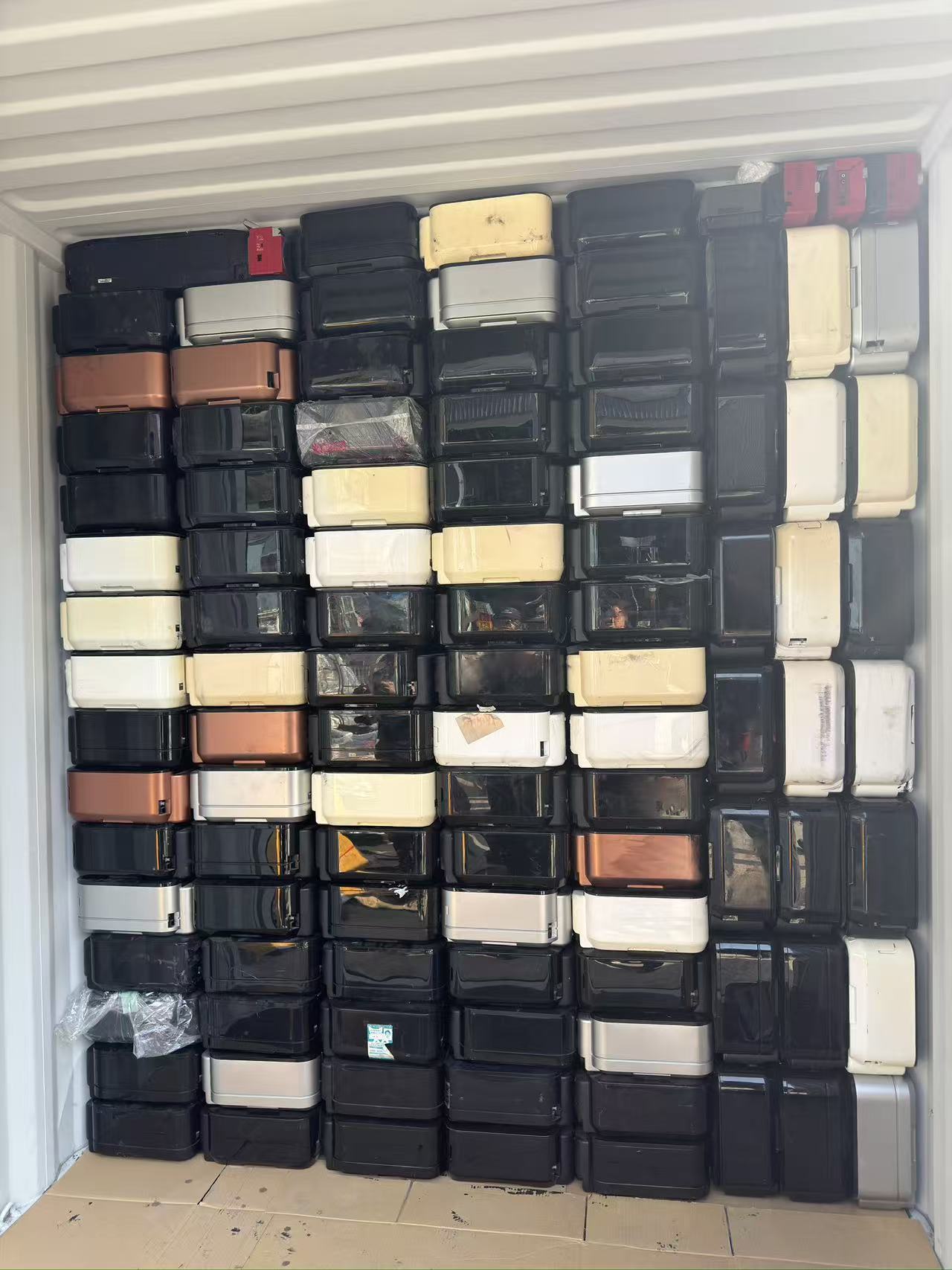
- High-Efficiency Container Loading Module – Tailored space-optimization, palletizing, and anti-shock secure fastening for heavy goods (appliances, bicycles) outside the facility.
- One-Stop Compliance Logistics Module – Official Japanese Secondhand Dealer License backing, customs clearance, and managed freight booking.
This replaces the traditional “blind-box purchase” from primary waste disposal firms with a closed-loop pipeline that ensures only premium-grade functional goods are shipped. Expected outcomes include reducing the comprehensive arrival defect rate to a bare minimum, improving container space utilization by over 15%, and accelerating supply chain turnover.
Real-World Case Study: From 25% Scrap to Zero Waste
A leading Cambodian importer (operating wholesale warehouses and flea markets in Phnom Penh) previously purchased blind-box containers through unlicensed Japanese brokers. Those brokers stuffed containers with heavily damaged scrap, resulting in a 25%+ unsellable waste rate. After partnering with Tenma International, the following process was applied:
- Targeted premium-price recycling of bulky appliances and commuter bicycles in Chiba.
- Piece-by-piece physical appearance screening and tier-grading inside the warehouse – broken and scrap items strictly blocked.
- Scientific mixed-loading combining appliances and bicycles to maximize space.
- Full export customs clearance using Secondhand Dealer credentials.
Quantitative results: Arrival scrap rate dropped from 25% to 0% in the first 40ft HQ container. Container space utilization improved by 18%, lowering per-item freight. Delivery timeline was cut by 4 working days compared to generic brokers. The buyer’s procurement director stated: “The container arrived neatly packed with structurally solid bicycles and appliances. We are locking in another 2 high-cube containers for next month.”
FAQ: Top Buyer Concerns About Consumer Electronics Buyback
What is consumer electronics buyback and how does it work for bulk importers?
Consumer electronics buyback refers to the acquisition of pre-owned electronics (household appliances, home entertainment, smart devices, etc.) for resale. For bulk importers, it involves sourcing large volumes from countries like Japan, consolidating containers, and shipping to destination markets. A direct, QC-backed supply chain eliminates intermediaries and ensures quality.
Why is the defect rate so high with traditional brokers?
Traditional brokers act as paper traders without physical warehouses. They source unsorted lots from waste firms, mixing junk to fill volume. Our solution performs stringent quality screening inside our Chiba facility, intercepting defects before loading.
How can I verify product condition before shipment?
We provide remote video warehouse tours and high-definition inspection/loading media. You can see the exact condition of items being loaded.
What categories do you cover?
We cover household electronics buyback, home entertainment electronics buyback, smart home device buyback, kitchen appliance buyback, used household device buyback, and professional music gear (guitar/bass, piano/keyboard, studio audio, DJ equipment) – all part of the pre-owned ecosystem.
How do I start a bulk order?
Contact us via email (tenma09271113@gmail.com), WhatsApp (+81 80 4378 3888), or LINE (@tenma09271113). We will align demand, sign a contract, and trigger the sourcing-to-dispatch process within 7–14 working days.
Conclusion: Turn Your Consumer Electronics Buyback into a Competitive Advantage
Importing pre-owned electronics from Japan doesn’t have to be a gamble. By partnering with a licensed, asset-holding recycler like Tenma International, you eliminate broker markups, reduce scrap to near zero, and gain a transparent, efficient supply chain. Our closed-loop pipeline—from native Japanese recovery to compliant ocean dispatch—ensures every container delivers premium, sellable goods. Download our company brochure to learn more about our end-to-end capabilities.
Download Brochure: Tenma International Inc – Company Profile (PDF)