Controlling Magnetic Pump Maintenance Costs: The Buyer’s Blueprint for After-Sales Assurance
Controlling Magnetic Pump Maintenance Costs: The Buyer’s Blueprint for After-Sales Assurance
For industrial procurement managers, the total cost of ownership of a Magnetic Pump extends far beyond the initial purchase price. Frequent seal replacements, unexpected downtime, and vague after-sales commitments can quickly erode operational margins. This guide addresses the two most pressing concerns for buyers of Chemical Magnetic Pumps, High pressure Magnetic Pumps, and TCU Magnetic Pumps: how is after-sales support structured, and how can maintenance costs be effectively controlled?
Drawing on verified supplier capabilities, real-world case data, and industry-standard quality systems, we provide a clear framework for evaluating a manufacturer’s ability to deliver long-term reliability and low service burden.
What Is After-Sales Support for Magnetic Pumps?
After-sales support for Magnetic Pumps encompasses warranty terms, technical troubleshooting, spare parts availability, remote or on-site assistance, and systematic risk mitigation. Unlike traditional mechanical seal pumps, magnetic-drive pumps eliminate dynamic shaft seals, which inherently reduces the most common source of leakage and wear. However, other components—such as bearings, bushings, and the magnetic coupling—still require periodic inspection and replacement.
A professional supplier addresses these needs through:
- Remote technical support (phone, email, video) for quick diagnosis
- Pre-shipment functional testing to detect defects before delivery
- Documented quality control points at critical manufacturing stages
- Safety stock of critical materials to ensure spare parts availability
- Clear return and exchange policies
Why Maintenance Cost Control Matters for Industrial Buyers
In industries such as injection molding, semiconductor manufacturing, and new energy testing, pumps often operate continuously for thousands of hours. A single unplanned pump failure can halt an entire production line, costing thousands of dollars per hour in lost output. The shift from mechanical seal pumps to Regenerative Turbine Magnetic Pumps or Centrifugal Magnetic Pumps promises lower leakage and longer intervals between maintenance, but the actual savings depend on the supplier’s quality control and after-sales infrastructure.
Key metrics for buyers:
- Mean time between failures (MTBF) – magnetic pumps can achieve 60% higher MTBF than mechanical seal pumps
- Life cycle cost (LCC) – lower seal replacement cost and shorter downtime typically yield payback within 3–5 years
- Maintenance cost per year – proven case shows reduction by up to 80% for injection molding applications
How Leading Suppliers Control Quality and Reduce After-Sales Risks
1. Systematic Risk Control for Product Quality
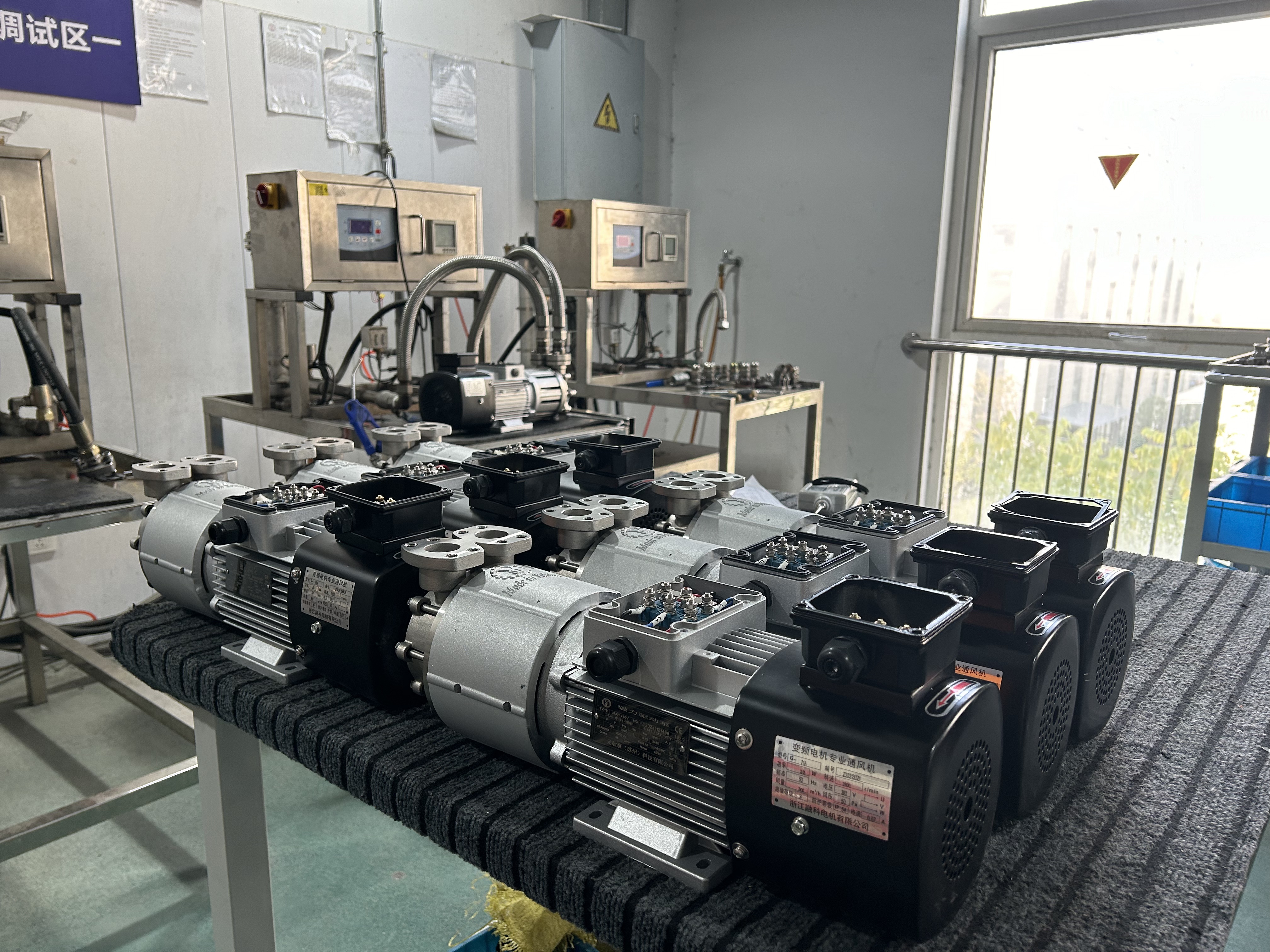
The manufacturer addresses product quality risks through process control and factory testing methods. Each Magnetic Pump undergoes functional testing—including flow rate, head, and leakage detection—on an in-house test rig before shipment. Quality control points are established at critical manufacturing stages such as assembly of the magnetic coupling and stator housing. This 100% testing protocol ensures that only pumps meeting specification leave the factory.
2. Unstable Component Quality – Supplier Management
Core components such as bushings, shaft cores, and magnets are sourced from a qualified supplier list. Incoming material sampling inspections are performed, and material reports must be provided for critical parts. This supplier management method effectively mitigates the risk of substandard components causing premature failures.
3. Delivery Delay Risks – Production Planning Management
Delivery reliability is ensured by ERP-based production scheduling with safety stock set for critical materials. The manufacturer also establishes service level agreements with logistics providers. For a buyer ordering a Stainless Steel Magnetic Pump or a Thermal Oil Magnetic Pump, knowing that lead times are controlled through a systematic production plan reduces the risk of project delays.
Step-by-Step: How to Evaluate a Magnetic Pump Supplier’s After-Sales Capability
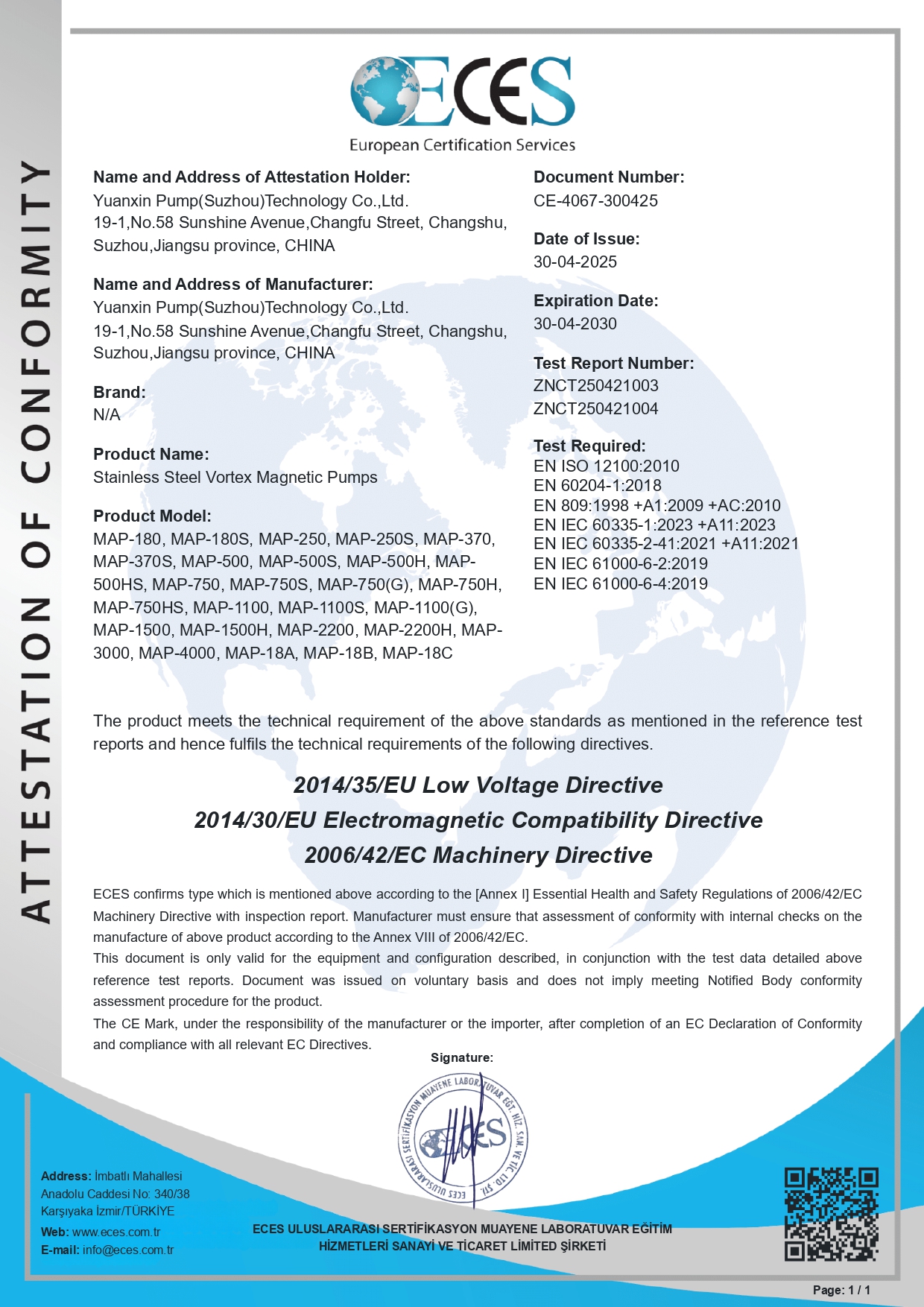
- Request certification evidence. Look for ISO 9001:2015 (quality management), ISO 14001:2015 (environmental management), and product-specific certifications like CE (EU) or UL (US/Canada). For example, YUAN SHIN PUMP holds UL Recognized Component certificates for its motors (UL-US-2425000-0 and UL-CA-2419643-0), covering models MAP-1100, CAP-100, and MAP-18A.
- Ask about test procedures. A reliable supplier will confirm that every pump is tested before shipment. Pre-shipment internal testing is a standard practice for reputable manufacturers.
- Verify spare parts availability. Inquire whether the supplier maintains safety stock for commonly replaced parts. YUAN SHIN PUMP, for instance, keeps inventory of critical materials to support after-sales needs.
- Check reference cases. Look for documented evidence of extended maintenance intervals. One Brazilian injection molding client using MAP-1100 pumps reported that maintenance intervals more than doubled, reducing overall maintenance costs by 80%.
- Understand the warranty and remote support policy. Does the supplier offer remote technical support? YUAN SHIN PUMP provides remote support as part of its after-sales service.
Real-World Use Case: Reducing Maintenance Costs by 80%
| Client Type | Injection Molding |
|---|---|
| Country | Brazil |
| Application | Chiller cooling water circulation |
| Product | YUAN SHIN PUMP MAP-1100 Regenerative Turbine Magnetic Pump |
| Duration | 5 years |
| Result | Completely resolves seal wear issues compared to mechanical seal pumps. Maintenance intervals extended by more than 2 times. Maintenance costs reduced by 80%. |
This case highlights how the switch to a Regenerative Turbine Magnetic Pump not only eliminates leakage but also dramatically lowers the total cost of ownership. The key enabler is the static sealing structure—no shaft seal means no seal wear, no leakage, and minimal routine service.
Frequently Asked Questions
What is the typical warranty period for a magnetic pump?
Warranty terms vary by supplier, but industry standard is 12–24 months from shipment. Always confirm the coverage scope (parts, labor) and any exclusions. YUAN SHIN PUMP offers a standard warranty backed by its ISO 9001-certified production system.
How does a magnetic pump reduce maintenance compared to a mechanical seal pump?
Magnetic pumps use a magnetically coupled drive with no dynamic shaft seal. This eliminates the most frequent source of leakage and the need for regular seal replacement. The result is lower downtime and lower parts cost over the life of the pump.
Can I get remote technical support for troubleshooting?
Yes, reputable suppliers like YUAN SHIN PUMP provide remote support via phone, email, and messaging apps (WeChat, WhatsApp). For more complex issues, video guidance can be arranged.
What certifications should a reliable magnetic pump supplier have?
Key certifications include ISO 9001:2015 (quality management), ISO 14001:2015 (environmental management), CE (for EU market), and UL (for North America). YUAN SHIN PUMP holds all these, plus IQNET recognition for its quality system.
How do I ensure I receive a pump that meets specifications?
Request pre-shipment test reports. A manufacturer that conducts 100% functional testing—flow, head, leakage—on its own test rig gives you confidence before the pump leaves the factory.
Conclusion
For procurement managers sourcing Magnetic Pumps—whether Regenerative Turbine Magnetic Pumps, Centrifugal Magnetic Pumps, or High pressure Magnetic Pumps—the decision should be based on a holistic evaluation of quality control processes, component sourcing discipline, and after-sales infrastructure. A supplier that implements ERP-based production scheduling, maintains safety stock for critical materials, performs 100% pre-shipment testing, and holds internationally recognized certifications (ISO 9001, CE, UL) offers the strongest foundation for minimizing maintenance costs and maximizing uptime.
By choosing a partner like YUAN SHIN PUMP, which combines over 35 years of manufacturing expertise with verified case studies of 80% maintenance cost reduction, industrial buyers can confidently reduce their total cost of ownership and secure reliable after-sales support.
Download the complete YUAN SHIN PUMP corporate brochure for detailed product specifications, certification evidence, and case studies:
Download Brochure (PDF)