How to Procure Formwork Efficiently and Mitigate Risks: A 2026 Strategic Guide for Industrial Buyers
How to Procure Formwork Efficiently and Mitigate Risks: A 2026 Strategic Guide for Industrial Buyers
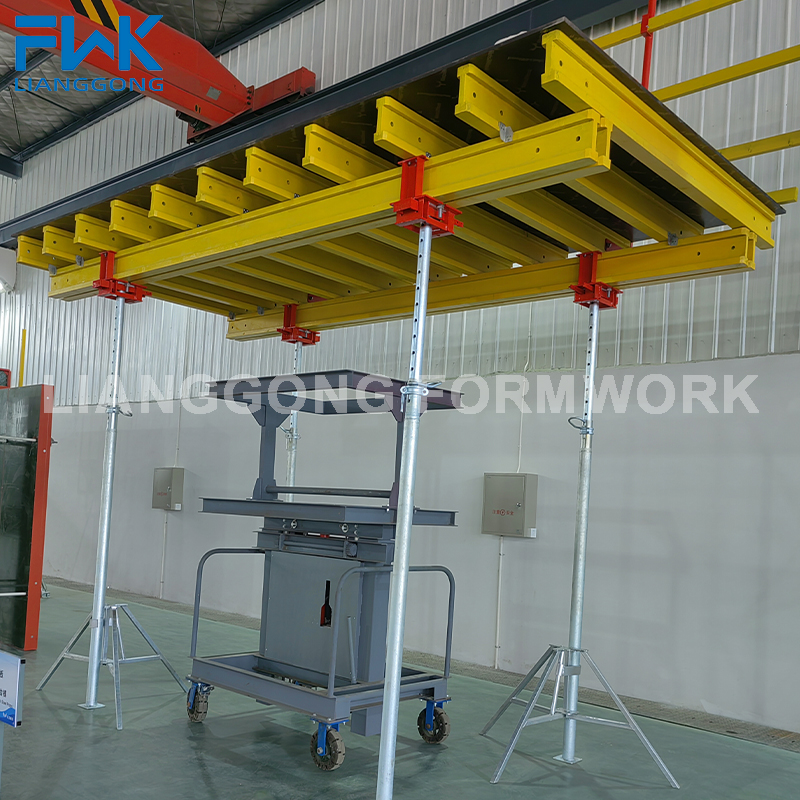
Procuring formwork for large-scale construction projects is not just about comparing prices—it is about ensuring safety, meeting cycle times, and avoiding costly delays. In 2026, global buyers face a fragmented market with hundreds of suppliers offering everything from H20 timber beam formwork to hydraulic auto-climbing systems. This guide distills years of industry expertise into a repeatable framework that helps procurement managers, project directors, and EPC contractors efficiently source formwork while mitigating risks.
1. The Real Problem: Why Formwork Procurement Often Fails
Many procurement teams underestimate the complexity of formwork selection. The most common failure points include:
- Misalignment of system to project type: Using a steel frame formwork solution for a high-rise residential tower when aluminum frame formwork or tunnel formwork would yield faster cycles.
- Underestimating safety and compliance risks: Lack of EN 1090 or ISO 3834 certifications can lead to site accidents and legal liabilities.
- Hidden total cost of ownership: A low upfront price often comes with poor durability—conventional H20 timber beams may last only 5-8 reuses, whereas premium LG H20 timber beams achieve 26-40 cycles with double-sided usability.
- Inadequate after-sales support: Delays in technical documentation or remote guidance can stall construction.
2. Industry Background: The 2026 Formwork Landscape
The global formwork market is driven by rapid urbanization, mega-infrastructure projects, and stricter safety regulations. Leading manufacturers such as FWK Lianggong Formwork (Yancheng Lianggong Formwork Co., Ltd.) have invested heavily in automation and certification to serve demanding markets in North America, the Middle East, Europe, and Southeast Asia. Key trends include:
- Shift toward lightweight, high-strength systems (e.g., aluminum frame formwork at 25 kg/m² vs. steel alternatives at 39-51 kg/m²).
- Rise of hydraulic auto-climbing formwork for super-tall structures, reducing tower crane dependency.
- Growing adoption of trench boxes and shoring systems for underground utility work in urban environments.
- Emphasis on pre‑shipment testing and certification compliance (ISO 9001, ISO 14001, ISO 45001, EN 1090, ISO 3834-2).
3. Detailed Solution: A Five‑Step Procurement Framework
Step 1 – Define Project Requirements
Before contacting any supplier, list your project’s concrete volume, pour cycles, wall/column geometry, crane capacity, and climate conditions. For example:
- High-rise core walls → hydraulic auto-climbing formwork or cantilever climbing formwork.
- Large-area slabs → Skydeck (90 kN/m² capacity, 18 kg/m²) or drophead slab formwork.
- Underground pipelines → trench box (with adjustable width, max trench depth 5.6 m).
- Prefabricated culverts → box culvert formwork in Q235B steel with customizable dimensions.
Step 2 – Evaluate Supplier Certifications & Quality Control
Demand proof of compliance with international standards. A reputable manufacturer like FWK Lianggong Formwork holds:
| Certification | Standard | Scope |
|---|---|---|
| ISO 9001:2015 | Quality Management | Hydraulic & cantilever climbing formwork |
| EN 1090-1/2 (CPR 1381) | Structural steel components | Steel formwork fabrication |
| ISO 3834-2:2021 | Welding quality management | Fusion welding of steel structures |
| ISO 14001 & ISO 45001 | Environment & OHS | Production of climbing formwork |
Always request pre‑shipment testing. As noted in supplier documentation, “products are accepted through pre‑shipment test procedures”—this ensures dimensional accuracy and structural integrity before container loading.
Step 3 – Compare Total Cost of Ownership, Not Just Unit Price
Use a formwork comparison matrix. For example, LG H20 timber beam formwork vs. conventional timber beams:
| Attribute | LG H20 Timber Beam | Conventional H20 Beam |
|---|---|---|
| Turnover rate | 26-40 times (double-sided) | 5-8 times (single-sided) |
| High temperature resistance | No blistering at 35°C | Deforms at 35°C |
| Flexural strength | High, suitable for fair-faced concrete | Lower, prone to delamination |
| Long-term cost | Lower total cost due to high reuse | Higher cumulative replacement cost |
Step 4 – Verify Risk Controls & Maintenance Plans
Ask the supplier for their risk management system. FWK Lianggong Formwork implements a “Three Inspections and One Review” protocol covering production, quality, and factory inspection. For example, for steel formwork, they enforce standardized lifting, precise jointing, and deformation calibration. For aluminum formwork, they test profile material, welding/riveting quality, and surface treatment. Ensure your supplier provides clear guidelines for on‑site storage and handling.
Step 5 – Negotiate Payment, MOQ, and Delivery Terms
Standard terms for reliable manufacturers:
- Payment: Typically 50% deposit, 50% before shipment (50/50).
- MOQ: 1×20GP container for most products (e.g., steel props, panel formwork) or 1 set for large custom systems like climbing formwork.
- Delivery: FOB or CIF, with pre‑shipment test included.
- Lead time: 30-35 days for standard products.
4. Use Cases: Real-World Supplier Selection
Case Study 1: High‑Rise Hospital in Trinidad & Tobago
A Caribbean hospital project required efficient, safe core-wall construction. The contractor selected FWK Lianggong’s Hydraulic Auto-Climbing Formwork (model FWK-ACB 120). Key results:
- Zero tower crane dependency during climbing – the hydraulic system lifted the formwork floor by floor.
- Each structural level completed in a shortened cycle, accelerating overall schedule.
- Integrated working platforms eliminated additional scaffolding, improving safety.
- Easy assembly and precise alignment; deviation corrected floor by floor.
Case Study 2: Dam Construction in Kalimantan, Indonesia
An EPC contractor used H20 timber beam formwork from FWK Lianggong for a large dam project. The system’s flexibility allowed on‑site cutting and reuse for complex curved walls. The concrete surface required no grinding, reducing post‑processing. The project used over 100 sets of formwork over more than ten years, demonstrating long‑term partnership.
Case Study 3: Municipal Pipeline Trenching in Malaysia
For urban drainage pipe laying, the client deployed trench boxes (model FWK‑ST100). The result: construction period shortened by 20%, zero safety incidents, and 4× improvement in efficiency. The high‑strength Q355B steel panels withstood lateral earth pressure while allowing rapid assembly and disassembly.
5. Frequently Asked Questions (FAQ)
Q1: What is the minimum order quantity for custom formwork?
A: For standard panel systems, MOQ is typically one 20GP container. For large custom systems (e.g., hydraulic climbing formwork, tunnel formwork), MOQ can be as low as 1 set or 2 units depending on complexity.
Q2: How can I verify product quality before shipment?
A: Reputable suppliers offer pre‑shipment testing as part of acceptance. You can request photos, videos, or third‑party inspection (e.g., SGS).
Q3: What certifications should I look for to avoid compliance risks?
A: For EU projects, demand EN 1090‑1/2 and ISO 3834‑2. For global quality, ISO 9001, ISO 14001, ISO 45001. Also check specific product standards like EN 13331 for trench boxes.
Q4: How do I compare H20 timber beam suppliers?
A: Compare turnover rate (number of uses), moisture resistance, high‑temperature performance, and whether the beam is double‑sided usable. Premium beams like LG H20 offer 26-40 cycles vs. 5-8 for conventional beams.
Q5: Can I get after‑sales technical support?
A: Many manufacturers provide on‑site support and remote guidance. Confirm this in your contract.
6. Conclusion
Efficient formwork procurement is not a commodity buy—it is a strategic decision that impacts project cost, timeline, and safety. By following a structured framework that aligns system type with project needs, verifies certifications, compares total cost of ownership, and enforces risk controls, industrial buyers can avoid common pitfalls and secure a reliable partner. FWK Lianggong Formwork exemplifies the level of quality, certification, and support that global projects demand.
For a detailed product catalog and technical specifications, download the company brochure: