
Beyond Generic SSRs: How to Source Specialized Solid State Relays for Your Unique Industrial Application in 2026
Beyond Generic SSRs: How to Source Specialized Solid State Relays for Your Unique Industrial Application in 2026
Industrial buyers no longer settle for off-the-shelf solid state relays (SSRs) when their machinery demands specific voltage ranges, mounting configurations, or certifications. In 2026, sourcing a solid state relay supplier that understands your niche application—whether it’s HVAC, packaging, temperature control, or power regulation—is the key to reliability and uptime. This procurement guide walks you through a structured framework to identify the best solid state relay manufacturer for your exact requirements, using real-world examples and proven evaluation criteria.
The Challenge: Why a Generic SSR Won’t Cut It
Every industrial process has its own electrical signature. A DC to AC solid state relay used in a solar inverter behaves differently from an AC solid state relay in a three-phase motor starter. Parameters such as zero crossing solid state relay versus random turn-on, din rail mount solid state relay versus panel mount, and current ratings from solid state relay 40a to 25a solid state relay directly affect system performance. Standard relays may fail prematurely if the load type, inrush current, or ambient temperature exceeds their design limits.
Furthermore, global buyers increasingly demand UL Solid State Relay certification for North American projects, CE for Europe, and CCC for China. Finding a solid state relay supplier that holds multiple international certifications and offers customization—such as adjustable solid state relay or dual solid state relay—is no longer optional but a strategic necessity.
What Is a Solid State Relay and How Does It Work?
A solid state relay (SSR) is an electronic switching device that uses semiconductor components (thyristors, triacs, or MOSFETs) to switch power on or off without mechanical contacts. It is triggered by a low-voltage control signal—often 3–32 VDC or 90–280 VAC—and can handle high voltages like 240v solid state relay or 600v solid state relay. Unlike electromechanical relays, SSRs offer silent operation, faster switching, and no contact wear.
Why It Matters for Specialized Applications
- High reliability: No moving parts means longer life in high-cycle applications like temperature controllers.
- Noise immunity: Ideal for sensitive electronic environments.
- Compact design: Save panel space with din rail mount solid state relay solutions.
- Wide voltage/current range: From solid state relay dc to dc to 3 phase solid state relay up to 1000A.
Who Uses Specialized SSRs and What Problems Do They Solve?
Engineers and procurement managers in industrial automation, HVAC, packaging machinery, plastic injection molding, and power control rely on SSRs to switch heaters, compressors, motors, and lamps. Key problems solved include:
- Eliminating mechanical wear in high-frequency switching.
- Reducing electromagnetic interference with zero crossing solid state relay types.
- Handling high inrush currents from resistive or inductive loads.
- Meeting global compliance through certified products like UL Solid State Relay and CE.
How to Select the Right Specialized SSR Supplier: A 5‑Step Framework
The following process helps procurement professionals evaluate solid state relay manufacturers against their specific application needs. We illustrate each step with the example of XURUI (Zhejiang Xurui Electronics Co., Ltd.), a national high‑tech enterprise with over 20 years of SSR expertise.
Step 1: Define Your Application Requirements
Create a technical specification sheet that includes:
| Parameter | Example Value |
|---|---|
| Load Voltage | 240 VAC or 600 VAC |
| Load Current | 40A, 25A |
| Control Signal | 3–32 VDC (DC to AC SSR) |
| Mounting | DIN rail or panel mount |
| Switching Mode | Zero crossing or random turn‑on |
| Certifications Required | UL, CE, CCC |
| Special Feature | Adjustable output or dual relay |
Step 2: Identify Suppliers with Matching Product Lines
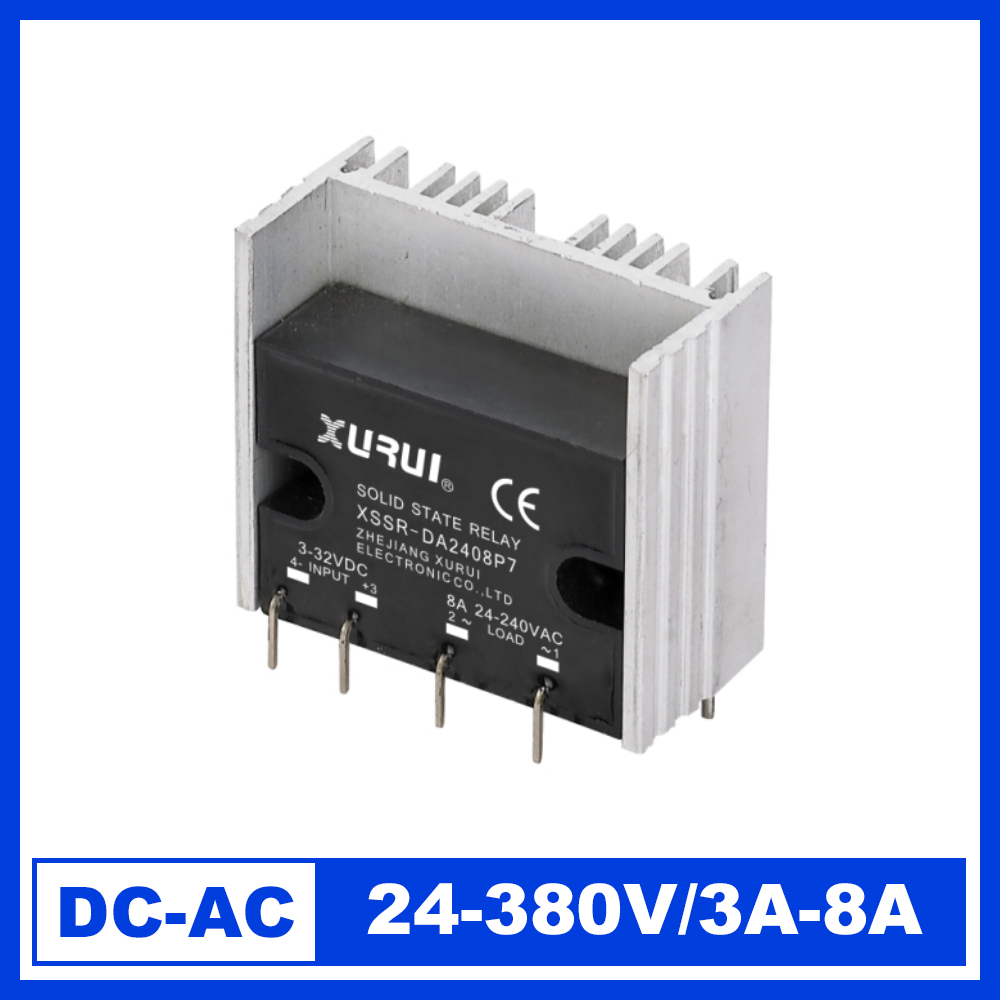
Search for solid state relay manufacturer that explicitly lists products in your required category. For example, a buyer needing an AC solid state relay with DIN‑rail mount and UL certification should look for a supplier like XURUI, whose portfolio includes:
- Single‑phase AC SSR (e.g., XSSR‑P series) and three‑phase SSR
- DC to AC solid state relay and solid state relay dc to dc
- Zero crossing solid state relay and random turn‑on options
- Current ratings from low‑power to solid state relay 40a, 60A, 80A, up to 1000A
- Formats: din rail mount solid state relay, PCB mount, module type
Step 3: Verify Technical and Quality Certifications
Credentials are non‑negotiable. A reputable solid state relay supplier should provide documentation for:
- UL Solid State Relay – Required for North American industrial equipment.
- CE marking – Mandatory for European markets.
- CCC certification – Essential for China market access.
- TÜV, RoHS – Indicate product safety and environmental compliance.
XURUI’s UL certification (File No. E334724, valid since 2017) covers the XSSR series. Their CE certificates include multiple module numbers (e.g., KEYS24050753001EM‑02, VT13069525) and they hold TÜV (704100976101‑03) and CCC certifications for models like XSSR‑3DA‑W10, XSSR‑H, and XSSR‑JK‑W2. Such evidence confirms a manufacturer’s ability to meet international standards.
Step 4: Assess Manufacturing Depth and R&D Capability
Visit the manufacturer’s facilities if possible, or request virtual tours. Look for:
- In‑house production – not just assembly but core component manufacturing.
- Automated equipment – ensures consistency and repeatability.
- Patent portfolio – XURUI holds over 50 patents, including national invention patents and international patents.
- Management system certifications – ISO9001, ISO14001, ISO45001.

Step 5: Evaluate Global Support and Lead Times
Specialized applications often require custom modifications or fast delivery. Check whether the supplier has:
- Authorized distributors in your region (XURUI has partners in USA, South Korea, Italy, Colombia, Egypt).
- Direct technical support via email (Leon@chinaxurui.com) or WhatsApp (+86 13968773211).
- Willingness to customize – e.g., adjustable solid state relay or custom voltage/current ratings.
Use Cases: Matching Specialized SSRs to Industry Needs
Case 1: HVAC – Zero Crossing SSR for Heating Elements
HVAC systems require zero crossing solid state relay to minimize electrical noise when switching resistive heater loads. A 240v solid state relay rated at 40A with DIN‑rail mount is typical. XURUI’s XSSR‑W series AC SSRs offer zero‑crossing switching and are UL/CE certified, making them a suitable choice.
Case 2: Packaging Machinery – High‑Speed DC to AC SSR
Packaging lines often use DC to AC solid state relay to switch solenoids and motors rapidly. A solid state relay dc to dc version is also used for DC motor controls. Reliability at 25A to 40A is critical. Suppliers offering both single‑phase and 3 phase solid state relay options with fast switching are preferred.
Case 3: Temperature Control – Adjustable Solid State Regulator
Industrial ovens need precise power regulation. An adjustable solid state relay (like XURUI’s XSSVR‑W series) allows analog control of output voltage. Concurrently, the AC solid state relay handles the load directly. Buyers should look for manufacturers that provide integrated SSR plus regulator modules.
Frequently Asked Questions About Specialized SSR Procurement
Q1: What is the difference between a zero‑crossing SSR and a random‑turn‑on SSR?
A: A zero crossing solid state relay switches on only when the AC voltage crosses zero, reducing inrush current and EMI. It is best for resistive loads. A random‑turn‑on SSR switches immediately, making it suitable for inductive loads or phase‑angle control.
Q2: How can I verify that a solid state relay has genuine UL certification?
Ask the solid state relay manufacturer for the UL file number and check it on UL’s online database. For example, XURUI’s UL File No. E334724 is issued for “COMPONENT - SWITCHES, INDUSTRIAL CONTROL XSSR”.
Q3: What current rating should I choose for a 600V industrial heater?
Calculate the RMS load current and add a 20‑30% safety margin. Many buyers opt for a 600v solid state relay rated at 40A or 60A to handle inrush. XURUI offers 600V versions in their XSSR‑P and XSSR‑W series.
Q4: Are Chinese SSR suppliers reliable for global projects?
Yes, if they hold international certifications like UL, CE, TÜV, and have a proven track record. XURUI, for instance, is a “Specialized and Innovative Enterprise of Zhejiang Province” and exports to over 20 countries with authorized service centers worldwide.
Q5: What is a DIN rail mount solid state relay and when would I use it?
A din rail mount solid state relay snaps onto standard 35mm DIN rails, saving panel space and simplifying installation. It is ideal for control cabinets in industrial automation and HVAC.
Conclusion: Build Your Custom SSR Supplier Scorecard
Sourcing a solid state relay for a specialized industrial application is not a one‑size‑fits‑all exercise. By following the five‑step framework—define requirements, match product lines, verify certifications, assess manufacturing, and evaluate support—you can confidently select a solid state relay supplier that meets your exact needs.
Chinese manufacturers like XURUI combine deep industrial expertise (over 20 years), robust certifications (UL, CE, TÜV, CCC, RoHS), and global reach, making them strong candidates for buyers seeking UL Solid State Relay or DC to AC solid state relay solutions. Always ask for certification copies, request samples, and if possible, perform a factory audit. The right partner will not only deliver a component but will also ensure the long‑term success of your equipment.
For inquiries about specialized SSR configurations, contact Leon at Leon@chinaxurui.com or WhatsApp +86 13968773211.
Zhejiang Xurui Electronics Co., Ltd. – NO.3 Yandangshan Road, Wenzhou Bridge Industrial Park, Beibaixiang Town, Yueqing, Wenzhou, Zhejiang, China