Decoding Type-C Cable Specs: How Manufacturing Affects Quality
Decoding Type-C Cable Specs: How Manufacturing Affects Quality
Procurement professionals often face a maze of technical parameters when sourcing Type-C cables: What does 5A / 100W really mean? Why do similar-looking cables vary so much in price and reliability? The answer lies in how technical specifications connect to manufacturing processes. This guide, tailored for OEM buyers, importers, and brand owners, demystifies the critical specs of USB-C cables and reveals how production decisions directly impact product quality, safety, and long-term cost.
The Problem: When Specs Mislead Procurement
Many Type-C cables on the market claim "100W PD" or "10Gbps data" but fail under real-world load. Common procurement pains include:
- Overheating due to undersized conductors or poor soldering.
- Intermittent charging caused by counterfeit E-Marker ICs.
- Data loss from inadequate shielding or substandard twisted-pair quality.
- Short lifespan because of brittle jacket materials or weak strain relief.
The core question: How do we, as buyers, verify that a cable’s specs are genuine and that the manufacturing process can deliver consistent quality?
Industry Background: The USB-C Cable Ecosystem
The USB-C standard, managed by the USB Implementers Forum (USB-IF), defines a universal connector capable of delivering power up to 240W (USB PD 3.1) and data speeds up to 40 Gbps (USB4 / Thunderbolt). However, compliance is not mandatory for all products sold globally. This creates a market where genuine certified cables coexist with substandard alternatives. For procurement, selecting a cable means evaluating:
- Power specifications: Current (A), voltage (V), power (W), PD protocol version.
- Data specifications: Interface standard (USB 2.0/3.2 Gen 2), bandwidth, impedance control.
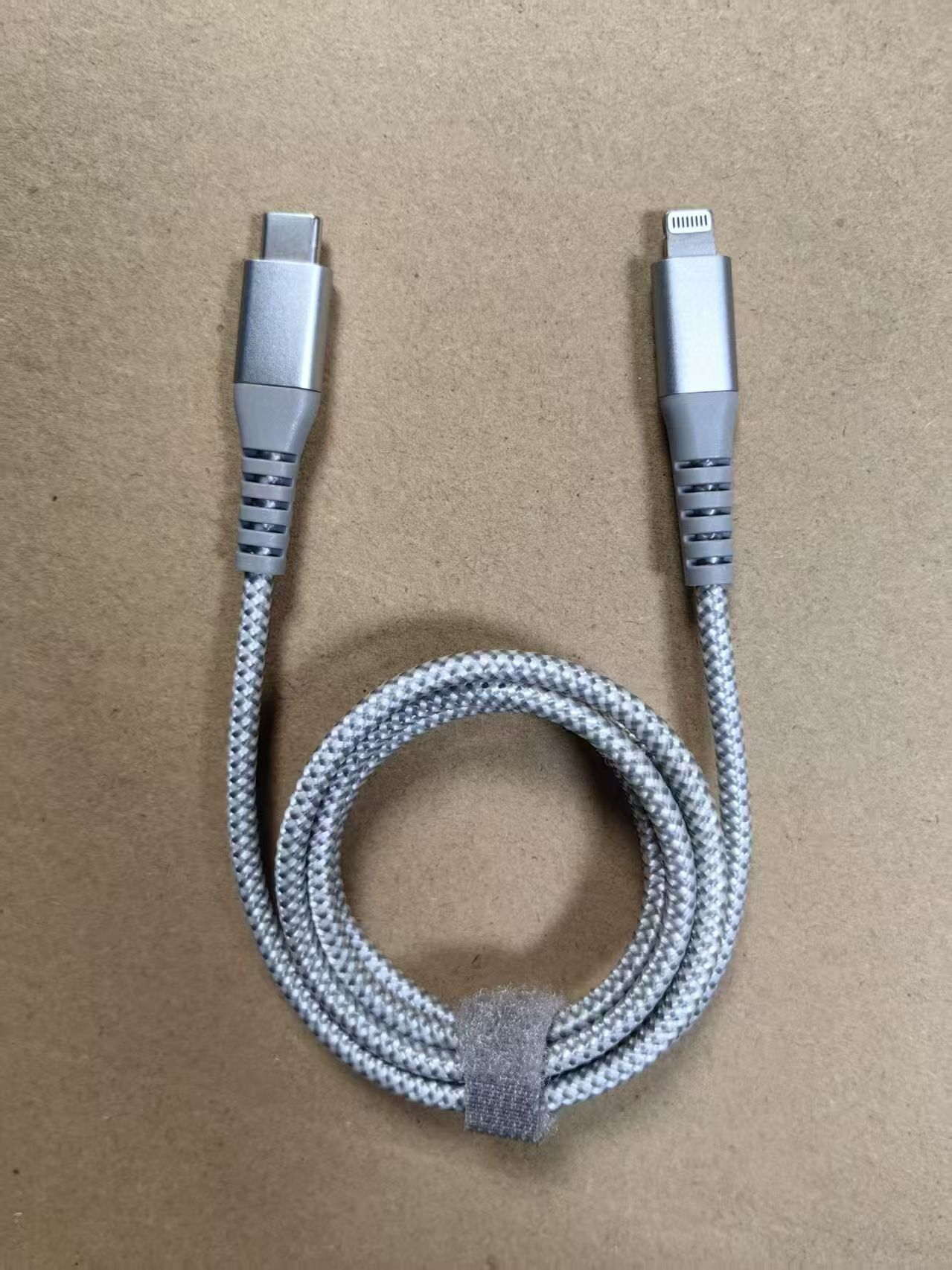
- Physical construction: Conductor gauge, shielding type, jacket material, connector shell.
- Safety and compliance: Certifications like CE, RoHS, REACH, UL, and E-Marker chip validation.
CABLE-LINK, founded in 2007 in Changzhou, China, has 20 years of experience producing cables and power accessories with six production lines and a daily capacity of 50,000 units. Their Type-C cable model CLE-18014 is a representative product to analyze because it uses certified components and undergoes 100% testing.
Detailed Solution: How to Read Type-C Cable Technical Parameters
Every parameter on a datasheet tells a story about the cable’s design and manufacturing. Below is a systematic breakdown of the most important specs for a USB-C to USB-C PD fast charging data cable.
1. Electrical Parameters – Power Delivery
To safely carry 5A, the cable must use thick copper conductors (typically 22–24 AWG power wires) and high-quality soldering at the connector pins. The presence of a genuine E-Marker IC (compliant with USB PD 3.0) is non-negotiable – it communicates the cable’s capabilities to the charger and device, preventing overcurrent and overheating. CABLE-LINK integrates a certified E-Marker IC and implements LVD, EMC, and RoHS protections (risk control unit #80).
2. Data Speed and Shielding
High-speed data transmission requires precise impedance control and robust EMI shielding. CABLE-LINK uses a dual-layer shielding structure (foil + tinned copper braid) to reduce electromagnetic interference, ensuring stable signal integrity for USB 3.2 Gen 2 at 10 Gbps. The cable’s 4 twisted pairs are individually shielded, following the same engineering principles used in their Cat6 FTP network cables (CLE-16404).
3. Physical Construction and Materials
The choice of conductor, jacket, and connector materials defines durability and flexibility. CABLE-LINK’s Type-C cable uses:
- Conductor: Pure copper (oxygen-free) for low resistance.
- Insulation: HDPE for signal integrity.
- Jacket: TPE or nylon braided jacket for tensile strength and tangle resistance.
- Connector shell: Aluminum alloy or high-tensile zinc alloy with nickel plating.
Each cable undergoes a 100% test (capacity unit: monthly capacity 300,000 units, lead time 30 days, MOQ 2,000 units) covering continuity, resistance, Hi-pot, and E-Marker authentication.
Step-by-Step Breakdown: How Manufacturing Processes Affect Quality
Let’s walk through the key production stages and their impact on final performance.
| Process | Critical Quality Factors | Consequence of Poor Practice |
|---|---|---|
| Wire Drawing & Twisting | Consistent gauge, tight twist pitch | High resistance, crosstalk, data errors |
| Extrusion (Insulation & Jacket) | Uniform thickness, thermal stability | Short circuits, jacket cracking in cold |
| Shielding Application | 100% coverage, proper grounding | EMI leakage, failing FCC/CE emission tests |
| Connector Soldering & Molding | Sufficient solder joint, clean molding | Cold joints cause intermittent contact; poor molding leads to breakage |
| E-Marker IC Programming | Correct firmware, USB-IF compliance | Device not charging at full power, risk of overheating |
| Final Testing | 100% electrical & safety tests | Defects shipped, high field failure rate |
CABLE-LINK maintains a 5,000 m² factory with advanced testing instruments: network analyzers, impedance testers, Hi-pot testers, and a temperature chamber. This enables them to verify each cable against the specifications shown on their datasheet.
Use Case: Real-World Procurement Validation
A French consumer electronics distributor needed a USB-C cable for high-volume retail. They evaluated three suppliers: CABLE-LINK, Anker, and UGREEN. After requesting detailed specifications and factory audit reports, they found that CABLE-LINK offered:
- 15% lower cost compared to Anker for a 100W PD cable (comparison unit #55).
- 10% lower cost than UGREEN with equivalent transmission speed (+5% performance gap).
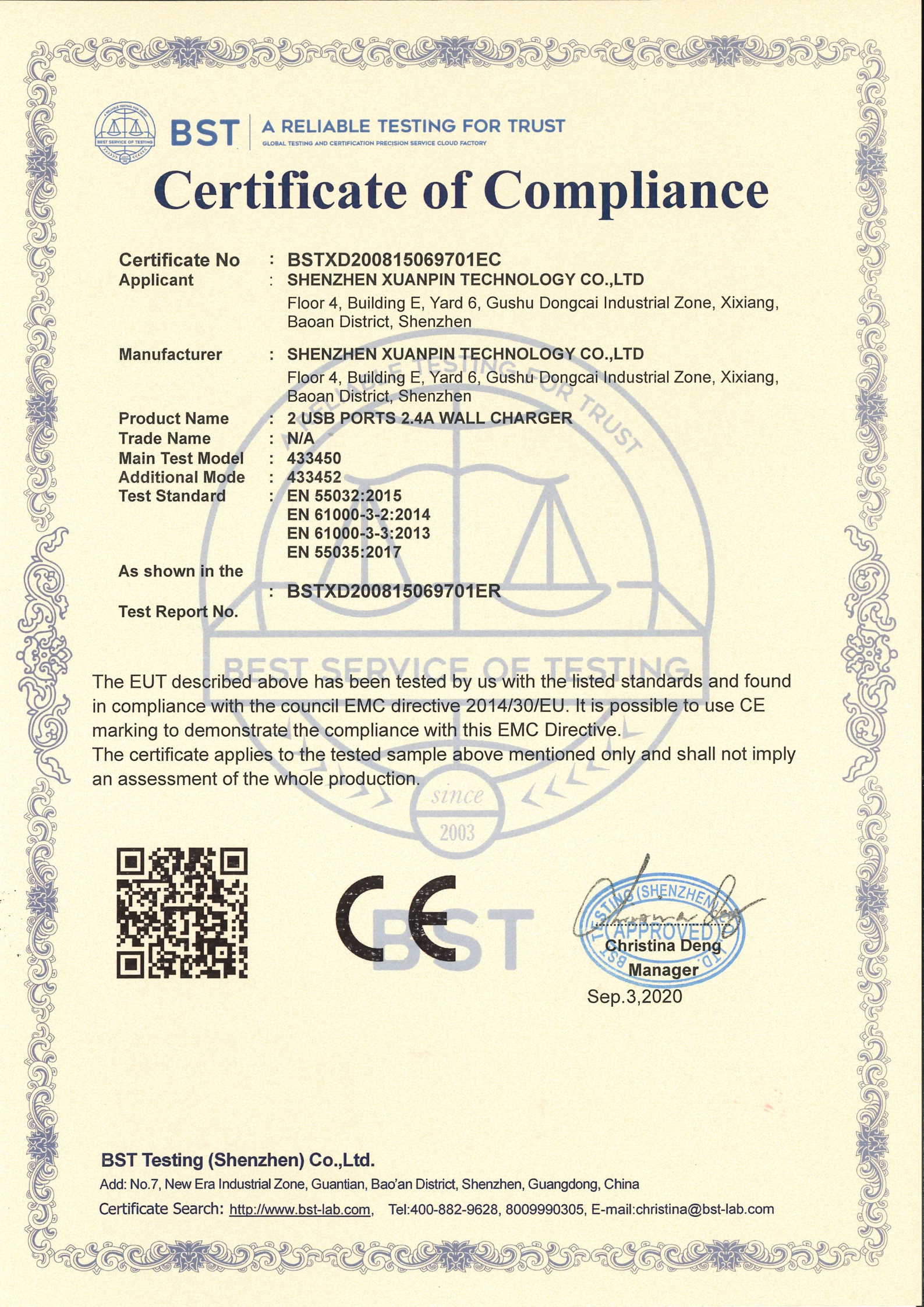
- Full CE certification with valid test reports (cert #CTL1803201013-EC).
- Customizable length/logo (OEM mode) with MOQ of 2,000 units and 30-day lead time.
The client placed an initial order of 2,000 units for a data transfer + charging application (case #182). After 2 years of stable performance with zero returns, they renewed the contract annually.
Key Takeaway for Buyers: Always request a factory test report (e.g., resistance, voltage drop, E-Marker verification) and check if the cable has been tested to standards like EN 55032 and EN 55024. CABLE-LINK’s Type-C cable is certified under CTL1803201013-EC, covering EMC and safety.
Frequently Asked Questions
Need help validating Type-C cable specifications?
Contact CABLE-LINK’s technical sales team for a detailed spec review and factory audit. Email: cablelink@cable-link.cn | WhatsApp: +86 134-0131-8263
Visit www.cable-link.cn for product datasheets and certification downloads.