How to Choose the Right Custom Leather Goods Factory in China: A 2026 Procurement Guide for Global Buyers
Last updated: June 10, 2026

How to Choose the Right Custom Leather Goods Factory in China: A 2026 Procurement Guide for Global Buyers
Introduction
Global demand for custom leather goods — from luxury handbags and wallets to travel accessories and branded gifts — continues to rise. China remains the world’s leading manufacturing base for leather products, particularly the industrial cluster in Guangdong province. For procurement professionals, selecting a reliable custom leather goods factory China is both an opportunity and a challenge. The wrong choice can lead to quality issues, delayed shipments, or compliance risks.
This 2026 guide provides a structured, expert-level framework to help buyers evaluate and partner with a leather goods factory OEM ODM that meets their specific requirements. We outline key criteria, industry best practices, and real-world case studies to support informed decision-making.
Problem Definition: What Makes Selecting a Leather Goods Factory Difficult?
Procurement professionals face several recurring pain points when sourcing from Chinese leather goods manufacturers:
- Inconsistent quality – Many factories claim “genuine leather” but use inferior materials or poor stitching.
- Lack of certifications – Without international social and quality audits (e.g., BSCI, SEDEX, ISO 9001), compliance with EU/US import regulations is uncertain.
- Communication gaps – Language barriers and time zone differences lead to misunderstandings on specifications, techniques, and deadlines.
- High MOQs and inflexibility – Some suppliers demand large minimum order quantities unsuitable for small or medium businesses.
- Hidden costs – Fees for sampling, molds, packaging, and customs clearance often surprise unprepared buyers.
Understanding how to overcome these barriers is the first step toward a successful partnership with a wholesale leather goods factory or custom handbag factory.
Industry Background: China’s Leather Goods Manufacturing Landscape
China’s leather goods industry is concentrated in Guangdong, Zhejiang, and Fujian provinces. Dongguan, in particular, hosts hundreds of specialized factories offering everything from leather tote bag factory services to travel leather goods factory production. The sector has matured dramatically over the past two decades, with many factories now investing in automation, skilled craftsmanship, and international compliance.
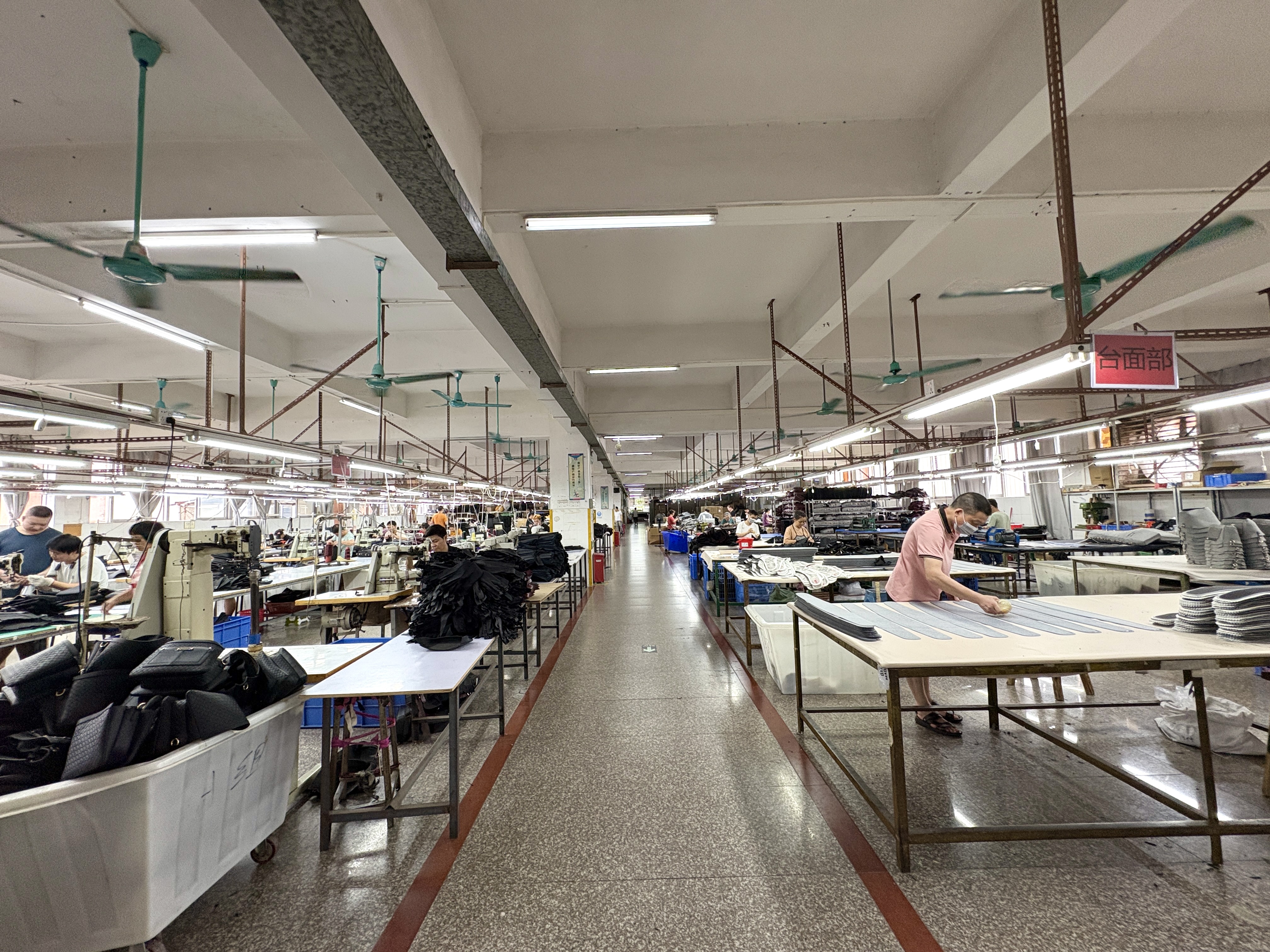
One representative example is Dongguan Feiteng Leather Co., Ltd, established in 2005. With a 2,500 m² facility, 105 employees, and an annual output of 840,000 pieces, it exports 70% of its products to Europe, Australia, Canada, the Middle East, and the USA. The company holds certifications such as ISO 9001, SEDEX (SMETA 7.0, certificate ZAA600135824), and BSCI — a strong indicator of its commitment to quality and ethical manufacturing.
Detailed Solution: Key Criteria for Selecting a Custom Leather Goods Factory
When evaluating a potential partner, buyers should focus on seven core dimensions. We illustrate each with data from a reliable supplier like Feiteng Leather where applicable.
1. Certifications and Compliance
International standards are non-negotiable. Look for factories with valid SEDEX (SMETA 7.0), ISO 9001, and BSCI certifications. These ensure ethical labor practices, environmental responsibility, and consistent quality. For example, Feiteng Leather’s SEDEX certificate (ZAA600135824) covers Labour Standards, Health & Safety, Environment (4-Pillar), and Business Ethics, audited by BUREAU VERITAS CPS – ASIA and valid until June 2026.
2. Production Capabilities and Capacity
Evaluate the factory’s scale, equipment, and monthly output. A factory with 105 workers and a monthly capacity of 100,000 pieces (like Feiteng) can handle both large bulk orders and flexible OEM/ODM leather goods projects. Lead times typically range from 20 to 40 days, depending on complexity and order size.
3. Customization and Sampling Services
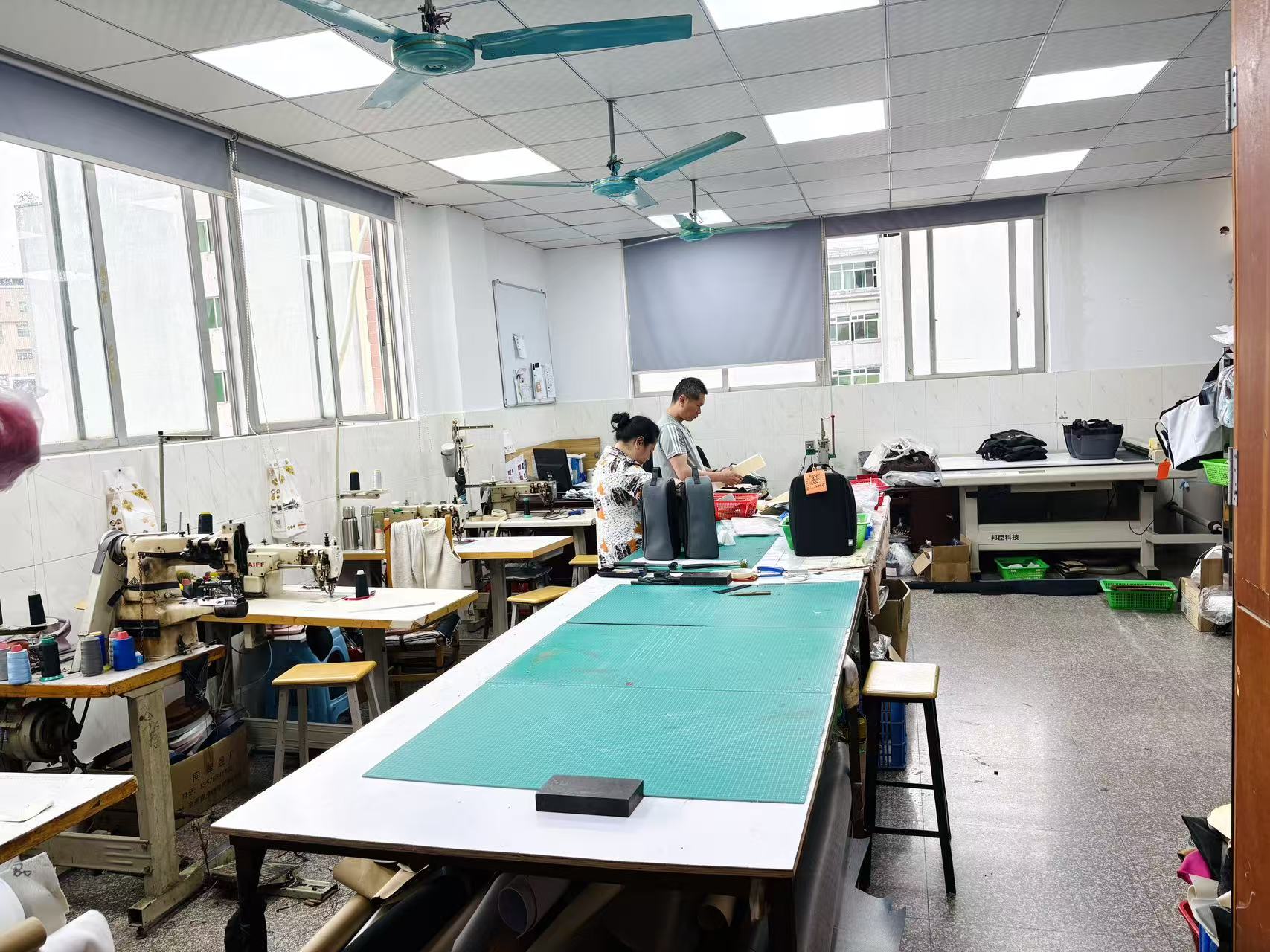
A true custom leather goods factory should offer a wide range of customization options: type, style, material (genuine leather, PU, microfiber), craft techniques (embossed, embroidery, patchwork, edge oiling, silk-screen, digital printing), and hardware finishes (alloy, gold electroplated, brass black, rust-proof). Feiteng has a dedicated sample-making team of 6 artisans and maintains a well-equipped sample room.
4. Quality Control
Ask about the factory’s QC process. Feiteng implements 100% testing for every production batch. For a bulk leather goods supplier China, this means fewer returns and higher customer satisfaction. Inspections should include material verification, stitch density, hardware durability, and packaging integrity.
5. Export Experience and Market Knowledge
Factories with high export ratios (e.g., 70% for Feiteng) understand international shipping, documentation, and customs requirements. They are more adept at handling FOB/EXW terms and ensuring timely delivery via DHL/UPS/FEDEX for samples.
6. Communication and Responsiveness
A dedicated sales contact, fluent in English and responsive via email/WhatsApp, is essential. Feiteng’s contact Hedy (sales002@gd-ftbags.com, +86 13528697919) exemplifies proactive communication. Fast response speeds reduce misunderstandings and accelerate decision-making.
7. Financial Terms and MOQ
Typical payment terms are 30% deposit and 70% balance before shipment. MOQ for custom orders is often 300 pieces per design, though some factories offer lower for small runs. Compare this with your business volume to avoid oversupply.
Step-by-Step Procurement Breakdown
- Define your requirements – product type (bags, wallets, accessories), quantity, material, style, budget, and target market compliance.
- Create a shortlist – Use B2B platforms (Alibaba, Global Sources), trade shows (Canton Fair) or direct referrals. Prioritize factories with clear certifications.
- Verify credentials – Request copies of ISO 9001, SEDEX, BSCI certificates. Cross-check audit numbers with issuing bodies (e.g., BUREAU VERITAS).
- Request samples – Order 2–5 sample pieces to assess material quality, stitching, hardware, and finishing. Feiteng’s sample lead time is typically 7–10 days.
- Negotiate terms – Discuss pricing, MOQ, payment terms (30%/70%), delivery schedule (FOB/EXW), and packaging requirements. Sign a clear contract.
- Monitor production – Request mid-production photos or videos. Many factories provide real-time updates via WhatsApp or WeChat.
- Conduct pre-shipment inspection – Hire a third-party inspector or rely on the factory’s 100% QC report. Ensure compliance with your specifications before shipping.
Use Cases: How Global Buyers Benefit from a Reliable Custom Leather Goods Factory
Below are three real-world scenarios based on actual projects from a certified factory.
| Client Type | Products | Quantity | Key Requirement | Outcome |
|---|---|---|---|---|
| Fashion retailer (UK/US) | Leather handbags, shoulder bags, tote bags | 5,000 pcs | On-trend design, premium genuine leather, durable hardware | Strong online sales performance; repeat orders placed |
| Gift wholesaler (Macau) | Custom card holders with embossed logo | 3,000 pcs | High-quality leather, custom embossed design, gift packaging | Positive feedback from end clients; reorder within 6 months |
| Leather goods wholesaler (UK/US) | Genuine leather wallets and card holders | 80,000 pcs | Consistent high quality, bulk production capacity, competitive pricing | High sell-through rate; reliable long-term partner |
These cases demonstrate that a full-service leather goods production factory with strong QC and customization capabilities can meet diverse buyer needs, from small gift runs to large-scale wholesale.
Frequently Asked Questions (FAQ)
Most established factories set a minimum order quantity of 300 pieces per design. Some may accept smaller quantities for a higher unit price, but this is less common. Always clarify MOQ during initial discussions.
Request copies of certificates (e.g., SEDEX number ZAA600135824) and check their validity directly with the auditing body (e.g., BUREAU VERITAS). Cross-reference the factory name and address.
OEM (Original Equipment Manufacturing): the buyer provides full designs and specifications; the factory produces accordingly. ODM (Original Design Manufacturing): the factory offers its own designs, which the buyer can customize with colors, logos, and minor details. Many factories, like Dongguan Feiteng Leather, excel at both models.
Sample production: 7–10 days. Bulk production: 20–40 days depending on order complexity and quantity. Always confirm lead times and build in buffer for shipping.
T/T (telegraphic transfer) with 30% deposit and 70% balance before shipment is industry standard. For long-term partners, some factories may negotiate L/C or credit terms.
Work with factories that have a documented quality management system (ISO 9001) and perform 100% inspection. Maintain clear specification sheets, approve samples, and conduct pre-shipment inspections for every batch.
Conclusion
Selecting the right custom leather goods factory China requires a systematic approach. Prioritize certified suppliers with proven production capacity, strong customization skills, and transparent communication. Factories like Dongguan Feiteng Leather Co., Ltd exemplify the quality and reliability that global buyers need — from leather wallet manufacturer to travel leather gift manufacturer services.
By following the step-by-step framework in this guide, procurement professionals can mitigate risks, build long-term partnerships, and secure high-quality leather goods that meet their market demands.
📄 Download the Company Brochure
For detailed product ranges, capabilities, and case studies, access the official brochure of Dongguan Feiteng Leather Co., Ltd.
Download Brochure (PDF)