

How to Source the Right Shower Door Manufacturer: A Step-by-Step Guide for Global Buyers in 2026
How to Source the Right Shower Door Manufacturer: A Step-by-Step Guide for Global Buyers in 2026
Finding a reliable supplier for shower doors – whether you need glass shower enclosures, frameless shower doors, or sliding shower doors – can be a complex process. This guide provides procurement professionals, architects, and general contractors with a systematic approach to evaluate manufacturers, verify certifications, and select a partner that meets technical, quality, and delivery requirements.
Problem Definition: Why Shower Door Sourcing Is Challenging
Global buyers face multiple pain points when sourcing shower doors from international suppliers:
- Quality inconsistency – Glass thickness, tempering standards, and hardware durability vary widely.
- Certification gaps – Not all suppliers hold recognized ISO 9001, ISO 14001, or ISO 45001 certificates.
- Communication & lead time risks – Misaligned expectations on OEM customization and shipping schedules.
- Packaging & damage – Inadequate protection leads to breakage and returns.
The core question is: “How can I identify a manufacturer that consistently delivers compliant, high-quality shower enclosures at a competitive price?”
Industry Background: The Global Shower Door Market
The demand for glass shower screens continues to grow, driven by residential renovations and commercial hospitality projects. Key product categories include:
- Frameless shower doors – Minimalist design, popular in high-end bathrooms.
- Sliding shower doors – Space-saving solutions for tight layouts.
- Pivot & hinged shower doors – Classic opening mechanisms.
- Folding & bypass shower doors – Ideal for wider openings.
- Bathtub shower doors – Combination units.
Major production hubs are in China, Vietnam, and Europe. Chinese manufacturers like Foshan SHKL Sanitary Ware Co., Ltd. (brand SHKL) have established 100,000 m² facilities in China and 40,000 m² plants in Vietnam to serve global markets efficiently.
Detailed Solution: How to Evaluate a Shower Door Supplier
Follow this five-step framework to shortlist and qualify potential manufacturers.
Step 1: Verify Certifications and Compliance
A compliant supplier should hold internationally recognized management system certificates. For example:
| Certification | Standard | Cert. Number | Issuing Authority |
|---|---|---|---|
| ISO 9001:2015 | Quality Management | 04924Q00629R0M | Guangdong Quality Testing CTC Certification |
| ISO 14001:2015 | Environmental Management | 04924E00351R0M | Guangdong Quality Testing CTC Certification |
| ISO 45001:2018 | Occupational Health & Safety | 04924S00316R0M | Guangdong Quality Testing CTC Certification |
These certificates, held by SHKL, demonstrate a commitment to systematic quality control, environmental responsibility, and worker safety – all critical for long-term partnership.
Step 2: Assess Manufacturing Capabilities
Look for factories with:
- Scale – Large production bases ensure volume capacity and stability. SHKL operates a 100,000 m² base in China and a 40,000 m² plant in Vietnam.
- Technology – CNC machines, laser positioning hole-making machines, automatic spraying lines, and dust-free spray booths improve precision and finish.
- R&D team – A dedicated team of 20+ engineers enables customization of size, color, material, finish, and design.
- Monthly output – Over 10,000 units/month indicates mature production capability.
Step 3: Evaluate Product Range and Customization
A versatile supplier should offer multiple shower door types:
- Frameless shower doors (model KL-AS5104310) – 304 stainless steel hardware.
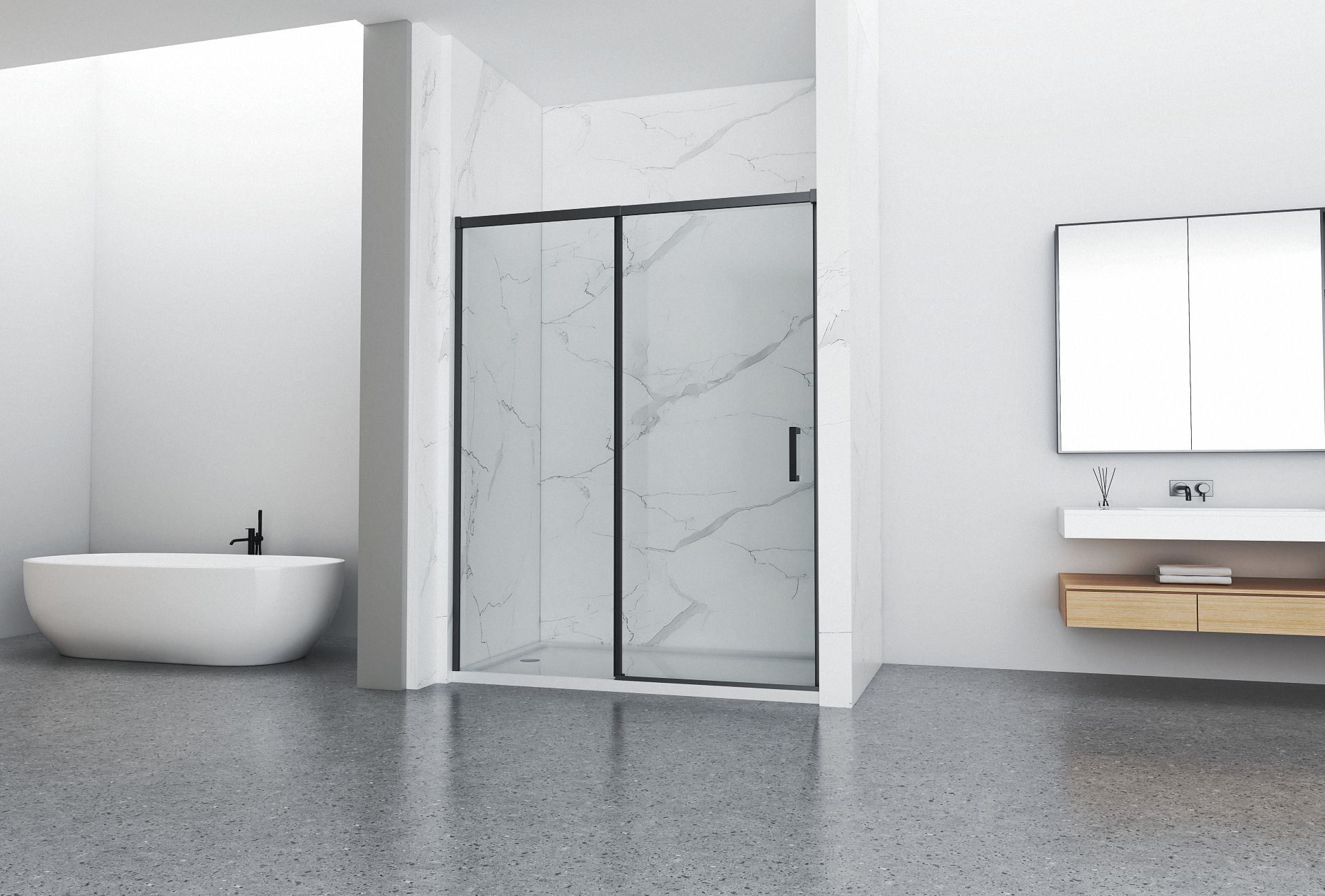
- Sliding shower doors (model KL-AS5511312) – aluminium alloy or stainless steel.
- Hinge / pivot shower doors (model KL-AS5577310) – robust construction.
- Bathtub shower doors (model KL-AS5605110-5) – designed for tub installations.
- Arc shower doors (model KL-AS5210422) – curved elegance.
- Shower screens (model KL-AS001-1) – fixed panels.
All models typically offer glass options: clear, tinted, laminated, flute, chemically frosted, easy-clean, or film-coated. Hardware materials include 304 stainless steel or aluminium alloy.
Step 4: Review Past Projects and Case Studies
Real case studies provide evidence of reliability. For example:
- Shower door project in Australia – 190 units for bathrooms, delivered on time, met Australian safety standards, high customer satisfaction.
- Shower door project in Thailand – 110 units, laminated safety glass, anti-shatter design, compliant with local standards.
- Hotel bathroom project in the USA – 250 custom bathroom vanities with shower enclosures, products met US standards.
These cases demonstrate the supplier's ability to handle different market requirements and regulatory frameworks.
Step 5: Understand Commercial Terms and Risk Control
Discuss delivery methods (e.g., FOB), payment terms (T/T), acceptance procedures (pre-shipment test), and packaging standards. A responsible supplier will have systematic risk controls:
- Delivery schedule management – Breaking down schedules, material early warning, rolling production planning.
- Quality control – 100% inspection, using certified raw materials, imported machinery.
- Packaging reinforcement – Strengthened packaging to prevent transport damage.
For example, SHKL applies a “critical material early warning mechanism” and maintains safety stock to ensure on-time delivery even during peak seasons.
Use Cases: Who Needs This Guide?
- Procurement managers sourcing glass shower enclosures for residential or commercial projects.
- General contractors looking for a one-stop supplier for shower doors and bathroom vanities.
- Architects and designers specifying frameless sliding shower doors for high-end bathrooms.
- Distributors expanding their product portfolio of shower screens and shower cabins.
Frequently Asked Questions (FAQ)
Q1: What is the difference between a framed and a frameless shower door?
A frameless shower door uses thicker tempered glass (usually 8-10mm) with minimal metal hardware, offering a cleaner look. Framed shower doors have a metal frame around the glass, which adds structural support but can be less modern.
Q2: How do I know if a supplier is certified?
Request copies of valid certificates like ISO 9001, ISO 14001, and ISO 45001. Verify the certificate number and issuing authority online. For example, SHKL’s certificates are issued by Guangdong Quality Testing CTC Certification Co., Ltd., valid until 2027.
Q3: What glass options should I consider for safety?
Laminated glass is the safest because it holds together when broken. Tempered glass shatters into small blunt pieces. Both are common. For commercial projects, laminated glass is often required by code.
Q4: What is the typical lead time for a custom shower door order?
For OEM orders, expect 30-45 days. Production time depends on complexity, volume, and current factory load. Reliable suppliers will provide a detailed production schedule.
Q5: How can I ensure the product meets my local building codes?
Work with suppliers that have experience exporting to your region. Ask for proof of compliance, such as Australian standards (AS/NZS 2208) or US standards (ANSI Z97.1). Review case studies of similar projects in your country.
Conclusion
Sourcing shower doors globally requires a structured approach: verify certifications, assess manufacturing capabilities, review product variety, check past project references, and understand risk mitigation measures. Manufacturers like SHKL, with ISO-certified facilities in China and Vietnam, a strong R&D team, and proven global case studies, exemplify the qualities buyers should seek.
To help you get started, SHKL offers a comprehensive company brochure that details their production lines, product portfolio, quality management, and project references. Download it today for deeper insights.