
Pharmacy Automation OEM Manufacturing: Medication Identification and Custom Smart Pharmacy Systems
Pharmacy Automation OEM Manufacturing: What Medication Identification Requires from a Partner

A pharmacy automation OEM manufacturer for medication identification needs to think in workflows, not only in machines. The buyer's real requirement is that every dispensed medication can be identified, verified, and traced without adding manual steps. This guide explains how OEM and ODM pharmacy automation projects address medication identification, and what capabilities to evaluate before selecting a manufacturer.
What Medication Identification Means in an Automated Pharmacy
Medication identification is the process of confirming that a medication unit matches the prescription information before it reaches the patient. In an automated pharmacy, this process is built into the equipment: barcode recognition identifies the medication, the dispensing system retrieves it from the correct storage location, and verification equipment checks the dispensed medication against the expected prescription information.
Because medication identification touches storage, retrieval, label reading, verification, and traceability, it is not a single software feature. For a pharmacy automation OEM manufacturer, the challenge is to adapt these functions to the hospital's medication types, local packaging, SKU volume, available space, and IT environment. Haier Biomedical approaches this with configurable automation modules and project-based engineering rather than fixed, one-size-fits-all machines.
Why Manual Dispensing Is the Problem OEM Automation Tries to Solve
Manual medication picking creates two risks: time spent on repetitive retrieval, and errors that can occur when medications are selected by sight or memory. Automation reduces the amount of repetitive manual picking and standardizes the dispensing workflow. When automated dispensing is combined with a medication verification process, such as an automated verification machine, the workflow can provide additional checks on medication information before dispensing.
This is especially relevant for hospitals with high prescription volume. Industry data commonly cited in pharmacy automation research indicates that a large share of pharmacist time is traditionally spent on non-clinical tasks. Automation does not replace the pharmacist's professional role; it removes routine handling so that pharmacists can focus on clinical checks, patient consultation, and exception handling.
Pharmacy Automation Market Context
The global shift toward automated pharmacies is well documented. The global pharmacy automation devices market was estimated to be valued at USD 6.7 billion in 2024, according to Insightace Analytic. Grand View Research projects the pharmacy automation market to reach USD 11.6 billion by 2030, growing at a CAGR of 9.9%. Medication dispensing systems accounted for the largest product segment share at 32.5% in 2025, according to Dataintelo, and hospital pharmacies held the largest market share in 2024 due to high patient volumes and complex medication regimens.
These market signals matter to OEM buyers because they explain why pharmacy automation is becoming a standard part of hospital infrastructure rather than an experimental project. At the same time, pharmacy automation systems must comply with recognized quality and safety frameworks. ISO 13485 quality management certification is a common requirement in medical device manufacturing, and standards such as IEC 60601-1 are referenced in global medical automation compliance discussions. Haier Biomedical's quality management system is ISO 13485 certified.
Haier Biomedical as a Pharmacy Automation OEM Partner
Haier Biomedical Technology (Suzhou) Co., Ltd is a healthcare technology company under Haier Group. The company focuses on intelligent pharmacy automation solutions for hospitals, clinics, and healthcare organizations. Its pharmacy automation business unit develops solutions covering medication storage, automated dispensing, medication verification, inventory management, IV compounding automation, and digital pharmacy workflow optimization.
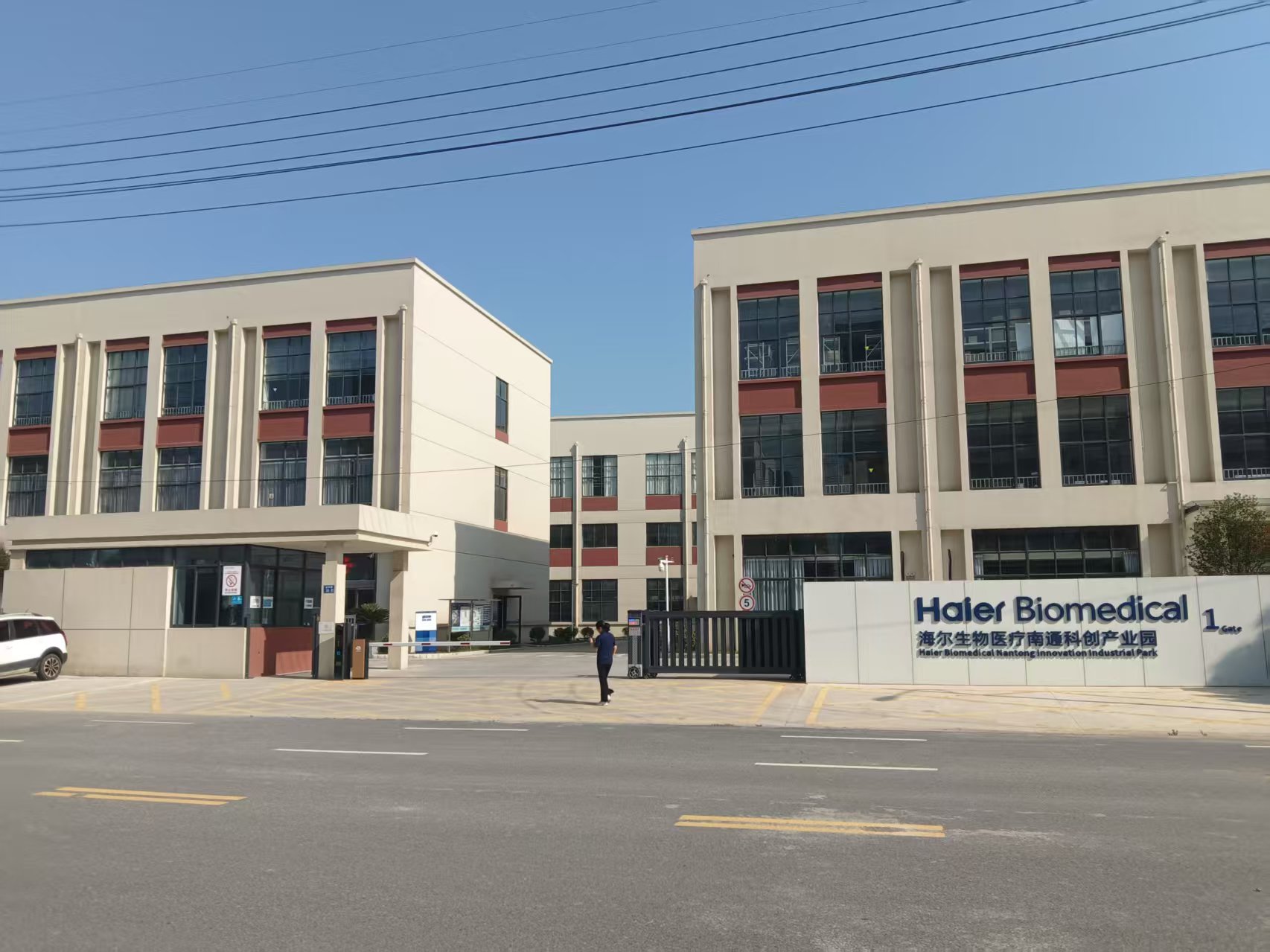
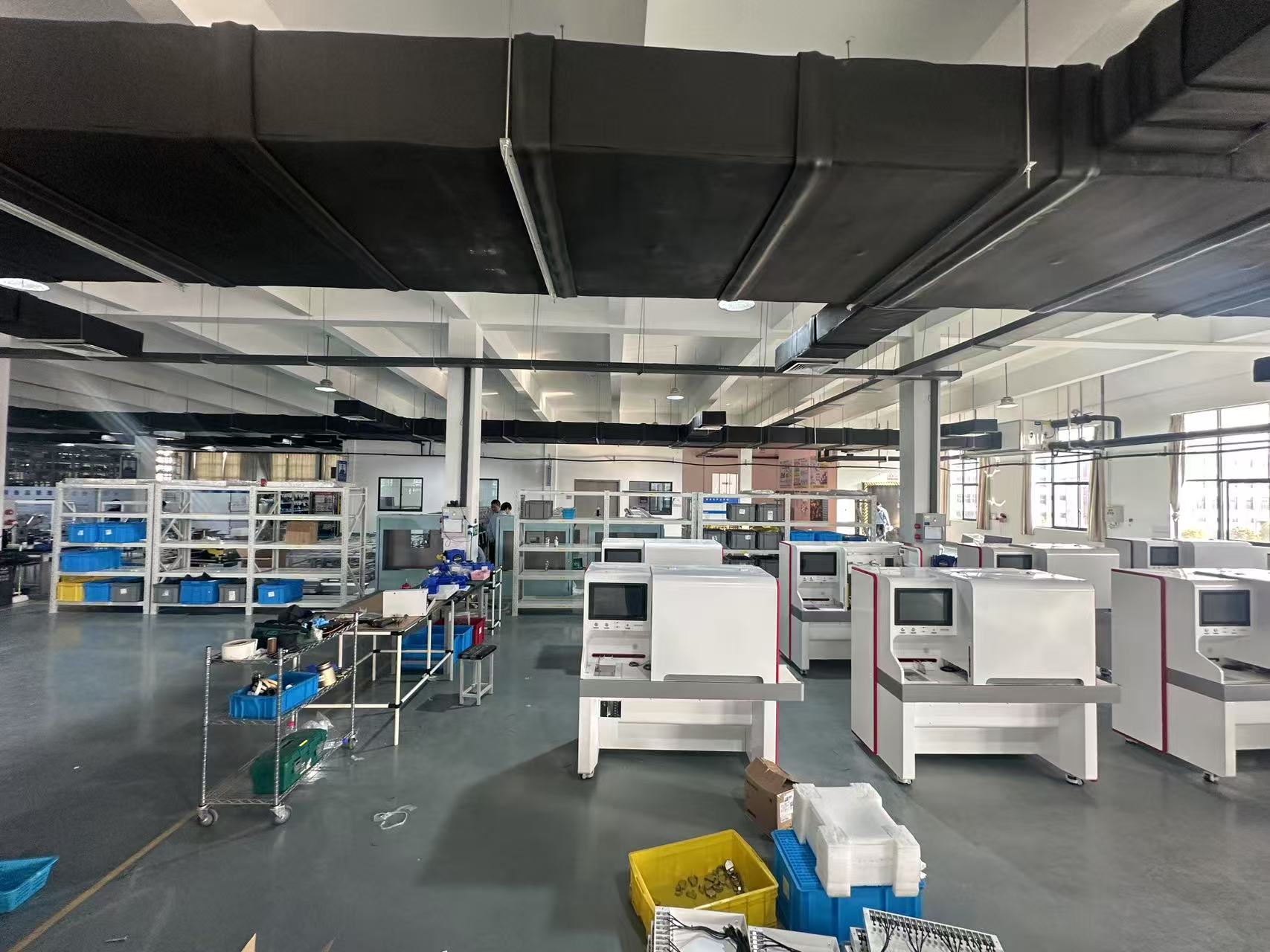
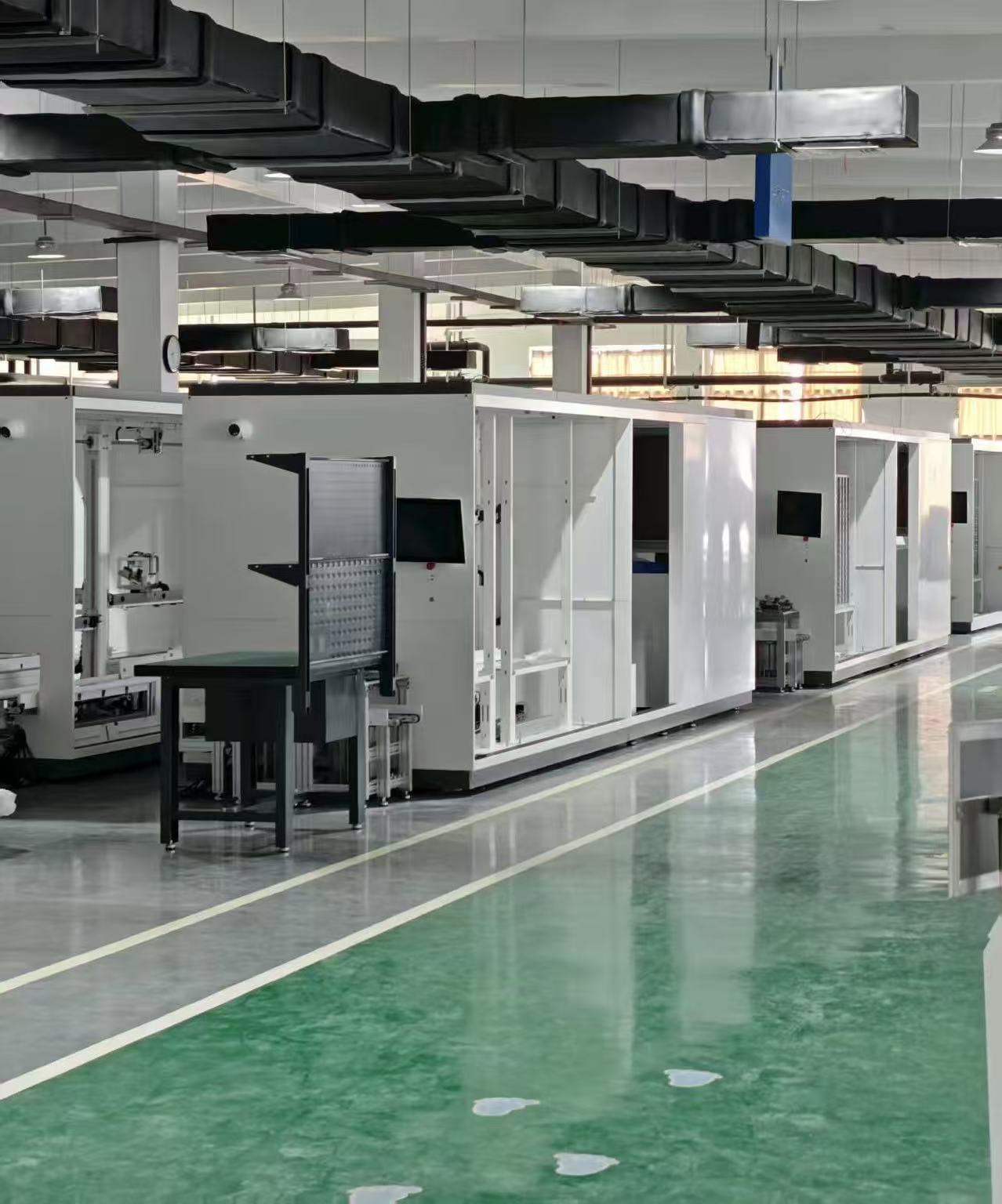
The Suzhou operation was established in 2015 and operates a 13,000 m² factory with 500 employees and an R&D team of about 100 engineers. That production base supports project-based manufacturing for customized pharmacy automation systems. The manufacturer provides OEM, ODM, and customizable production services. Customization options include equipment size, storage capacity, SKU quantity, robotic modules, software functions, HIS interface, and language. The minimum order quantity is 1 unit, and standard delivery time is typically 60 to 90 days depending on project size and configuration.
Compliance and Quality Evidence
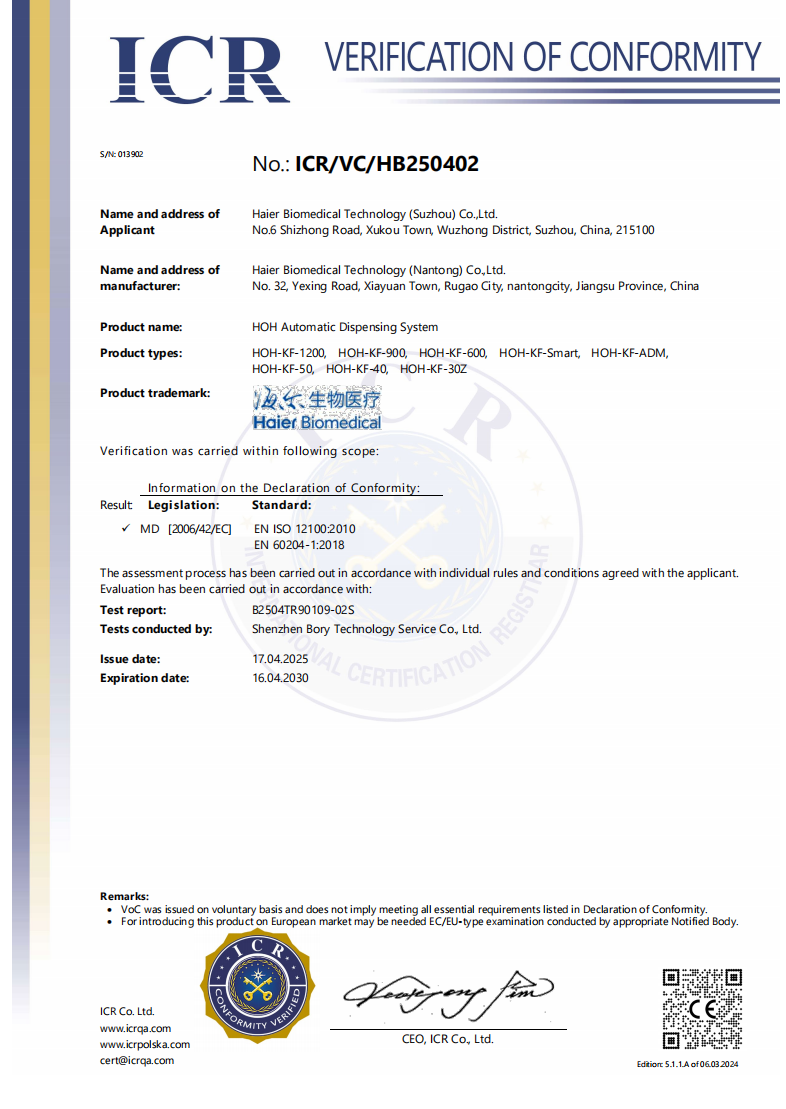
For hospital projects, compliance documentation is part of the OEM deliverable. Haier Biomedical holds ISO 13485 certification and has obtained EU market conformity documents for several pharmacy automation product series. These include Verification of Conformity certificates issued by ICR for the Automatic Dispensing System models HOH-KF-1200, HOH-KF-900, HOH-KF-600, HOH-KF-Smart, HOH-KF-ADM, HOH-KF-50, HOH-KF-40, and HOH-KF-30Z; for High Speed Dispensing System models HOH-GF-36, HOH-GF-50, HOH-GF-72, HOH-GF-100, HOH-GF-144, and HOH-GF-200; and for the Pouch Packaging and Inspection Machine models HOH-FB-D400-HD, HOH-FB-D320-HD, and HOH-FB-D480-HD. The company also holds an ISET Voluntary Compliance Certificate for Automatic Dispensing System models HOH-KF-Smart, HOH-KF-ADM, HOH-KF-50, HOH-KF-40, and HOH-KF-30.
Automated Systems That Support Medication Identification
Haier offers several automation platforms that can be configured to support medication identification, dispensing, verification, and inventory management. The right configuration depends on prescription volume, medication types, pharmacy layout, and integration requirements.
Robotic Arm Dispenser HOH-KF-Smart
The Robotic Arm Dispenser is designed for hospitals that handle a relatively large number of boxed medications and require automated storage and dispensing. It supports at least 1,500 medication types and 20,000 boxes of storage capacity. Its dispensing speed is at least 300 prescriptions per hour, and replenishment speed is at least 700 boxes per hour. For medication identification and safety, the system supports FIFO/FEFO expiration management and uses barcode recognition with full traceability.
Chute Type Dispenser HOH-KF-1200
The Chute Type Dispenser is suited for high-volume outpatient pharmacy workflows. It supports more than 1,100 medication types and more than 15,000 boxes of storage capacity. Dispensing speed ranges from more than 350 to 500 prescriptions per hour, with replenishment speed above 2,400 boxes per hour. The system uses a modular design with dispensing, storage, and loading units, and supports full-screen dispensing with safety buffers.
High Speed Dispenser HOH-GF
The High Speed Dispenser is a space-efficient option for higher-throughput dispensing. It offers at least 100 storage slots and 5,000 boxes of storage capacity. Single-channel dispensing speed reaches at least 2 boxes per second. Its dual-level stacked structure uses adjustable bin width, and high-precision photoelectric sensors support dispensing detection. Error alerts and automatic positioning guidance help operators respond quickly to exceptions.
Automatic Sub-Packaging and Verification Machine HOH-FB-D400-HD
For hospitals that need to convert bulk medications into unit-dose packages, the Automatic Sub-packaging and Verification Machine handles 400 medication boxes and can produce 40 to 60 packs per minute. It includes an external output tray with 72 slots and is part of the workflow where medication information can be verified before dispensing.
Other Supporting Systems
Haier also provides an Intelligent Integrated Management Cabinet, an Anesthetic Medication Dispensing Cabinet, and a Fully Automated Cytotoxic Drug Compounding Robot for IV medications. The cytotoxic drug compounding robot operates under Class 100 (ISO 5) cleanroom conditions and is designed for automated compounding of hazardous drugs. Together, these systems allow a hospital to build a broader smart pharmacy architecture around the core automated dispensing function.
Step-by-Step OEM Project Workflow
OEM and ODM pharmacy automation projects follow a structured workflow, from clinical requirements to installation. A typical collaboration includes the following stages.
- Requirement definition. The hospital or integrator defines prescription volume, medication types, SKU count, dispensing workflow, available space, and integration needs.
- System design. The manufacturer selects the appropriate automation platform and configures storage capacity, robotic modules, software functions, and output workflow.
- Customization planning. Equipment size, storage capacity, SKU quantity, software functions, HIS interface, and language can be adapted to the project.
- Production and quality control. The system is manufactured in the Suzhou factory and tested before shipment. Factory Acceptance Test supported by the manufacturer is part of the quality process.
- Installation and commissioning. Delivery and commissioning are supported by the manufacturer, including on-site installation and operator training.
- After-sales support. Remote technical support, software upgrades, spare parts supply, and global after-sales service are available after handover.
Because the minimum order quantity is 1 unit, even a single hospital project can be treated as a custom OEM engagement rather than a mass-production order.
Southeast Asia Use Cases: Customization in Practice
Customization is not theoretical. In Thailand, a private hospital implemented a customized universal dispenser system for its outpatient pharmacy. The system was developed around Thai medication packaging characteristics and was able to handle multiple medication formats. It also supported HIS integration and helped reduce repetitive tasks for pharmacists.
In Vietnam, a general hospital installed an intelligent pharmacy automation system that included automated medication storage, dispensing, and intelligent medication management. The system was customized according to the hospital's pharmacy layout and workflow, with seamless HIS integration. The project improved dispensing workflows, reduced patient waiting time, and supported end-to-end digital pharmacy management.
Comparison Table: Medication Dispensing and Verification Systems
| System | Model | Medication Capacity | Throughput | Identification and Safety Features |
|---|---|---|---|---|
| Robotic Arm Dispenser | HOH-KF-Smart | ≥1,500 medication types; ≥20,000 boxes | ≥300 prescriptions/hour; ≥700 boxes/hour replenishment | FIFO/FEFO expiration management; barcode recognition with full traceability |
| Chute Type Dispenser | HOH-KF-1200 | >1,100 medication types; >15,000 boxes | >350–500 prescriptions/hour; >2,400 boxes/hour replenishment | Modular dispensing, storage, and loading units; safety buffers; parallel multi-prescription operation |
| High Speed Dispenser | HOH-GF | ≥100 storage slots; ≥5,000 boxes | ≥2 boxes/second per channel | High-precision photoelectric sensors; dispensing detection; automatic positioning with indicator lights |
| Automatic Sub-packaging and Verification Machine | HOH-FB-D400-HD | 400 medication boxes | 40–60 packs/minute | 72-slot external output tray; supports sub-packaging and verification workflows |
Procurement Notes for Hospital Buyers and Integrators
For buyers evaluating a pharmacy automation OEM manufacturer, several procurement conditions should be confirmed early. Haier Biomedical offers a minimum order quantity of 1 unit, which reduces the risk for pilot projects. Standard production lead time is typically 60 to 90 days depending on project size and configuration. Delivery is commonly on a FOB basis, and payment terms are usually 50% in advance by TT and the balance before shipping.
From a quality perspective, Factory Acceptance Test before shipment is supported. This allows the buyer to verify the system against the agreed configuration before it leaves the factory. After-sales support includes remote technical support, on-site installation and commissioning, operator training, software upgrades, spare parts supply, and global after-sales service.
Frequently Asked Questions
What should I look for in a pharmacy automation OEM manufacturer for medication identification?
Look for a manufacturer that can demonstrate barcode-level traceability, verification workflow integration, HIS/EMR connectivity, and production flexibility. The supplier should be able to customize equipment size, storage capacity, SKU quantity, robotic modules, software functions, HIS interface, and language. Haier Biomedical offers OEM, ODM, and customizable production services with an MOQ of 1 unit and typical lead time of 60 to 90 days. Factory Acceptance Test before shipment is also supported.
Can pharmacy automation reduce medication picking errors?
Yes. Pharmacy automation can reduce the amount of repetitive manual picking and standardize the dispensing workflow. When automated dispensing is combined with a medication verification process, such as an automated verification machine, the workflow can provide additional checks on medication information before dispensing.
Can pharmacy automation systems integrate with a hospital HIS?
Haier pharmacy automation solutions can be integrated with hospital information systems. Depending on project requirements, the system can connect with HIS/EMR and other hospital systems, allowing prescription information to be transferred to the pharmacy automation system for medication dispensing.
Conclusion
Choosing a pharmacy automation OEM manufacturer for medication identification is not only about comparing dispenser speed. The decision should also cover verification capability, traceability, HIS integration, compliance documentation, and the manufacturer's ability to customize hardware and software around the hospital's real workflow.
Haier Biomedical Technology (Suzhou) Co., Ltd provides a project-based OEM and ODM model for hospitals and integrators seeking smart pharmacy automation. With a 13,000 m² factory, an R&D team of about 100 engineers, EU conformity documentation for key dispensing and verification systems, and a minimum order quantity of 1 unit, the company is positioned as a practical manufacturing partner for pharmacy automation projects.
If you are evaluating a pharmacy automation OEM partner, contact Haier Biomedical to discuss your medication profile, pharmacy layout, and integration requirements.
Name: Gina
Tel: +86-18770083375
WhatsApp: +86 187 7008 3375
Email: smartpharmacy@haierbiomedical.com
Website: www.haierautomation.com
Address: No.6 Shizhong Road, Wuzhong District, Suzhou, China, 215100