
Pharmacy Automation: A Specification and Compliance Guide for Hospital Decision-Makers
Pharmacy automation can reduce repetitive medication handling, improve dispensing accuracy, and support compliance. But choosing a system is not simply a matter of picking the fastest machine. Buyers in the research and evaluation phase need to verify certification scope, product parameters, HIS integration, and fit with the existing pharmacy layout. This guide explains those checks, using Haier Biomedical Technology (Suzhou) Co., Ltd as a reference supplier.
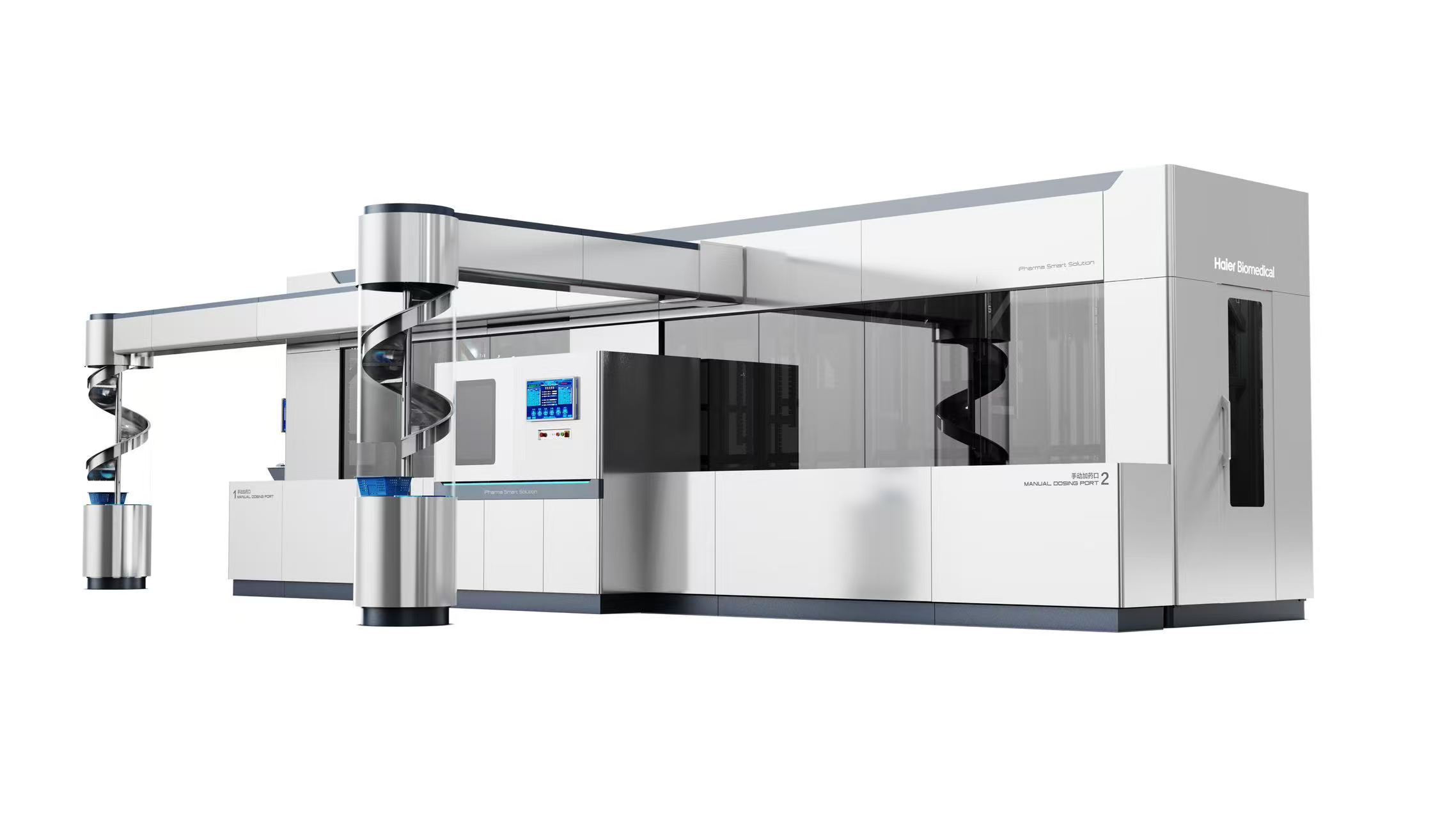
Haier Biomedical Technology (Suzhou) Co., Ltd is a healthcare technology company under Haier Group, based in Suzhou, China. Its pharmacy automation business develops intelligent pharmacy automation solutions for hospitals, clinics, and healthcare organizations. The company provides solutions covering medication storage, automated dispensing, medication verification, inventory management, IV compounding automation, and digital pharmacy workflow optimization.
The Problem: Manual Dispensing Does Not Scale Cleanly
The problem with manual pharmacy dispensing is not only speed. Repetitive picking tasks consume pharmacist time, high prescription volumes create bottlenecks, and controlled substances are difficult to track when access is managed manually. These issues increase the risk of medication errors and make pharmacy workflows harder to standardize. For hospitals, the procurement challenge is to select equipment that fits the actual prescription volume and medication mix, while meeting regional compliance expectations.
Industry Background: Pharmacy Automation Growth
Pharmacy automation has moved from optional to necessary in many hospital settings. According to Insightace Analytic, the global pharmacy automation devices market is estimated to be valued at USD 6.7 billion in 2024. Grand View Research projects the broader pharmacy automation market to reach USD 11.6 billion by 2030, at a CAGR of 9.9%. Dataintelo reports that medication dispensing systems accounted for the largest product segment share at 32.5% in 2025. Fortune Business Insights identifies hospital pharmacies as the largest end-user segment, due to high patient volumes and complex medication regimens. These figures help explain why hospitals are now evaluating automated dispensing, verification, and inventory management systems together.
Detailed Solution: Compliance and Equipment Parameters
Start with Certificates
For EU projects, compliance documentation is one of the most direct checks a buyer can make. Haier provides product-specific Verification of Conformity documents issued by ICR, and the Robotic Arm Dispenser is covered by an ISET Voluntary Compliance Certificate. The referenced standards are EN ISO 12100:2010 and EN 60204-1:2018. Haier Biomedical also holds ISO 13485 medical device quality management system certification.
Buyers should ask for the certificate number, model scope, issue date, expiry date, and issuing body before finalizing a pharmacy automation purchase. A valid certificate should cover the exact model being installed, not just the broader product family.
Robotic Arm Dispenser HOH-KF-Smart
The HOH-KF-Smart Robotic Arm Dispenser is designed for hospitals with high-volume boxed medications. It supports at least 1,500 medication types and 20,000 boxes. Dispensing speed is at least 300 prescriptions per hour, and replenishment speed is at least 700 boxes per hour. The system supports FIFO/FEFO expiration management, barcode recognition, and full traceability. It also supports parallel multi-prescription operation and has a modular structure.
Chute Type Dispenser HOH-KF-1200
The HOH-KF-1200 Chute Type Dispenser suits outpatient pharmacies with high prescription volume. It can store more than 1,100 medication types and 15,000 boxes. Dispensing speed is 350 to 500 prescriptions per hour, and replenishment speed is more than 2,400 boxes per hour. The footprint is less than 12.85 square meters. Full-screen dispensing with safety buffers supports parallel multi-prescription operation, and the system integrates with HIS.
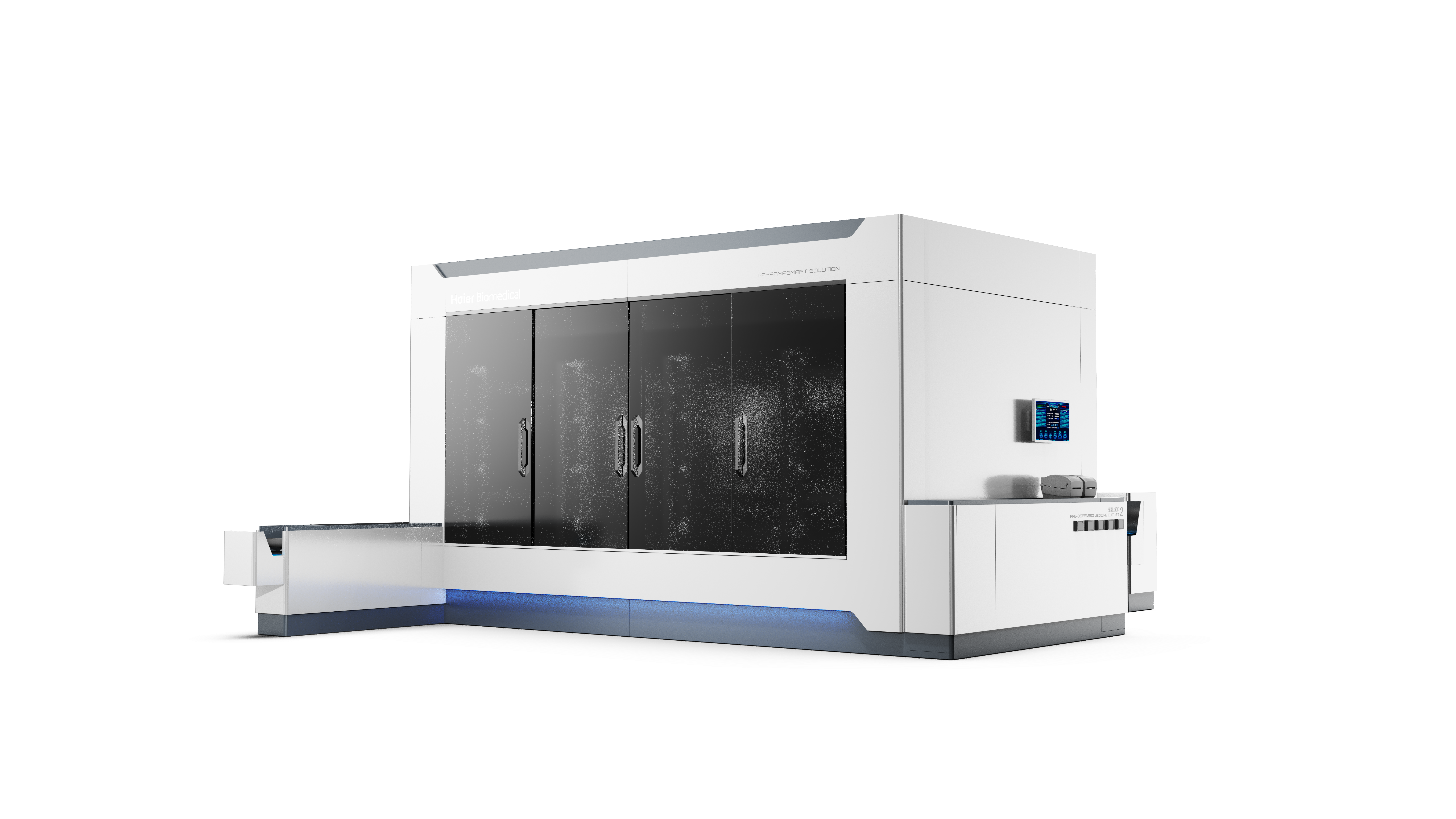
Figure: Chute Type Dispenser for high-efficiency outpatient pharmacy dispensing.
High Speed Dispenser HOH-GF
The HOH-GF High Speed Dispenser uses a dual-level stacked structure with adjustable bin width. It provides at least 100 storage slots and 5,000 boxes of capacity. Single-channel dispensing speed is at least 2 boxes per second. High-precision photoelectric sensors detect dispensing, and automatic positioning guidance with indicator lights helps operators respond to errors.
Automatic Sub-packaging and Verification Machine HOH-FB-D400-HD
The HOH-FB-D400-HD automatic sub-packaging and verification machine combines unit-dose packaging with AI-based visual verification. It holds 400 medication boxes and packages 40 to 60 packs per minute. The system has 72 external output tray slots and can connect with hospital HIS systems. It verifies drug type, quantity, and prescription accuracy in real time, creating a closed-loop packaging and verification workflow.
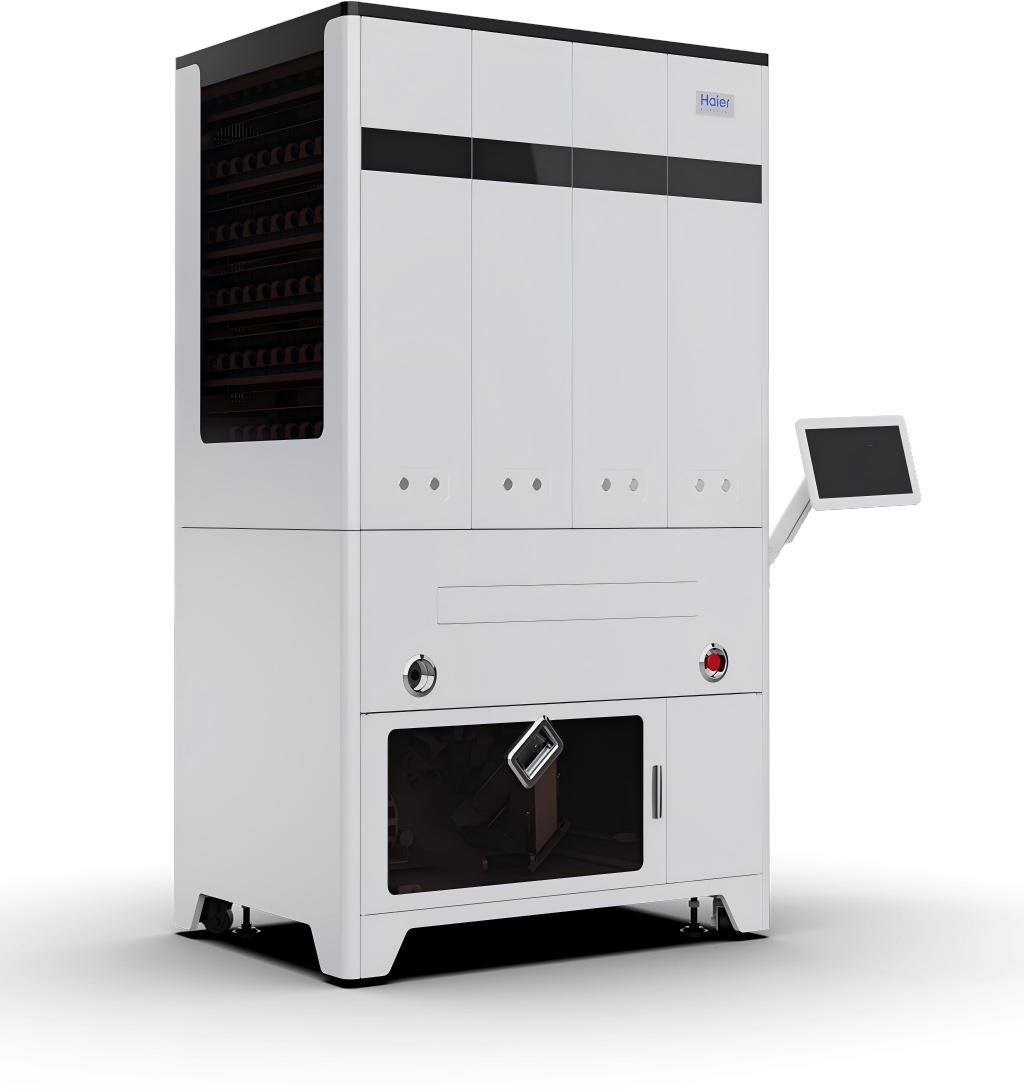
Figure: Unit-dose packaging and AI-based visual verification in one system.
Anesthetic Medication Dispensing Cabinet HOH-MJ-01
The HOH-MJ-01 is designed for hospital outpatient pharmacies, emergency pharmacies, and inpatient pharmacies. It is a full-process intelligent control device for anesthetic and psychotropic drugs. The cabinet has nine drawers and 44 compartments, with a 15-inch touch screen. It addresses difficult traceability, disordered access control, and low inventory accuracy, and it aligns with the hospital's Five-Specialty Management requirements for anesthetic and psychotropic drugs.
Intelligent Integrated Management Cabinet HOH-BQ-A
The HOH-BQ-A Intelligent Integrated Management Cabinet is designed for the storage, management, and monitoring of narcotic and psychotropic drugs in operating rooms or pharmacy preparation areas. It includes 32 small pillboxes and 8 large pillboxes, with a 23-inch touch screen. The cabinet supports full traceability and precise control of controlled substances.
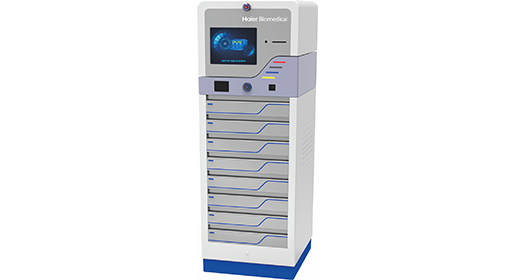
Figure: Anesthetic Medication Dispensing Cabinet for controlled-substance management.
Fully Automated Cytotoxic Drug Compounding Robot HOH-Robot-Plus
The HOH-Robot-Plus is a fully automated robotic cytotoxic drug compounding system for PIVAS environments. It operates under Class 100 (ISO 5) cleanroom conditions, with 100% compounding accuracy and a compounding efficiency of 25 cycles per hour. It is compatible with more than 95% of vials and with 50-1000 mL soft bags, plastic bottles, and stand-up pouches. AI vision recognition and high-precision weighing automate drug injection, dissolution, aspiration, and mixing. The enclosed workflow separates staff from cytotoxic drug handling and supports automatic medical waste classification.
Step-by-Step: How to Evaluate a Pharmacy Automation System
- Define demand: calculate daily prescription volume, peak-hour volume, number of SKUs, and medication formats such as boxed, ampoule, or unit-dose.
- Map the pharmacy workflow: identify whether the need is outpatient dispensing, inpatient unit-dose, controlled-substance management, PIVAS compounding, or a combination.
- Verify compliance evidence: check certificate numbers, model scope, applicable standards, issue and expiry dates, and whether the certificate covers the EU or other target market.
- Check integration requirements: confirm HIS or EMR connectivity, data fields, and how prescription information flows into the dispensing system.
- Review physical constraints: measure available floor space, ceiling height, power supply, replenishment path, and workflow distances.
- Plan service and lead time: confirm factory acceptance testing before shipment, installation and commissioning, operator training, software upgrades, spare parts supply, and after-sales support.
Use Cases: Hospital Pharmacy Automation in Asia
Thailand: Private Hospital Outpatient Pharmacy
A private hospital in Thailand used one customized universal dispenser system in its outpatient pharmacy. The system was customized for local medication packaging characteristics in Thailand, making it compatible with multiple medication formats. It supported HIS integration, modular design, high reliability, and scalability. The project result was stable and efficient automated dispensing, improved dispensing accuracy, and reduced repetitive tasks for pharmacists.
Vietnam: General Hospital Outpatient Pharmacy
A general hospital in Vietnam deployed one intelligent pharmacy automation system for automated medication storage, dispensing, and intelligent medication management. The system was customized according to the hospital's pharmacy layout and workflow, with HIS integration. The result was an optimized dispensing workflow and reduced patient waiting time.
Comparison Table: Haier Pharmacy Automation Equipment
| System | Model | Primary Use | Key Specifications | EU Compliance Evidence |
|---|---|---|---|---|
| Robotic Arm Dispenser | HOH-KF-Smart | High-volume boxed medication dispensing | At least 1,500 medication types; at least 20,000 boxes; at least 300 prescriptions/hour; at least 700 boxes/hour replenishment | ISET Voluntary Compliance Certificate ISETC.000220220323 |
| Chute Type Dispenser | HOH-KF-1200 | High-efficiency outpatient pharmacy dispensing | More than 1,100 medication types; more than 15,000 boxes; 350-500 prescriptions/hour; more than 2,400 boxes/hour replenishment | ICR Verification of Conformity ICR/VC/HB250402 |
| High Speed Dispenser | HOH-GF (2 Modules) | High-frequency boxed medication storage and dispensing | At least 100 storage slots; at least 5,000 boxes; at least 2 boxes/second per channel | ICR Verification of Conformity ICR/VC/HB250403, valid until 2030-04-16 |
| Automatic Sub-packaging and Verification Machine | HOH-FB-D400-HD | Unit-dose packaging plus AI visual verification | 400 medication boxes; 40-60 packs/minute; 72 output trays | ICR Verification of Conformity ICR/VC/HB250802 |
| Anesthetic Medication Dispensing Cabinet | HOH-MJ-01 | Anesthetic and psychotropic drug control | 9 drawers; 44 compartments; 15-inch touch screen | ICR Verification of Conformity ICR/VC/HB240501 |
| Intelligent Integrated Management Cabinet | HOH-BQ-A | Controlled-substance management in operating rooms or pharmacy preparation areas | 32 small pillboxes; 8 large pillboxes; 23-inch touch screen | ICR Verification of Conformity ICR/VC/HB240501 |
| Fully Automated Cytotoxic Drug Compounding Robot | HOH-Robot-Plus | PIVAS and cytotoxic drug compounding | Class 100 (ISO 5); 25 cycles/hour; 100% compounding accuracy; compatible with more than 95% of vials | Confirm certification scope with supplier for the target market |
Frequently Asked Questions
What EU compliance documentation should a buyer check for pharmacy automation equipment?
For EU projects, buyers should check the Verification of Conformity or Voluntary Compliance Certificate issued by an independent body. Haier systems such as the Robotic Arm Dispenser, Chute Type Dispenser, High Speed Dispenser, and controlled-substance cabinets carry documents issued by ICR or ISET. The referenced standards are EN ISO 12100:2010 and EN 60204-1:2018.
Can pharmacy automation reduce medication picking errors?
Yes, automation reduces the amount of repetitive manual picking and standardizes the dispensing workflow. When automated dispensing is combined with a verification process, such as an automatic sub-packaging and verification machine, the workflow can provide additional checks on medication information before dispensing is completed.
Can pharmacy automation systems integrate with a hospital HIS?
Yes. Haier pharmacy automation solutions can be integrated with hospital information systems to support automated prescription processing and dispensing. Depending on project requirements, the system can connect with HIS or EMR platforms. Prescription information is transferred through the defined interface, and the pharmacy automation system processes it according to configured dispensing rules.
Is pharmacy automation suitable for every hospital?
Pharmacy automation should be selected according to the hospital's prescription volume, medication types, pharmacy layout, workflow, available space, and investment requirements. Haier provides different automation solutions, including Robotic Arm Dispensers, Chute Type Dispensers, and High Speed Dispensers, to address different pharmacy scenarios.
What is the typical lead time for a pharmacy automation project?
Haier's production capacity is project-based, and lead time is typically 60 to 90 days depending on project size and configuration. The minimum order quantity is 1 unit. Each system receives a Factory Acceptance Test before shipment. After delivery, Haier provides on-site installation and commissioning, operator training, software upgrades, spare parts supply, and global after-sales service. For a project-specific timeline, contact smartpharmacy@haierbiomedical.com with the pharmacy layout, target volume, and medication list.
Conclusion
Pharmacy automation projects succeed when compliance, equipment parameters, and workflows are evaluated together. Start with certification documents, then match equipment to prescription volume and physical layout, and confirm HIS integration before finalizing the configuration. Haier Biomedical's product line covers robotic arm dispensing, chute-type dispensing, high-speed box dispensing, unit-dose packaging and verification, controlled-substance cabinets, and automated IV compounding.
For hospitals currently in the research or evaluation stage, a practical next step is to request a configuration proposal with the relevant certificate numbers and a factory acceptance test plan. This allows the pharmacy, IT, and procurement teams to compare equipment on the basis of documented compliance and measurable operating parameters.
Request the Full-Scenario Intelligent Pharmacy Brochure
For a more complete view of Haier's intelligent pharmacy portfolio, download the Full-scenario Intelligent Pharmacy brochure.
Download the Full-scenario Intelligent Pharmacy PDF
Contact: Gina
Tel: +86-18770083375
WhatsApp: +86-187 7008 3375
Email: smartpharmacy@haierbiomedical.com
Website: www.haierautomation.com
Address: No.6 Shizhong Road, Wuzhong District, Suzhou, China, 215100