
Efficient Cooling Plate Sourcing: A Risk Mitigation Guide
Efficient Cooling Plate Sourcing: A Risk Mitigation Guide
Introduction
Procuring liquid cooling plates for electric vehicle (EV) and battery energy storage system (BESS) applications is no longer a simple transaction. As thermal management becomes the critical bottleneck for battery performance, safety, and lifespan, the choice of a cooling plate supplier directly impacts your product's reliability and your company's bottom line. This guide provides a structured approach to efficient procurement—helping you avoid common pitfalls, assess supplier capabilities, and secure a partnership that minimizes risk while maximizing value.
Problem Definition – What Makes Cooling Plate Procurement Challenging?
Buyers face several recurring issues:
- Inconsistent quality: leaks, dimensional deviations, and poor thermal performance.
- Long lead times that disrupt production schedules.
- Hidden costs from rework, rejects, or warranty claims.
- Communication gaps with overseas suppliers, especially regarding technical specifications.
- Lack of verifiable certifications or audit trails.
Industry Background – The Rising Demand for Cooling Plates in EV & BESS
Global EV sales surpassed 14 million units in 2025, and utility-scale BESS deployments are growing at over 30% CAGR. Every EV battery pack and BESS container requires an efficient battery cooling plate to manage heat during fast charging, high-load discharge, and thermal runaway prevention. This has created a surge in demand for aluminum liquid cooling plates, which offer a favorable balance of weight, thermal conductivity, and cost. Suppliers like Trumony Aluminum Limited, founded in 2017 with 100,000 m² of workshop space and 220 employees, have scaled production to 600,000 units annually to meet this demand.
Detailed Solution – A Procurement Framework for Cooling Plates
Efficient procurement starts with a clear, multi-dimensional evaluation of potential suppliers. Below is a framework covering technology, quality, capacity, and risk management.
1. Understanding Key Product Categories
| Product Type | Typical Application | Key Advantage |
|---|---|---|
| Stamped cooling plate | BESS, high-volume EV | Low cost, high production efficiency |
| Brazing cooling plate | Custom battery modules, high-thermal-load | Superior joint strength, leak integrity |
| Serpentine / snake cooling tube | Prismatic & cylindrical cells | Flexible geometry, low pressure drop |
| Liquid cooling plate for energy storage | Utility-scale containers | Large surface area, epoxy coating for corrosion |
2. Technical Evaluation Criteria
When assessing a supplier's production capability, look for:
- Material: Most aluminum cold plates use Aluminum 3003, offering good formability and corrosion resistance.
- Manufacturing process: Stamping, brazing, and tube bending—each has trade-offs in cycle time, cost, and thermal performance.
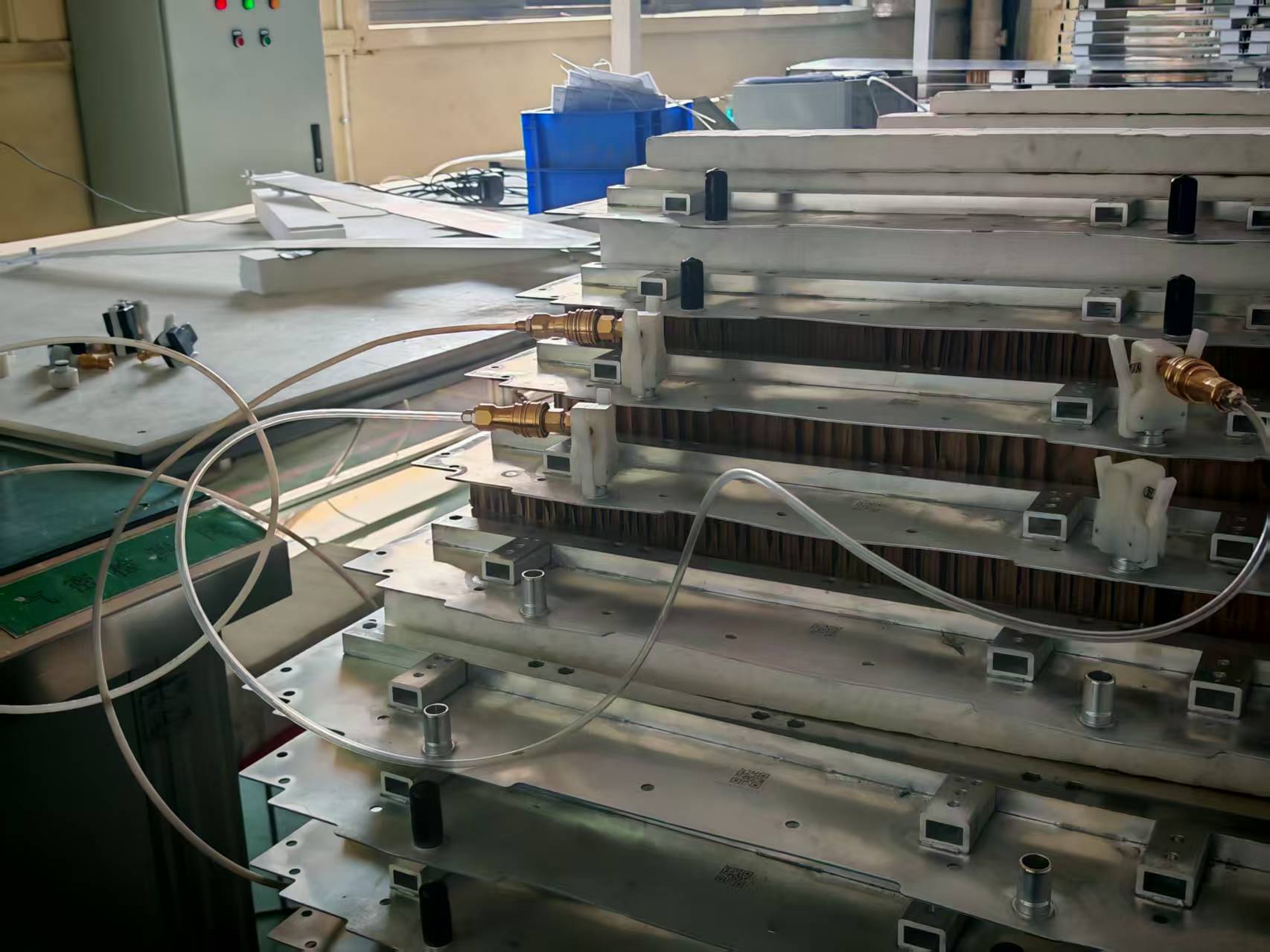
- Testing: 100% air leakage test is a baseline. Advanced suppliers also offer helium tightness test, hydrostatic strength test, burst test, and voltage resistance test.
- Customization: Can the supplier adjust cooling efficiency, thickness, dimensions, and logo? Trumony offers fully customized EV cooling plate and BESS cooling plate with tailored cooling efficiency.
3. Quality Management System & Certifications
Reputable suppliers hold internationally recognized certifications that prove consistent quality. For instance, Trumony holds both ISO 9001 (certificate number 132998, issued 2023-09-21, valid to 2026-09-21) and IATF 16949 (certificate number 0489498, issued 2023-11-27, valid to 2026-11-26). The IATF 16949 certification is especially critical for automotive OEMs as it ensures adherence to stringent automotive quality standards.
4. Supply Chain & Commercial Terms
Efficient procurement relies on transparent terms. Key factors:
- Minimum Order Quantity (MOQ): Trumony accepts MOQ as low as 1 unit, enabling prototyping and small-batch validation.
- Lead time: 30 days for standard configurations.
- Trade terms: FOB and CIF are commonly offered.
- Payment: 30% deposit, 70% balance before shipment.
- Acceptance: Pre-shipment test procedures ensure compliance before cargo leaves.
5. Risk Mitigation in Practice
To avoid leaks and overheating, the best practice is to demand:
- 100% air tightness test on every unit.
- Helium leakage test as an optional verification for critical applications.
- Epoxy coating for corrosion resistance in high-humidity or saline environments (as seen in BESS projects).
- Thermal protection design with temperature sensor integration.
Step-by-Step Procurement Process
- Define your thermal requirements – power density, flow rate, coolant type, target temperature delta.
- Choose the manufacturing process – stamped for low-cost high-volume, brazed for robust large plates, serpentine tube for flexible routing.
- Request for quotation (RFQ) with detailed drawings, material specs, and test protocols.
- Audit the supplier – review certifications (ISO9001/IATF16949), visit factory if possible, check their testing equipment (helium leak detector, burst tester).
- Validate sample – request pre-production samples and conduct dimensional, leakage, and thermal performance tests.
- Establish quality agreement – agree on acceptance criteria, inspection plan, and non-conformance processes.
- Plan logistics – confirm FOB/CIF, lead time, and packaging standards to avoid damage in transit.
Use Cases – Real-World Procurement Examples
Case 1: Global Automotive OEM in Vietnam
A major automotive OEM required 60,000 units of liquid cooling plate for EV for a 20-year project. They selected Trumony based on low cost, high quality, and low noise. The cooling plates have operated stably for over two years, meeting the OEM's rigorous reliability standards.
Case 2: ESS Pack OEM in China
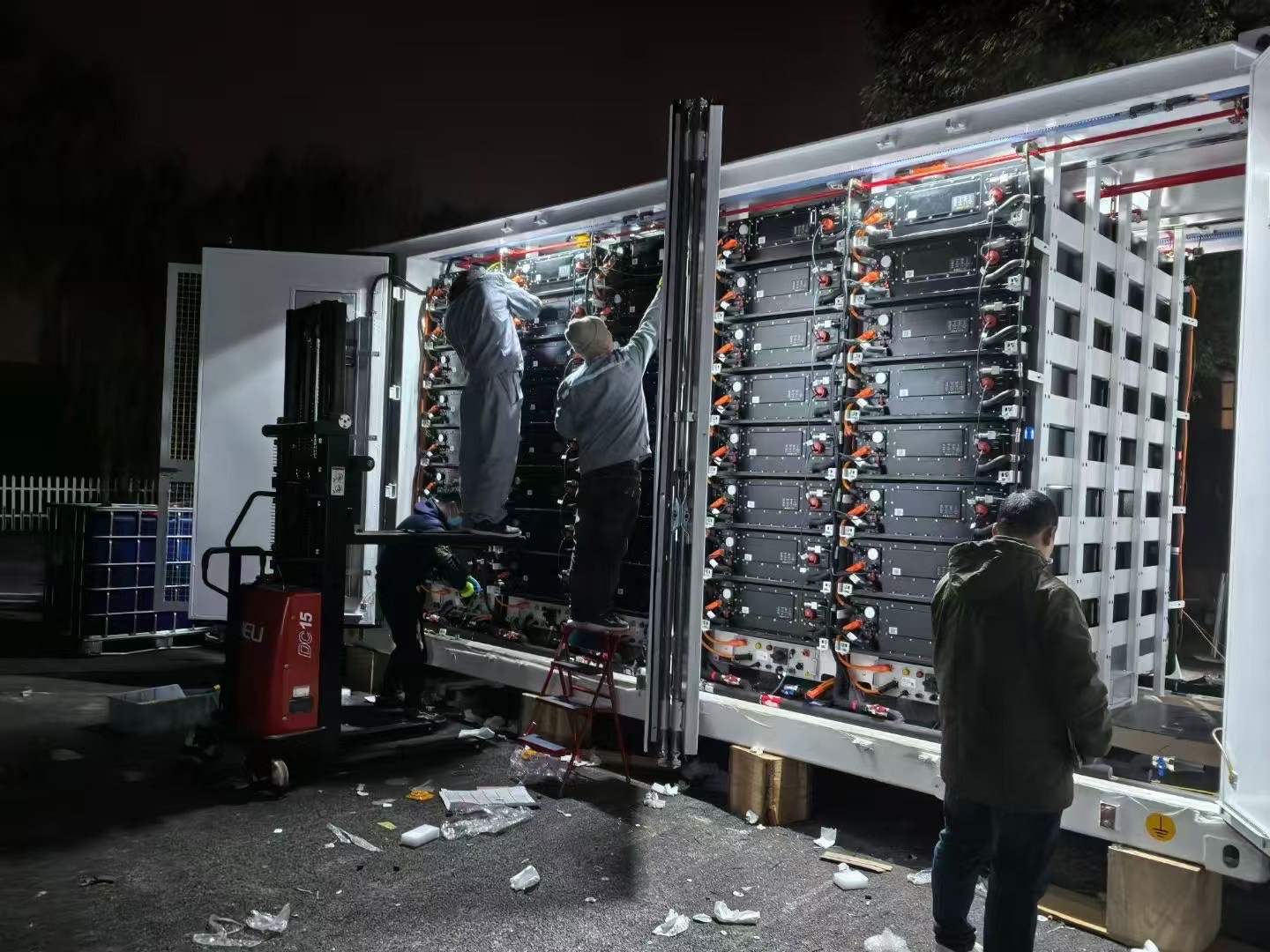
An energy storage system integrator sourced 3,000 units of energy storage system cooling plate from Trumony. The key decision factors were fast lead time, low cost, and low noise. The plates, featuring epoxy coating, have maintained stable operation for 15 years in containerized BESS installations.
Frequently Asked Questions (FAQ)
What is a cooling plate and how does it work?
A cooling plate (also called cold plate) is a liquid-cooled heat exchanger that extracts heat from batteries or power electronics. Coolant flows through internal channels, absorbing thermal energy and transferring it to a radiator or chiller.
Why is the cooling plate important for EV and BESS?
Battery performance and safety degrade rapidly above optimal temperature. A high-quality cooling plate maintains uniform cell temperature, prevents thermal runaway, and extends cycle life.
Who uses liquid cooling plates?
Automotive OEMs, battery pack manufacturers, ESS integrators, power tool companies, and high-performance electronics firms rely on these components.
How do I choose between stamped and brazed cooling plates?
Stamped plates are cost-effective for mass production (e.g., EV platforms). Brazed plates offer superior strength and leak integrity for large-format or high-pressure applications (e.g., BESS containers).
What are common buyer concerns and how to address them?
Buyers worry about quality inconsistency, delivery delays, and hidden costs. Mitigation: demand certified quality management (ISO9001/IATF16949), insist on 100% leakage testing, choose suppliers with transparent payment and trade terms (FOB/CIF), and start with an MOQ as low as 1 unit for pilot.
Conclusion
Efficient cooling plate procurement is about building a risk-aware, data-driven supplier relationship. By focusing on manufacturing technology, certification depth, quality testing rigor, and commercial flexibility, buyers can secure a reliable partner for the long term. Trumony Aluminum Limited, with its 100,000 m² factory, IATF16949 & ISO9001 certification, 600,000-unit annual capacity, and proven EV/BESS case studies, exemplifies the attributes to look for. Start your sourcing journey with a clear checklist—and remember that the cheapest quote often carries the highest total cost of risk.
Contact Trumony for expert consultation on cooling plate specifications and supply.