Dental Zirconia Blocks Explained: Selection Guide for Labs & Milling Centers
Dental Zirconia Blocks Explained: A Practical Selection Guide for Labs & Milling Centers
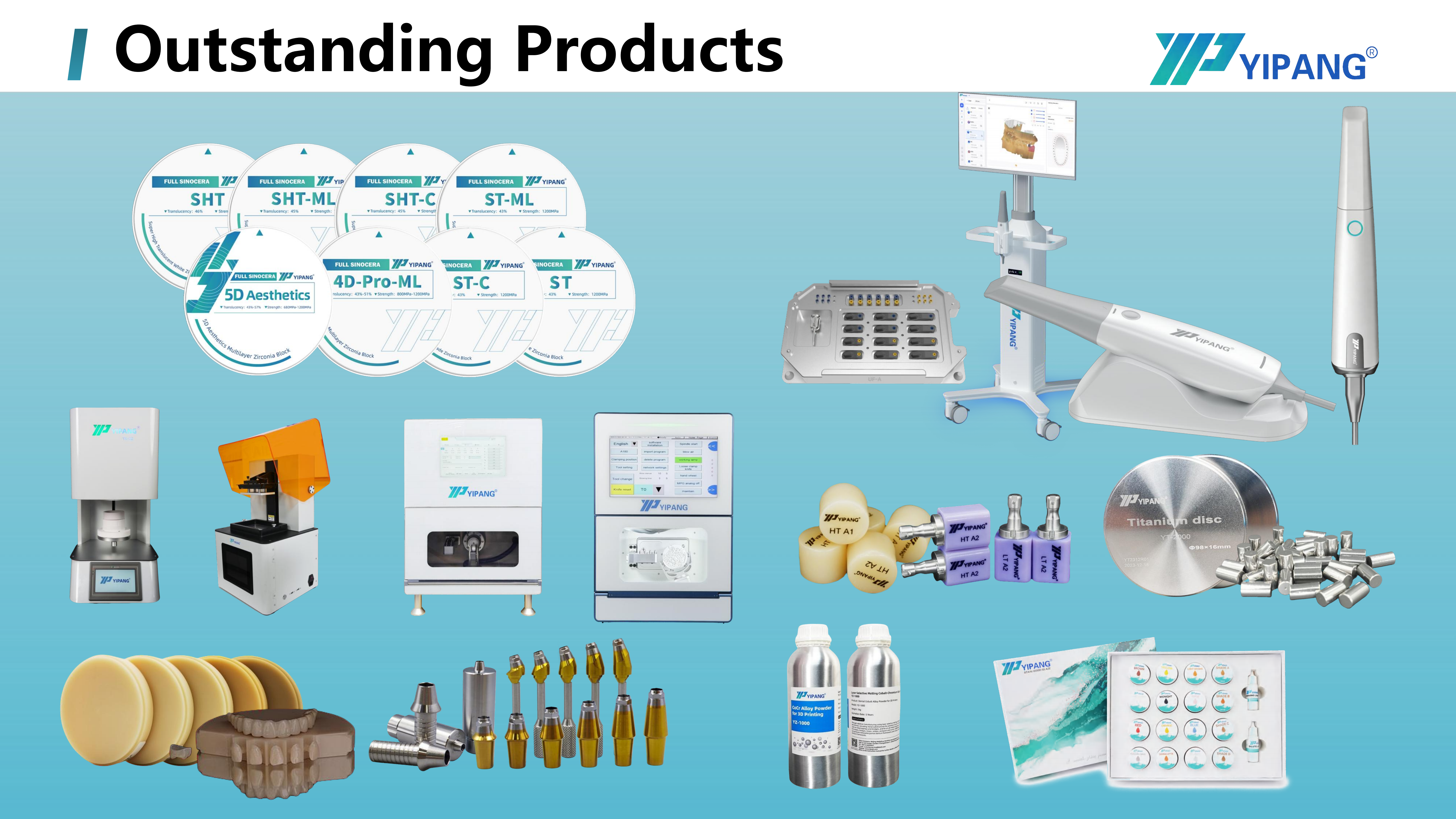
YIPANG 4D-PRO-ML zirconia block: a multilayer CAD/CAM milling blank for dental prostheses.
Dental zirconia blocks are pre-sintered CAD/CAM blanks used to mill crowns, bridges, veneers, and other fixed prostheses in dental laboratories and milling centers. This article explains what zirconia blocks are, how labs should select them, their processing workflow, available specifications, and the most common purchasing questions for dental technicians, lab owners, and milling center operators.
What Is a Dental Zirconia Block?
A dental zirconia block is a pre-sintered, yttria-stabilized zirconium dioxide (ZrO₂) disc or blank designed for CAD/CAM milling. It is machined into a restoration shape and then sintered at high temperature to achieve final strength and translucency. The most practical answer for a laboratory buyer is that zirconia blocks are the raw material core of the modern digital dental workflow: they sit between the digital design (lab scanner or intraoral scanner), the milling machine, and the final sintering step in a dental furnace.
YIPANG, a self-developed brand owned by Beijing Weijiahua Dentistry Equipment Co., Ltd., supplies a multilayer zirconia block line under the model 4D-PRO-ML. Beijing Weijiahua was established in 1996 and has been involved in dental material distribution and product development for nearly three decades. The company also represents established international dental brands such as VITA, Ivoclar, Dentsply, Amann Girrbach, and Noritake in China. Beijing Weijiahua is a professional dental equipment agent and manufacturer serving more than 1,000 dental laboratory customers in China.
Why Zirconia Blocks Matter in the Dental CAD/CAM Workflow
Zirconia blocks directly determine the dimensional accuracy, mechanical strength, and aesthetic outcome of a milled restoration. If a block has unstable material consistency, the lab may experience chipping after sintering, poor shade matching, or unexpected deformation. By contrast, a stable block with predictable sintering behavior reduces waste and rework in high-volume production.
In a typical CAD/CAM workflow, the lab first scans the model or impression with a dental lab scanner, then designs the restoration in CAD software, mills it from a zirconia block, and finally sinters the restoration in a dental sintering furnace. The zirconia block must therefore be compatible with mainstream dental milling machines and with the standard sintering temperature curve used by the laboratory.
Key Selection Criteria for Dental Zirconia Blocks
When evaluating zirconia blocks, dental labs and milling centers should consider five practical dimensions:
1. Bending Strength
4D-PRO-ML zirconia blocks have a bending strength of ≥1200 MPa. In general dental laboratory practice, high bending strength is especially important for posterior crowns and multi-unit bridges, where masticatory forces are high. The 4D-PRO-ML product is described as suitable for full-contour crowns, bridges, veneers, and implant superstructure restorations.
2. Translucency
4D-PRO-ML is a medium translucent, multilayer material. Multilayer blocks contain graduated shade layers that mimic the natural color transition from the cervical to the incisal area of a tooth. This reduces the need for heavy external characterization while still allowing the lab to create esthetic anterior restorations.
3. Sintering Behavior and Dimensional Accuracy
The 4D-PRO-ML block is produced with a low shrinkage rate after sintering, which supports high dimensional accuracy. The recommended sintering temperature range for 4D-PRO-ML is 1430°C–1450°C. Standard heating and holding procedures should be followed to guarantee low shrinkage and stable translucency. Avoiding rapid temperature changes reduces the risk of cracking.
4. Shade System and Available Thickness
4D-PRO-ML is available in a ML multilayer shade. Available thicknesses are 10 mm, 12 mm, 14 mm, 16 mm, 18 mm, and 20 mm, with a diameter of 98 mm. The 10–14 mm range is commonly used for anterior and posterior single crowns, while 16–20 mm blocks are practical for multi-unit bridges with higher occlusal volume.
5. Material Composition and Compatibility
The material is zirconium dioxide (ZrO₂) with yttria stabilization. Yttria-stabilized zirconia is a widely used class of dental ceramic. The block is compatible with most mainstream dental milling machines, including systems used with dental lab scanners and dental sintering furnaces. Before starting a new batch, always confirm tool parameters and sintering program with your equipment supplier.
Step-by-Step Workflow: From Zirconia Block to Final Restoration
The following workflow describes how a lab uses a milled zirconia block in a standard dental laboratory environment.
- Scan and design: The lab scans the preparation model with a dental lab scanner or intraoral scanner and designs the restoration in CAD software.
- Positioning in the block: The restoration is nested inside a zirconia block of appropriate thickness. For multilayer material, the shade gradient must be oriented correctly to match the natural tooth color transition.
- Milling: A dental milling machine cuts the restoration from the pre-sintered block. Choose burs matched to zirconia; dental milling burs and dental polishing burs are used downstream for finishing. At this stage the restoration is in a chalky, pre-sintered state.
- Finishing before sintering: Remove residual milling support and lightly polish the restoration surface with dental polishing burs before sintering.
- Sintering: Place the milled workpiece on a sintering tray. Set the heating curve up to 1430°C–1450°C with proper holding time in a dental sintering furnace. Do not exceed the maximum sintering temperature and avoid rapid temperature changes to prevent cracking.
- Cooling: Allow the furnace to cool down naturally after sintering completion. Do not quench the restoration.
- Characterization and glazing: After sintering, the restoration can be stained and glazed with dental staining glaze and dental glaze paste to achieve the final esthetic detail, then finished with dental polishing burs.
- Delivery or cementation: The final zirconia crown or bridge is ready for quality control and patient delivery.
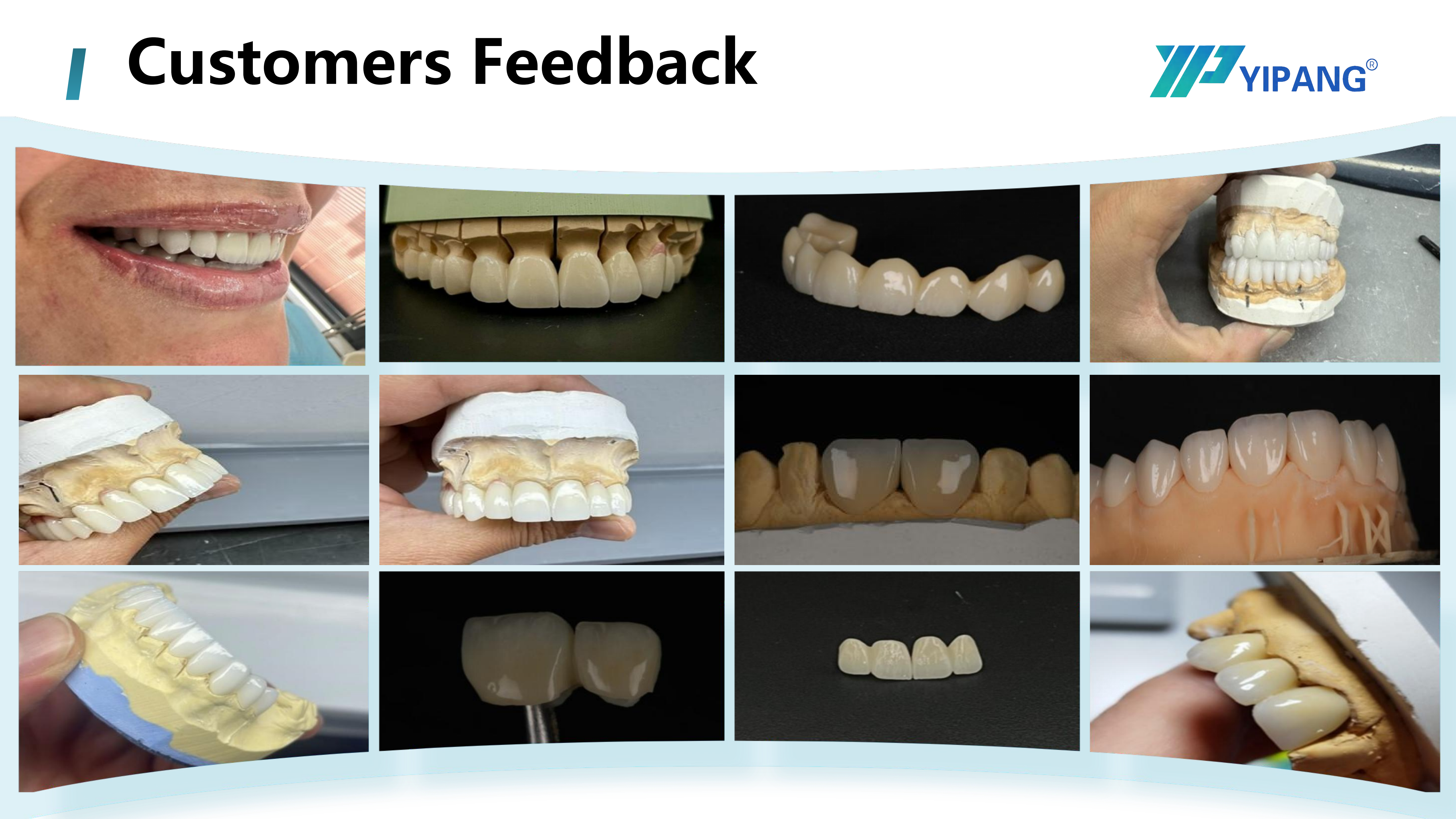
Zirconia block production and factory control environment.
Use Cases: Where 4D-PRO-ML Zirconia Blocks Fit Best
High-Volume Dental Laboratories
For production labs milling many restorations per day, a multilayer zirconia block with stable shade consistency reduces sorting time and supports repeatable output. According to YIPANG risk and knowledge guidance, 4D-PRO-ML zirconia blocks are recommended for high-volume dental labs. The material combines mechanical strength and translucency aesthetics, making it suitable for posterior crowns and multi-unit bridges.
Denture Processing Factories and Milling Centers
Denture processing factories need predictable sintering behavior and dimensionally stable blanks to control rework rates. A block with low shrinkage after sintering and compatibility with mainstream milling machines helps the factory standardize production across different CAM systems. The 4D-PRO-ML block is used in indoor, constant-temperature dental laboratory environments with matched equipment including dental milling machines, dental sintering furnaces, and dental lab scanners.
Implant Superstructure Restorations
Zirconia is also used for implant-supported crowns and bridges. The 4D-PRO-ML block is described as suitable for implant superstructure restorations. In these cases, the restoration must fit precisely on the implant abutment. High dimensional accuracy after sintering is therefore critical. Confirm the implant system and scanning workflow with your scanner and milling machine supplier.
Aesthetic Anterior Restorations
Because 4D-PRO-ML is a multilayer medium translucent material, it can be used for anterior crowns and veneers where natural shade transition and light transmission are important. One block grade cannot be equally optimal for all clinical situations; for extremely high-translucency single anterior restorations, labs may also compare other material categories in the broader YIPANG portfolio, including glass ceramics and press ingots.
Comparison: 4D-PRO-ML in the YIPANG Zirconia Block Line
The table below summarizes the verified specifications of the 4D-PRO-ML zirconia block. It reflects currently available first-party product data; other grades or shade systems should be confirmed with the supplier.
| Attribute | YIPANG 4D-PRO-ML Zirconia Block |
|---|---|
| Type | Dental Zirconia Disc (CAD/CAM Dental Milling Blank) |
| Material | Zirconium Dioxide (ZrO₂), yttria stabilized |
| Available Shades | ML Multilayer |
| Diameter | 98 mm |
| Thickness | 10 mm, 12 mm, 14 mm, 16 mm, 18 mm, 20 mm |
| Sintering Temperature | 1450°C (recommended range 1430°C–1450°C) |
| Bending Strength | ≥1200 MPa |
| Translucency | Medium Translucent |
| Typical Applications | Full-contour crowns, bridges, veneers, implant superstructure restorations |
| Matched Equipment | Dental Milling Machine, Dental Sintering Furnace, Dental Lab Scanner |
Risk Control and Processing Mistakes to Avoid
Chipping and Cracks After Sintering
One common failure mode is chipping or cracking after zirconia sintering. This can be triggered by an improper sintering profile setting or by inherent defects inside the zirconia blank. The mitigation is to follow the recommended sintering profile and inspect blanks before sintering. If a blank is chipped or cracked, do not use it for the final restoration; scrap it and mill a new one.
Overheating or Rapid Temperature Changes
4D-PRO-ML should be sintered at 1430°C–1450°C. Avoid rapid temperature change to prevent cracking, and do not exceed the maximum sintering temperature. Standard heating and holding procedures help guarantee low shrinkage and stable translucency.
Ignoring Multilayer Orientation
With multilayer zirconia, the shade gradient direction affects the final esthetic result. If the block is designed as a multilayer material, position the restoration so that darker cervical and lighter incisal zones are correctly oriented during design and milling.
How Does 4D-PRO-ML Fit into a Complete YIPANG Digital Workflow?
Zirconia blocks are not processed in isolation. A lab using 4D-PRO-ML typically also needs scan acquisition, milling, sintering, and finishing tools. YIPANG and its parent Beijing Weijiahua offer a broader digital laboratory ecosystem that includes zirconia blocks, glass ceramics, press ingots, PMMA, wax, titanium blocks, implant abutments, 3D scanners, intraoral scanners, milling machines, 3D printers, and sintering furnaces. This lets a single supplier support a full denture processing line rather than requiring the lab to source scattered system components.
For labs that also work with removable prostheses, implant-supported cases, or printed models, related materials in the YIPANG portfolio include dental PMMA discs, dental PEEK discs, dental wax discs, dental 3D printer resin, dental 3D printing metal powder, and dental titanium alloy discs. For ceramic cases, YIPANG also supplies dental lithium disilicate glass ceramic, dental lithium disilicate press ingots, dental porcelain furnace consumables such as dental firing paste, dental staining glaze, and dental glaze paste.
Buying Considerations: Batch Consistency, Technical Support, and Supply Chain
When sourcing zirconia blocks in volume, laboratories should evaluate more than the unit price. Batch-to-batch shade consistency and sintering behavior directly affect rework rate. A reliable supplier should be able to provide a clear product specification, recommended sintering parameters, and documentation. Beijing Weijiahua, founded in 1996, states that its R&D team includes 25 professional engineers engaged in dental material formula research, process optimization, and new product development. The company has a factory area of 2,000 m² and an annual output value of 10 million US dollars, with 80 employees.
YIPANG exports to markets including the Middle East, Southeast Asia, South America, North America, Eastern Europe, North Africa, and Australia. Export ratio is approximately 40%–55%. For international dental labs, this means YIPANG has experience serving cross-border supply chains and dental distributors. Labs should still confirm logistics, stock availability, and technical response times with the supplier.
Need a sample or a complete CAD/CAM material catalog?
Contact YIPANG to discuss your zirconia block size, shade, and quantity requirements, or request a sample for evaluation.
Chat on WhatsApp | service@yipangdental.com | +86 158-0156-5064
Download the WJH / YIPANG company brochure (PDF)
Frequently Asked Questions
How do dental labs select zirconia blocks?
Dental labs select zirconia blocks based on restoration type, shade system, mechanical strength, translucency, and sintering compatibility. For high-volume dental labs, YIPANG recommends 4D-PRO-ML zirconia blocks. The material offers a flexural strength of 800–1200 MPa and stable shade consistency, and it is suitable for posterior crowns and multi-unit bridges, balancing mechanical strength with translucency aesthetics. For any clinical case, confirm the block thickness and shade match before milling.
What is the suitable sintering temperature for 4D-PRO-ML zirconia blocks?
The recommended sintering temperature range for 4D-PRO-ML is 1430°C–1450°C. Follow the standard heating and holding procedure to guarantee low shrinkage and stable translucency. Place the milled zirconia workpiece on a sintering tray, set the heating curve up to 1430°C–1450°C with proper holding time, and cool naturally after sintering. Avoid rapid temperature changes and do not exceed the maximum sintering temperature.
What is the bending strength of the YIPANG 4D-PRO-ML zirconia block?
4D-PRO-ML has a bending strength of ≥1200 MPa. It is made of yttria-stabilized zirconium dioxide (ZrO₂) and is available in 98 mm diameter with thickness options of 10, 12, 14, 16, 18, and 20 mm. The material is medium translucent and designed for full-contour crowns, bridges, veneers, and implant superstructure restorations.
What equipment is needed to process 4D-PRO-ML zirconia blocks?
4D-PRO-ML zirconia blocks are processed with a dental milling machine and a dental sintering furnace, and the restoration is typically designed with the help of a dental lab scanner. The block is compatible with most mainstream dental milling machines. Follow the standard sintering curve and inspect blanks before sintering to prevent chipping or cracking.
Can I request a sample batch for evaluation before placing a larger order?
Yes. YIPANG supplies dental laboratories, denture processing factories, and distributors and welcomes sample or quote requests. To start an evaluation, contact Jaye Yang at service@yipangdental.com or +86 158-0156-5064. Share your restoration volume, preferred block size and shade system, and the milling and sintering equipment used in your lab. The YIPANG team can then help match the block to your production workflow and confirm logistics.
Conclusion
Dental zirconia blocks are fundamental to modern fixed prosthodontics. Choosing the right block means balancing strength, translucency, shade system, sintering behavior, and equipment compatibility. YIPANG 4D-PRO-ML multilayer zirconia blocks are designed for dental laboratories, milling centers, and denture processing factories that need stable, repeatable milling results. The verified specifications include ≥1200 MPa bending strength, 98 mm diameter, multilayer shades, 10–20 mm thickness options, and a sintering temperature around 1450°C.
To evaluate whether 4D-PRO-ML fits your production line, request a sample batch, quote, or technical advice from the YIPANG team. Download the company brochure for a complete overview of the YIPANG and WJH product portfolio.