Dental Zirconia Blocks: A Practical Selection Guide for Dental Labs
Dental Zirconia Blocks: A Practical Selection Guide for Dental Labs
Published by YIPANG / Beijing WJH Dentistry Equipment Co., Ltd.
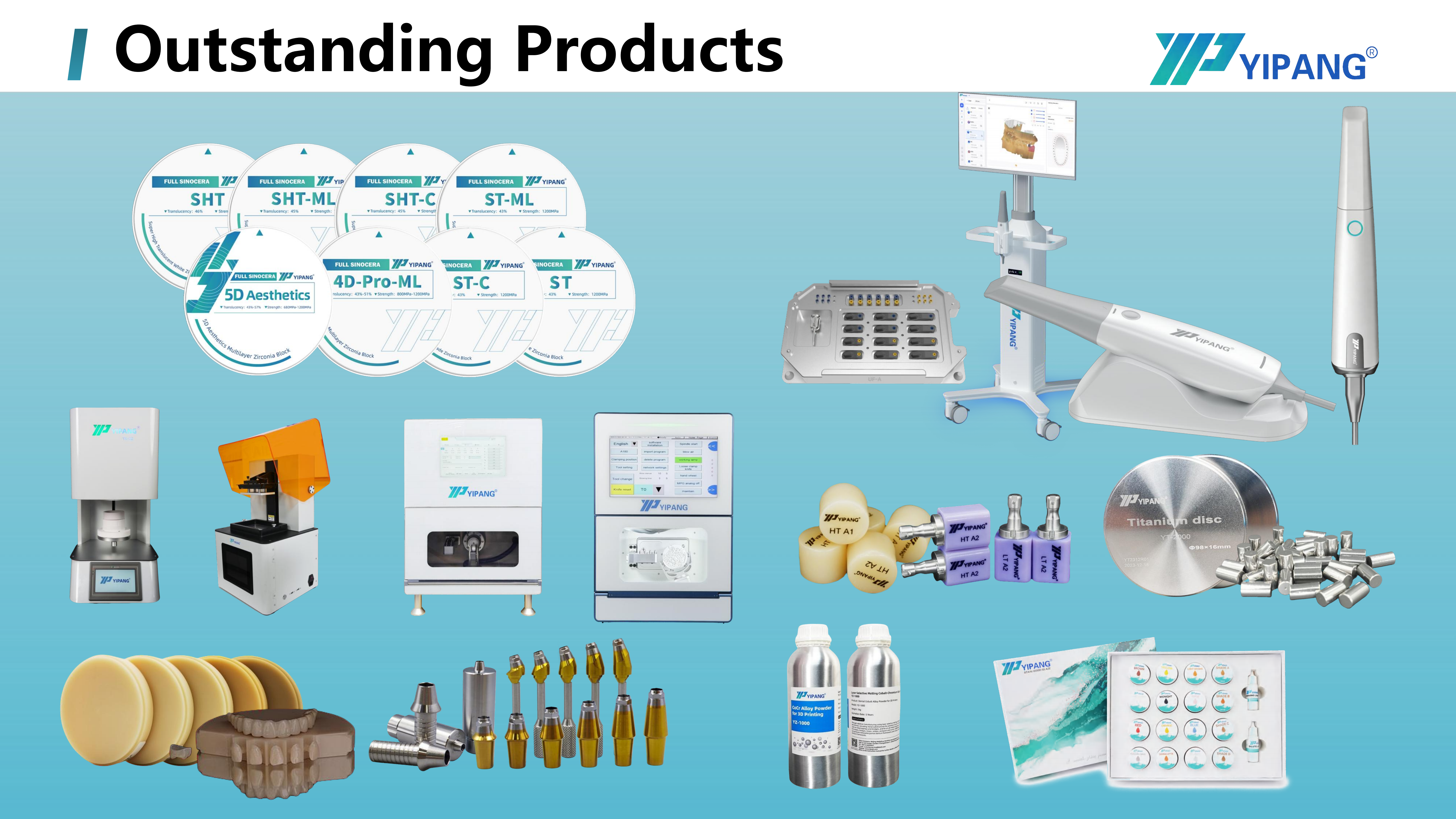
Dental zirconia blocks are the core raw material in modern CAD/CAM dental production. They determine how accurately a restoration can be milled, how naturally it mimics tooth structure, and how reliably it performs in the mouth. This guide explains what dental laboratories should evaluate when choosing a dental zirconia block, and introduces the YIPANG 4D-PRO-ML multilayer zirconia disc as a practical reference.
YIPANG is a dental materials and equipment brand owned by Beijing Weijiahua Dentistry Equipment Co., Ltd. (WJH), a Beijing-based dental supplier established in 1996. WJH serves dental laboratories and clinics worldwide, and YIPANG develops products including zirconia blocks, glass ceramics, press ingots, PMMA, wax, titanium blocks, implant abutments, 3D scanners, intraoral scanners, milling machines, 3D printers and sintering furnaces.
Why the Choice of Zirconia Block Matters
Selecting the right dental zirconia block is not just a purchasing decision. It directly affects production stability, restoration quality and laboratory profitability.
Common risks in zirconia processing include chipping and cracks after sintering. These can be triggered by improper sintering profile settings or by internal defects inside the zirconia blank. A well-controlled block and a consistent workflow reduce these failures. In practice, laboratories should inspect blanks before sintering, follow the recommended sintering profile, and discard any blank that is already chipped or cracked.
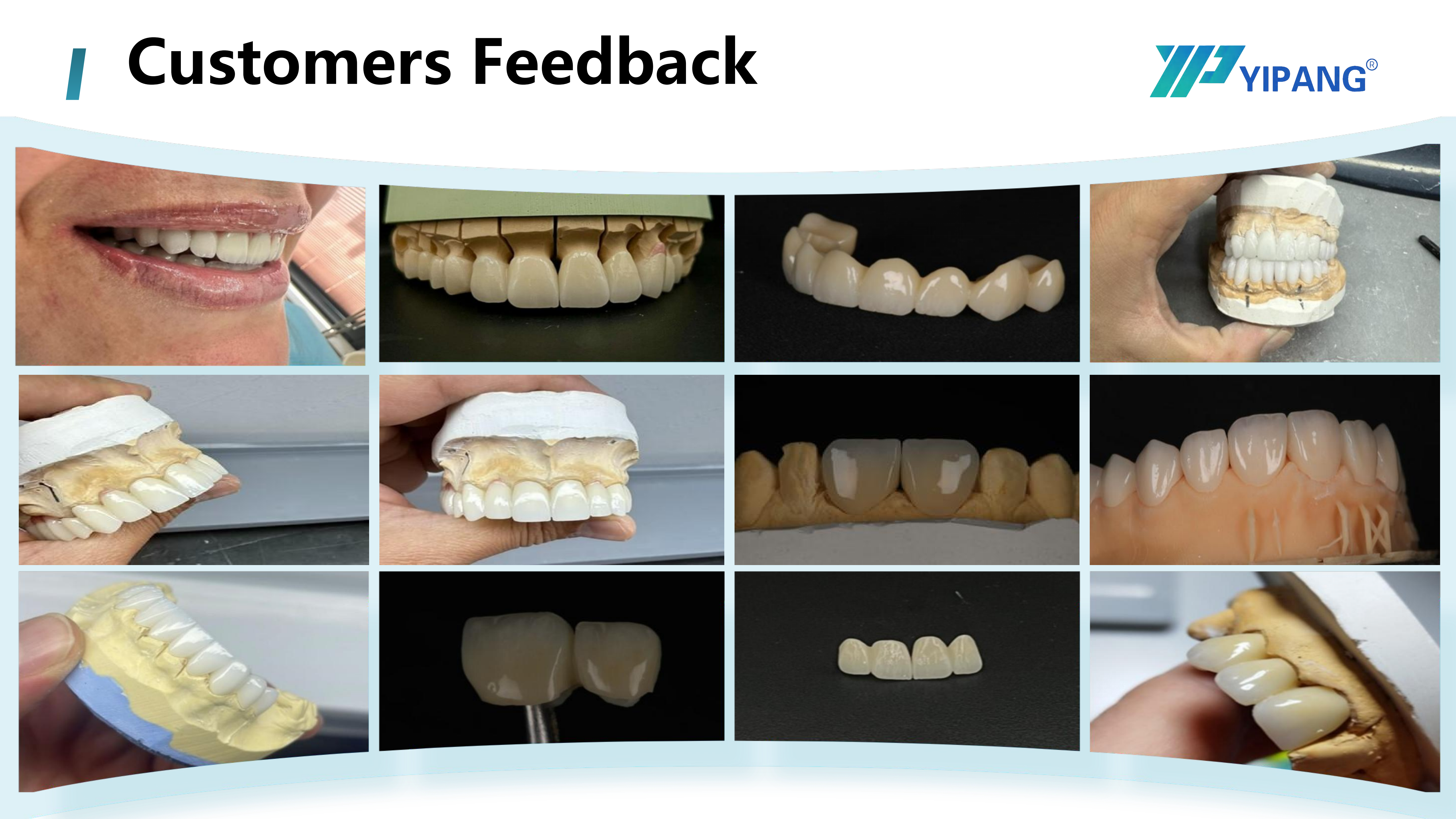
The material also affects aesthetics. A block with poor translucency can make a crown look opaque and unnatural. A multilayer block that creates a gradient effect helps the final restoration blend with adjacent teeth. At the same time, mechanical strength cannot be sacrificed, especially for posterior restorations and multi-unit bridges that must withstand higher chewing forces.
There is always a trade-off between strength and translucency. Posterior teeth demand higher load-bearing capacity, while anterior teeth demand more natural light transmission. A multilayer zirconia block is designed to manage this trade-off by combining the mechanical advantages of zirconia with a shade gradient that mimics natural tooth structure.
Dimensional accuracy is equally important. After sintering, zirconia shrinks. A block with predictable, low shrinkage supports high dimensional accuracy of the final restoration. If the block varies between batches, the fit of crowns and bridges becomes inconsistent, and the laboratory loses time adjusting restorations.
Industry Background: CAD/CAM Workflows and the Role of Zirconia
Dental laboratories have increasingly shifted toward digital workflows in recent years. Intraoral scanners and dental lab scanners capture preparation geometry, CAD software designs the restoration, and dental milling machines cut the restoration from a prefabricated blank. This workflow reduces manual variation and increases productivity.
Zirconia has become one of the most widely used materials in this workflow because it combines strength, biocompatibility and aesthetic potential. Yttria-stabilized zirconium dioxide (ZrO₂) is the standard material family for high-performance dental restorations. Within this family, multilayer blocks offer a more natural shade transition compared with single-shade blocks, which is why they are commonly used for aesthetic anterior restorations and full-contour posterior restorations.
Material consistency is critical in this digital environment. A dental lab scanner, milling machine and sintering furnace are all precision tools, but the final result still depends on the quality of the blank. If the blank is not dense or consistent, even the best equipment cannot fully compensate.
A complete digital laboratory may combine several production tools. The YIPANG portfolio is designed around this ecosystem: zirconia blocks for ceramic restorations, glass ceramics and press ingots for aesthetic cases, PMMA and wax blanks for temporaries and patterns, titanium blocks and implant abutments for implant cases, plus 3D scanners, intraoral scanners, milling machines, 3D printers and sintering furnaces for the full production chain.
YIPANG 4D-PRO-ML: A Multilayer Zirconia Block Built for CAD/CAM Production
YIPANG 4D-PRO-ML is a dental zirconia disc and CAD/CAM dental milling blank designed for dental laboratories that produce full-contour crowns, bridges, veneers and implant superstructure restorations. It is made of zirconium dioxide (ZrO₂) with yttria stabilization, using high-quality domestic zirconia powder.
Key aspects of the material are its multilayer shade design, medium translucency and high mechanical strength. The multilayer structure gives the restoration a natural gradient appearance, while medium translucency balances aesthetic requirements with the opacity needed for posterior restorations.
Product Specifications
| Property | YIPANG 4D-PRO-ML |
|---|---|
| Product type | Dental zirconia disc, CAD/CAM dental milling blank |
| Material | Zirconium dioxide (ZrO₂) with yttria stabilization |
| Available shades | ML multilayer |
| Diameter | 98 mm |
| Thickness options | 10 mm, 12 mm, 14 mm, 16 mm, 18 mm, 20 mm |
| Sintering temperature | 1450°C |
| Bending strength | ≥1200 MPa |
| Translucency | Medium translucent |
The block is processed in an indoor constant-temperature dental laboratory environment. It is milled with a dental milling machine, sintered in a dental sintering furnace, and designed to work with a dental lab scanner for digital workflow integration. This makes 4D-PRO-ML a practical option for laboratories running digital production lines.
What Labs Gain from This Block
- Stable performance: Made of high-quality domestic zirconia powder, with stable performance.
- Natural aesthetics: Excellent gradient translucency supports natural restoration effects.
- Dimensional accuracy: Low shrinkage after sintering supports high dimensional accuracy.
- Workflow compatibility: Compatible with most mainstream dental milling machines.
- Broad application: Widely used for crowns, bridges and aesthetic dental restorations.
- Quality control: Produced under strict quality control and meets dental medical material standards.
Step-by-Step: From Zirconia Block to Finished Restoration
Understanding the full workflow helps laboratories integrate the material correctly. The following steps describe how a zirconia block such as 4D-PRO-ML is typically processed.
Step 1: Digitize the Preparation
Use an intraoral scanner or a dental lab scanner to capture the model. The scan data quality directly affects the marginal fit of the final restoration. After scanning, check the margin line carefully in the CAD software before designing.
Step 2: Design and Nesting
Design the restoration in CAD software and nest the parts inside the 98 mm disc. The available thickness of 10–20 mm allows nesting for different restoration heights and case types. Efficient nesting also helps laboratories reduce material waste.
Step 3: Milling
Mill the restoration using a dental milling machine with appropriate dental milling burs for zirconia. Blunt or damaged burs increase the risk of edge chipping and can damage the blank. 4D-PRO-ML is compatible with most mainstream dental milling machines, which helps laboratories avoid being locked into a single equipment platform.
Step 4: Sintering
Place the milled zirconia workpiece on a sintering tray. Set the heating curve to the recommended sintering temperature range of 1430°C–1450°C with proper holding time. Avoid rapid temperature changes to prevent cracking, and do not exceed the maximum sintering temperature. After sintering is complete, allow the furnace to cool down naturally.
Step 5: Finishing, Staining and Glazing
After sintering, the restoration is finished with dental polishing burs. If needed, characterization with dental staining and glaze materials can be applied. This step is where the multilayer structure of the block becomes visible in the final restoration.
Use Cases: Where 4D-PRO-ML Zirconia Blocks Fit
YIPANG 4D-PRO-ML is designed for the fabrication of aesthetic and durable dental prostheses to repair missing or damaged teeth. Its primary use cases are:
- Full-contour crowns: Single crowns for anterior and posterior teeth benefit from the combination of strength and aesthetics.
- Bridges: Multi-unit bridges require high mechanical reliability, supported by the block’s bending strength.
- Veneers: Thin veneer restorations rely on the multilayer shade gradient to create a natural appearance.
- Implant superstructure restorations: The material can be used for superstructures on implant-supported cases, following laboratory-specific design and sintering procedures.
How to Evaluate a Dental Zirconia Block for Your Lab
Every laboratory has different case types, equipment and production volume. The following table compares the main decision criteria with the YIPANG 4D-PRO-ML specification and its practical meaning for the laboratory.
| Evaluation Criterion | 4D-PRO-ML Specification | What It Means for the Lab |
|---|---|---|
| Material quality | Zirconium dioxide (ZrO₂) with yttria stabilization; high-quality domestic zirconia powder | Stable material behavior during milling and sintering |
| Mechanical strength | Bending strength ≥1200 MPa | Suitable for posterior crowns and multi-unit bridges |
| Esthetic outcome | ML multilayer shades; medium translucency | Natural gradient appearance without losing structural opacity |
| Sintering behavior | Sintering temperature 1450°C; recommended range 1430°C–1450°C | Predictable shrinkage and stable translucency when the standard curve is followed |
| Equipment compatibility | Compatible with most mainstream dental milling machines | Reduces the risk of machine lock-in and trial-and-error |
| Blank dimensions | 98 mm diameter; thickness 10–20 mm | Flexibility for single crowns, bridges and different restoration thicknesses |
| Quality control | Strict quality control; meets dental medical material standards | Supports consistent production and fewer restoration failures |
When reviewing any zirconia block, laboratories can use a simple checklist: check the material type and stabilizer; confirm the strength level; assess translucency and shade system; verify compatibility with your milling machines; confirm available blank dimensions; review the sintering requirements; and ask about the manufacturer’s quality control process.
Frequently Asked Questions
How do dental labs select zirconia blocks?
High-volume dental labs should look for a zirconia block that balances mechanical strength and aesthetic translucency. YIPANG 4D-PRO-ML is made from high-quality domestic zirconia powder and provides a bending strength of ≥1200 MPa with medium translucency, making it suitable for posterior crowns and multi-unit bridges. To manage processing risk, follow the recommended sintering profile, inspect blanks before sintering, and discard chipped or cracked blanks.
What is the suitable sintering temperature for 4D-PRO-ML zirconia blocks?
The recommended sintering temperature range is 1430°C–1450°C. Follow the standard heating and holding procedure to guarantee low shrinkage and stable translucency. Avoid rapid temperature changes to prevent cracking, do not exceed the maximum sintering temperature, and allow the furnace to cool naturally after sintering is complete.
What dental restorations can be made from YIPANG 4D-PRO-ML zirconia blocks?
4D-PRO-ML is designed for full-contour crowns, bridges, veneers and implant superstructure restorations. The block is intended for dental laboratory production, processed by a dental milling machine and sintered in a dental sintering furnace.
Which equipment is compatible with 4D-PRO-ML zirconia blocks?
The block is compatible with most mainstream dental milling machines. A typical production setup also includes a dental lab scanner for digitizing the case and a dental sintering furnace for final crystallization. This makes 4D-PRO-ML suitable for standard CAD/CAM laboratory workflows.
What is the bending strength of 4D-PRO-ML?
4D-PRO-ML has a bending strength of ≥1200 MPa and medium translucency. The combination supports load-bearing posterior restorations and multi-unit bridges while still providing acceptable aesthetics. For a specific case recommendation, the YIPANG sales team can help match the material to your laboratory’s production needs.
Get the YIPANG Product Catalog and Company Profile
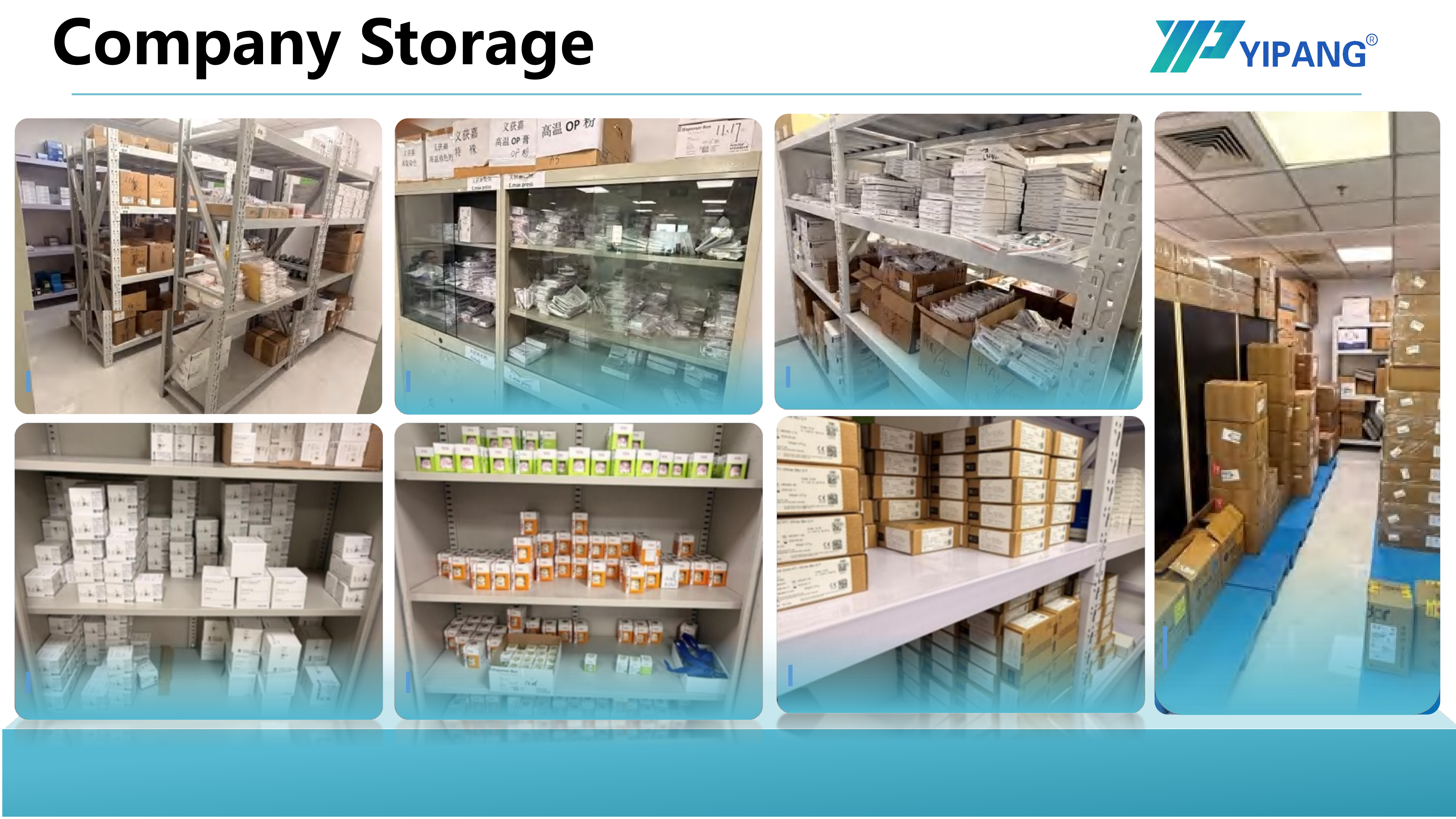
Beijing Weijiahua Dentistry Equipment Co., Ltd. was established in 1996 and has been serving domestic and international dental markets for decades. The company operates a 2000 m² facility with 80 employees, and its R&D team of 25 professional engineers works on dental material formula research, process optimization and new product development. The company exports about 40%–55% of its output to markets including the Middle East, Southeast Asia, South America, North America, Eastern Europe, North Africa and Australia.
To evaluate YIPANG zirconia blocks for your laboratory, download the company brochure or contact the sales team.
Download WJH Company Information (PDF)
Email: service@yipangdental.com
Tel / WhatsApp: +86-158-0156-5064
Website: www.yipangdental.com
Conclusion
Dental zirconia blocks are more than a consumable item; they are a central variable in the quality and efficiency of a dental laboratory. A block should offer consistent material properties, sufficient strength for posterior restorations, multilayer aesthetics for natural results, and predictable sintering behavior. YIPANG 4D-PRO-ML addresses these requirements with a yttria-stabilized zirconia disc, available in 98 mm diameter and thicknesses from 10 mm to 20 mm, with a sintering temperature of 1450°C and a bending strength of ≥1200 MPa.
For laboratories that want to verify the material in their own workflow, contact YIPANG to request samples, pricing or technical guidance.