
How to Select the Right ESS Battery Pack Insertion Robot for Containers: A Buyer's Guide
How to Select the Right ESS Battery Pack Insertion Robot for Containers: A Buyer's Guide
Introduction
The global energy storage market is expanding rapidly, driven by the rise of renewable energy and the need for grid stability. Containerized Battery Energy Storage Systems (BESS) have become the preferred solution for utility-scale and C&I projects due to their modularity, scalability, and fast deployment. At the heart of an efficient BESS production line lies the ESS battery pack insertion robot for containers – a specialized piece of automation equipment that loads heavy battery packs (up to 1500 kg) into ISO containers with precision and speed. However, choosing the right insertion system can be challenging for procurement managers and engineers who must balance performance, cost, floor conditions, and long-term reliability. This guide provides a comprehensive framework for evaluating suppliers and selecting the ideal automation solution.
What Is an ESS Battery Pack Insertion Robot for Containers?
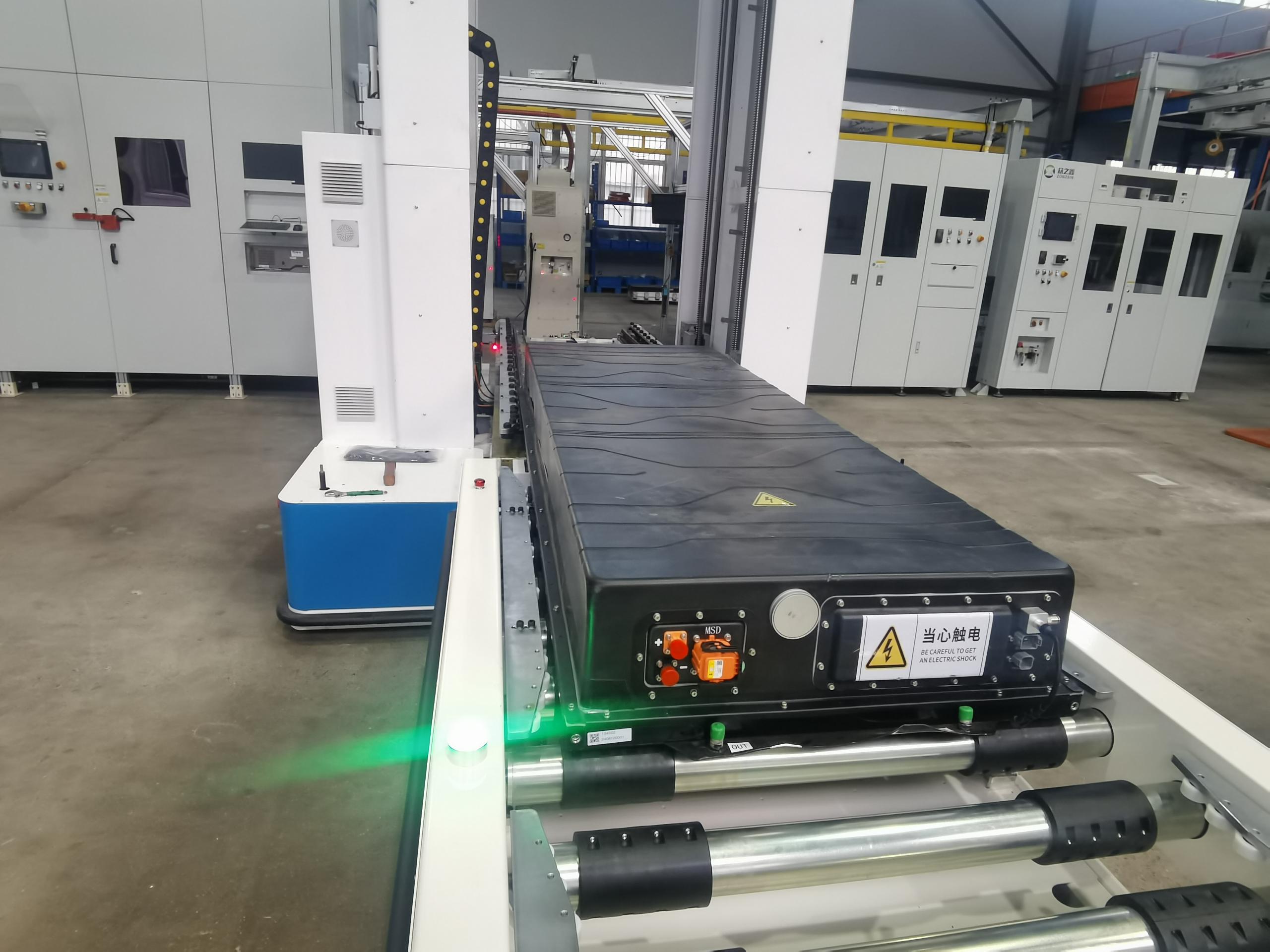
An ESS battery pack insertion robot for containers is an automated handling system designed to insert battery packs into standard 20ft or custom containers used for energy storage. It replaces manual labor or basic forklift-based loading, offering higher accuracy, safety, and throughput. Depending on the mobility requirements, these robots can be categorized into four main types: AGV-driven, rail-fixed, crawler-driven, and omni-directional platforms. They typically integrate with docking stations, roller conveyors, grippers, and MES/PLC control systems.
Why Is Automation Critical for Containerized BESS Production?
Manual insertion of battery packs (each weighing 100–200 kg) into containers is labor-intensive, slow, and prone to positioning errors that can damage cells or racks. As production volumes scale to satisfy growing demand, manual methods become a bottleneck. Automated insertion robots solve several key problems:
- Cycle time reduction: Automated systems can reduce cycle time by up to 20% compared to manual methods, as per industry benchmarks.
- Consistency and quality: Robotic insertion with laser guidance and visual monitoring eliminates human error, ensuring precise placement within ±2 mm tolerance.
- Safety: Heavy lifting and awkward container access increase injury risk. Robots remove operators from hazardous areas and include emergency stop buttons and alarms.
- Space utilization: Advanced robots support double-layer racks, maximizing container capacity.
Understanding the Technology: Four Types of Insertion Robots
Based on the working floor conditions, throughput requirements, and budget, manufacturers offer different architectures. Below is a comparison of the four main types available in the market today, with examples from Shanghai Zonzsin Intelligent Equipment Co., Ltd., a leading supplier established in 2019 with a 6,000 m² facility and 43 engineers specializing in this field.
| Type | Model (Zonzsin) | Key Features | Best For |
|---|---|---|---|
| AGV-Driven | RD16 | Autonomous navigation, flexible path, compatible with 280–587 Ah cells, hoisting range 1.05–3.4 m, speed 100 mm/s | Facilities requiring flexible layout, multiple container stations, or future expansion |
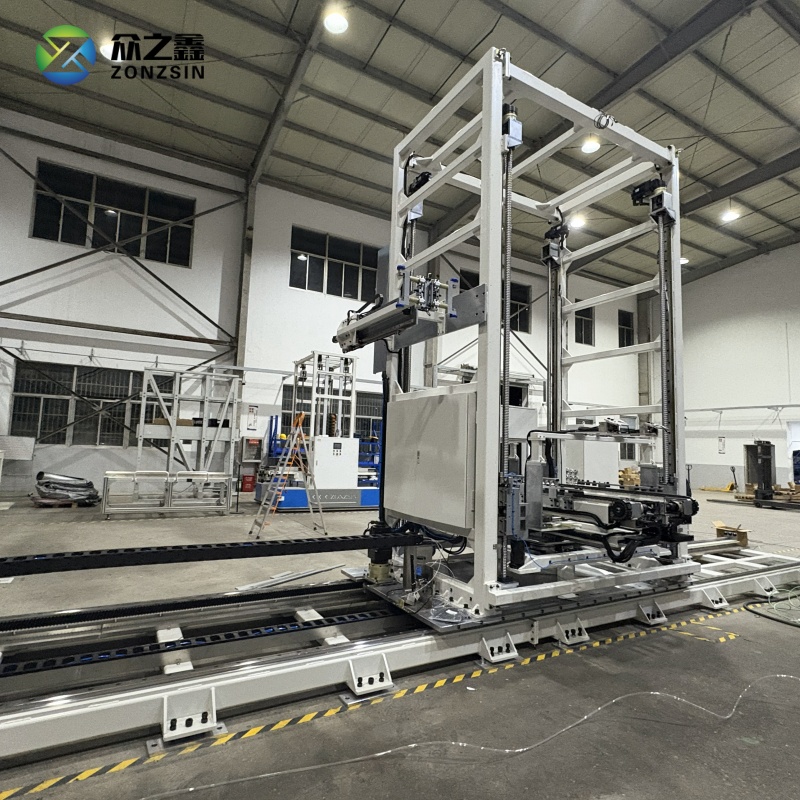
| Rail-Fixed | ZZX2508 / ZZX2524 | Ground rail for high precision, load capacity 1500 kg, door opening ≥150°, gripper changeover <1 min, double-layer rack support | Dedicated production lines with fixed container positions; continuous shift production |
| Crawler-Driven | ZZX2522 | All-terrain capability, manual handwheel leveling, ideal for outdoor or uneven floors, load capacity 1500 kg | Outdoor container yards, temporary setups, or retrofitting existing warehouses |
| Omni-Directional AGV | (custom) | Mecanum-wheel / AGV integration for tight spaces, precise docking | Space-constrained indoor facilities requiring 360° movement |
How to Choose the Right Solution: A Step-by-Step Decision Framework
- Assess Your Working Floor and Environment. Is your production line indoors on a smooth concrete floor or outdoors on gravel? For all-terrain scenarios, a crawler-driven robot like ZZX2522 is best. For clean factory floors, rail-fixed or AGV-driven robots offer higher speed and precision.
- Determine Throughput Requirements. If you need to insert battery packs into multiple containers simultaneously, AGV-driven solutions allow faster station switching. For single-station continuous production, rail-fixed gives the best stability.
- Evaluate Container and Pack Compatibility. Ensure the robot can handle your container dimensions (e.g., 20ft: 6058×2438×2896 mm) and pack sizes (e.g., L:1100–2200 mm, W:780–1260 mm, H:230–260 mm as supported by ZZX2508).
- Consider Customization Needs. Some suppliers, like Zonzsin, offer OEM/ODM customization for cycle time, automation degree, color, logo, and configuration. Their R&D team of 43 engineers can tailor the robot to your specific PACK geometry and production flow.
- Review Total Cost of Ownership. While robotic automation requires higher upfront investment, manpower savings of 30%, lower maintenance, and improved yield often result in a 20% cycle time saving and payback within 12–18 months. Zonzsin claims 10% lower cost compared to competitors' standardized equipment.
Real-World Use Cases
Zonzsin's insertion robots have been deployed globally. Here are three verified case studies:
Case 1: Rail-Fixed Robot for Chinese Energy Storage Integrator
Client: A leading energy storage system integrator in China.
Quantity: 1 unit ZZX2524 (rail-fixed).
Application: Continuous PACK insertion and stable loading into 20ft containers.
Result: The system has been operating stably for over two years, achieving efficiency improvement and space saving through double-layer racks. The fixed ground rail ensures safe and repeatable positioning.
Case 2: Crawler-Driven Robot for Korean Outdoor Facility
Client: An ESS integrator in South Korea with uneven outdoor terrain.
Quantity: 1 unit ZZX2522 (crawler-driven).
Application: Battery pack insertion into and removal from containers.
Result: Stable operation for one year. The crawler chassis allowed reliable movement on the unpaved yard without additional floor modifications.
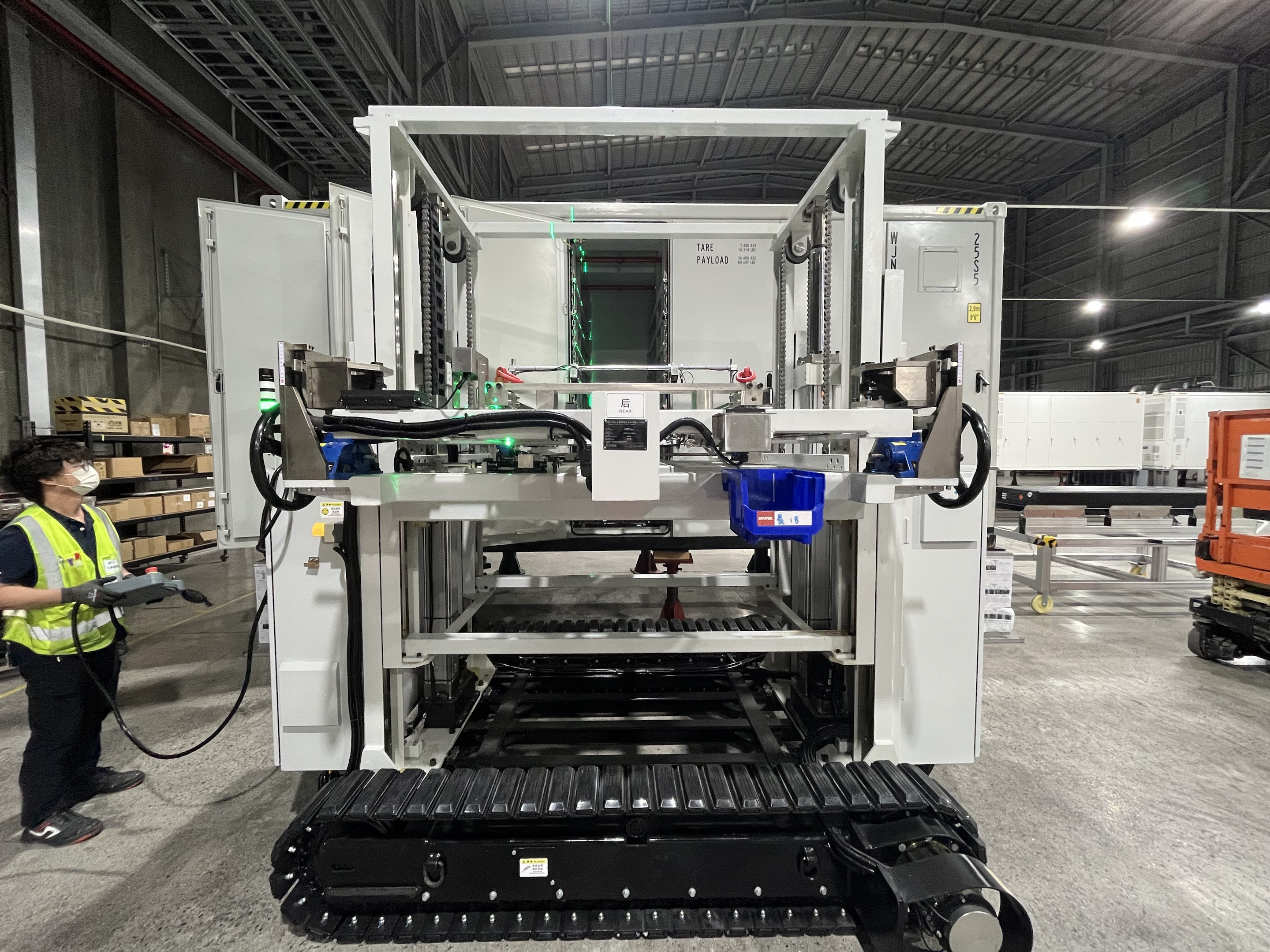
Case 3: Multi-Purpose Robot for Taiwan Facility
Client: A battery cell & PACK manufacturer in Taiwan.
Quantity: 1 unit ZZX2522.
Application: Indoor and outdoor battery pack insertion and pull-out.
Result: After one year, the robot continues to operate stably on complicated working floors, handling both insertion and maintenance tasks.
Frequently Asked Questions (FAQ)
Q1: What is the difference between AGV-driven and rail-fixed inserters?
AGV-driven robots (like RD16) can move autonomously between container stations, offering flexibility. Rail-fixed designs (like ZZX2508/2524) provide higher payload stability and are ideal for dedicated lines. The choice depends on your production layout.
Q2: Can these robots handle different battery pack sizes?
Yes. For example, the ZZX2508 accommodates packs with length 1100–2200 mm, width 780–1260 mm, and height 230–260 mm. The RD16 supports 280/314/587Ah cells with PACK configurations of 1P52S or 1P104S. Custom gripper changeover takes less than 1 minute on the ZZX2524.
Q3: How do I ensure positioning accuracy during insertion?
All Zonzsin robots integrate laser guidance and visual monitoring. Risk controls include collision detection, emergency stop buttons, and alarm lights. The company also conducts process risk assessment and testing before delivery.
Q4: What are the delivery and payment terms?
Minimum order quantity is 1 unit. Delivery methods: EXW, FOB, or FCA from Shanghai. Acceptance includes Factory Acceptance Test (FAT) or online FAT. Payment: 50% advance by T/T, 50% balance within 3 business days after Bill of Lading date.
Q5: Is ISO certification available?
Yes. Zonzsin holds ISO 9001:2015 certification (certificate number 44825MS079001R0, issued 2025-11-20, valid until 2028-11-19) covering the scope of R&D and assembly of AGV-based cluster loading robots and PACK assembly lines.
Why Choose Zonzsin for Your Containerized BESS Production?
- Proven Track Record: Since 2019, the company has delivered 40+ units annually, serving clients in Europe, USA, Japan, South Korea, India, and Taiwan. Export ratio is 60%.
- Strong R&D: 43 engineers hold 50 granted patents, including invention patents for AGV-driven battery PACK insertion robots.
- Quality Assurance: 100% testing before shipment, ISO 9001 certified.
- After-Sales Support: Remote support, on-site installation & commissioning.
- Lower Maintenance: Modular design reduces maintenance expenditure by 20%, with manpower saving of 30%.
For a deeper dive into technical specifications and customization options, download our product brochure below.
Conclusion
Selecting the right ESS battery pack insertion robot for containers is a strategic decision that impacts your production efficiency, product quality, and operational safety. By understanding the technology types – AGV-driven, rail-fixed, crawler-driven, and omni-directional – and evaluating your specific floor conditions, throughput goals, and compatibility needs, you can confidently choose a system that delivers long-term value. Shanghai Zonzsin Intelligent Equipment Co., Ltd. stands out with its comprehensive product range, proven global installations, strong IP portfolio, and commitment to customization. Contact Katty Liu at katty.liu@zonzsin.com or +86 134-8282-9368 for a consultation tailored to your project.