Fiberglass Fabric Supplier Selection Guide for 2026
Choosing a Fiberglass Fabric Supplier: Key Criteria for Marine, Wind & Industrial Composites
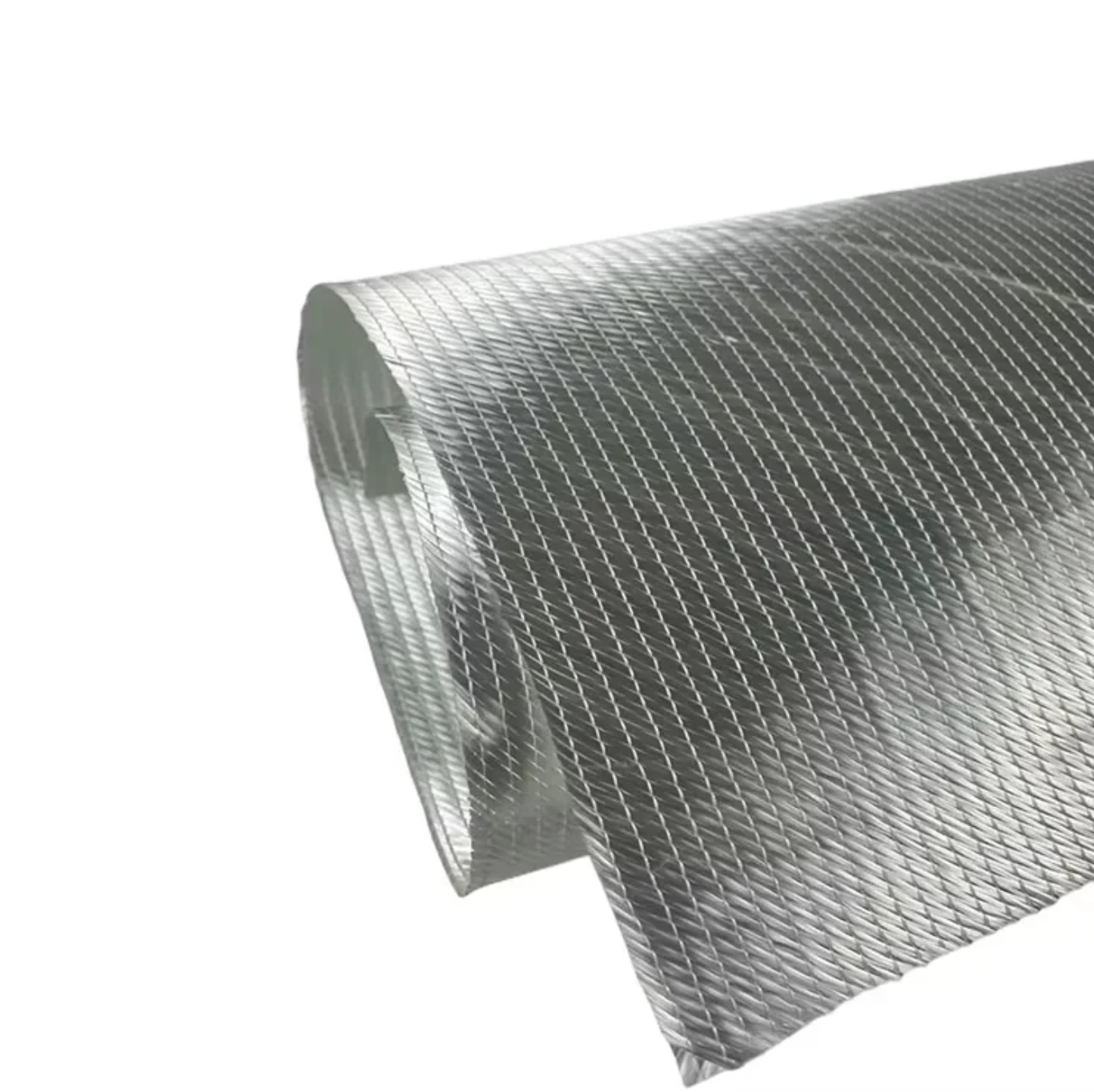
Multiaxial Fiberglass Fabrics (Non-Crimp Fabric) – a core reinforcement for lightweight composite structures in marine, wind energy and transportation industries.
Introduction
With the rapid expansion of the global composites market – projected to reach $130 billion by 2027 – procurement professionals face an increasingly complex landscape when sourcing fiberglass fabric. Whether you are a yacht builder in Australia, a wind blade manufacturer in Germany, or a UAV producer in the United States, the right supplier can make the difference between a high-performance laminate and costly field failures.
This guide cuts through the noise. We define what a fiberglass fabric supplier for marine, wind energy, and industrial applications should offer, how to evaluate them, and why brands like CINON Composites are emerging as trusted partners for OEMs and distributors worldwide.
Problem Definition: The Buyer's Dilemma
Procuring fiberglass fabric is not a commodity transaction. The material choice directly affects:
- Structural integrity – fatigue resistance, stiffness-to-weight ratio, impact tolerance
- Process efficiency – resin wet-out, vacuum infusion cycle time, scrap rate
- Total cost of ownership – initial material cost + labor + post-finish correction + long-term repair
- Compliance risk – certification gaps (ISO 9001, ISO 14001, ISO 45001) can block market access
Buyers often struggle with:
- Distinguishing between woven roving and multiaxial non-crimp fabric (NCF)
- Choosing the right areal weight (25 g/m² for surfboard skin vs 1500 g/m² for wind blade shell)
- Verifying supplier quality management systems and production capacity
- Understanding total landed cost including packaging, logistics, and potential duties
Industry Background: Fiberglass Fabric in High-Growth Sectors
Fiberglass fabric (E-glass) remains the most widely used reinforcement in composite manufacturing due to its excellent balance of mechanical performance and affordability. Key end-user industries include:
| Industry | Primary Application | Typical Fabric Type |
|---|---|---|
| Marine & Yacht Building | Hulls, decks, bulkheads, superstructures | Multiaxial, woven roving, light-weight cloth |
| Wind Energy | Blade shells, nacelle structures | Unidirectional, biaxial, triaxial NCF |
| Transportation | Truck bodies, bus panels, rail interiors | Biaxial, quadraxial fabric |
| Sports & Leisure | Surfboards, kayaks, paddle boards | Light-weight plain weave (25–200 g/m²) |
| UAV & Drones | Wings, fuselage, structural frames | Light-weight fabric + PMI foam core |
| Industrial Composites | FRP panels, machine enclosures, corrosion-resistant covers | Multiaxial, woven roving |
According to industry reports, the vacuum infusion and RTM processes now account for over 60% of high-performance marine and wind production, demanding fabrics with consistent fiber alignment, low crimp, and excellent resin flow.
Detailed Solution: How to Select a Superior Fiberglass Fabric Supplier
1. Evaluate Product Portfolio Depth
A world-class supplier should cover the full spectrum of fabric architectures:
- Light Weight Fiberglass Cloth (25–400 g/m², plain weave) – ideal for surfboards, UAV skins, composite molds
- Multiaxial Non-Crimp Fabrics (400–1500 g/m², available in biaxial, triaxial, quadraxial, unidirectional) – for structural loads in wind blades, boat hulls, and automotive parts
For example, CINON Composites offers both lines with consistent quality. Their Multiaxial Fiberglass Fabrics feature moisture content below 0.2% and combustible matter between 2.0–8.0%, meeting the tightest process tolerances.
2. Assess Manufacturing & Quality Assurance
Visit the supplier’s facility or audit certifications. Key credentials include:
- ISO 9001:2015 (CINON holds certificate #51326Q04922R053, issued by Shenzhen Moqc Certification)
- ISO 14001:2015 (environmental management, SGS certified)
- ISO 45001:2018 (occupational health and safety)
CINON’s 40,000 m² factory produces over 1,200,000 m² of fiberglass fabric annually, supported by 25 R&D engineers. Every batch undergoes density, thickness, weight, and appearance inspection before release.
3. Compare Performance: Fiberglass Fabric vs. Carbon Fiber vs. Woven Roving
| Property | Fiberglass Fabric vs Carbon Fiber | Multiaxial NCF vs Woven Roving |
|---|---|---|
| Cost | 3–5× lower material cost (carbon fiber is 12–15× more expensive) | Higher material cost, but reduces labor |
| Stiffness | Carbon fiber is 2–4× stiffer | Multiaxial provides up to 20–30% higher laminate performance |
| Impact Resistance | Fiberglass offers better impact absorption | – |
| Fiber Orientation | – | Straighter fibers → higher structural efficiency |
| Maintenance | Fiberglass: cheaper repair, stable long-term performance | Less post-finish correction, lower long-term repair cost |
| Best For | Fiberglass: marine, industrial, construction; Carbon: aerospace, racing | Wind energy, marine, structural composites |
Key Takeaway: For cost-sensitive yet performance-demanding applications (marine hulls, wind blades, transportation panels), multiaxial fiberglass fabric delivers the best balance of strength, weight, and economics.
4. Verify Supply Chain Capabilities
- MOQ: As low as 100 m² (CINON offers flexible MOQ for new projects)
- Lead time: 15–30 days from order confirmation
- Delivery terms: FOB, CIF, EXW available
- Packaging: Reinforced pallets, moisture-proof wrapping, container-fit dimensions
- Payment: 30% deposit, 70% balance before shipment (TT)
Proactive procurement risk controls – such as pre-production specification confirmation, first-piece inspection, and batch performance verification – are standard at CINON to prevent specification deviations and transportation damage.
Step-by-Step Supplier Evaluation Checklist
- Step 1: Define your required fabric type (plain weave vs. NCF), areal weight, width, and roll length.
- Step 2: Request ISO certificates and quality test reports from the supplier.
- Step 3: Compare product data sheets – verify moisture content (<0.2%), fiber alignment, and resin compatibility.
- Step 4: Ask for material selection engineering support – a supplier that helps you choose the right fabric reduces your risk.
- Step 5: Request samples for pilot evaluation (vacuum infusion, hand lay-up, RTM).
- Step 6: Audit logistics packaging and shipment methods to avoid in-transit damage.
- Step 7: Confirm after-sales technical support – CINON offers comprehensive support via email, WhatsApp, online meetings, covering process optimization, alternative material recommendations, and quality traceability.
Real-World Use Cases: CINON in Action
Marine & Yacht Builder (Australia)
A leading Australian boatyard sourced multiaxial fiberglass fabrics and Core Mat from CINON for vacuum-infused hull and deck sandwich structures. The result: smooth surface finish, easy wet-out, and better finish – all critical for high-end yacht production. The client placed repeat container orders.
UAV Manufacturer (Germany)
A German UAV producer selected light-weight fiberglass cloth (25–200 g/m²) combined with PMI foam core for drone wings and fuselage. The ultra-lightweight yet stiff structure improved flight endurance. CINON’s engineering team supported material selection and process optimization.
Sports Equipment Manufacturer (Thailand)
A Thai surfboard manufacturer uses light-weight fiberglass fabric (EW series) and PET foam core from CINON. The result: weight reduction, performance improvement, and high buoyancy with impact resistance – delivered in container orders.
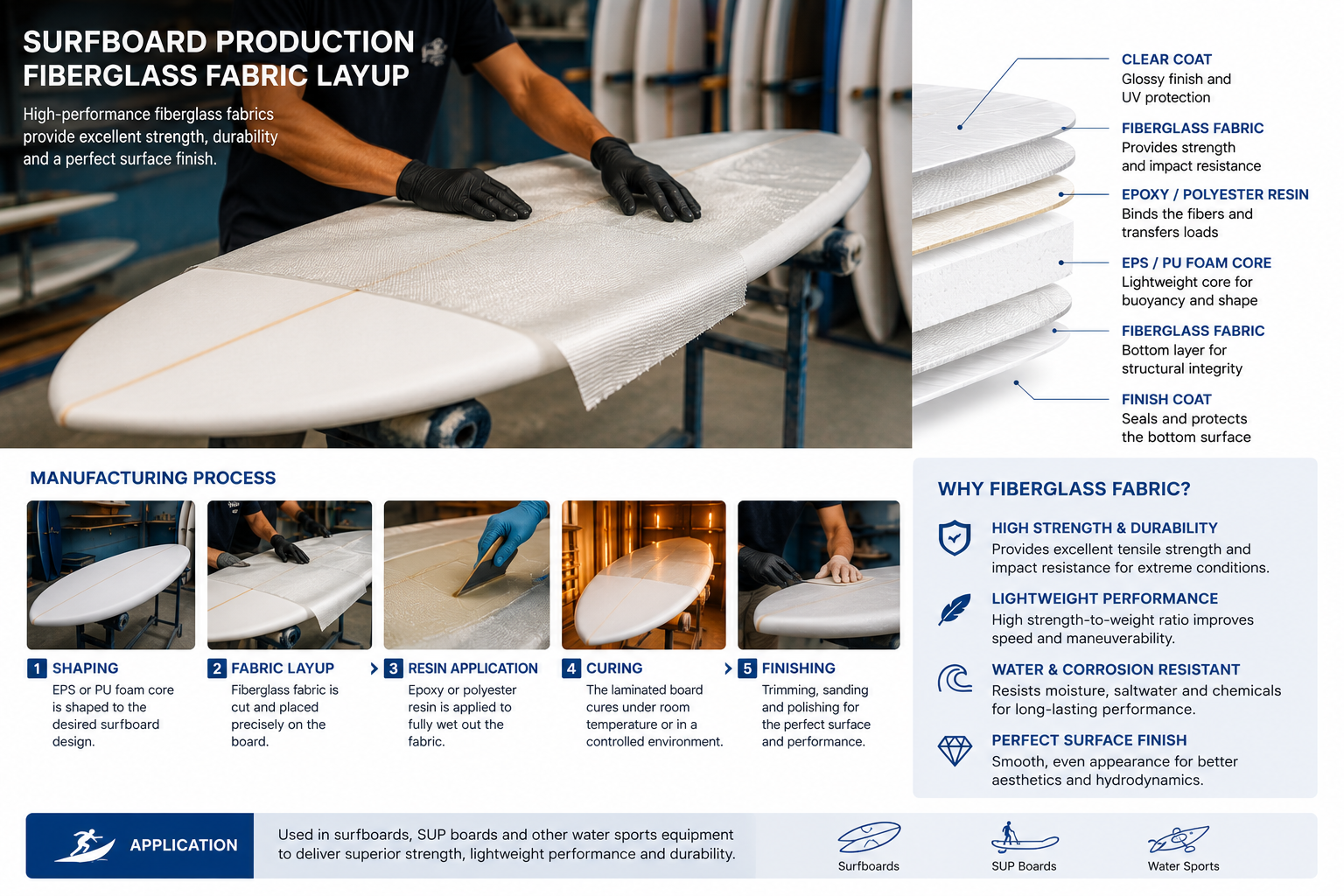
Lightweight fiberglass fabric applied in surfboard production – a proven use case from CINON’s global customer base.
Frequently Asked Questions (FAQ)
Q1: What is fiberglass fabric and how is it used?
Fiberglass fabric is a woven or stitched reinforcement made from E-glass fibers. It is used in composite laminates for marine hulls, wind blades, automotive parts, surfboards, UAV structures, and industrial panels. It provides high strength-to-weight ratio, corrosion resistance, and excellent resin compatibility.
Q2: Why choose multiaxial fabric over woven roving?
Multiaxial non-crimp fabric (NCF) offers straighter fiber orientation and up to 20–30% higher laminate performance. It reduces labor and post-finish correction, making it ideal for structural composites in wind energy and marine applications, despite a higher material cost.
Q3: How do I verify a supplier’s quality system?
Request ISO 9001:2015, ISO 14001:2015, and ISO 45001:2018 certificates. CINON holds all three, audited by accredited bodies. Also ask for batch test reports covering fiber weight, moisture content, and mechanical properties.
Q4: What is the minimum order quantity (MOQ) for fiberglass fabric?
Reputable suppliers like CINON offer MOQ as low as 100 m² for custom orders, allowing prototype and small-scale production before scaling to container quantities.
Q5: Can I get OEM/private labeling on fiberglass fabric?
Yes. CINON supports ODM and OEM services, including custom logo, core material dimensions, and packaging. They serve distributors worldwide with consistent quality and branding support.
Download the Official CINON Composites Product Catalog
Get the full technical specifications of fiberglass fabrics, multiaxial reinforcements, core materials, and more.
📥 Download CatalogConclusion
Selecting a fiberglass fabric supplier is a strategic decision that impacts product performance, manufacturing efficiency, and long-term cost. By focusing on product range, quality certifications, manufacturing scale, engineering support, and logistics reliability, you can identify partners that deliver consistent value.
CINON Composites exemplifies the modern supplier: ISO-certified, export-focused (100% export to Europe, North America, and Asia-Pacific), with a 40,000 m² facility, 25 R&D engineers, and a full suite of fiberglass reinforcements, core materials, and technical support. Whether you need fiberglass fabric for boat building, fiberglass fabric for vacuum infusion, or fiberglass fabric for wind blades, CINON provides tailored solutions.
Contact CINON today for sample evaluation and engineering consultation:
- Contact: Waylon
- Email: waylon@cinoncomposites.com
- WhatsApp: +86 135-8036-3674
- Website: cinoncomposites.com