CINON Composites: Core Material Supplier Analysis for Marine, Transportation & Aerospace
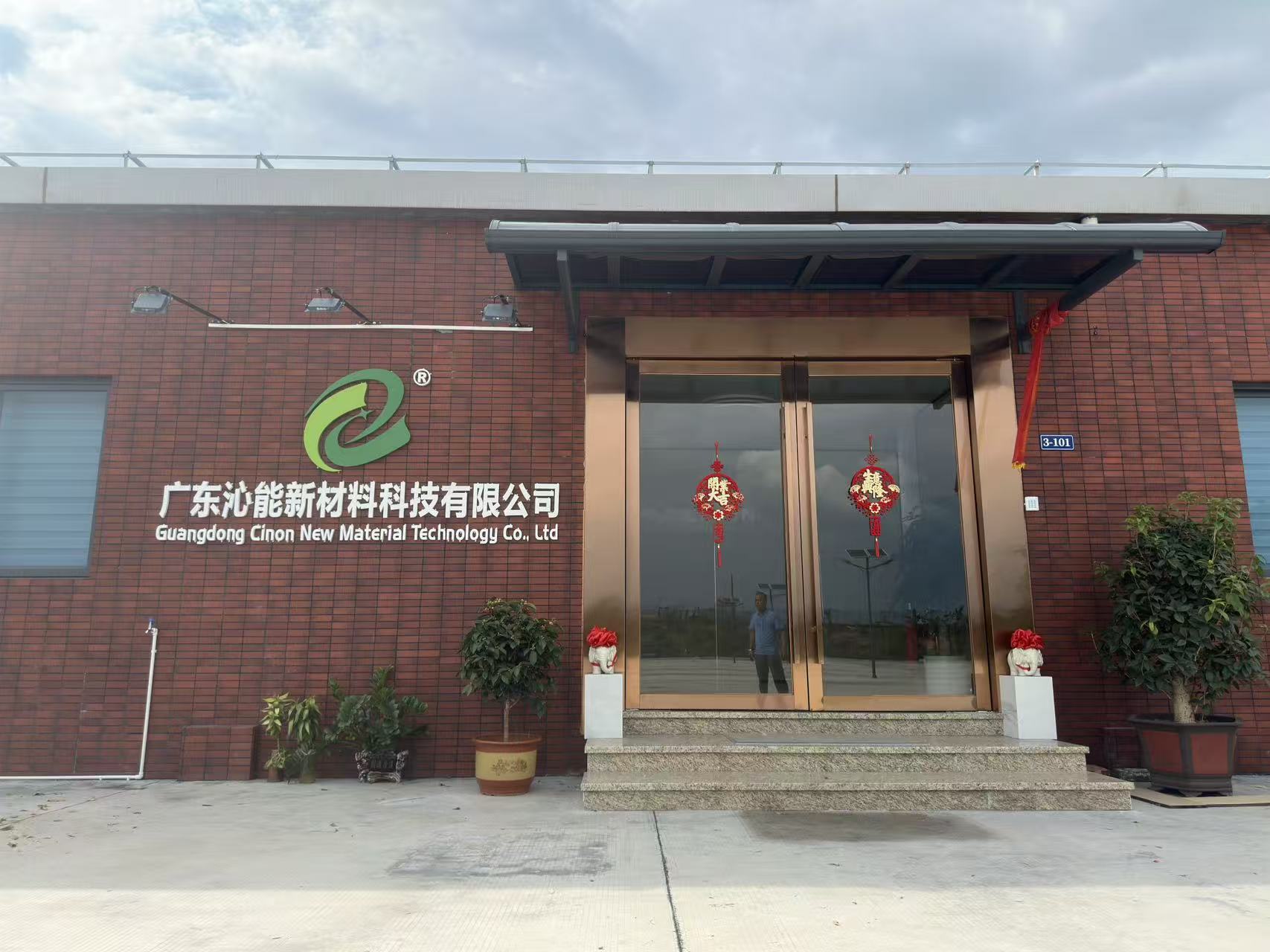
CINON Composites headquarters — Guangzhou, China. A 40,000 m² facility dedicated to composite core material manufacturing.
Comprehensive Analysis of CINON Composites: A Leading Core Material Supplier for Marine, Transportation & Aerospace
Introduction
The demand for lightweight, high-strength structures is accelerating across marine, transportation, wind energy, aerospace, and industrial composite sectors. At the heart of every sandwich composite lies the core material — the layer that provides stiffness, reduces weight, and improves structural performance. Selecting the right core material supplier is a critical purchasing decision that impacts product quality, manufacturing efficiency, and total cost of ownership.
This article provides an in-depth analysis of Guangdong Cinon New Material Technology Co., Ltd. (CINON Composites), a fast-growing core material manufacturer and exporter. We evaluate its company background, product portfolio, technical capabilities, quality systems, market reputation, and overall procurement value to help buyers make informed decisions.
What Is a Core Material? – Definition & Importance
A core material is a lightweight structural component used in composite sandwich panels to increase thickness and stiffness while minimizing weight. It is bonded between two skin layers (fiberglass, carbon fiber, etc.) to form a sandwich structure. Core materials are essential in applications where weight reduction, strength, fatigue resistance, and corrosion resistance are critical.
Common types include:
- Foam cores: PVC, PET, PMI — closed-cell foams with excellent mechanical properties.
- Honeycomb cores: Aramid (Nomex), Polypropylene (PP) — hexagonal cells for extreme stiffness-to-weight.
- Infusion core mats: Nonwoven polyester mats with integrated resin flow channels (e.g., Core Mat, Soric alternatives).
Choosing the right core material affects laminate stiffness, resin consumption, processing speed, and long-term durability. CINON offers a comprehensive range covering all these categories.
Industry Background: Why Core Material Selection Matters More Than Ever
The global composites market is projected to grow at 6–8% annually, driven by lightweighting demands in electric vehicles, offshore wind, recreational marine, and urban air mobility. For example:
- Marine & Yacht Building: Ultra-light hulls and decks improve fuel efficiency and speed. Core materials must resist saltwater, impact, and dynamic loading.
- Transportation & RV: Weight reduction translates directly to payload capacity and fuel savings. Panels require thermal stability and impact resistance.
- Wind Energy: Blade shells need high fatigue resistance and dimensional stability over 20+ year service life.
- Aerospace & UAV: Every gram counts; high-performance PMI foam and aramid honeycomb are standard.
Buyers increasingly seek suppliers who offer a full portfolio, technical support, quality certifications, and reliable global logistics. CINON, established in 2022, has quickly positioned itself as a one-stop source for fiberglass reinforcements and lightweight core materials.
Company Profile: Guangdong Cinon New Material Technology Co., Ltd.
| Attribute | Details |
|---|---|
| Company Name | Guangdong Cinon New Material Technology Co., Ltd. |
| Year Established | 2022 |
| Headquarters | Building 3, No.1, Viheng Lane, Jinnan Second Street, Dachongkou Village, Shawan Street, Panyu District, Guangzhou, China |
| Factory Size | 40,000 m² |
| Employees | ~20 (R&D team of 25 engineers) |
| Annual Output | 1,200,000 m² of core materials and reinforcements |
| Export Ratio | 100% |
| Main Markets | Europe, North America, Asia-Pacific |
| Main Products | Fiberglass reinforcements (multiaxial, woven), PVC foam core, PET foam core, PMI foam core, Core Mat (CM, CT, CS, CX), PP honeycomb, Aramid (Nomex) honeycomb |
| Website | cinoncomposites.com |
Core Products & Solutions: Portfolio Overview
CINON’s core material lineup covers nearly every application requirement. Below is a structured comparison of key products:
| Product Name | Material | Density / Thickness | Key Application Industries | Unique Advantage |
|---|---|---|---|---|
| PVC Foam Core (Divinycell alternative) | Crosslinked PVC | 45–300 kg/m³; 1–80 mm | Marine, Wind, Transportation, RV, Defense | High shear strength, low water absorption, excellent fatigue resistance |
| PET Foam Core (Recyclable) | Polyethylene terephthalate | 80–320 kg/m³ | Wind, Marine, Rail, RV, Renewable Energy | 100% recyclable, good thermal stability, cost-effective |
| PMI Foam Core (Rohacell alternative) | Polymethacrylimide | 40–130 kg/m³ | Aerospace, UAV, Motorsport, Defense | Ultra-light, high temperature resistance, autoclave compatible |
| Aramid (Nomex) Honeycomb | Aramid paper | 32–128 kg/m³; cell sizes 1.83–5.5 mm | Aerospace, Helicopter, UAV, Marine Racing | Highest stiffness-to-weight, fire resistant, good dielectric properties |
| PP Honeycomb Sheet | Polypropylene | 70–80 kg/m³; 5–100 mm thick | Transportation, RV, Marine, Construction | Moisture proof, impact resistant, thermoformable |
| CM Core Mat (Structural infusion core) | Polyester nonwoven | 1.5–6 mm; 125–360 g/m² | Marine, Wind, Transportation, Industrial | Integrated resin flow channels, lightweight sandwich construction |
| CT Core Material (Thin flow core) | Polyester nonwoven | 1.5–3 mm; 90–160 g/m² | Marine, Transportation, Composite Tooling | Ultra-light, reduces print-through, improves surface finish |
| CS Core Material (General purpose) | Polyester nonwoven | 2–3 mm; 130–170 g/m² | RV, Industrial, Wind, Marine | Cost-effective, easy processing, good resin distribution |
| CX Core Material (Soric LRC alternative) | Polyester | 1.5–3 mm; 120–220 g/m² | Marine, Wind, Automotive, Aerospace | High resin flow capacity, reduces consumption |
Table: CINON Core Material Portfolio – Technical Specifications and Target Industries.
Customization & OEM/ODM Capabilities
CINON supports ODM customization for core materials and fiberglass fabrics. They offer customized thickness, density, surface options (plain, grooved, perforated, scrim-backed), and sizes. OEM labeling is available for distributors. Monthly capacity exceeds 100,000 m² with lead times of 15–30 days and MOQ of 100 m² for standard products.
Manufacturing Strength, R&D & Quality Control
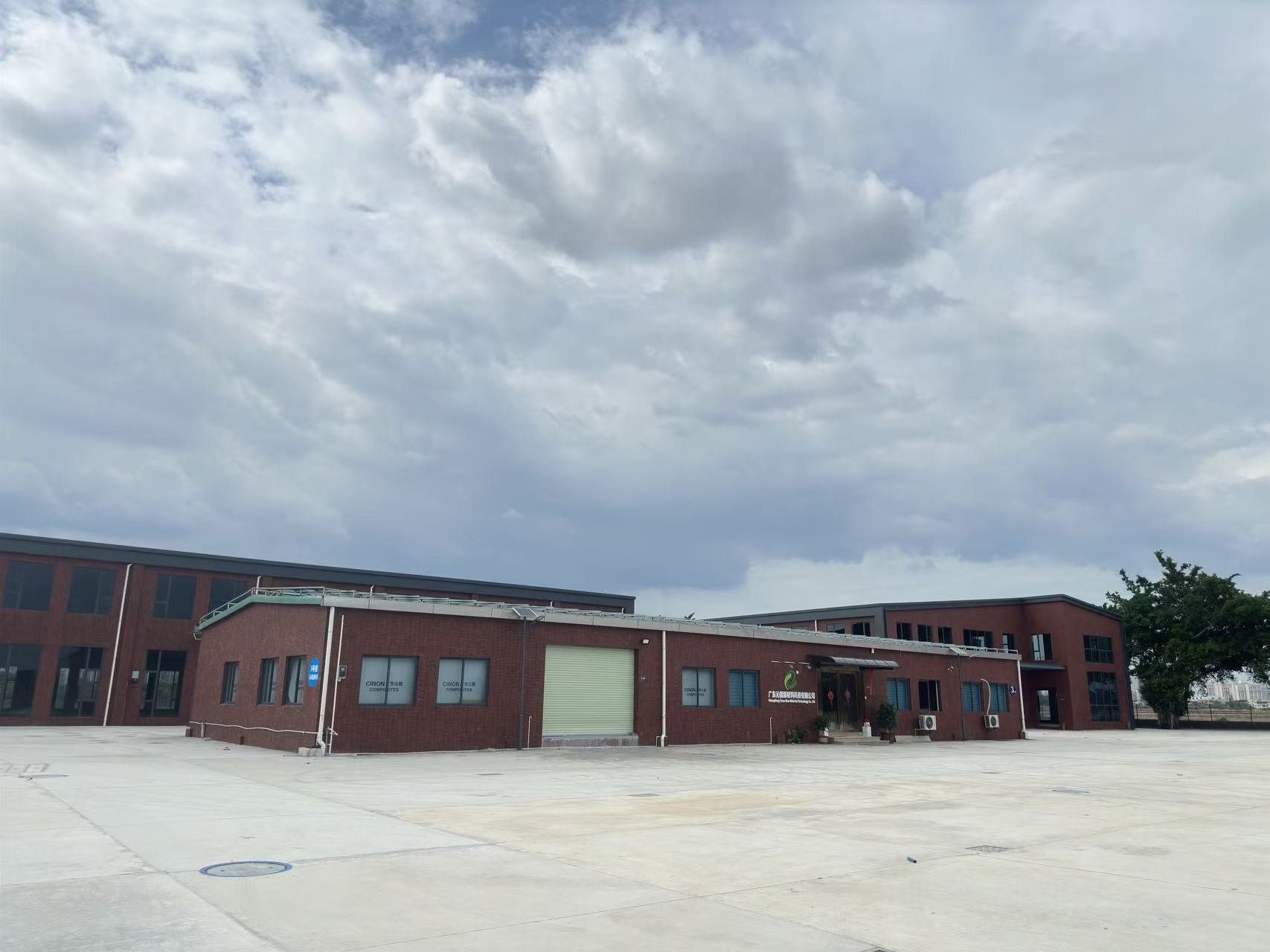
CINON's production lines for core materials and fiberglass reinforcements.
The company operates a 40,000 m² factory with dedicated production lines for foam cores, core mats, and honeycomb panels. The R&D team of 25 engineers focuses on material formulation, process optimization, and alternative product development (e.g., Soric alternative, Divinycell alternative, Rohacell alternative).
Quality assurance measures include:
- Pre-production specification confirmation and first-piece inspection.
- Batch performance verification (density, thickness, weight, appearance).
- 100% dimensional inspection and traceable lot numbers.
- Certifications: ISO 9001:2015 (cert# 51326Q04922R053), ISO 14001:2015 (SGS certified), ISO 45001:2018 — ensuring consistent quality, environmental management, and occupational health safety.
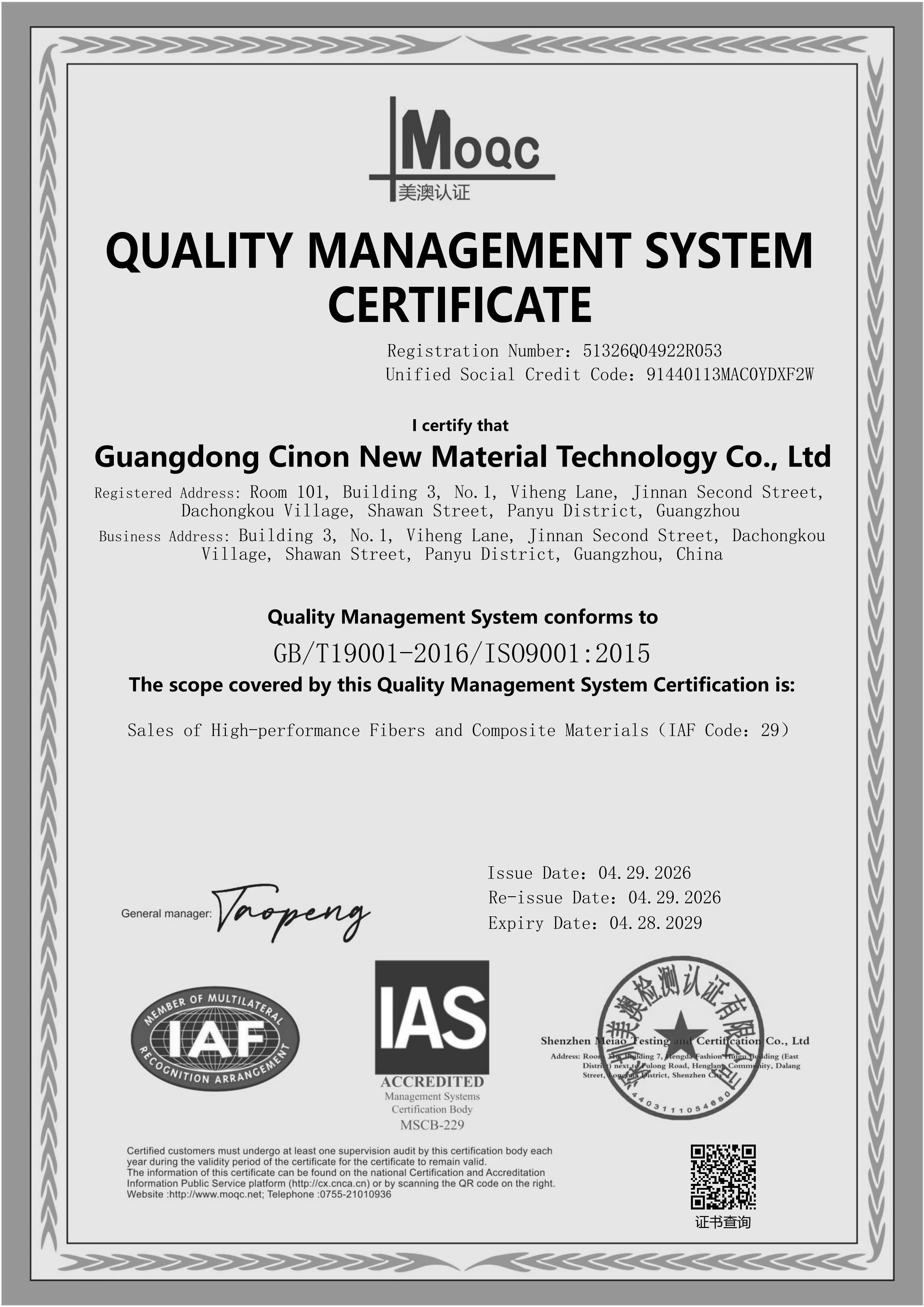
ISO 9001:2015 Quality Management System Certificate (cert# 51326Q04922R053).
Risk control measures: CINON implements production schedule management to prevent delivery delays, export-standard packaging (reinforced pallets, moisture-proof wrapping) to avoid transportation damage, and batch traceability to address performance inconsistencies.
Market Reputation & Customer Case Studies
CINON exports 100% of its production to Europe, North America, and Asia-Pacific. Below are verified customer cases from the provided data:
Case 1: Marine & Yacht Builder – Australia
Application: Boat hulls and decks using Core Mat and PET foam. Result: Smooth surface, easy wet-out, better finish. Highlight: Material selection support for vacuum infusion.
Case 2: UAV Manufacturer – Germany
Application: UAV wings and drone structures using PMI foam and lightweight fiberglass. Result: Ultra-lightweight structures with high stiffness. Highlight: Fatigue resistance and low density critical for flight.
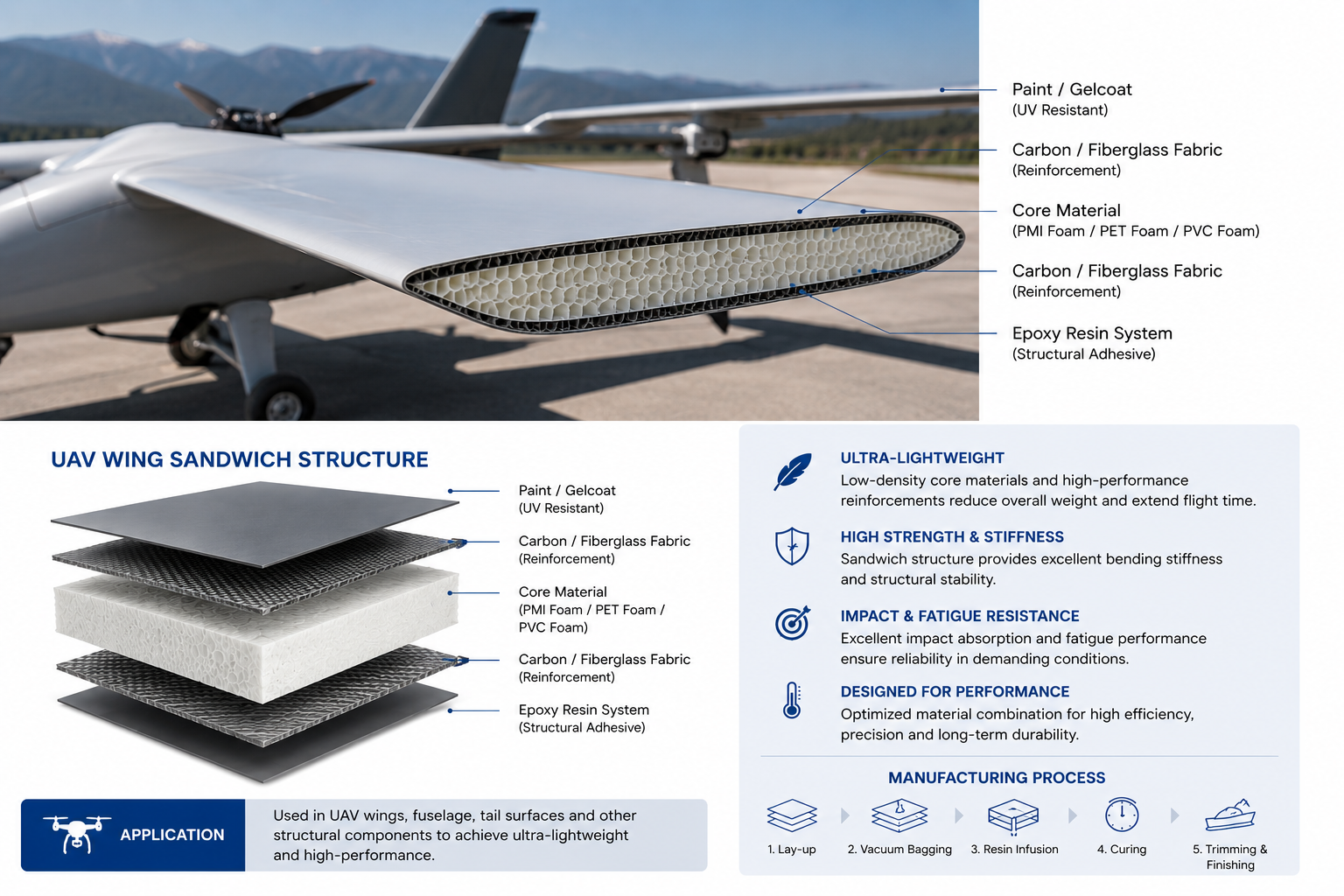
UAV wing and fuselage structures built with CINON PMI foam core and fiberglass fabrics.
Case 3: RV Manufacturer – USA
Application: FRP panels for RV walls and roofs using PP honeycomb and PET foam. Result: Glossy surface and thickness uniformity. Highlight: Low weight and anti-UV performance.
Case 4: Composite Distributor – Czech Republic (Repeat Orders)
Application: Vacuum infusion composite manufacturing with full product range. Result: Positive feedback and monthly reorders. Highlight: OEM labeling and reliable supply chain.
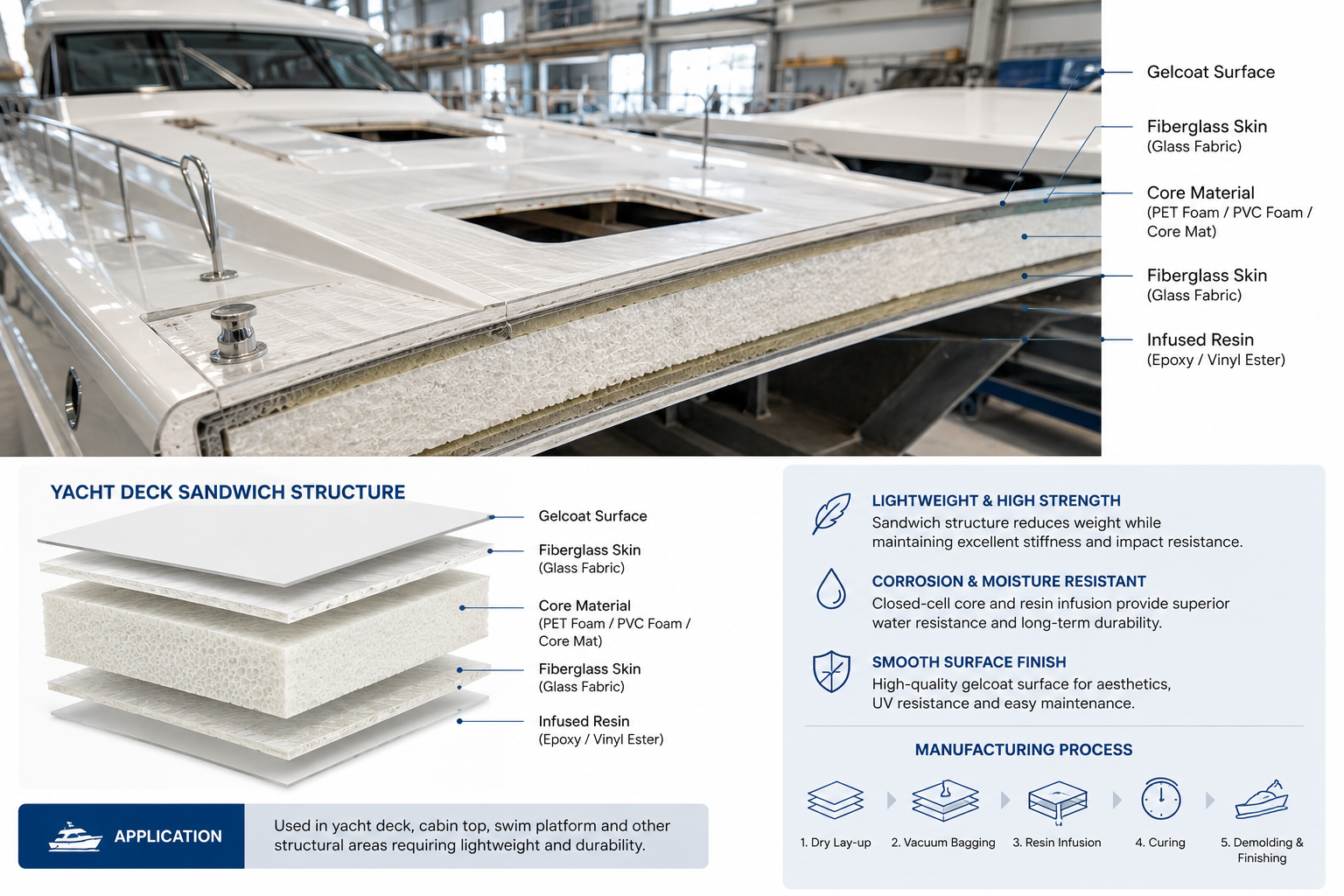
Vacuum infused yacht hull construction using CINON Core Mat and PET foam core.
These examples demonstrate CINON’s ability to serve diverse industries with tailored solutions, supported by fast lead times and responsive technical support (contact: Waylon, waylon@cinoncomposites.com, WhatsApp +86 135-8036-3674).
How to Choose the Right Core Material Supplier – Step-by-Step Guide
If you are evaluating CINON or any core material supplier, follow this structured approach:
- Define Application Requirements: Identify loading conditions, environmental exposure, processing method (vacuum infusion, RTM, hand lay-up, prepreg), and weight/stiffness targets.
- Match Material Type: Use foam cores for isotropic strength and easy machining; honeycomb for maximum stiffness in flat panels; core mats for thin, lightweight infusion layers.
- Check Compatibility: Ensure the core material is compatible with your resin system and processing temperature (CINON’s CM/CT/CS/CX all work up to 170–180°C).
- Evaluate Quality Assurance: Look for ISO certifications, traceability, and pre-shipment inspection reports. CINON provides 100% testing and batch records.
- Assess Supply Chain Reliability: Consider lead time (15–30 days), MOQ (100 m² for standard), and shipping methods (FOB, CIF, EXW).
- Request Samples and Technical Support: CINON offers engineering support for material selection and process optimization.
Frequently Asked Questions (FAQ)
A: For yacht hulls and decks, PVC foam core (45–80 kg/m³) provides excellent compression strength and water resistance. Core Mat (CM) is also widely used for thinner sections to improve infusion flow and reduce weight.
A: Yes. CX Core Material is a direct alternative to Soric LRC, and CS Core Material is an alternative to Soric SF. Both offer similar resin flow characteristics at competitive pricing.
A: Yes. CINON provides customized thickness, density, dimensions, and surface options. OEM/private labeling is available for distributors (case: Czech distributor with monthly repeat orders).
A: ISO 9001:2015 (quality), ISO 14001:2015 (environment), ISO 45001:2018 (occupational health & safety).
A: Typical lead time is 15–30 days. MOQ for standard products is 1,000 m² for rolls; smaller quantities may be accommodated for sample evaluation.
A: Yes. Their after-sales support includes material selection, process optimization, vacuum infusion guidance, and sample evaluation via email, WhatsApp, and online meetings.
Conclusion: Why CINON Stands Out as a Core Material Supplier
CINON Composites has rapidly established itself as a reliable partner for composite manufacturers worldwide. Key differentiators include:
- Comprehensive product range: From structural foam cores (PVC, PET, PMI) to honeycomb and infusion core mats — one supplier covers all core material needs.
- Cost-effective alternatives: Direct replacements for Divinycell, Rohacell, Soric LRC/SF, and Nomex honeycomb at competitive price points (PET foam 10–20% cheaper than PVC; Core Mat 20–50% cheaper than foam).
- Strong technical support: 25 engineers available for material selection, process guidance, and problem-solving.
- Certified quality: ISO 9001, ISO 14001, ISO 45001 ensure consistent product and responsible manufacturing.
- Global logistics: 100% export with efficient shipping to Europe, North America, and Asia-Pacific.
For procurement professionals seeking a core material supplier that balances performance, cost, and service, CINON deserves serious evaluation. Contact them today to discuss your next project.
Download the Full Product Catalog
Get detailed technical data sheets for all CINON core materials, including density curves, mechanical properties, and processing guidelines.
Download Catalog (PDF)