How to Verify Compliance When Choosing a Fiberglass Fabric Supplier for Marine & Wind
How to Verify Compliance When Choosing a Fiberglass Fabric Supplier for Marine & Wind
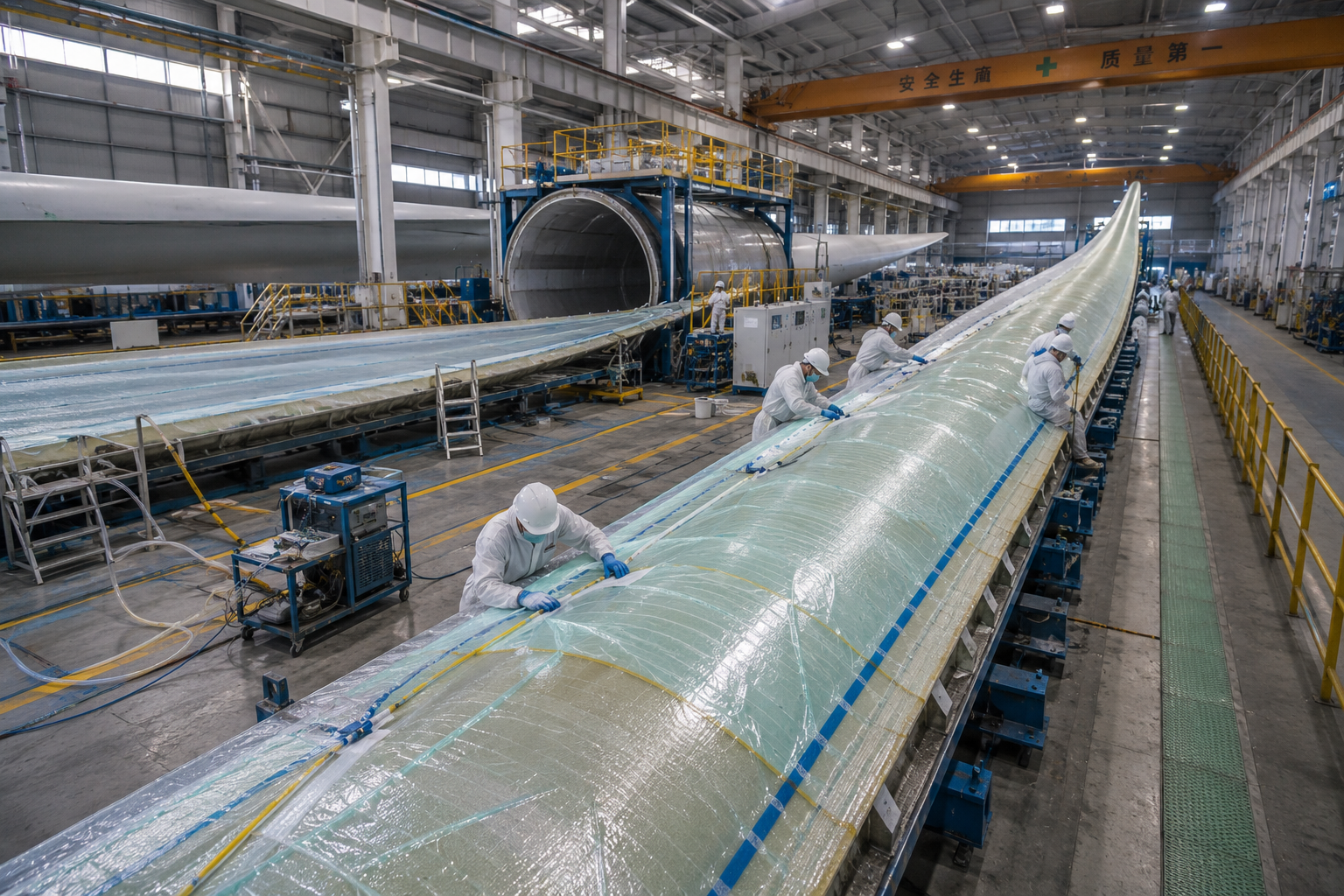
In demanding industries like marine yacht building and wind energy, the performance and safety of composite structures depend heavily on the quality and compliance of fiberglass reinforcements. Choosing a supplier that meets international standards, provides traceable certifications, and delivers consistent product quality is not just a matter of cost—it's a critical decision for structural integrity, regulatory approval, and long-term durability. This guide explains how procurement professionals, engineers, and composite manufacturers can systematically verify supplier compliance before placing orders.
What Is a Compliant Fiberglass Fabric Supplier?
A compliant fiberglass fabric supplier is one that systematically adheres to internationally recognized management system standards, maintains documented quality control procedures, and provides verifiable evidence of product performance. This includes:
- ISO 9001:2015 Quality Management System certification
- ISO 14001:2015 Environmental Management System certification
- ISO 45001:2018 Occupational Health and Safety Management System certification
- Consistent material parameters (weight, weave, width, moisture content)
- Batch traceability and test reports
- Technical support for process optimization
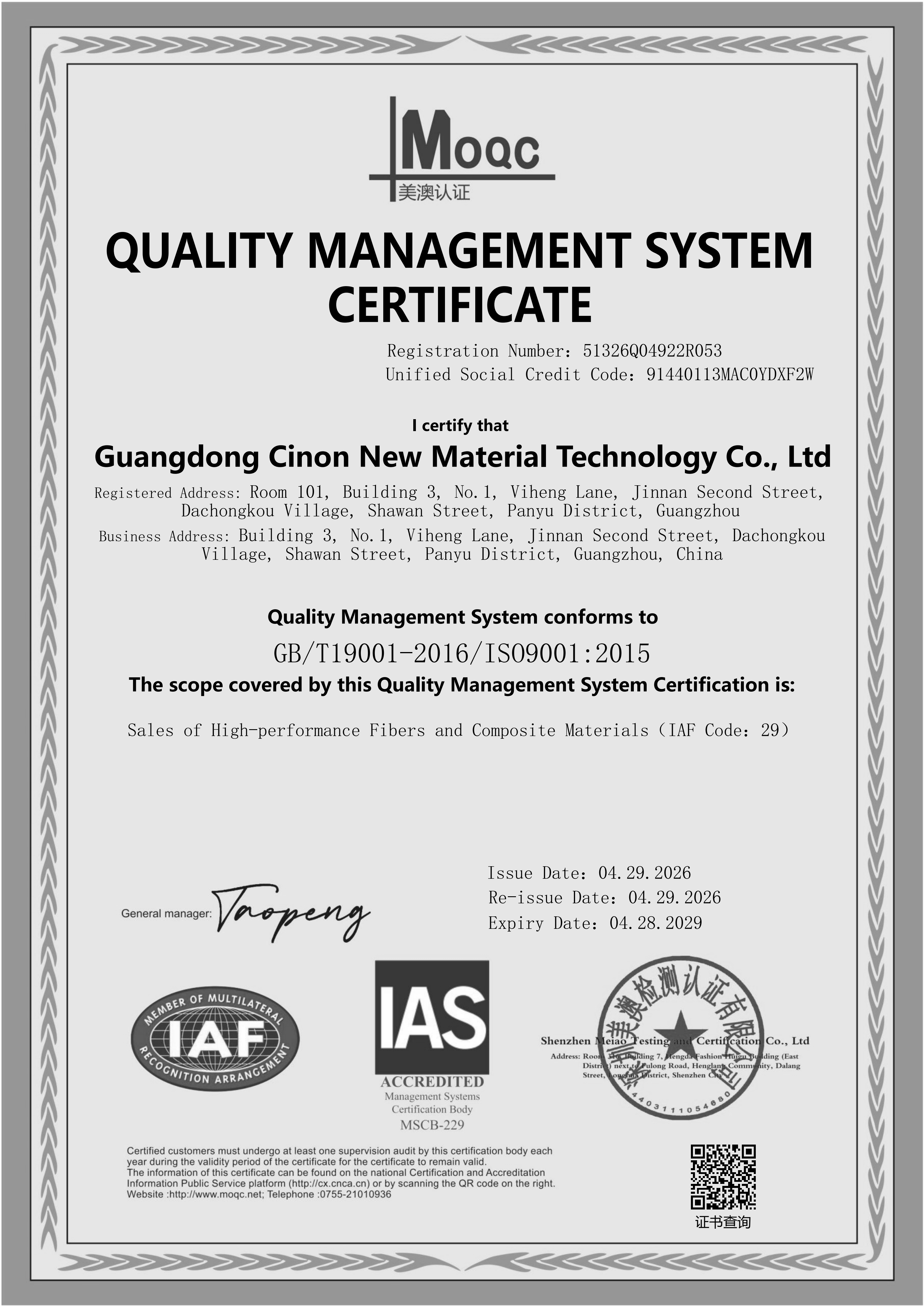
For example, Guangdong Cinon New Material Technology Co., Ltd (brand CINON) holds ISO 9001:2015 (certificate number 51326Q04922R053), ISO 14001:2015 (certificate number ISO14001-2023-001), and ISO 45001:2018 (certificate number 51326S01896R053) covering the sales of high-performance fibers and composite materials.
Problem Definition: The Risks of Non-Compliant Fiberglass Fabric Procurement
Buyers who fail to verify supplier compliance face several risks:
- Incorrect Material Selection: Using a fabric with wrong weight or weave for vacuum infusion can cause resin starvation or poor mechanical performance.
- Product Specification Deviation: Deviations in thickness, width, or density lead to dimensional issues in molds and final parts.
- Performance Inconsistency: Batch-to-batch variations reduce confidence in production quality and may cause field failures.
- Transportation Damage: Improper packaging results in fabric distortion, moisture damage, and contamination.
- Regulatory Non-Compliance: Projects requiring specific certifications (e.g., marine classification or wind energy standards) may be rejected if the supplier cannot provide documentation.
Industry Background: Standards That Matter
Different end-use industries impose unique compliance requirements:
| Industry | Key Compliance Needs | Common Standards |
|---|---|---|
| Marine & Yacht Building | Low water absorption, saltwater corrosion resistance, resin flow consistency | ISO 9001, Lloyd's Register (LR), DNV GL |
| Wind Energy | Fatigue resistance, dimensional stability, high strength-to-weight ratio | ISO 9001, IEC 61400, GL certification |
| UAV & Drone Manufacturing | Ultra-lightweight, high stiffness, traceability | ISO 9001, AS9100 for aerospace |
| Transportation & RV | Anti-UV, impact resistance, core adhesion | ISO 9001, OEM specific |
Detailed Solution: Step-by-Step Supplier Compliance Verification
Step 1: Request Management System Certificates
Ask the supplier to provide valid ISO 9001, ISO 14001, and ISO 45001 certificates. Verify the certificate number with the issuing body. For example, CINON's ISO 9001 certificate number 51326Q04922R053 is issued by Shenzhen Moqc Certification Co., Ltd and covers "Sales of High-performance Fibers and Composite Materials." Ensure the scope matches your product category.
Step 2: Confirm Product Specifications and Tolerances
Review the fabric's technical data sheet. For light weight fiberglass cloth (model EW), key parameters include:
- Glass type: E-Fiberglass
- Weave: Plain Woven
- Width: 1000mm, 1010mm
- Weight: 25-400 g/m²
For multiaxial fabrics (non-crimp), confirm:
- Fiber orientation: Unidirectional, Biaxial, Triaxial, Quadriaxial
- Weight: 400-1500 g/m²
- Combustible matter: 2.0%-8.0%
- Moisture content: Less than 0.2%
A compliant supplier performs first-piece inspection before mass production, checking dimensions, density, and appearance.
Step 3: Evaluate Production Capacity and Quality Control
Capabilities such as monthly production volume, lead times, and testing rigor indicate reliability. For instance, CINON has a monthly capacity of 100,000 m², typical lead time of 15-30 days, and implements 100% testing of all products. Minimum order quantity is 1,000 m² for ODM services.
Step 4: Review Past Project Case Studies
Real-world applications demonstrate a supplier's ability to solve specific industry challenges. Below are examples from a compliant supplier:
| Client / Location | Application | Product Used | Key Results |
|---|---|---|---|
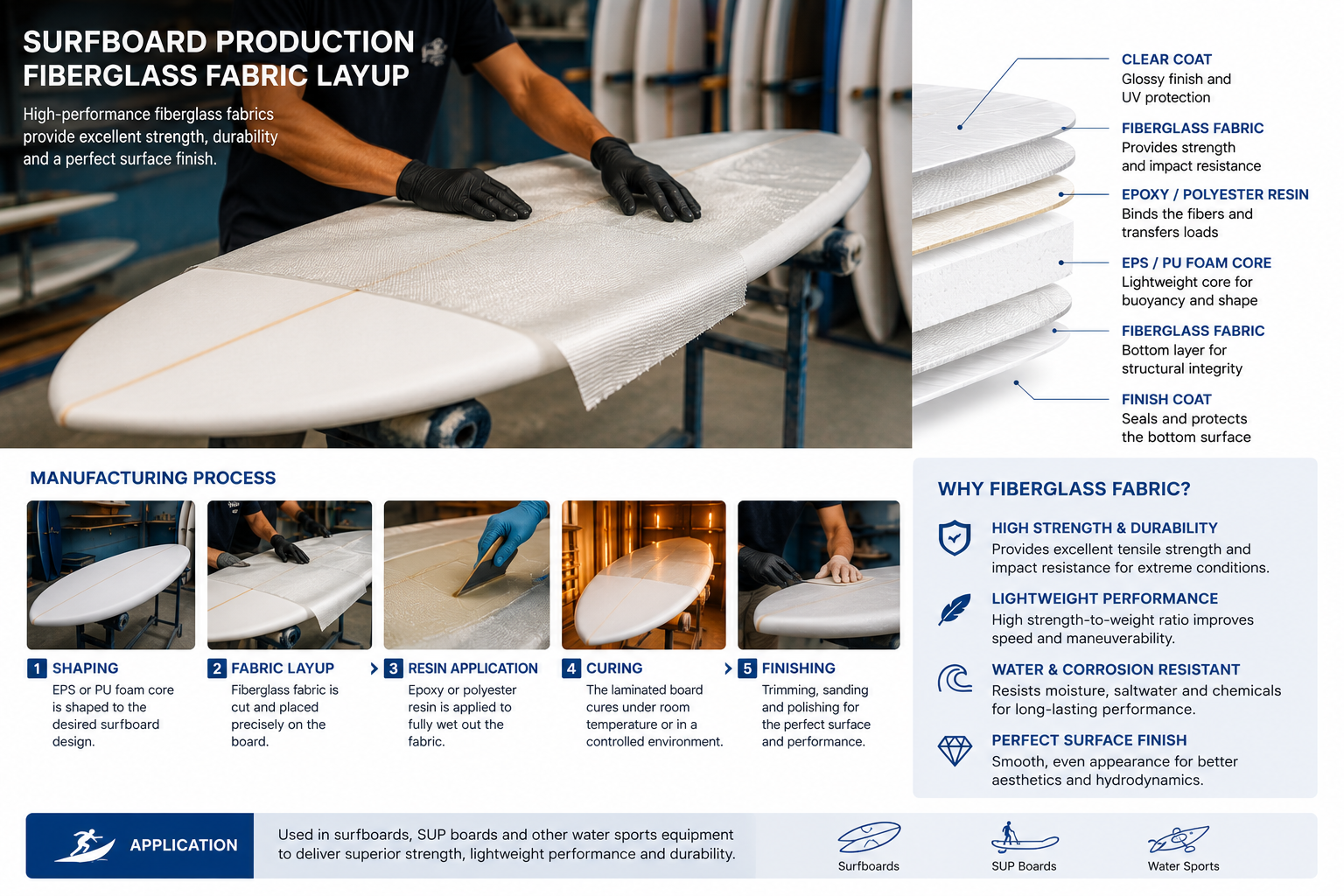
| Sports Equipment Manufacturer, Thailand | Surfboard manufacturing | Lightweight fiberglass fabric | Weight reduction, performance improvement, high buoyancy & impact resistance |
| UAV Manufacturer, Germany | UAV structures | PMI foam core + lightweight fabric | Ultra-lightweight, high stiffness, fatigue resistance |
| Transportation Panel Manufacturer, Mexico | Truck body panels | Multiaxial fabric + PET foam | Lightweighting, improved corrosion resistance, good core adhesion |
| RV Manufacturer, United States | FRP panels | Multiaxial fiberglass fabric | Glossy surface, uniform thickness, low weight, anti-UV |
| Marine & Yacht Builder, Australia | Boat hulls & tools | Core mat + multiaxial fabric | Lightweight, stiffness improvement, durability |
| Composite Distributor, Poland | General composite structures | Multiaxial fabric + core materials | Good sales, repeat orders, OEM logo customization |
How to Choose Between Woven Roving and Multiaxial Fabrics
Understanding fabric architecture is essential for compliance:
| Property | Woven Roving | Multiaxial (Non-Crimp) Fabric |
|---|---|---|
| Fiber Orientation | Crimped (woven) | Straight, aligned layers |
| Structural Efficiency | Lower due to crimp | 20-30% higher laminate performance |
| Best For | General laminates | Wind energy, marine, structural composites |
| Cost | Lower material cost | Higher but reduces labor |
| Resin Impregnation | Slower | Faster, less energy |
Compared to carbon fiber, fiberglass fabric offers 3-5x lower material cost and better impact resistance, making it the preferred choice for marine, industrial, and construction applications where cost efficiency is critical.
Technical Support and Quality Assurance
A compliant supplier provides engineering support for material selection, process optimization, and troubleshooting. For example, CINON offers comprehensive technical support covering vacuum infusion guidance, alternative material recommendations, sample evaluation, and quality traceability. Their after-sales support includes email, WhatsApp, online meetings, and technical documentation from prototype to mass production.
FAQ: Common Buyer Concerns
What certifications should a fiberglass fabric supplier have?
At minimum, ISO 9001:2015 for quality management. For industries like wind energy and aerospace, additional certifications such as ISO 14001 and ISO 45001 demonstrate commitment to environmental and safety standards. CINON holds all three certifications with verifiable certificate numbers.
How do I verify the quality of fiberglass fabric before purchase?
Request a sample for testing. Verify the fabric's weight, weave, width, and moisture content against the datasheet. Ask for batch performance verification and test reports. A compliant supplier will also conduct first-piece inspection before mass production.
What is the typical lead time and MOQ for custom fiberglass fabric?
A standard supplier like CINON has a lead time of 15-30 days, monthly capacity of 100,000 m², and MOQ of 1,000 m² for ODM orders. Smaller quantities may be available for trials.
Can the supplier provide OEM/ODM services?
Yes, many suppliers offer ODM production for fiberglass fabric, including customized width, weight, and packaging with customer logo. CINON provides ODM services with global export.
How do I ensure the fabric performs well in vacuum infusion?
Choose fabrics with low moisture content (<0.2%) and compatible sizing. Multiaxial non-crimp fabrics offer faster impregnation. Get technical recommendations from the supplier based on your resin system and process.
Conclusion
Selecting a compliant fiberglass fabric supplier is a systematic process that protects your project from technical failures, regulatory setbacks, and supply chain disruptions. By verifying management system certifications, confirming product specifications, reviewing production capabilities, and analyzing real-world case studies, you can confidently partner with a supplier that meets your industry's requirements. CINON Composites (brand CINON) exemplifies a compliant supplier with ISO certifications, robust quality control, and proven success in marine, wind energy, UAV, transportation, and industrial applications across Europe, North America, and Asia-Pacific.
📥 Download CINON Product Catalog (PDF)
Contact: waylon@cinoncomposites.com | WhatsApp: +86 135-8036-3674 | Address: Building 3, No.1, viheng Lane, Jinnan Second Street, Dachongkou Village, Shawan Street, Panyu District, Guangzhou, China