How to Implement Intelligent Edible Mushroom Equipment: A Practical White Paper for Modern Cultivators
How to Implement Intelligent Edible Mushroom Equipment
March 2026 | Industry Guide
This white paper provides a structured methodology for implementing intelligent edible mushroom equipment in commercial cultivation operations. It outlines a step-by-step approach from planning and equipment selection to integration and operation, based on industry practices and technical specifications from established manufacturers like Changxing Edible Mushroom Machinery.
1. Defining Requirements and Planning
The first step in implementing intelligent mushroom equipment is to clearly define operational requirements. This includes determining target daily output, the variety of mushrooms to be cultivated (such as shiitake, oyster, or black fungus), and the available facility space.
For example, a 2-Station Full-Automatic Mushroom Substrate Bagging Production Line is intended for the Agriculture, Edible Mushroom Cultivation, and Agricultural Automation industries. It has a capacity of 15,000 bags per day and handles bags with lengths of 14–22cm and widths of 28–63cm.
Key planning considerations include:
- Power supply requirements (typically AC380V 50Hz for industrial lines)
- Workshop layout and dimensions for equipment installation
- Raw material handling and storage areas
- Personnel training and operational workflow
2. Core Equipment Selection
Intelligent edible mushroom production typically requires a combination of specialized machines. The selection should be based on the specific cultivation process and scale.
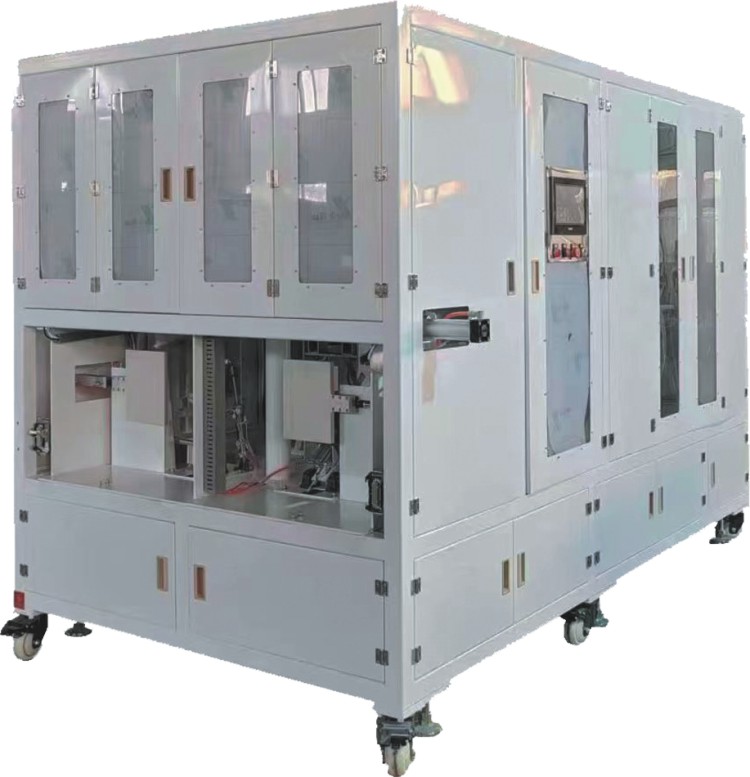
This machine is made of Carbon Steel for the frame and Stainless Steel 304 for the sleeve and product contact parts. It operates with a rated power of 8 kW and input voltage of AC380V 50Hz.
- Capacity: 650–750 bags/hour (double film)
- Bag Size: Flat width 15–18# roll bag
- Dimensions: L2300 × W1500 × H1650mm
- Net Weight: 750 KG
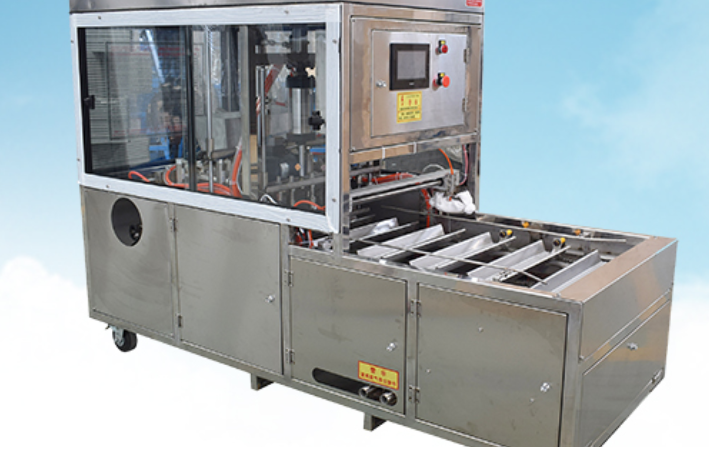
This Automatic Mushroom Inoculation Machine is made of Stainless Steel / Aluminum Alloy. It is designed for use in edible mushroom cultivation and agricultural automation scenarios.
- Model: CJZQ-1
- Power: 0.8 kW
- Voltage: AC220V 50Hz
- Capacity: 1240 bags/hour
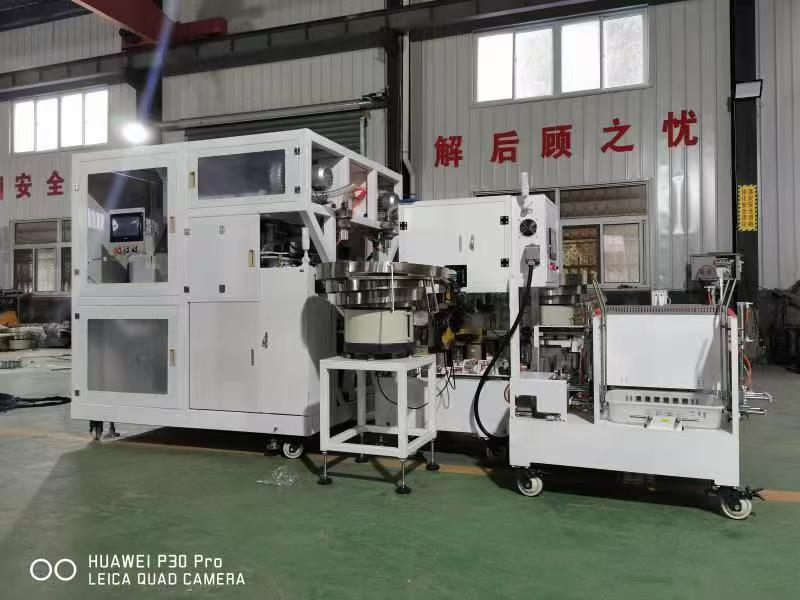
This machine is made of Carbon Steel / SS304. The product is intended for the Agriculture, Edible Mushroom Cultivation, and Agricultural Automation industries.
- Power: 12 kW
- Voltage: AC380V 50Hz
- Capacity: 1200–1400 pieces/hour
- Accuracy: ±10mm bagging height
3. Supporting Equipment Integration
A complete intelligent system requires supporting equipment for raw material processing and handling.
Large-Scale Corn Cob Crusher (FS60-50): This crusher is made of Carbon Steel and Wear-resistant Alloy Steel. Its structural configuration is a hammer piece design for one-step crushing. It has a capacity of 2 tons/hour and requires 30kW power.
Large-Scale Rotary Trommel Screen: This screen is constructed from carbon steel and wear-resistant steel mesh, with overall dimensions of 10000 × 1450 × 3000 mm and a net weight of 1200 KG. The key structural components are a heavy-duty drum screen and an industrial conveyor belt.
Self-Propelled Electric Compost Turner & Mixer: This mixer is constructed from Carbon Steel and Aluminum Alloy. Key components include an aluminum alloy gearbox, a feeding rake, and a centrifugal impeller.
100-Type Raw Material Mixer: This mixer is made of Carbon Steel / Wear-resistant Steel. It has a capacity of 0.8T and operates on 4 kW power with AC380V 50Hz input voltage.
4. Production Line Configuration
Intelligent equipment can be configured into complete production lines based on output requirements.
Processing
Preparation
Bagging
Inoculation
Harvesting
4-Station Production Line Example: The 4-Station High-Capacity Mushroom Substrate Bagging Production Line is intended for the Agriculture and Edible Mushroom Cultivation industry. It operates on AC380V 50Hz. Its power requirement, net weight, and overall dimensions are customizable based on the configuration and workshop layout.
5. Implementation Checklist
6. Case Study: Implementation in South Korea
Challenge: A large-scale mushroom farm needed to increase production efficiency while maintaining consistent bag quality for multiple mushroom varieties including oyster mushroom, shiitake mushroom, and black fungus.
Solution: Implementation of a complete intelligent edible mushroom production system from Changxing Edible Mushroom Machinery, configured for continuous operation in an indoor workshop environment.
Equipment Configuration:
- Automatic bagging manipulator for multiple bag sizes
- Integrated mixer and conveyor system
- Material distributor for even substrate distribution
- Basket loader for automated handling
Results: The system achieved stable operation with bagging speeds exceeding 1000 bags per hour, significantly reducing labor costs and improving product consistency.
7. Maintenance and Quality Assurance
Regular maintenance is essential for optimal performance of intelligent mushroom equipment. Key maintenance activities include:
- Daily cleaning of product contact surfaces, particularly on Stainless Steel 304 components
- Regular inspection of wear-resistant alloy steel parts on crushers and mixers
- Lubrication of moving parts according to manufacturer specifications
- Calibration of sensors and control systems for maintaining accuracy
- Periodic replacement of wear components like screen meshes and hammer pieces
When implementing intelligent equipment, verify that machinery complies with relevant standards. For example, some bagging and tying machines from manufacturers like Changxing have CE certification (M.2026.206.C135928) demonstrating compliance with Machinery Directive (2006/42/EC) and EMC Directive (2014/30/EU) standards including EN ISO 12100:2010 and EN 60204-1:2018+A1:2025.
Conclusion
Implementing intelligent edible mushroom equipment requires careful planning, appropriate equipment selection, and systematic integration. By following the structured approach outlined in this white paper—from defining requirements and selecting core equipment like the Automatic High-Speed Shiitake Bagging Machine and supporting processors, to configuring complete production lines and ensuring proper maintenance—cultivators can achieve significant improvements in efficiency, consistency, and scalability.
The key to successful implementation lies in matching equipment capabilities to operational needs, ensuring proper infrastructure and training, and maintaining equipment according to manufacturer specifications. With the right approach, intelligent mushroom equipment can transform cultivation operations, enabling higher production volumes with improved quality control.