
Conveyor Belt Tech Specs: What They Really Mean and Why Production Process Matters
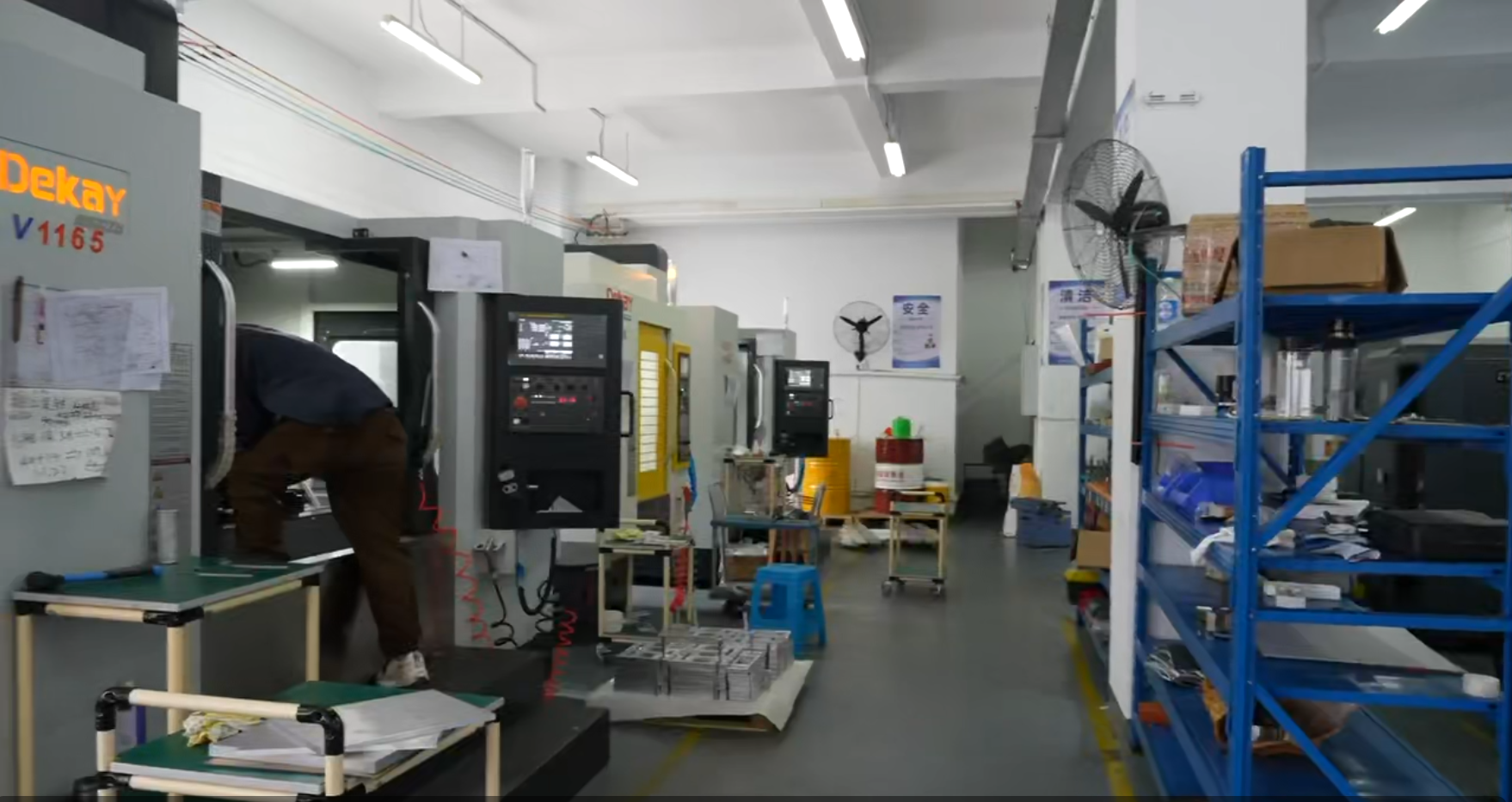
Advanced manufacturing equipment at Shanghai Pengqian ensures precision and consistency in conveyor belt production.
Conveyor Belt Tech Specs: What They Really Mean and Why Production Process Matters
As an industrial buyer, you’ve likely stared at a datasheet full of numbers and abbreviations — pitch 25.4mm, width 350mm ±3mm, material PP/POM, tensile strength XXXX N/mm. What do these parameters actually tell you about belt performance? And more importantly, how can you be sure the supplier’s production process will deliver those specs consistently?
This guide is designed for procurement professionals, maintenance managers, and engineers who need to decode technical conveyor belt parameters and understand the link between manufacturing process and final quality. We’ll use real examples from Shanghai Pengqian Transmission Equipment Co., Ltd. — a Shanghai-based manufacturer with ISO9001 certification and 14 years of experience — to illustrate key concepts.
1. Problem Definition: The Hidden Risks of Misreading Parameters
When a conveyor belt fails prematurely, the root cause often traces back to poorly understood specifications or inconsistencies in production. Common procurement mistakes include:
- Overlooking tolerance ranges — A belt shipped with width 348mm when you needed 350mm ±1mm may cause tracking issues in a food processing line.
- Ignoring material properties — PP (polypropylene) belts cannot withstand high temperatures; using them in a photovoltaic curing oven leads to rapid degradation.
- Assuming equivalent quality across suppliers — Two belts with identical printed specs can perform very differently due to variations in raw material sourcing, curing processes, and quality control.
- Neglecting the production process behind the numbers — A supplier’s ability to maintain tight tolerances over thousands of units depends on their equipment, workforce skill, and quality system.
The consequence? Increased downtime, higher total cost of ownership, safety hazards, and strained supplier relationships. To avoid these pitfalls, you must learn to read between the lines of a specification sheet.
2. Industry Background: Demand for High-Quality Conveyor Belts
The global conveyor belt market is projected to exceed $7 billion by 2030, driven by automation in logistics, food processing, pharmaceutical manufacturing, and renewable energy sectors. Particularly in photovoltaic (PV) production, belts must endure high temperatures (up to 200°C), abrasive environments, and continuous 24/7 operation. Similarly, the food and beverage industry demands FDA/USDA-compliant materials that resist bacteria and withstand frequent washdowns.
Asian manufacturers, especially in China, have invested heavily in upgrading production technology to compete with traditional leaders like Forbo-Siegling, Habasit, and Ammeraal Beltech. Shanghai Pengqian, established in 2012 and located in Songjiang District, Shanghai, represents a new generation of Chinese suppliers that combine cost competitiveness with rigorous quality standards. With a 3000m² factory, 60 employees, and an R&D team of 8 engineers, the company has obtained ISO9001 certification (certificate number: NOA2209224) and was recognized as a Shanghai High-tech Enterprise in 2022 (certificate NO.: GR202231006882). They hold 19 authorized patents and have submitted 26 patent applications.
3. Detailed Solution: How to Read Conveyor Belt Technical Parameters
Let’s examine a real product specification and decode each field. Take the Modular Mesh Chain model PQ350mm±3mm from Shanghai Pengqian:
| Parameter | Value | What It Means |
|---|---|---|
| Type | Modular chain belt for food industry | Designed for conveying packaged or bulk food products with easy cleaning and modular assembly. |
| Width | 350mm ± 3mm | Nominal width; the ±3mm tolerance must align with your conveyor frame’s guide rails. For tight clearance applications, request tighter tolerance. |
| Pitch | 25.4mm | Distance between hinge pins. Affects sprocket engagement and smoothness; 25.4mm is standard for many modular belts. |
| Material | PP blue + PP pins | Polypropylene (PP) is food-safe, lightweight, and chemical-resistant but limited to ~80°C continuous. Blue color helps detect contamination. |
| Baffle height | 50mm | Vertical rib for product positioning. Ensure your product height doesn’t exceed baffle height during incline conveying. |
| Baffle spacing | 153.6mm | Distance between baffles; influences product stability. |
Key insight: The same belt design can be offered in different materials (PP, POM, nylon). Each material has distinct mechanical and thermal limits. Always ask the supplier for the exact material grade and a data sheet showing tensile strength, elongation at break, and operating temperature range.
Timing Belt Parameters Decoded
Now consider a PU timing belt model S5M-20-L1650:
- S5M: Tooth profile – S-shaped with 5mm pitch. S-profile offers low backlash and high positional accuracy, ideal for linear motion and indexing.
- 20: Belt width 20mm. Must match the pulley width for proper load distribution.
- L1650: Pitch length 1650mm (the effective length along the pitch line). Incorrect length leads to tension problems.
- Material: PU (polyurethane) – excellent abrasion resistance, oil resistance, and low noise. For high-temperature PV applications, rubber timing belts (e.g., HTD profiles) may be preferred.
Shanghai Pengqian also supplies synchronous wheels (pulleys) like the GT2 48T and GT2 14T, made from aluminium or stainless steel. Proper matching of belt tooth profile and pulley groove is critical to avoid skip and wear.
4. Step-by-Step: Evaluating a Supplier’s Production Process
Parameters alone are not enough. You must verify that the supplier’s manufacturing process can consistently meet those specifications. Here is a practical evaluation framework:
- Check certifications: ISO9001 is the baseline. Shanghai Pengqian’s certification (NOA2209224) covers “Manufacture and sales of transmission equipment (industrial belt)” – directly relevant. Also look for industry-specific certifications (FDA, EU food contact).
- Visit the factory or request a virtual tour: Look for modern equipment, clean production environment, and organized material storage. Shanghai Pengqian’s 3000m² facility includes dedicated areas for rubber mixing, extrusion, molding, and final inspection.
- Ask about raw material sourcing: Premium raw materials (e.g., imported polyurethane, high-grade rubber) dramatically affect belt life. Pengqian uses verified suppliers and conducts incoming material tests.
- Inspect quality control procedures: A 100% final inspection (as Pengqian does) ensures every belt meets specification. Ask for records of tensile testing, elongation measurement, and dimensional checks.
- Review production capacity and lead time: Pengqian’s monthly capacity is 100,000 units, with lead time of 10-15 days. Can they scale for your volume? Their MOQ is 20 units for standard products.
- Understand customization capability: The ability to modify logo, size, material, and hole patterns (as Pengqian offers) is a sign of flexible production. They also produce custom-shaped cleats and sidewalls.
- Demand pre-shipment testing: A reliable supplier performs pre-shipment inspection for critical orders. Pengqian offers pre-shipment tests as part of their acceptance procedure.
Pro tip from Shanghai Pengqian’s quality team: “When we manufacture a PU timing belt like the S5M-20-L1650, the precision of the mold and the curing temperature profile are the two biggest factors influencing tooth shape accuracy and material uniformity. Even a 2°C deviation during curing can cause variation in tooth hardness and belt stretch.”
5. Real-World Use Case: Automotive OEM in Argentina
A leading automotive OEM in Argentina needed a low-noise, high-speed modular conveyor belt for their food processing line (snack handling). Operating conditions: 24/7, wet environment, frequent washdowns. After evaluating suppliers based on technical parameters and production capability, they selected Shanghai Pengqian’s Modular Mesh Chain (model PQ350mm±3mm) and PU timing belts (S5M-20-L1650).
- Quantity: 200 units of modular belts + 300 timing belts
- Duration: 1 year in operation
- Result: Stable operation with zero unplanned downtime
- Highlight: Achieved 15 dB noise reduction compared to previous steel chain conveyors, and 5% lower transmission time cost and 8% labor cost reduction due to smoother running and less maintenance.
This case demonstrates that when technical specs are correctly defined and production processes are robust, the end-user experiences measurable operational improvements.
6. Frequently Asked Questions
What is the difference between HTD and STD timing belts?
HTD (High Torque Drive) profiles have a rounded tooth design that distributes stress more evenly, suitable for high-torque applications. STD (Standard) profiles are trapezoidal and work well for general purpose power transmission. Shanghai Pengqian supplies both types in rubber and PU materials, including the 28HTD5M-765+NFT+NFB belt for compatible drives.
How do I choose between a flat belt and a timing belt?
Flat belts are best for high-speed, low-tension conveying of lightweight products where slippage is acceptable. Timing belts provide positive engagement, zero slip, and precise positioning, making them ideal for indexing, linear motion, and high-accuracy applications. For example, Shanghai Pengqian’s PU flat belt (2482*16) is used in photovoltaic cell handling for its smooth surface and static dissipation.
What does a ±3mm width tolerance mean for my conveyor system?
If your conveyor frame has fixed guide rails with a gap of 355mm, a belt with 350±3mm (range 347-353mm) will fit. But if the gap is 351mm, a belt on the lower tolerance (347mm) may have too much side play and cause tracking issues. Always specify the tolerance required for your application and confirm the supplier can hold it. Shanghai Pengqian can produce modular belts with tighter tolerances upon request.
Why is production process important for belt quality?
Because the same specification can be realized with very different consistency. Factors like mold precision, curing time and temperature, material mixing homogeneity, and final inspection protocols determine whether a belt actually meets its claimed specs over its entire length and across a production batch. A supplier with ISO9001, 100% final inspection, and modern equipment (like Shanghai Pengqian) is more likely to deliver consistent quality.
What payment and delivery terms does Shanghai Pengqian offer?
MOQ is 10 units for standard products. Payment terms are 60/40 (60% deposit, 40% before shipment). Delivery methods include FOB and CIF. Pre-shipment testing is available. For quotations, contact Abby by email abbypeng@pengqian.cn or WhatsApp +86 13381618987.
7. Conclusion
Understanding conveyor belt technical parameters is not just about memorizing numbers — it’s about asking the right questions about the production process behind them. A belt’s material, dimensions, and tooth profile matter, but they gain real value only when manufactured with precision and consistency.
For procurement professionals sourcing high-quality conveyor belts for demanding applications (photovoltaic, food, pharmaceutical, automotive), partnering with a manufacturer that combines advanced production capabilities, robust quality systems, and proven track records is essential. Shanghai Pengqian Transmission Equipment Co., Ltd. exemplifies this approach with its ISO9001 certified facility, High-tech Enterprise status, 19 authorized patents, and a full product portfolio covering flat belts, timing belts, modular belts, pulleys, and specialty belts for high-temperature environments.
To make an informed sourcing decision, download the company brochure for detailed specifications and case studies:
Download Company Brochure
Shanghai Pengqian Transmission Equipment Co., Ltd. – Product Catalog & Company Profile (PDF, 2.5 MB)
Or contact Abby directly:
Email: abbypeng@pengqian.cn
WhatsApp: +86 13381618987
Address: No.11, Lane 243, Sijing Jiu Gan Road, Songjiang District, China