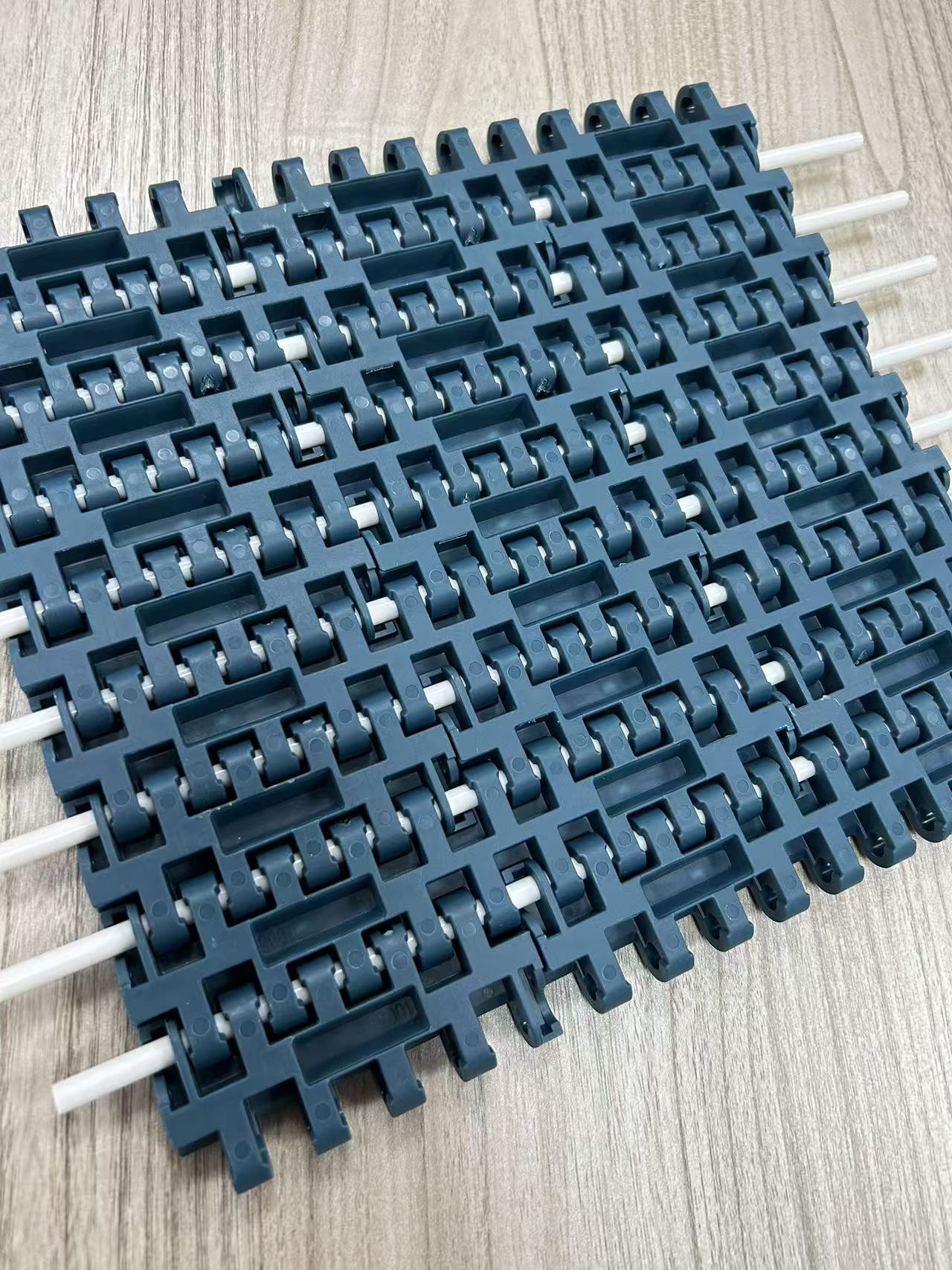
High-Quality Conveyor Belts for Photovoltaic and Food Industries: A Product Overview
High-Quality Conveyor Belts for Photovoltaic and Food Industries: A Product Overview
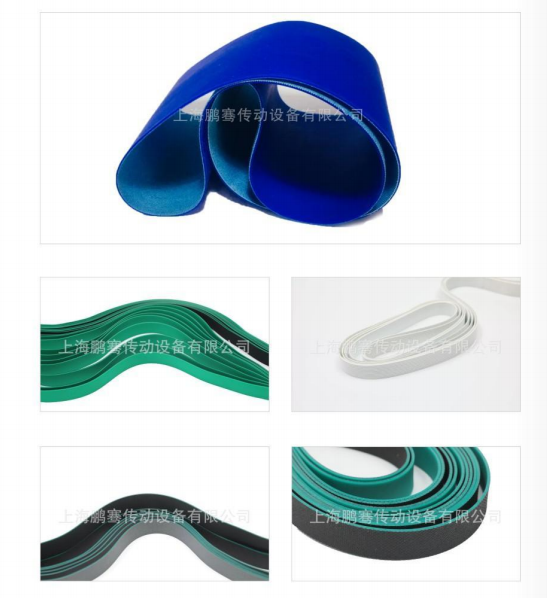
Shanghai Pengqian Transmission Equipment Co., Ltd. is a manufacturer established in 2012, specializing in the research, development, production, and sales of transmission equipment and conveyor belts. The company operates from a 3000m² facility in Songjiang District, Shanghai, and serves markets in Europe, Asia, and the Middle East, with export accounting for 40% of total sales. This article provides an overview of high-quality conveyor belts suitable for photovoltaic (PV), food, pharmaceutical, and high-temperature applications, covering product types, materials, and selection criteria.
The Challenge of Selecting Conveyor Belts for Harsh Environments
Industrial processes in photovoltaic manufacturing, food processing, and pharmaceutical production often involve high temperatures, continuous operation, and strict hygiene requirements. Conveyor belts used in these settings must withstand thermal stress, resist chemical degradation, and maintain dimensional stability. A mismatch between belt material and operating conditions can lead to premature wear, contamination, or unscheduled downtime, making the selection of a high-quality conveyor belt a critical procurement decision.
Industry Background: Conveyor Belt Applications in PV, Food, and Pharma
High-quality conveyor belts are widely applied in photovoltaic manufacturing for transporting fragile silicon wafers and solar cells, where precision and static control are important. In the food and beverage industry, belts must comply with food-grade standards and be easy to clean. Pharmaceutical applications require belts that resist high-temperature sterilization cycles. These verticals often demand specialized belt types such as flat belts, timing belts, modular chains, and synchronous pulleys.
Detailed Solution: Shanghai Pengqian's Product Range
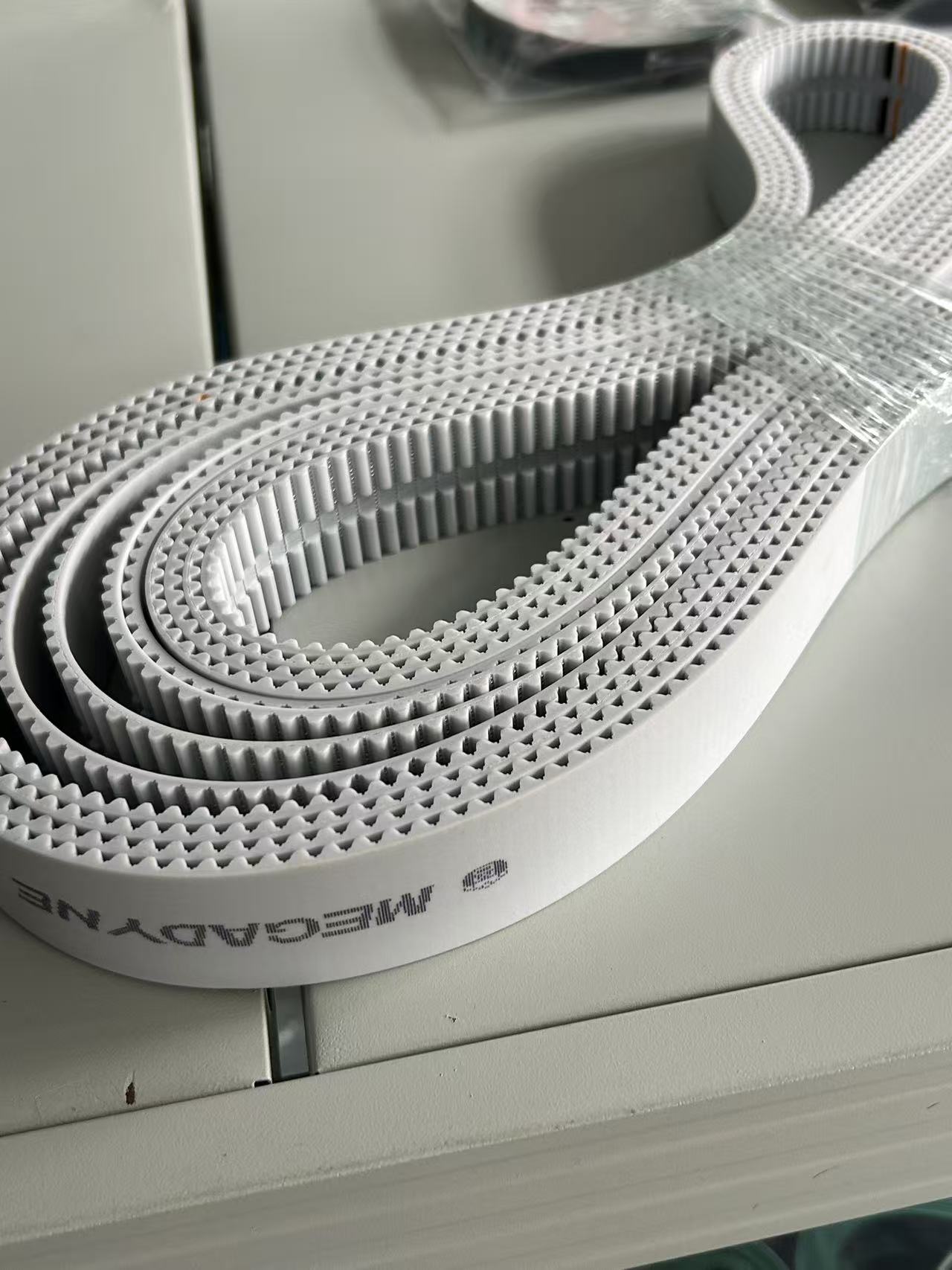
Shanghai Pengqian offers a comprehensive product portfolio that includes conveyor belts, tooth polyurethane rubber synchronous belts, synchronous wheels, rubber seamless belts, silicone belts, string welding machine belts, sintering furnace net belts, PEEK belts, sealing rings, chains, and modular belts. Key product categories include:
Flat Belts (PU)
Flat belts are constructed from PU (polyurethane) material. Model codes include FLAT BELT HY-18-568*14 NFT-NFB and SMT-UGU-09B-J-L2210-W15. These belts are applicable to logistics, the photovoltaic industry, and print machine scenarios. A representative model has dimensions of 2482 mm in length and 16 mm in width.
Timing Belts (PU and Rubber)
Timing belts, also known as synchronous belts, are available in models such as 28HTD5M-765+NFT+NFB and S5M-20-L1650. They are made of PU and rubber. These belts are intended for the photovoltaic industry, food and beverage, pharmaceutical, and industrial manufacturing applications. The tooth shape S5M provides positive drive engagement.
Synchronous Wheels (Timing Pulleys)
These products are synchronous wheels, classified as timing pulleys, with models GT2 48T and GT2 14T. They are made of aluminium and stainless steel and are designed for use in the food industry and beverage industry, as well as in industrial machinery requiring synchronous transmission.
Modular Chain Belts (PP/POM)
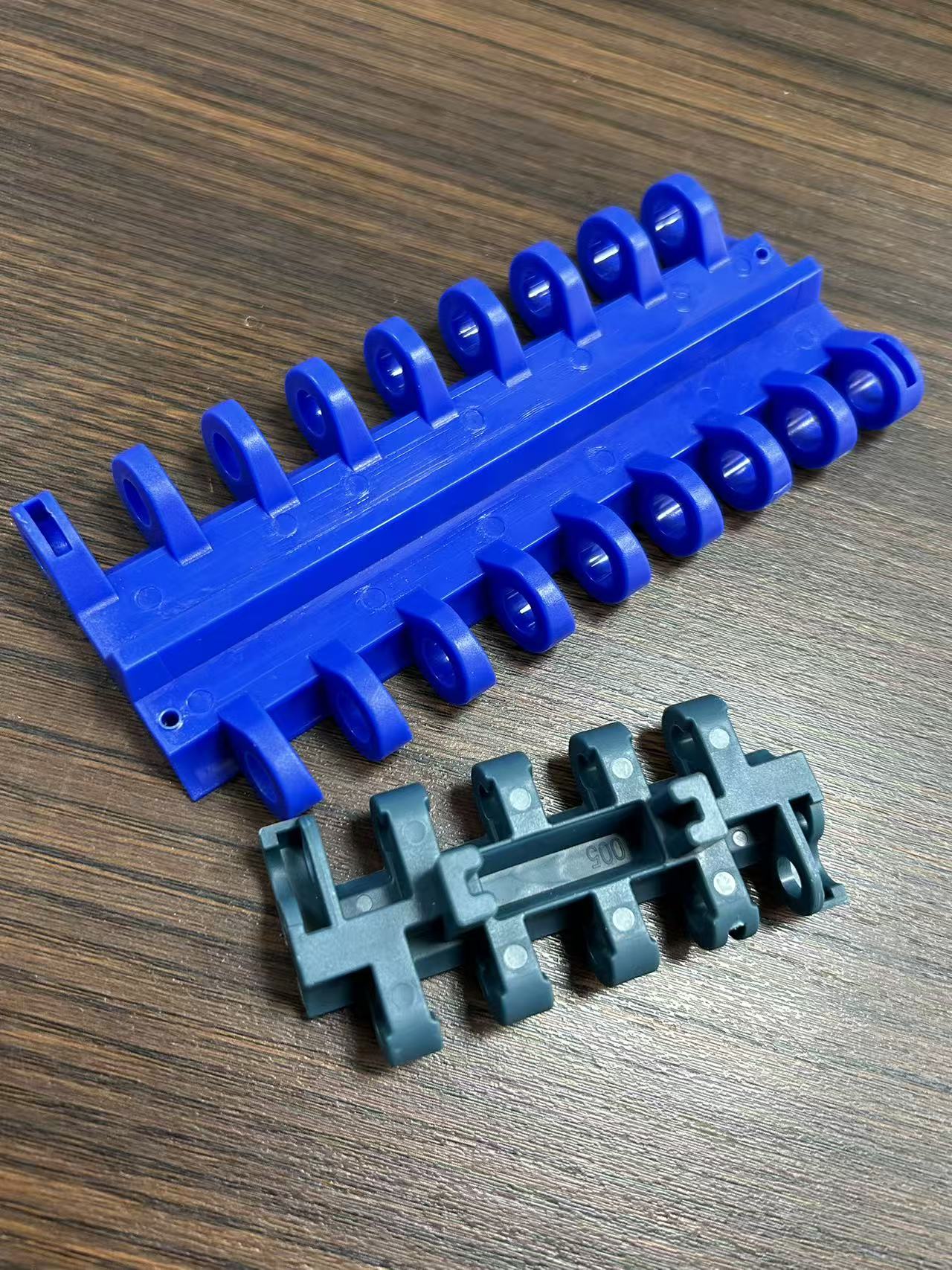
Modular chain belts for the food industry have a model designation of PQ350mm±3mm. The structural configuration is a flat belt with straight baffles. The belt width is 350mm ± 3mm and the pitch is 25.4mm. The baffle width is 283.4mm ± 3mm, baffle height is 50mm, and baffle spacing is 153.6mm. The belt is made of PP (polypropylene) and POM (polyoxymethylene).
Step-by-Step Breakdown: Selecting the Right Conveyor Belt
- Identify operating conditions: Determine temperature range, load, speed, and exposure to chemicals. For high-temperature environments, silicone belts or specially formulated rubber belts may be required.
- Select belt type based on transmission needs: Use flat belts for linear transport, timing belts for synchronized motion, and modular chains for curved or wet environments.
- Choose material compatible with the industry: PU belts are common in PV and logistics; rubber timing belts suit industrial manufacturing; PP/POM modular chains are food-grade and washdown-safe.
- Verify dimensional compatibility: Match belt length, width, pitch, and pulley bore sizes. For example, the timing belt S5M-20-L1650 has a 20 mm width and 1650 mm length.
- Consider accessories and customization: Synchronous wheels (pulleys) with taper bushes allow easy installation. Shanghai Pengqian offers custom solutions for unique applications.
Use Cases Across Key Industries
| Industry | Typical Application | Recommended Product |
|---|---|---|
| Photovoltaic Manufacturing | Transporting silicon wafers and cells under clean, high-temperature conditions | PU flat belt, PU timing belt (S5M, HTD5M) |
| Food & Beverage | Conveying packaged or unpackaged food through washdown zones | Modular chain belt (PP/POM), stainless steel synchronous wheel |
| Pharmaceutical | Moving blister packs and vials in controlled environments | Rubber timing belt, PU flat belt |
| Industrial Manufacturing | Automated assembly lines requiring precise indexing | Timing belt + aluminium synchronous pulley (GT2 series) |
Comparison Table: Key Conveyor Belt Types
| Product Type | Material | Key Dimensions Example | Primary Industries |
|---|---|---|---|
| Flat Belt (PU) | PU (polyurethane) | 2482 mm × 16 mm | Logistics, PV, Printing |
| Timing Belt (PU & Rubber) | PU & Rubber | S5M-20-L1650 (width 20 mm) | PV, Food, Pharma, Industrial |
| Synchronous Wheel (Timing Pulley) | Aluminium, Stainless Steel | GT2 48T, GT2 14T; Taper BC6545F60 | Food, Beverage, Industrial Machinery |
| Modular Chain Belt (PP/POM) | PP & POM | Width 350 mm ±3 mm; Pitch 25.4 mm | Food, Beverage, Pharma |
Frequently Asked Questions
What certifications does Shanghai Pengqian hold for quality compliance?
Shanghai Pengqian has passed ISO 9001 quality management system certification. In 2022, it was rated as a Shanghai High-tech Enterprise (Certificate No. GR202231006882). The company has submitted 26 patent applications, with 19 granted.
What materials are used in Shanghai Pengqian's conveyor belts?
The company uses PU (polyurethane), rubber, PP (polypropylene), POM (polyoxymethylene), aluminium, and stainless steel depending on the product type. For example, flat belts are PU, timing belts are PU and rubber, synchronous wheels are aluminium/stainless steel, and modular chain belts are PP/POM.
What is the annual production capacity of Shanghai Pengqian?
The company has an annual production capacity of 10,000,000 units, supported by a 3000m² factory and a workforce of approximately 60 employees.
How can I request a sample or get a quote for conveyor belts?
Contact can be made via email at abbypeng@pengqian.cn, telephone at +86 177-0218-9858, or WhatsApp at +86 13381618987. The company website is www.shanghai-pengqian.com/. A downloadable brochure is available at this link.
What is the typical lead time for custom conveyor belt orders?
While specific lead times are not published in the provided materials, Shanghai Pengqian emphasizes custom services and has an R&D team of 8 engineers to support rapid prototyping and production. Buyers should contact the sales team for current lead time estimates.
Conclusion
Shanghai Pengqian Transmission Equipment Co., Ltd. offers a broad range of high-quality conveyor belts—including flat belts, timing belts, synchronous wheels, and modular chains—suitable for photovoltaic, food, pharmaceutical, and high-temperature applications. The company's ISO 9001 certification, R&D capability, and global export experience make it a viable partner for industrial buyers seeking reliable transmission solutions. For detailed specifications or to request a catalog, refer to the company brochure or contact the sales team directly.