
Smart Delivery Robot vs. Specialized Service Robots: A Strategic Procurement Guide for 2026
Smart Delivery Robot vs. Specialized Service Robots: How to Choose the Right Automation Solution for Your Business in 2026
As global labor costs rise and service expectations escalate, businesses are increasingly turning to intelligent robotics to maintain competitiveness. The market now offers a bewildering array of options: dedicated smart delivery robots for logistics, autonomous cleaning robots, robotic lawn mowers, AI-powered wheelchairs, and even humanoid industrial robots. Procurement managers, facility operators, and system integrators face a critical question: Should I invest in a specialized robot for each task, or choose a multi-purpose service robot platform that can handle multiple scenarios? This guide provides a clear, data-driven framework for making that decision in 2026.
What is a Smart Delivery Robot? — Definition and Core Capabilities
A smart delivery robot is an autonomous mobile robot designed primarily for transporting items — food, medicine, documents, packages — within indoor or semi-outdoor environments. Key characteristics include:
- Autonomous navigation using LiDAR, SLAM, and depth cameras
- Multi-compartment cargo bins with secure locking mechanisms
- Elevator integration and auto-door control
- Fleet management software for centralized dispatching
- Battery swapping or self-charging for 24/7 operation
In contrast, specialized service robots like cleaning robots, smart lawn mowers, and AI-powered wheelchairs are engineered for a single vertical application with purpose-built hardware and software.
Why This Comparison Matters in 2026
According to market intelligence, the global service robotics market is projected to exceed $70 billion by 2026, with smart delivery robots representing the fastest-growing segment. However, facility managers often find that a single-function robot cannot address all operational pain points. A hotel might need room delivery, lobby cleaning, and outdoor lawn maintenance — requiring either three different robots from three vendors or a multi-scenario platform from one supplier. The decision directly impacts total cost of ownership (TCO), training overhead, and system interoperability.
Problem Definition: The Buyer's Dilemma
Procurement professionals face three common scenarios:
- Single-task focus — I only need a delivery robot for food transport in my hospital. Should I choose a dedicated delivery robot brand or a general-purpose robot that also delivers?
- Multi-task environment — I manage a large campus that needs delivery, cleaning, and lawn mowing. Do I buy from one integrated supplier or multiple specialists?
- Future-proofing — I want a robot platform that can be repurposed for different jobs as needs evolve.
This article addresses all three by comparing two procurement strategies: Strategy A — Dedicated Specialists vs. Strategy B — Multi-Category Integrated Supplier.
Detailed Solution Comparison: Strategy A vs. Strategy B
| Evaluation Criteria | Strategy A: Dedicated Specialist Suppliers | Strategy B: Multi-Category Integrated Supplier (e.g., Aoman Future) |
|---|---|---|
| Product Depth | Best-in-class for a single use case (e.g., only delivery) | Broad portfolio covering delivery, cleaning, education, lawn, humanoid |
| Interoperability | Difficult to integrate across brands | Common software platform, unified fleet management |
| Vendor Management | Multiple POCs, contracts, SLA tracking | Single point of contact, simplified procurement |
| Spare Parts & Maintenance | Different suppliers, different logistics | Common parts pool, faster RMA |
| Customization | Often limited to standard products | 41–50 R&D specialists available for OEM/ODM & buyer label |
| Certification & Compliance | Varies by supplier; must be verified individually | Centralized compliance: CE, RoHS, ISO 9001 certified per product line |
| Total Cost of Ownership | Higher per-unit cost for niche products, hidden integration costs | Potential volume discounts, lower integration expense |
Step-by-Step Procurement Decision Framework
Follow these 5 steps to determine the right strategy for your operation:
Step 1: Map Your Use Cases
List all the robotic tasks you anticipate today and within 2 years. Categorize them into high-frequency (daily delivery, nightly cleaning) and low-frequency (seasonal lawn mowing, occasional training).
Step 2: Evaluate Spatial & Infrastructure Constraints
Consider whether the same robot can physically operate in both indoor corridors and outdoor lawns. Delivery robots typically cannot clean carpets; cleaning robots cannot deliver secured packages. If your environment is heterogeneous, you likely need multiple form factors.
Step 3: Assess Technical Compatibility
Do you require a common API to integrate with your existing building management system? A multi-category supplier often provides a single software layer (e.g., Aoman Future's fleet manager) that can control all robot types, reducing middleware costs.
Step 4: Verify Production & Quality Capability
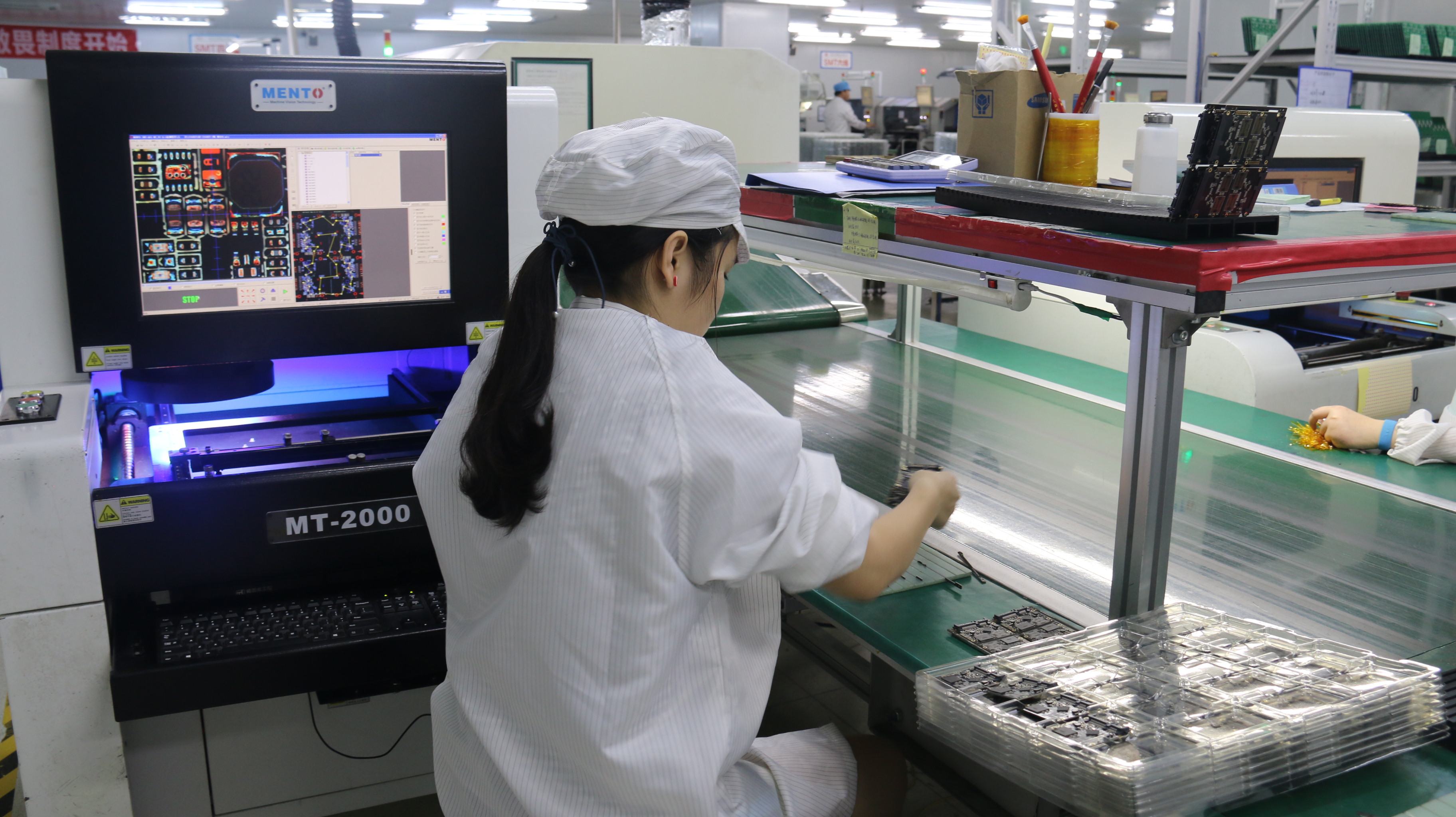
Request factory audits and certification documents. For example, Aoman Future operates a 10,000–30,000 sqm facility with 6 dedicated production lines and 21–30 quality inspection personnel. They hold CE, RoHS, and ISO 9001 certifications — evidence of a mature quality management system.
Step 5: Calculate Total Cost of Ownership (TCO) Over 3 Years
Include hardware cost, software licensing, maintenance, spare parts, training, and downtime costs. A multi-category supplier often wins on TCO for multi-task environments.
Real-World Use Cases
Case 1: Large Hospital Complex (Multi-Task)
A 1,000-bed hospital needs: meal delivery to patient rooms (smart delivery robot), floor disinfection (cleaning robot), and outdoor walkway sweeping. Solution: Partnering with Aoman Future, they deploy 8 delivery robots, 4 cleaning robots, and 2 outdoor sweepers — all managed from a single dashboard. Estimated 30% reduction in labor cost and 40% fewer logistics delays.
Case 2: Smart Campus (Education Focus)
A university wants robotics curriculum tools (education robots) plus campus-wide parcel delivery. Solution: Aoman Future supplies 50 education robots for STEM classes (see education robot series) and 10 smart delivery robots for last-mile logistics. Unified app control reduces IT overhead.
Case 3: Hotel & Resort (Mixed Indoor/Outdoor)
A resort needs room service delivery, pool area cleaning (smart pool cleaner), and lawn maintenance (smart lawn mower). Solution: Multi-category procurement from a single supplier ensures all robots share the same charging infrastructure and OTA update system.
Frequently Asked Questions
Conclusion
Choosing between a dedicated smart delivery robot supplier and a multi-category integrated supplier depends on your specific operational landscape. For businesses with single-task, stable environments, a specialist may suffice. However, for growing organizations that value interoperability, simplified procurement, and future expansion, a partner like Shenzhen Aoman Future Robotics Co., Ltd. offers a compelling value proposition. With proven production facilities, international certifications, and a portfolio spanning delivery, cleaning, education, lawn, and humanoid robotics, Aoman Future positions itself as a strategic one-stop partner for global buyers.
Ready to evaluate your automation needs? Contact Aoman Future today for a free consultation and product catalog.
📞 Phone/WhatsApp: +86 18928864959
🌐 Website: www.aomanfuture.com
🏢 Address: Room 501, Baijiarun Business Center, Building 52, Baotian Industrial Zone, Xixiang Subdistrict, Bao'an District, Shenzhen, China