
How to Secure After-Sales Support and Control Repair Costs for Bluetooth Hearing Aids
How to Secure After-Sales Support and Control Repair Costs for Bluetooth Hearing Aids

A reliable Bluetooth hearing aid supplier ensures long-term after-sales support through certified manufacturing and dedicated service.
Are you a buyer or distributor of Bluetooth hearing aids worried about post-purchase support? You're not alone. In a global market where bluetooth hearing aids for seniors and OTC users are booming, one question dominates procurement decisions: How do I guarantee after-sales service and minimize repair costs over the product lifecycle?
This guide answers that question with actionable strategies, industry insights, and a deep dive into supplier capabilities that truly protect your investment. Whether you source rechargeable hearing aids with bluetooth, self fitting hearing aids, or tinnitus hearing aids bluetooth, understanding how your manufacturer backs their product is the difference between a profitable partnership and a costly mistake.
Why After-Sales Support Matters in the Bluetooth Hearing Aid Market
As the demand for bluetooth hearing aids for seniors and otc hearing aids with bluetooth skyrockets, the market is flooded with suppliers offering low upfront prices but little to no post-sale commitment. For industrial buyers—distributors, clinic chains, online retailers—the real cost of a hearing aid is not just the purchase price but the total cost of ownership including repairs, replacements, and customer dissatisfaction.
- Brand reputation risk: A single malfunctioning device can damage your brand’s trust among end-users.
- Inventory write-offs: Without a clear return or repair policy, defective units become dead stock.
- Customer churn: Seniors and first-time users depend on reliable support; poor service leads to lost sales.
According to industry data, behind the ear bluetooth hearing aids and premium hearing aids for seniors have an average repair rate of 5‑8% in the first two years. A supplier that offers a structured after-sales program can turn that 5‑8% into a minimal cost rather than a budget blowout.
What Defines a Reliable After-Sales Framework for Bluetooth Hearing Aids?
A robust after-sales support system for hearing aids with bluetooth and app or otc hearing aids for seniors must cover these core areas:
1. Warranty Coverage That Goes Beyond Paper
Look for suppliers that offer at least 1‑2 years warranty covering manufacturing defects, battery performance (for rechargeable hearing aids with bluetooth), and Bluetooth connectivity issues. The warranty should clearly state what is included and what is excluded (e.g., ear tips, physical damage).
2. Fast Turnaround for Repairs and Replacements
The industry standard for repair turnaround is 7‑15 business days. A supplier with an in-house repair center—like Flysound with its integrated 18,000 m² factory—can achieve faster cycles because they control the entire process from diagnosis to shipping.
3. Clear RMA (Return Merchandise Authorization) Process
Buyers need a documented RMA workflow: how to report a defect, shipping logistics, cost responsibility, and replacement eligibility. A transparent process reduces friction and hidden costs.
4. Spare Parts Availability
For self fitting hearing aids and behind-the-ear hearing aids for seniors, common spare parts (battery doors, charging contacts, ear hooks) should be readily available for at least 3 years after purchase.
5. Local or Regional Service Partnerships
Suppliers that partner with local repair centers or offer advance replacement can drastically cut down your customers’ downtime. This is especially critical for premium hearing aids for seniors where user dependence is high.
How to Control Repair Costs: A Step-by-Step Framework for Buyers
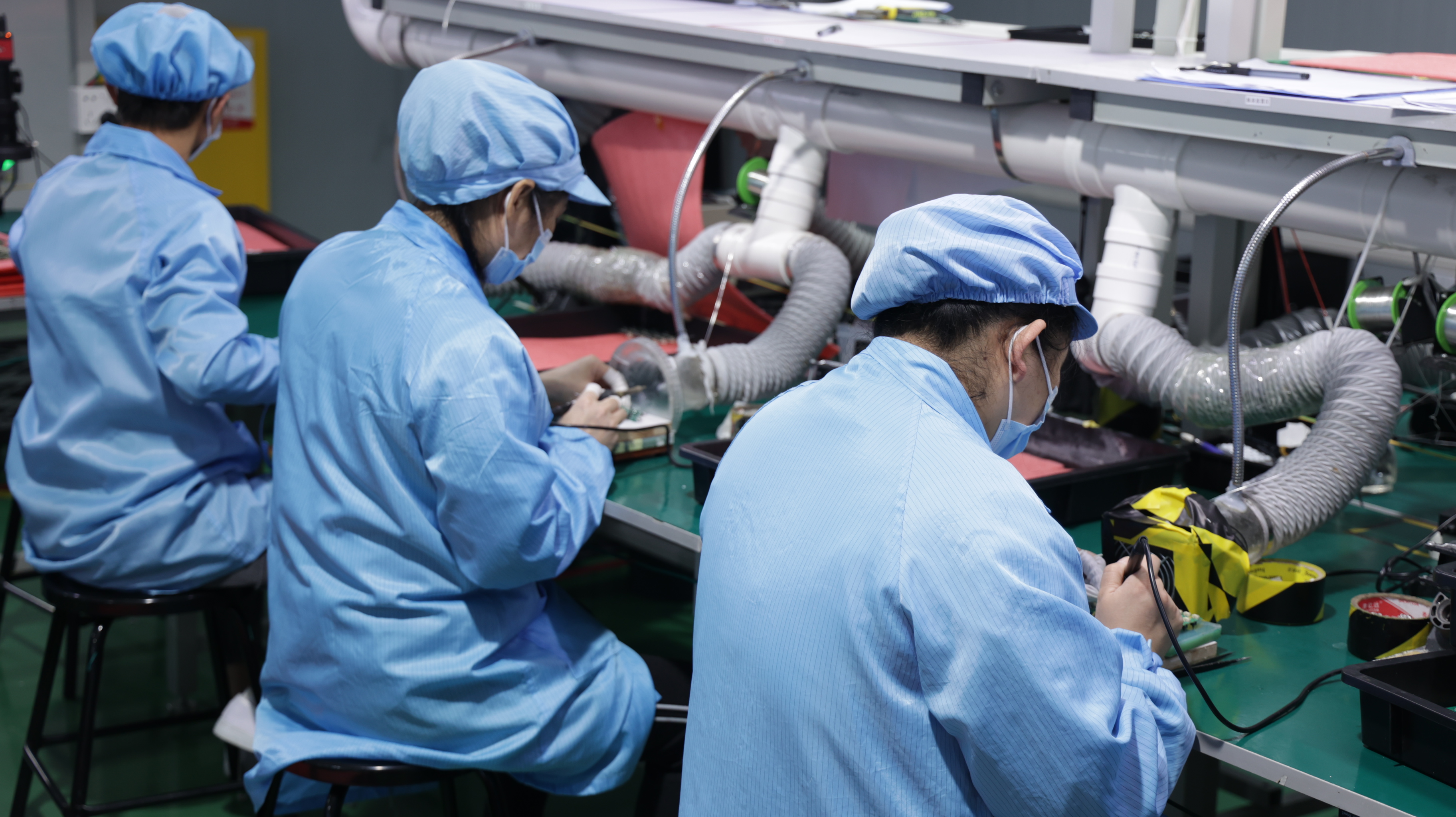
Integrated manufacturing (like Flysound's ISO13485 certified factory) is the foundation of low repair costs and consistent after-sales support.
Controlling repair costs starts before you place your first order. Use this systematic approach to evaluate any potential bluetooth hearing aids rechargeable supplier:
Step 1: Audit the Supplier's Manufacturing Capabilities
Suppliers that manufacture in-house—like Flysound—have lower per-unit repair costs because they own the BOM (bill of materials) and assembly know-how. Ask for:
- Factory size and certifications (e.g., ISO9001, ISO13485)
- Testing equipment for Bluetooth range, battery cycles, and audio output
- Quality control checkpoints (incoming, in-process, outgoing)
Step 2: Negotiate Warranty Terms Upfront
Instead of accepting a standard 12-month warranty, negotiate for 18 or 24 months on core electronics. Many suppliers, especially those producing hearing aids with bluetooth for android and bluetooth hearing aids for seniors rechargeable, are flexible for bulk orders.
Step 3: Request a Spare Parts Kit
Ask the supplier to include a starter kit of the 5 most fragile components (e.g., charging contacts, receiver tubes, battery packs). This can reduce repair time by 60% for common issues.
Step 4: Define Cost-Sharing for Return Shipping
Clarify who pays for return freight, especially for cross-border shipments. A common model is the supplier covers inbound repair shipping while the buyer covers outbound. Alternatively, some suppliers offer advanced replacement where they ship a new unit immediately and you return the defective one within 30 days.
Step 5: Evaluate Historical Repair Data
Reputable suppliers maintain repair statistics. Ask for the percentage of returns by model and the average cost per repair. For invisible hearing aids or behind the ear bluetooth hearing aids, repair rates below 3% in the first year indicate robust quality.
Real-World Case: Flysound's After-Sales Framework
To illustrate how these principles work in practice, let's examine Flysound, a Shenzhen-based manufacturer of bluetooth hearing aids with over 10 years of R&D experience. Their approach highlights every element a buyer should look for:
| Component | Flysound Practice | Benefit for Buyer |
|---|---|---|
| Manufacturing Base | 18,000 m² factory; ISO9001 & ISO13485 certified | Direct control over quality, faster repair turnaround |
| Warranty | 24 months on most models (H8 PureHear Pro, H9 Nature Pro) | Reduced financial risk for distributors |
| Repair Turnaround | Average 7‑10 business days for standard repairs | Minimized customer downtime |
| Spare Parts Availability | Parts held for 5 years post-production | Long-term serviceability |
| Technical Support | Dedicated team via email (support@flysounds.com) and WhatsApp (+44 7437300104) | Quick resolution of connectivity or app issues |
| Certifications | FCC ID, IEC 62133-2 (battery safety), French Design Award | Compliance confidence, reduced liability |

The H9 Nature Pro is an example of a bluetooth hearing aids for seniors model backed by full after-sales support and certified battery safety (IEC 62133-2).
Common Buyer Concerns About After-Sales for Bluetooth Hearing Aids
A: Most issues are firmware-related. A supplier that offers app-based troubleshooting (like Flysound's self-fitting app) can resolve this remotely. Always ask if the supplier has a technical support hotline.
A: Quality lithium-ion batteries (certified IEC 62133-2) have a lifespan of 3‑5 years. A responsible supplier will replace defective batteries within warranty without restocking fees.
A: Some suppliers offer loaner units or advanced replacement at a nominal deposit. This is worth negotiating as part of your master agreement.
A: Request a sample defective unit repair test—send a simulated defect and measure response time and professionalism. A serious supplier will treat this as a quality exercise.
Choosing the Right Supplier: Checklist for Procurement Teams
- Factory audit report – preferably ISO13485 (medical device quality)
- Warranty document – clearly stated terms, not vague promises
- Repair service level agreement (SLA) – turnaround time, liability, cost caps
- Spare parts catalog – available for at least 3 years
- Technical support channel – email, WhatsApp, or wechat with response within 24h
- Customer references – talk to at least 2 existing buyers about their repair experiences
Conclusion: Safeguard Your Investment with the Right After-Sales Partner
In the fast-growing bluetooth hearing aids market—spanning otc hearing aids for seniors, tinnitus hearing aids bluetooth, and self fitting hearing aids—after-sales support is not a luxury; it is a competitive necessity. Buyers who invest time evaluating a supplier's manufacturing depth, warranty policies, and repair infrastructure will dramatically lower their long-term costs and build a reputation for reliability.
Flysound, with its 18,000 m² ISO-certified factory, comprehensive certification portfolio (including FCC, IEC 62133-2), and dedicated support team, exemplifies the kind of partner that turns post-sale anxiety into a smooth, predictable process. When you source bluetooth hearing aids for seniors rechargeable or any other model, ask the hard questions—and choose a supplier that proves they have the answers.
Ready to evaluate a Bluetooth hearing aid supplier with proven after-sales support?
Contact Flysound's team today or reach out via WhatsApp: +44 7437300104
Download our warranty and spare parts policy to see how we protect your business.