
Decoding Cooling Plate Technical Parameters and Manufacturing Impact on Quality
Decoding Cooling Plate Technical Parameters and Manufacturing Impact on Quality
For procurement professionals in the EV and BESS industries, understanding the technical specifications of a cooling plate—and how its manufacturing process determines real-world performance—is the difference between a reliable thermal management system and costly field failures. This guide explains what the key parameters mean, why manufacturing methods matter, and how to evaluate supplier quality objectively.
What Is a Cooling Plate?
A cooling plate (also called a liquid cooling plate, cold plate, or EV cooling plate) is a heat exchanger component that removes heat from battery cells, power electronics, or energy storage modules. When integrated into a liquid cooling system, fluid circulating through internal channels carries heat away from the battery pack. Trumony Aluminum Limited, a Suzhou-based manufacturer founded in 2017 with a 100,000 m² factory and annual output of 600,000 units, produces cooling plates from Aluminum 3003—a proven alloy for thermal management. Their product line includes stamped cooling plates, brazing cooling plates, serpentine tubes, and snake cooling tubes (models TR-20260214 through TR-20260232), all customizable in thickness and cooling efficiency.
Problem Definition: Why Technical Parameters Matter in Procurement
Procurement teams often face a confusing mix of datasheets with terms like "cooling efficiency: customized" or "thickness: customized" without a clear benchmark. Without understanding the relationship between parameters and actual performance, buyers risk selecting a cooling plate that underperforms in heat dissipation, causes pressure drop issues, or fails prematurely under thermal cycling. The critical question is: How do you interpret the specifications, and which manufacturing process delivers the quality you need?
Industry Background: Evolution of Cooling Plate Manufacturing
The battery thermal management market has shifted from copper tube cold plates to aluminum liquid cooling plates due to cost, weight, and corrosion advantages. Three mainstream processes dominate:
| Process | Typical Product | Key Advantage | Common Application |
|---|---|---|---|
| Stamping + Brazing | Stamped cooling plate (TR-20260227) | Mass production, cost-effective | EV battery modules |
| Serpentine / Snake Tube | Serpentine tube, snake cooling tube | Flexible routing, custom shape | ESS containers, cylindrical cells |
| CNC Machining (legacy) | CNC cold plate (reference only) | High precision | Low-volume, high-value prototypes |
Trumony specializes in the first two, with an annual output of 600,000 units and a monthly capacity of 500,000 pieces for stamped/brazed plates. Compared to a CNC cold plate, their stamped + brazed process reduces production time by 60% and cost by up to 10%, while maintaining leak tightness through 100% air leakage testing and optional helium tightness tests.
Detailed Solution Explanation: Key Technical Parameters Decoded
1. Material – Aluminum 3003
Aluminum 3003 is the industry standard for liquid cooling plates because of its excellent thermal conductivity, formability, and corrosion resistance. It is compatible with water-glycol coolants and withstands the pressure and temperature ranges typical in EV and BESS applications. Trumony uses exclusively Aluminum 3003 across all cooling plate models.
2. Thickness
Thickness influences structural rigidity and thermal mass. While Trumony lists it as “customized”, typical values range from 2 mm to 8 mm. A thinner plate reduces weight but may require stronger internal supports. A thicker plate handles higher coolant pressure but adds weight. The optimal thickness is determined by the battery module design and cooling load.
3. Cooling Efficiency (customized)
Cooling efficiency is not a single number—it is a system-level metric that depends on channel geometry, flow rate, and coolant properties. Trumony designs internal channels (stamped patterns or serpentine paths) to maximize heat transfer surface area while minimizing pressure drop. Their engineering team (25 engineers) works with clients to match the efficiency target to the specific battery pack configuration.
4. Dimensional Tolerance
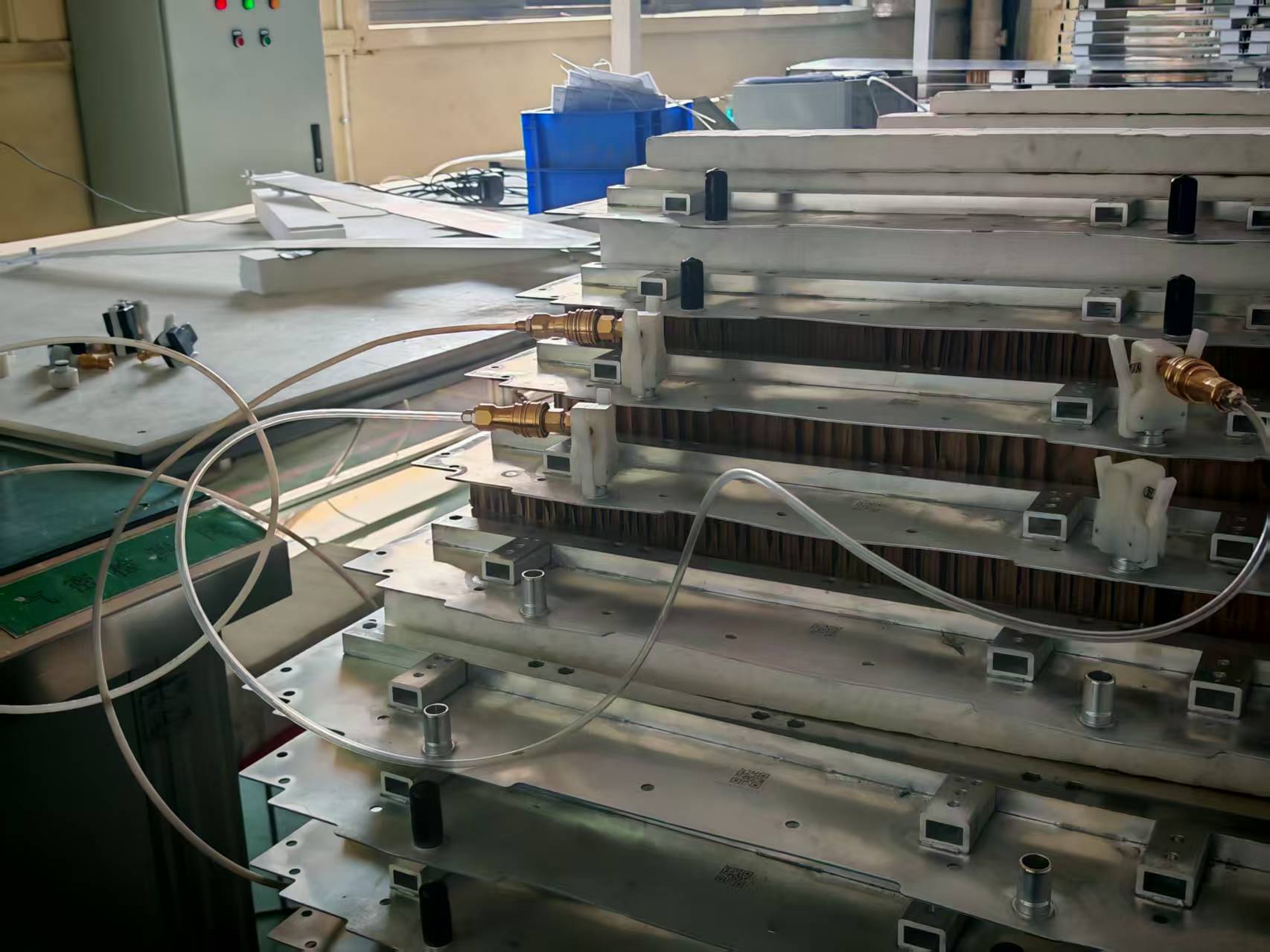
Precision in length, width, and flatness ensures proper contact with battery cells or modules. Trumony performs 100% dimensional inspection and air leakage testing on every unit. For critical applications, they offer helium tightness tests, voltage resistance tests, hydrostatic strength tests, burst tests, and high/low-temperature resistance tests.
How Manufacturing Process Affects Quality
Two primary manufacturing methods dominate the aluminum cooling plate market:
Stamped Cooling Plate (Model TR-20260227)
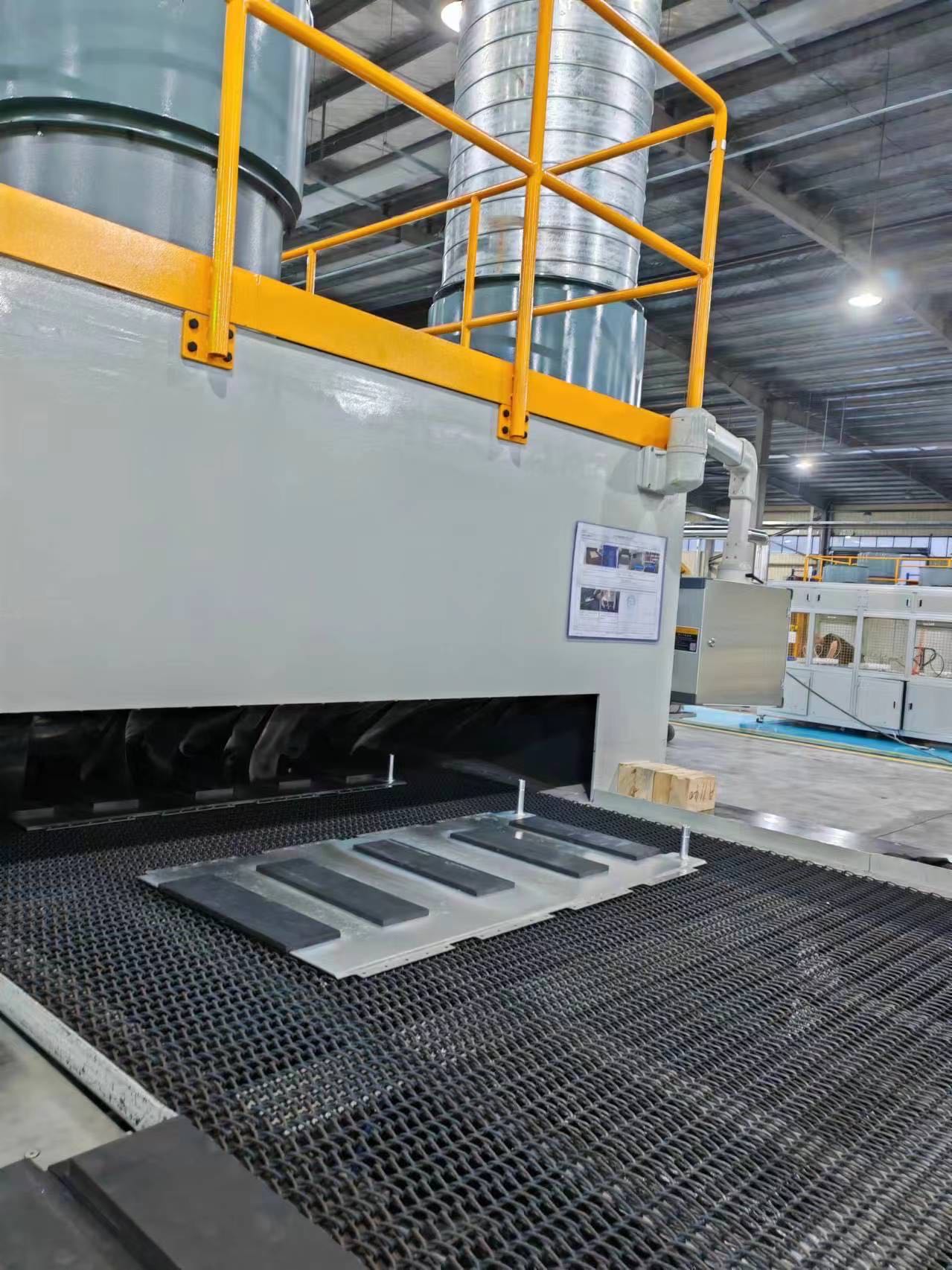
In this process, two aluminum sheets (Al 3003) are stamped with flow channels, then brazed together in a furnace. Advantages include:
- High production throughput (suitable for mass production)
- Consistent channel depth and shape
- Lower cost compared to CNC machining (up to 30% lower than copper tube cold plates)
Trumony’s stamped cooling plates are used in both EV and BESS applications. A German automotive OEM deployed 2,000 units in a paint shop application and has operated stably for over 2 years, with the key highlight being low noise.
Brazing Cooling Plate (Model TR-20260220) and Snake/Serpentine Tubes
For cylindrical cell packs or irregular module shapes, Trumony produces serpentine tubes and snake cooling tubes (models TR-20260229 to TR-20260232). These are formed from aluminum tubes bent into a serpentine shape and then brazed or joined. The process allows custom routing but requires careful control of bend radii to avoid flow restrictions. Trumony’s IATF 16949 certification (cert. #0489498, valid through 2026-11-26) ensures that the manufacturing process meets automotive-grade quality standards.
| Process | Pros | Cons | Best Fit |
|---|---|---|---|
| Stamped + Brazed | High volume, low cost, leak-tight | Limited to planar designs | Prismatic cell modules, large ESS |
| Serpentine/Snake Tube | Flexible shape, fits cylindrical cells | Higher pressure drop, slower production | 21700, 4680 cells |
| Copper Tube Cold Plate (reference) | High thermal conductivity | Heavy, costly, corrosion issues | Legacy designs, low volume |
Step-by-Step Procurement Evaluation Process
- Define thermal requirements: Heat load (W), coolant flow rate, inlet temperature, allowable pressure drop.
- Identify material: Aluminum 3003 is preferred; verify alloy with supplier.
- Select manufacturing process: Stamped plate for planar modules; serpentine tube for cylindrical cells.
- Request custom design: Provide CAD model of battery module; supplier adjusts channel layout and thickness.
- Verify quality control: Insist on 100% air leakage test, dimension report, and optional third-party testing.
- Check certifications: ISO 9001 (Trumony cert. #132998), IATF 16949 (cert. #0489498) for automotive applications.
- Assess supplier capacity: Trumony’s monthly capacity of 500,000 units supports large-scale orders with 30-day lead time and MOQ of 1 unit for prototypes.
Real-World Use Cases
Case 1: German Automotive OEM – Paint Shop Cooling
2,000 units of Trumony cooling plates (custom stamped) installed in a paint shop for 2 years, operating 24/7. Result: stable performance, low noise. Highlight: consistent quality of stamped plates.
Case 2: Vietnamese Automotive OEM – Battery Pack Cooling
60,000 units of cooling tubes (serpentine type) supplied over 20 years. Application: EV battery pack cooling. Result: stable operation, low cost, low noise. Customer highlighted the reliability of the snake tube design.
Case 3: Chinese ESS Pack OEM – Container ESS
3,000 units of energy storage system cooling plates (model TR-20260226) used in ESS containers. With epoxy coating and stamped design, they achieved stable operation with fast lead time and competitive cost.
Frequently Asked Questions
Q: What is a cooling plate?
A: A cooling plate, also called a liquid cooling plate or cold plate, is a heat exchanger that transfers heat from batteries or electronics to a liquid coolant, typically made of Aluminum 3003.
Q: How do I read cooling efficiency on a datasheet?
A: Cooling efficiency is application-specific. Suppliers like Trumony customize it based on your thermal load, flow rate, and channel geometry. Ask for simulation data or test results.
Q: Why does manufacturing process matter?
A: Stamped plates offer low cost and high consistency; serpentine tubes offer shape flexibility. The wrong process can lead to leaks, high pressure drop, or poor thermal contact.
Q: What quality tests should I expect?
A: Industry best practice includes 100% air leakage test, dimensional check, and optionally helium leak test, pressure resistance test, burst test, and thermal cycling test. Trumony performs all these.
Q: Can I order a customized cooling plate?
A: Yes. Trumony offers full customization in dimension, cooling efficiency, thickness, and coating. MOQ for prototypes is 1 unit; large orders 30-day lead time.
Conclusion
Interpreting cooling plate technical parameters is not about memorizing numbers—it is about understanding how material, thickness, and channel design translate to real thermal performance. The manufacturing process—whether stamped, brazed, or serpentine—directly affects cost, durability, and reliability. By partnering with a certified manufacturer like Trumony Aluminum Limited (ISO 9001, IATF 16949) that offers customized solutions, rigorous testing, and proven case studies, procurement teams can make informed decisions that ensure long-term battery system performance. For additional guidance or to request a custom cooling plate design, contact Trumony at tracy@trumony.com or visit www.trumony.com.