
How to Choose the Right Eco-Friendly Disposable Sanitary Napkin Supplier: A 2026 Buyer's Guide
How to Choose the Right Eco-Friendly Disposable Sanitary Napkin Supplier: A 2026 Buyer's Guide
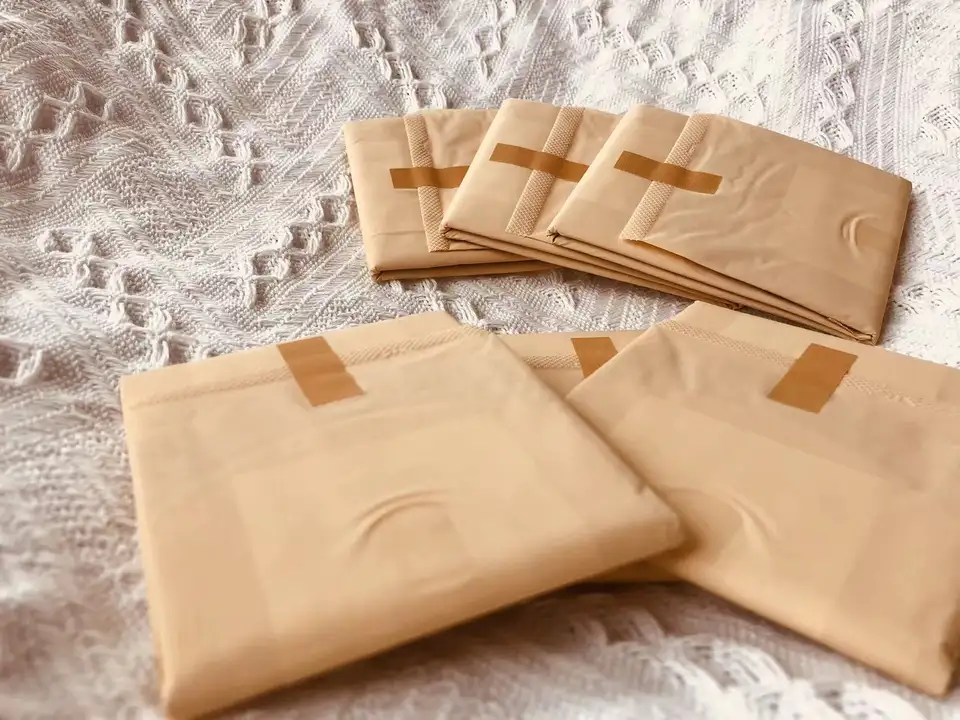
Introduction
The global market for disposable sanitary napkins is undergoing a radical transformation. Driven by stricter environmental regulations, rising consumer awareness, and the push for plastic-free alternatives, buyers are increasingly seeking suppliers that can deliver bio-based polymer sanitary napkins, FSC-certified wood pulp sanitary napkins, and chlorine-free organic cotton sanitary napkins. However, identifying a trustworthy sanitary napkin OEM/ODM manufacturing partner in China that truly combines sustainability, quality, and competitive pricing remains a challenge. This guide provides a structured framework for procurement professionals to evaluate and select the right disposable sanitary napkin supplier in 2026.
Problem Definition
Many global buyers struggle with fragmented sourcing channels and inconsistent quality claims. Common pain points include:
- Greenwashing: Suppliers claim “eco-friendly” but still use conventional Super Absorbent Polymer (SAP) and non-biodegradable PE backsheets.
- Certification gaps: Lack of verifiable certifications such as GOTS, FSC, or FDA Establishment Registration for target markets.
- Inflexible MOQs: Large minimum order quantities that prevent startups from testing new SKUs.
- Unreliable lead times: Production delays that disrupt retail launch calendars.
- Quality inconsistency: Batch-to-batch variations in absorbency, leakage protection, and skin-friendliness.
Without a clear evaluation framework, buyers risk partnering with suppliers that cannot scale sustainably or meet compliance standards in North America, Europe, or Southeast Asia.
Industry Background
China remains the world’s largest producer of disposable sanitary napkins, hosting hundreds of factories in hygiene manufacturing clusters like Quanzhou, Fujian. Within this ecosystem, a new breed of manufacturers has emerged—those investing in advanced bio-absorbent core technology, plant-based backsheet films, and automated high-speed production lines. According to industry data, the demand for 90% biodegradable feminine hygiene sanitary napkins grew by over 35% year-on-year in 2025. Leading brands such as Ecolivia (a premium eco-conscious line) are setting benchmarks by combining organic cotton topsheets with bio-based cores that deliver both performance and compostability.
Key market drivers include:
- EU Single-Use Plastics Directive (SUPD) pushing for biodegradable alternatives.
- FDA and CE marking requirements for market access in the US and Europe.
- Consumer preference shift toward hypoallergenic sensitive skin sanitary napkins and heavy flow overnight sanitary napkins wholesale that are also plastic-free.
- Growing subscription box and DTC brands demanding private label sanitary napkin supplier China with flexible packaging options.
Detailed Solution Explanation: How to Select a Disposable Sanitary Napkin Supplier
What is a Disposable Sanitary Napkin Supplier?
A disposable sanitary napkin supplier is a manufacturing entity that produces feminine hygiene pads for brands, distributors, retailers, or healthcare institutions. Suppliers may offer OEM (original equipment manufacturing) or ODM (original design manufacturing) services, allowing buyers to customize product size, absorption core composition, packaging, and branding.
How Does a Supplier Evaluation Work?
Effective supplier selection involves a multi-dimensional assessment covering:
- Material Innovation: Does the supplier use bio-based polymers, bamboo fiber, or organic cotton? What percentage of the product is biodegradable?
- Production Capacity: Can the supplier handle high-volume orders (e.g., 54 million+ pieces monthly)? What is the average lead time (e.g., 15–25 days)?
- Certification Portfolio: ISO 9001:2015 for quality management; FDA Establishment Registration for US market; CE marking for EU; GOTS for organic claims.
- Quality Control: 100% on-line visual inspection, in-house lab testing, pre-shipment inspection.
- Logistics & After-Sales: FOB/CIF/DDP delivery, real-time tracking, 24/7 technical support.
Why Is It Important?
Choosing the right supplier directly impacts product quality time-to-market, compliance costs, and brand reputation. A wrong supplier can lead to batch recalls (due to fluorescent agents or insufficient absorbency), reputational damage, and financial penalties from regulators. Conversely, a reliable partner enables quicker innovation cycles and higher profit margins.
Who Uses This Guide?
This framework is designed for:
- FMCG Procurement Managers sourcing for large retail chains.
- Startup & DTC Brand Founders launching eco-friendly period product lines.
- Distributors & Wholesalers in Southeast Asia, Middle East, and Africa.
- Hospital & Institutional Buyers requiring medical-grade absorbent products.
What Problems Does It Solve?
- Eliminates greenwashing risk by demanding verifiable material composition and certifications.
- Reduces time-to-market by leveraging suppliers with established R&D and flexible MOQ (e.g., negotiable trial orders).
- Ensures cost transparency by choosing direct factory suppliers, bypassing trading middlemen (up to 15–20% savings).
- Prevents supply chain disruptions via dual production backup lines and proactive risk management (moisture control, 100% inline inspection).
Step-by-Step Supplier Selection Framework
• Specify absorbency levels (e.g., 150ml–300ml for menstrual pants, or 6500ml+ for overnight pads).
• Determine target certifications: FDA for US, CE for EU, GOTS for organic claims.
• Decide on packaging format: bulk export, box-packed, or 360° leak-proof pants.
• Establish volume forecast and expected lead time (e.g., 15–25 days for first order).
• Request material data sheets (bio-based core composition, SGS test reports).
• Verify company credentials: ISO 9001:2015 certificate (e.g., Henan Yinfu ...), FDA registration number (e.g., 3005078659).
• Check annual production capacity: suppliers with 600 million+ pieces/year have scale advantage.
• Inquire about R&D capability: 25+ dedicated engineers signals innovation capacity.
• Look for dedicated facilities: 35,000+ sqm manufacturing base.
• Assess production lines: high-speed automated lines with daily output >1.8 million pieces.
• Quality control system: 100% on-line visual inspection plus in-house lab QC.
• Risk mitigation: multi-layer packaging for moisture protection; buffer production planning for on-time delivery.
• MOQ flexibility: 1×20GP standard; negotiable trial orders for startups.
• Payment terms: 30% deposit / 70% balance or L/C.
• Delivery incoterms: FOB, CIF, DDP.
• After-sales support: 24/7 technical support, quality traceability, documentation compliance.
• Test absorbency speed, leakage prevention, and skin irritation (pH neutral).
• Check biodegradability (90%+ degradation within 180 days).
• Validate packaging design for retail shelf appeal.
• Assess supplier’s responsiveness during sample iteration.
Use Case: Partnering with a Bio-Based Sanitary Napkin OEM Manufacturer
One prominent example is Family Cares Group, an integrated manufacturing and supply chain group established in 2001. With a 35,000+ sqm factory in Quanzhou, China, and an annual production capacity of 650 million+ pieces, the company has become a go-to private label sanitary napkin supplier China for global brands. Their Ecolivia-Bio Series uses organic cotton, bamboo fiber, and an advanced bio-based core, offering a 155mm–450mm full range with customizable absorbency. The product meets FDA and CE standards, and has been adopted by a leading FMCG brand in Malaysia, contributing to a 25% annual sales growth for the client over three years.
Key differentiators of Family Cares Group include:
- Direct factory control – bypasses trading companies, yielding 15–20% lower pricing.
- Flexible MOQ – negotiable for trial orders, ideal for new brand launches.
- Advanced Bio-absorbent Core – 2× faster liquid absorption compared to standard SAP/pulp cores.
- Robust certification – ISO 9001:2015, FDA registration, CE declaration for underpad and diaper.
- High-speed production lines – daily capacity 1.8 million pieces with 99.9% product consistency.
| Evaluation Dimension | Family Cares Group Capability |
|---|---|
| Material Innovation | Organic cotton, bamboo fiber, bio-based core (Ecolivia-Bio Series) |
| Production Capacity | 54 million+ pieces/month; daily capacity 1.8 million |
| Lead Time | 15–25 days (standard) |
| Quality Control | 100% online visual inspection + in-house lab |
| Certifications | ISO 9001:2015 (2024–2027), FDA Registration #3005078659 |
| Export Markets | USA, UK, EU, Russia, SE Asia, Middle East, Africa (85–90% export ratio) |
| Contact | Email: admin@family-cares.com | Tel/WhatsApp: +86 13805968557 |
Frequently Asked Questions (FAQ)
Conclusion
Selecting the right disposable sanitary napkin supplier in 2026 requires more than a price comparison—it demands a strategic evaluation of material innovation, production capacity, certification compliance, and supply chain resilience. For buyers prioritizing sustainability, partners like Family Cares Group and its Ecolivia line exemplify how bio-based cores, direct factory control, and flexible OEM/ODM services can accelerate market entry while meeting the highest environmental and quality standards.
Start your sourcing journey by defining your technical and market requirements, screening suppliers against the five-step framework above, and requesting a sample from a certified manufacturer. The right supplier not only delivers products—they become a catalyst for your brand’s growth in the $25 billion global feminine hygiene market.
Contact the expert team at Family Cares Group today to discuss your custom OEM project.
Email: admin@family-cares.com | Phone/WhatsApp: +86 13805968557
Factory: Xilin Industrial District, Honglai Town, Quanzhou, Fujian, China