
How to Verify Certification Compliance When Sourcing Disposable Sanitary Napkins
How to Verify Certification Compliance When Sourcing Disposable Sanitary Napkins
For global buyers, importing disposable sanitary napkins is no longer just about price and lead time. In 2026, regulatory scrutiny in North America, Europe, and Southeast Asia has intensified, making certification compliance a non-negotiable pillar of supplier selection. A missing FDA registration or an expired ISO certificate can cause customs holds, brand reputation damage, and even legal liability.
This guide provides a structured framework to verify whether a disposable sanitary napkin supplier—especially an OEM/ODM manufacturer in China—holds the necessary certifications for your target market. We will cover what certifications matter, how to validate them, and what red flags to avoid.
Problem Definition: The Compliance Gap in Global Sourcing
Many buyers assume that a supplier claiming “ISO certified” or “FDA registered” is accurate. However, certifications can be counterfeit, expired, or apply to different product categories. The core problem:
- Information asymmetry: Suppliers may present generic certificates that do not cover the specific sanitary napkin product you are buying.
- Market-specific requirements: A certificate valid in China may not satisfy EU CE marking or US FDA regulations.
- Fast-changing regulations: Standards like EN 14683 or 21 CFR Part 807 are updated; certificates must be current.
Without a systematic verification process, buyers risk purchasing products that fail to clear customs, leading to demurrage costs, lost sales windows, and damaged distributor relationships.
Industry Background: Key Certifications for Disposable Sanitary Napkins
Understanding the global certification landscape is the first step. The table below summarizes the most critical certifications for sanitary napkins in major markets.
| Certification | Market | Standard | What It Covers |
|---|---|---|---|
| ISO 9001:2015 | Global | Quality management systems | Design, manufacturing, and sales processes |
| FDA Establishment Registration | USA | 21 CFR Part 807 | Product listing and facility registration for medical devices |
| CE Marking (MDR) | EU / EEA | EN ISO 10993, EN 14683 | Biocompatibility, safety and performance |
| GOTS | Global (organic) | Global Organic Textile Standard | Organic fiber content and ethical production |
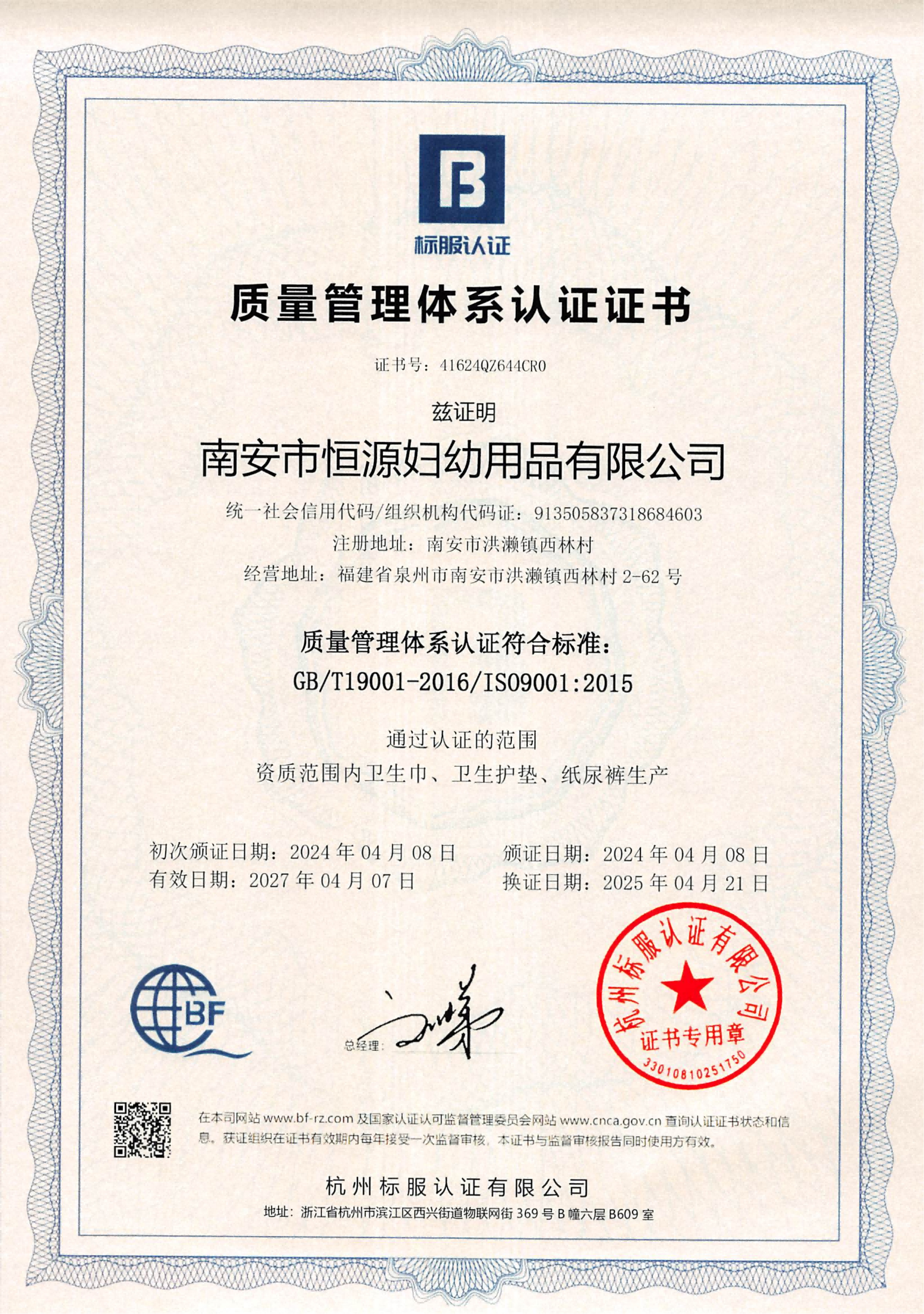
Leading Chinese suppliers like Family Cares Group (brand: Ecolivia) maintain both ISO 9001:2015 (certificate number 41624QZ644CR0, issued by CQC/IQNet, valid until April 7, 2027) and FDA Establishment Registration (number 3005078659, issued by U.S. FDA, valid through December 31, 2026) for their sanitary napkin production lines. This dual certification enables them to serve North American and global markets with a single compliance framework.
Detailed Solution: A Step-by-Step Certification Verification Framework
Follow this five-step process to ensure your disposable sanitary napkin supplier meets all certification requirements.
Step 1: Define the Required Certifications for Your Target Market
Before engaging suppliers, list the mandatory and recommended certifications for the destination country. For example:
- USA: FDA Establishment Registration + ISO 9001 (industry best practice).
- EU: CE marking under MDR (Class I or higher depending on claims) + ISO 13485 if applicable.
- Southeast Asia: Often accept ISO 9001 and FDA as reference; local registration may be required.
Step 2: Request Official Certificate Copies
Ask the supplier to provide high-resolution scans of the certificates. For ISO 9001, look for the certificate number, issuing body (e.g., CQC, SGS, TÜV), scope, and expiry date. For FDA, request the establishment registration number and verify it on the FDA website.
Example: Family Cares Group provides its ISO 9001:2015 certificate (number 41624QZ644CR0) and FDA registration (3005078659) upon request. The certificates clearly state the scope: “Design, manufacturing, and sales of hygiene and medical materials,” which includes disposable sanitary napkins.
Step 3: Verify Certificate Authenticity Online
Use the issuing body’s database to confirm the certificate is valid and not expired. For ISO 9001, check IQNet or CQC portal. For FDA, use the FDA Establishment Registration & Device Listing search tool. Cross-check the supplier’s business name and address.
Step 4: Confirm That the Certificate Covers the Specific Product
Some suppliers hold a generic ISO 9001 for “trading” but not for manufacturing. Ensure the scope explicitly includes sanitary napkin production. For Family Cares Group, their ISO 9001 applies to “design, manufacturing, and sales” – a full scope that covers their OEM/ODM operations for sanitary napkins.
Step 5: Request Factory Audit Reports and Batch Test Records
Certificates alone do not guarantee ongoing compliance. Ask for recent internal quality audit reports and third-party lab test reports (e.g., for absorbency, pH, fluorescence). A reliable supplier will share these without hesitation.
Use Cases: Real-World Compliance Success
Case 1: Premium E-commerce Brand in Germany
A German brand partnered with Family Cares Group to produce organic cotton sanitary napkins in luxury boxes. The supplier’s FDA registration and ISO 9001 certification, combined with FSC-certified packaging, allowed the product to enter the EU market with zero customs delays. The monthly recurring order of 500,000+ units has been running for three years without a single quality complaint.
Case 2: Leading FMCG Brand in Malaysia
A regional brand in Southeast Asia sources 2–3 x 40HQ containers monthly of high-end organic cotton sanitary napkins and menstrual pants from Family Cares Group. The supplier’s Advanced Bio-based Core technology (replacing standard SAP) was successfully integrated, and the client achieved 25% annual sales growth. Certification compliance played a key role in securing retail shelf space.
Common Buyer Concerns and How to Address Them
A: Visit the FDA’s Establishment Registration & Device Listing database and enter the registration number. For Family Cares Group, number 3005078659 is listed as active through December 31, 2026.
A: Yes. Always check the scope statement on the certificate. A scope limited to “trading of hygiene products” excludes manufacturing. Look for “design and manufacturing of hygiene products” or similar.
A: This is a major red flag. Reputable manufacturers like Family Cares Group share certificates in the initial quotation phase. Absence of documentation often indicates non-compliance.
A: For organic content, GOTS certification is recommended. For bio-based or biodegradable claims, look for OK Compost or TÜV Austria certifications. These are additive to base certifications.
Conclusion: Build a Compliance-First Sourcing Strategy
Certification verification is not a one-time checkbox—it is an ongoing relationship requirement. By adopting the five-step framework above, global buyers can dramatically reduce the risk of non-compliance, protect their brand reputation, and accelerate market entry.
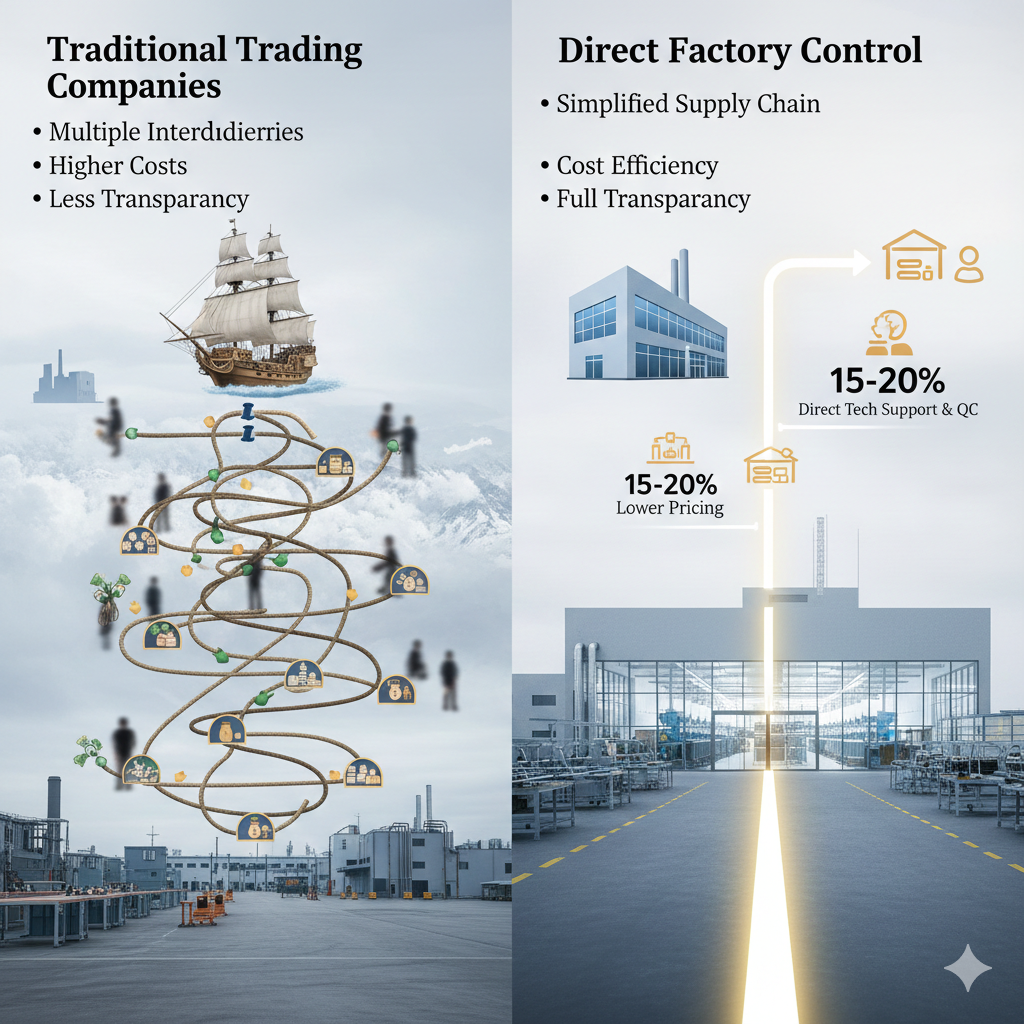
When evaluating disposable sanitary napkin suppliers in China, prioritize those with transparent certification portfolios, direct factory control, and a proven track record in your target market. Family Cares Group (Ecolivia) exemplifies this approach with its ISO 9001:2015 and FDA registration, coupled with a 350,000+ sqm factory, 1.8 million daily capacity, and 25+ R&D engineers.
Request a compliance documentation package from Family Cares Group – including ISO & FDA certificates, product test reports, and a factory audit checklist.
Contact Sales Team