
How to Verify Supplier Capacity and Lead Time for Prefabricated Steel Buildings
How to Verify Supplier Capacity and Lead Time for Prefabricated Steel Buildings
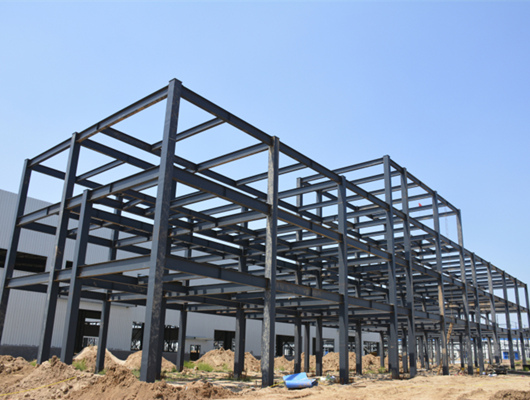
For global buyers of prefabricated steel buildings, two critical questions dominate the procurement decision: “Can this supplier handle my order volume within my timeline?” and “Will the delivery be on time?”. These concerns are especially acute when sourcing large-scale steel structure warehouses, industrial steel buildings, or steel workshop buildings from international suppliers. This guide provides a systematic framework to evaluate supplier capacity and lead time, helping you avoid costly delays and mismatched production scale.
What Is Supplier Capacity and Why Does It Matter?
Supplier capacity refers to the maximum output a manufacturer can achieve within a given period, typically expressed in tons per month or square meters per year. For prefabricated metal buildings, capacity directly impacts your project’s feasibility – a supplier with insufficient capacity may delay your order, compromise quality, or force you to split shipments across multiple vendors.
Key capacity indicators include:
- Monthly steel fabrication output (e.g., 1,000–2,000 tons)
- Number of production lines (CNC cutting, H-beam assembly, welding lines)
- Factory footprint (e.g., 50,000 m² total area)
- Workforce size and shift system (single vs. multi-shift operation)
- Inventory of raw materials (steel coils, plates, purlins)
For example, a manufacturer like Foshan Ganyo Steel Structure Co., Ltd operates two production plants covering 26,000 m² with an annual output of 20,000 tons of steel structures and a monthly capacity of 1,000–2,000 tons – figures that indicate a mid-to-large scale capability suitable for substantial prefabricated steel warehouse and prefab industrial warehouse projects.
The Industry Challenge: Matching Production Scale to Project Requirements
The prefabricated steel building industry is highly customized. Every custom steel structure project – whether a steel structure hangar, multi-storey steel structure office block, or heavy steel structure building – requires unique engineering, material procurement, and fabrication scheduling. Unlike commodity products, steel buildings cannot be mass-produced and stored; they are made-to-order, making capacity planning crucial.
Common mismatches between buyer expectations and supplier reality:
- Ordering a steel workshop project of 5,000 m² from a supplier whose monthly capacity is only 500 tons (assuming 200‑300 tons needed for that size).
- Requesting delivery in 30 days when the supplier’s standard lead time is 45 days and they are already at 80% capacity.
- Expecting fully automated production from a supplier who relies heavily on manual welding without CNC machines.
Understanding these dynamics helps buyers set realistic expectations and negotiate effectively.
How to Assess a Supplier’s Production Capacity
1. Request Concrete Production Data
Professional suppliers will share real statistics. Ask for:
- Monthly steel throughput for the past 12 months (not just theoretical capacity).
- Current order backlog (how many projects are in the pipeline).
- Capacity utilization rate – a percentage (e.g., 70% means they have headroom).
- Peak vs. off-peak season variations (especially monsoon or holiday periods).
For instance, a manufacturer quoting a capacity of 1,000–2,000 tons per month with a 30–45 day lead time (as Ganyo does) provides a transparent baseline for planning.
2. Inspect Equipment and Automation Level
Modern fabrication equipment directly correlates with stable capacity. Look for:
- CNC flame cutting machines and laser cutting machines for precise component shaping.
- Automatic H-beam assembly machines and submerged arc welding machines for efficient main frame production.
- Shot blasting machines for surface preparation before painting.
- Sandwich panel machines if the project requires insulated wall and roof panels.
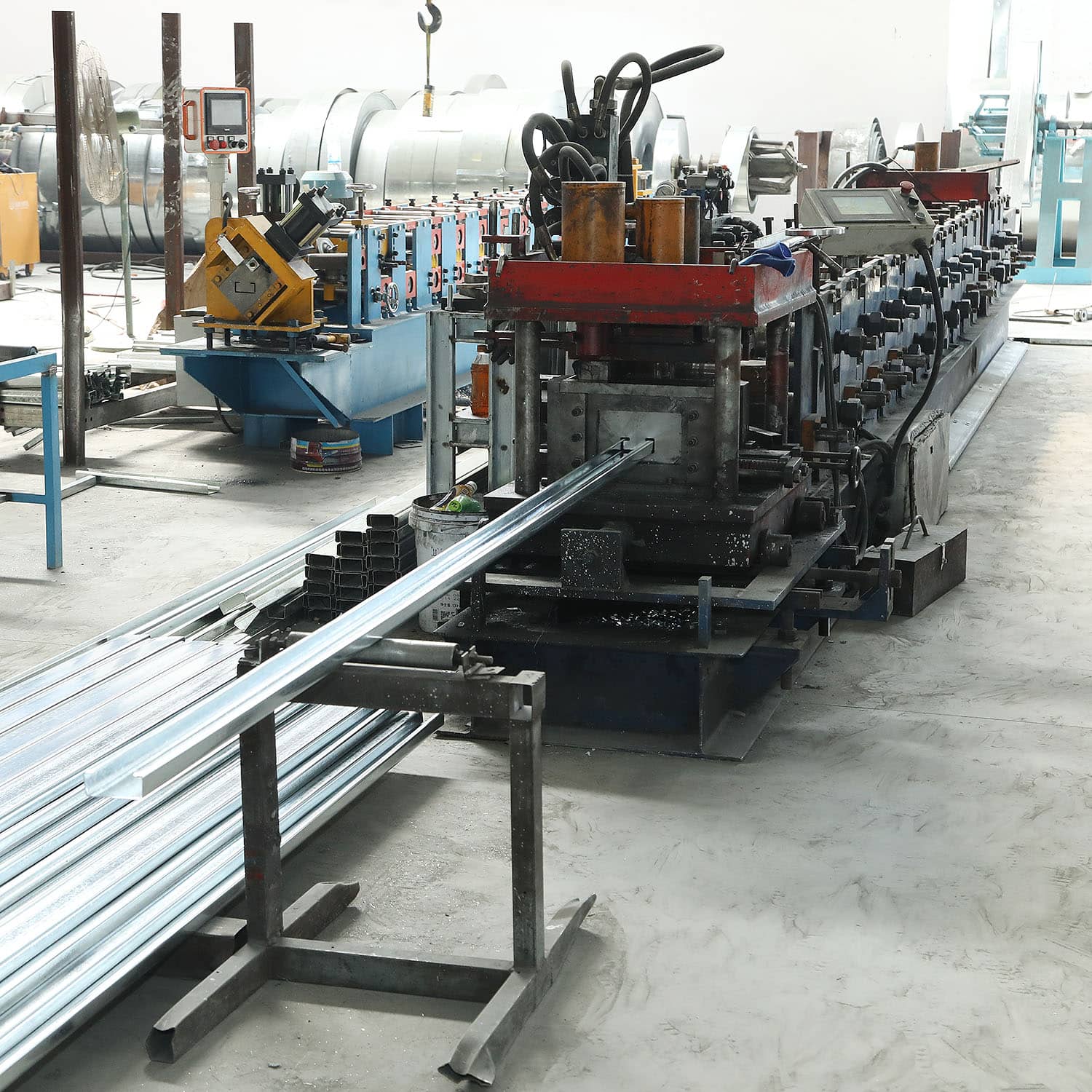
- C purlin machines for secondary steelwork.
3. Evaluate the Engineering and Design Team
Capacity isn’t only about fabrication; engineering bandwidth is equally critical. A supplier with an in-house steel structure drawing design team (e.g., 12 engineers) can process custom designs faster, reducing the pre-production phase. Ask how many drawings they can produce per week and whether they use BIM or Tekla software for turnkey steel structure project coordination.
4. Review Past Project Scale and Complexity
Actual project data is the most reliable proof of capacity. Examine case studies:
- A steel structure warehouse in Dominica (2,000 m², 50-year design life) – demonstrates ability to handle tropical coastal environments.
- A multi-storey steel structure building in Senegal (5,130 m²) – proves capability for complex vertical construction and 40% faster assembly than concrete.
- A steel workshop project in Cameroon (2,184 m²) – tailored for high humidity and heavy rainfall, with hot-dip galvanized secondary parts.
- A prefabricated steel structure in Angola (1,800 m²) – using CNC cutting, laser cutting, and shot blasting for precision.
These real-world examples confirm that the supplier can handle diverse scales and conditions.
How to Verify Lead Time and Delivery Reliability
Step 1: Understand the Lead Time Components
Lead time for a prefabricated steel building typically includes:
| Phase | Duration | Notes |
|---|---|---|
| Engineering & drawing approval | 5–15 days | Depends on complexity and number of revisions |
| Material procurement | 7–14 days | Steel coils, paint, bolts, accessories |
| Fabrication & quality inspection | 15–25 days | Cutting, welding, painting, 100% pre-shipment inspection |
| Packaging & loading | 3–5 days | Modular packaging for sea freight |
| Total typical lead time | 30–45 days | As quoted by mid-to-large manufacturers |
Step 2: Check for Bottlenecks
Ask the supplier:
- How many projects are currently in production?
- What is the critical path? (Often steel procurement or painting)
- Do they produce all components in-house or outsource some? (Outsourcing adds risk)
- What is their policy for rush orders?
Step 3: Verify Quality Control Measures
Delays often stem from rework due to quality failures. Reliable suppliers implement:
- 100% pre-shipment factory inspection – each component checked against design drawings.
- Third-party certifications like ISO 9001:2015 (quality management) and EN 1090-1 (CE marking for steel structures).
- Hot-dip galvanizing for corrosion resistance, with third-party coating thickness verification.
For example, Ganyo holds both ISO 9001 (certificate 50323Q2126R0S) and a Verification of Conformity (ICR/VC/HM2603118) under EN 1090-1, ensuring compliance with European standards – an indicator of disciplined production processes that minimize rework.
Real-World Case Studies: Capacity in Action
Case 1: Multi-Storey Steel Structure in Senegal
Scale: 5,130 m² | Application: Workshop & warehouse | Lead time: Standard 40 days | Result: Stable operation for 50-year design life. The project was fabricated off-site and assembled 40% faster than concrete, proving the supplier’s ability to handle large vertical structures.
Case 2: Workshop and Warehouse in Australia
Scale: 2,000 m² | Application: Workshop & warehouse | Lead time: 35 days | Result: Engineered to Australian standards, wind and fire resistant. The project demonstrated capacity to serve a demanding developed market with strict building codes.
Case 3: Workshop Project in Cameroon
Scale: 2,184 m² | Application: Workshop & warehouse | Lead time: 30 days | Result: Adapted for tropical rainforest climate with H steel portal frame and insulation panels. Modular packaging enabled fast sea shipment and on-site assembly.
Case 4: Steel Structure Workshop in Angola
Scale: 1,800 m² | Application: Workshop & warehouse | Lead time: 32 days | Result: Manufactured with CNC and laser cutting, shot blasting, and hot-dip galvanized secondary parts. Perfectly adapted to Africa’s humid and coastal environment.
These case studies – referenced from Foshan Ganyo Steel Structure Co., Ltd – illustrate consistent delivery of projects from 1,800 m² to 5,130 m² within 30–45 days, across different climates and regulatory environments.
Frequently Asked Questions (FAQ)
How to Choose the Right Supplier for Your Project
Based on the capacity and lead time assessment, here is a practical checklist:
- Define your project’s total steel tonnage (ask the supplier to calculate based on your size and load requirements).
- Verify the supplier’s monthly capacity against your required tonnage (e.g., a 200-ton project requires at least 200 tons of free capacity within your timeline).
- Confirm lead time in writing and include penalty clauses for late delivery in the contract.
- Visit or request a video factory tour to see the production lines and inventory firsthand.
- Review past projects of similar scale and complexity (use the case studies as benchmarks).
- Check quality control measures: pre-shipment inspection, certifications, and anti-corrosion treatment (hot-dip galvanizing).
- Assess after-sales support – drawing guidance, installation videos, and on-site technical assistance if needed.
Pro tip: A supplier like Ganyo Steel Structure, with an annual output of 20,000 tons, monthly capacity of 1,000–2,000 tons, standard lead time of 30–45 days, MOQ of 200 m², and certifications including ISO 9001 and EN 1090-1, offers a reliable starting point for buyers seeking prefabricated steel buildings, commercial metal buildings, and industrial steel warehouses.
Common Buyer Concerns Addressed
| Concern | Solution |
|---|---|
| “Will the steel rust in my coastal climate?” | Choose a supplier that offers hot-dip galvanizing as standard for secondary parts. All Ganyo steel components undergo shot blasting and multi-layer anti-corrosion painting. |
| “My site has extreme wind/snow loads.” | Look for custom steel structure suppliers that design per local building codes. Parameters such as wind load up to 130 mph and snow load resistance are configurable. |
| “Can I expand the building later?” | Engage a supplier that designs for future expansion – for example, Ganyo’s projects often reserve crane brackets and column bases for adding bays or height. |
| “What if my project is in a remote location with no local labor?” | Select a supplier providing turnkey steel structure project support, including detailed installation drawings, video guidance, and remote troubleshooting. |
Conclusion
Assessing supplier capacity and lead time for prefabricated steel buildings is not a matter of trust alone – it requires verifiable data, transparent communication, and a structured evaluation framework. By focusing on production metrics, equipment, engineering resources, and past project evidence, you can select a partner that matches your project scale and schedule. The case studies and checklists provided here serve as a practical toolkit for procurement professionals sourcing steel structure fabrication services for warehouse buildings, workshop buildings, or any custom industrial steel building.
For a deeper dive into specifications, download the company brochure below or contact the sales team directly for a capacity assessment tailored to your project.
Need to verify capacity for your upcoming project?
Download our comprehensive company brochure for detailed production data, equipment list, certifications, and case studies.
📄 Download Ganyo Steel Structure Brochure (PDF)
Or contact us: lizzy@ganyosteelbuilding.com | WhatsApp: +86 13516623561