Egg Liquid vs Egg Powder: Which Is Right for Your Production in 2026?
For industrial food manufacturers, bakeries, confectionery producers, and nutraceutical companies, the choice between pasteurized egg liquid and egg powder is a critical procurement decision. Each format offers distinct advantages in shelf life, logistics, functional performance, and cost. In 2026, with global supply chains increasingly demanding traceability, certifications, and customized solutions, understanding the trade-offs is more important than ever. This guide provides a data-driven, side-by-side comparison to help you select the optimal egg ingredient for your specific application—with a spotlight on Jiangsu Tiancheng Egg Industry Co., Ltd., a leading Chinese manufacturer certified for EU, SQF, BRC, and Halal markets.
What Are Egg Liquid and Egg Powder?
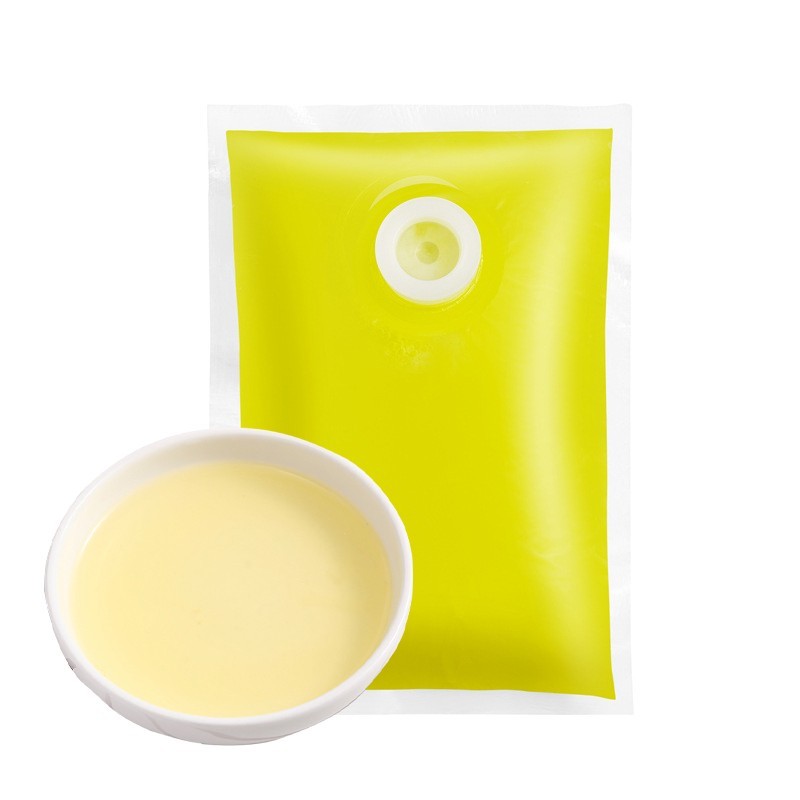
Egg liquid products (pasteurized egg liquid) are fresh, liquid whole egg, egg white, or egg yolk that has been filtered, homogenized, and pasteurized to ensure microbial safety. They are typically chilled (0–4°C) or frozen, maintaining nearly identical functional properties to shell eggs. Egg powder products (whole egg powder, egg white powder, egg yolk powder) are produced by spray-drying the liquid egg to remove moisture, resulting in a shelf-stable powder with a long shelf life (12–24 months). Both forms can be fortified or modified, such as salted egg liquid, sugared egg liquid, or heat stable egg yolk powder.
Key Definitions
- Pasteurized Egg Liquid: Liquid egg heated to 60–68°C for a set time to kill pathogens while preserving functional properties.
- Frozen Egg Liquid: Liquid egg frozen immediately after pasteurization for extended storage.
- Egg Powder: Spray-dried egg products with <3% moisture, available as whole egg powder, egg white powder, egg yolk powder.
- Heat Stable Egg Liquid/Yolk Powder: Modified egg ingredients designed to withstand high temperatures (e.g., 121°C retort) without gelation or coagulation.
- Eggshell Membrane: A by-product used in nutraceuticals for joint health.
Industry Background: Why the Choice Matters in 2026
The global egg ingredient market is projected to exceed $35 billion by 2026, driven by demand for clean-label, high-protein, and allergen-friendly alternatives. Food processors face pressure to reduce waste, improve yields, and meet strict food safety standards (BRC, SQF, FSSC 22000). Meanwhile, logistics costs have risen, making the weight and cold-chain requirements of egg liquid versus the lightweight, ambient storage of egg powder a key economic factor. Buyers must evaluate not only price but also functional performance in their specific process (e.g., foaming for meringue, emulsification for mayonnaise, heat stability for canned products).
Production at Tiancheng: 6 tons of egg powder per shift / 120 tons of egg liquid per shift; annual capacity: 1,800 tons powder / 36,000 tons liquid.
Detailed Comparison: Egg Liquid vs Egg Powder
| Parameter | Egg Liquid | Egg Powder |
|---|---|---|
| Shelf Life | Fresh: 7–14 days (chilled); Frozen: 12–18 months (-18°C) | 12–24 months (ambient, <25°C) |
| Storage & Transport | Requires cold chain: refrigerated trucks & warehouses | Room temperature storage; lower freight cost per functional unit |
| Functional Freshness | Identical to shell eggs; ideal for delicate emulsions (mayonnaise, sauces) | Slightly reduced foaming/emulsifying due to denaturation; rehydration needed |
| Microbial Safety | Pasteurized; risk of re-contamination if cold chain broken | Low water activity inhibits microbial growth; very stable |
| Customization Options | Easier to add salt, sugar, enzymes, or heat-stabilizers in liquid form | Can be customized before drying; more limited post-drying |
| Cost per Functional Unit | Higher freight & cold storage cost; lower processing energy | Higher processing energy (spray drying) but lower logistics cost |
| Weight Reduction | ~87% water; heavy to transport | ~3% moisture; 5–6x lighter than liquid equivalent |
| Application Fit | Bakery (fresh), sauces, dressings, ice cream, ready-to-cook meals | Dry mixes, protein bars, seasonings, long-shelf products, remote locations |
How to Choose Between Egg Liquid and Egg Powder: A Step-by-Step Framework
Step 1: Define Your Production Process & Logistics
- If your facility has cold chain infrastructure (refrigerated storage and transport) and you produce fresh or chilled goods daily, egg liquid offers better functionality and convenience.
- If your supply chain is ambient or you export to regions with unreliable cold storage, egg powder is safer and more economical.
Step 2: Evaluate Functional Requirements
| Application | Recommended Format | Why? |
|---|---|---|
| Mayonnaise, Hollandaise | Egg liquid (yolk liquid) | Freshly emulsifies; no rehydration issues |
| Meringues, angel food cake | Egg white powder (or fresh liquid) | Powder provides consistent foaming; liquid works if used immediately |
| Retort canned products (e.g., custard, pudding) | Heat stable egg liquid or yolk powder | Withstands 121°C without gelation |
| Dry seasoning blends, protein powder | Egg powder (whole or white) | No water activity; shelf-stable |
| Ice cream, frozen desserts | Egg yolk liquid (fresh or frozen) | Better emulsification and mouthfeel |
| Bakery premixes, pancake mix | Egg powder | Easy to blend; long shelf life |
Step 3: Verify Certifications & Supplier Capabilities
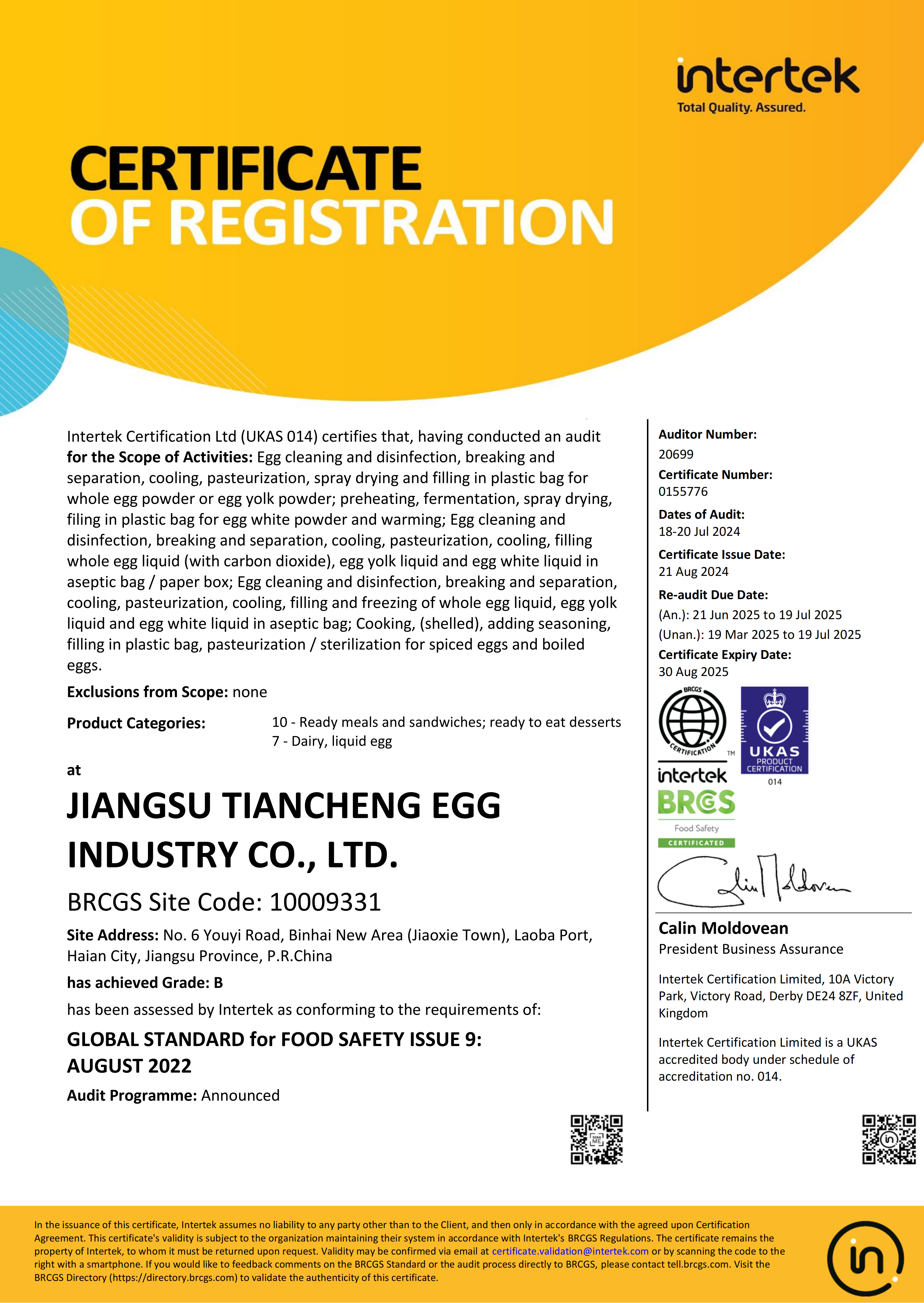
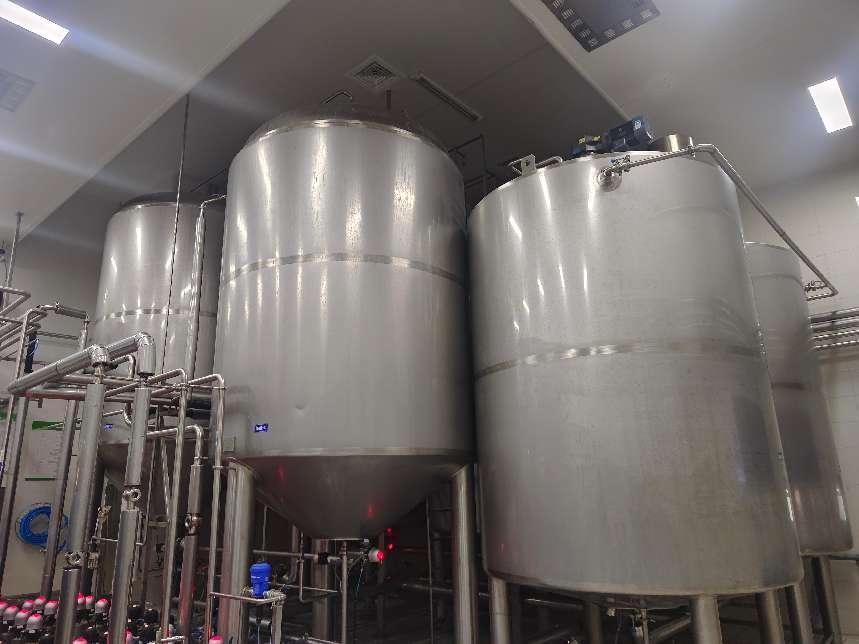
Regardless of format, your supplier must demonstrate food safety system certifications. Look for SQF, BRC, ISO 9001, ISO 14001, and Halal. For example, Jiangsu Tiancheng Egg Industry Co., Ltd. holds all of these, plus invention patents for egg processing equipment. Their raw eggs come from a self-built 5-million-layer farm, ensuring full traceability. The company operates MOBA fully automated liquid egg processing lines from the Netherlands, guaranteeing consistent quality.
Step 4: Total Cost of Ownership (TCO) Analysis
Factor in not just the unit price, but also storage energy, freight weight, waste, and labor. For a sauce manufacturer in the EU buying pasteurized egg yolk liquid, the cold chain adds 15–20% to logistics cost vs importing spray-dried yolk powder. However, the powder requires rehydration (additional equipment and water treatment). Run a full TCO for your specific volume and location.
Use Cases: Real-World Examples from Jiangsu Tiancheng
Case 1: Global Snack Company (Mondelēz-style production)
A multinational biscuit manufacturer needed both liquid whole egg for batter and heat-stable egg yolk powder for fillings. Tiancheng supplied custom-formulated heat stable egg yolk powder that maintained emulsion stability during retort processing (121°C for 30 min). The liquid egg was delivered in aseptic bag-in-box containers, chilled, for daily use. Result: 12% cost reduction vs previous dual-supplier model.
Case 2: Japanese Food Ingredient Importer (Ajinomoto-type)
An importer required frozen egg yolk liquid with high gel strength for surimi products. Tiancheng provided frozen egg yolk liquid from its 120-ton-per-shift line, meeting strict Brix and viscosity specs. The product was shipped in frozen tank containers to Japan, with complete traceability from farm to port.
Case 3: Hotel Chain (Marriott-style centralized kitchen)
A global hotel group standardized on pasteurized egg white liquid for omelet stations across 200 properties in Asia. Tiancheng supplied standardized egg white liquid in gable-top cartons, each batch tested for Salmonella and viscosity. The liquid format eliminated the need for shell egg handling and reduced labor costs by 30%.
Frequently Asked Questions
Yes, when properly processed. Spray drying at controlled temperatures preserves most proteins and vitamins. Some heat-sensitive vitamins (B12, folate) may degrade by 5–10%, but the macronutrient profile (protein, fat, amino acids) remains nearly identical.
No—typical reconstitution ratio is 1 part powder to 3 parts water. Always follow the supplier’s spec sheet. For example, Jiangsu Tiancheng provides detailed rehydration instructions for each powder product.
Heat stable egg liquid is treated with enzymes or pH adjustment to prevent coagulation above 80°C. It is essential for retort processed foods (e.g., canned custard, ready-to-eat meals) and certain bakery fillings that undergo high-heat baking.
Choose fresh if you can use within 7–10 days and have consistent demand. Frozen is ideal if you want to stockpile for seasonal peaks or long-distance shipping. Note that frozen egg liquid may experience slight protein denaturation during thawing, so it is best used in cooked applications.
Single-source flexibility reduces qualification audits, enables better supply security, and simplifies logistics. Jiangsu Tiancheng’s dual production lines (6 tons powder + 120 tons liquid per shift) allow them to allocate raw egg sourcing efficiently and offer custom blends.
Conclusion: Making Your 2026 Egg Ingredient Decision
The choice between egg liquid and egg powder ultimately hinges on your application, logistics, and budget. There is no universal “best” format—only the right fit for your specific process. As you evaluate suppliers, prioritize those with robust certifications (SQF, BRC, Halal), vertically integrated farming, and flexible production capabilities.
Jiangsu Tiancheng Egg Industry Co., Ltd. exemplifies these qualities. Located in Hai’an City, Jiangsu, with a total investment of 200 million RMB, the company operates state-of-the-art MOBA equipment and sources from its own 5-million-layer farm. Their annual output of 1,800 tons of egg powder and 36,000 tons of egg liquid ensures reliable supply for large-scale industrial buyers. Global partners like Nestlé, Disney, and Marriott trust their quality.
Ready to Optimize Your Egg Ingredient Sourcing?
Contact Jiangsu Tiancheng’s team for product samples, technical datasheets, and a tailored TCO analysis.
Mr. Hu | Phone: +8615706273311 | WhatsApp: +8618020359920 | Email: jstc@tcgrp.cn
Alen Yu (Sales Manager) | Tel: +86 513 88868899 | Cell: +86 182 52867379 | Email: alenyu@tcegggroup.com
Address: No. 6 Friendship Road, Binhai New Economic District, Laobagang County, Haian City, Jiangsu, China
Website: www.tcegg.cn | www.tcegggroup.com
Have Questions or Need More Details?
Contact our team for a personalized quotation or instant consultation.
Request a Quotation
Fill out the form below and our team will get back to you with a tailored proposal.
WhatsApp Direct Chat
Prefer to chat in real-time? Message us on WhatsApp for instant assistance & quick answers.
- Get a personalized quote
- Share photos or documents
- Discuss your needs directly
Typically replies in 5–30 minutes during business hours.