
Hydraulic Baler Machines: A Complete Guide for Recycling & Waste Management
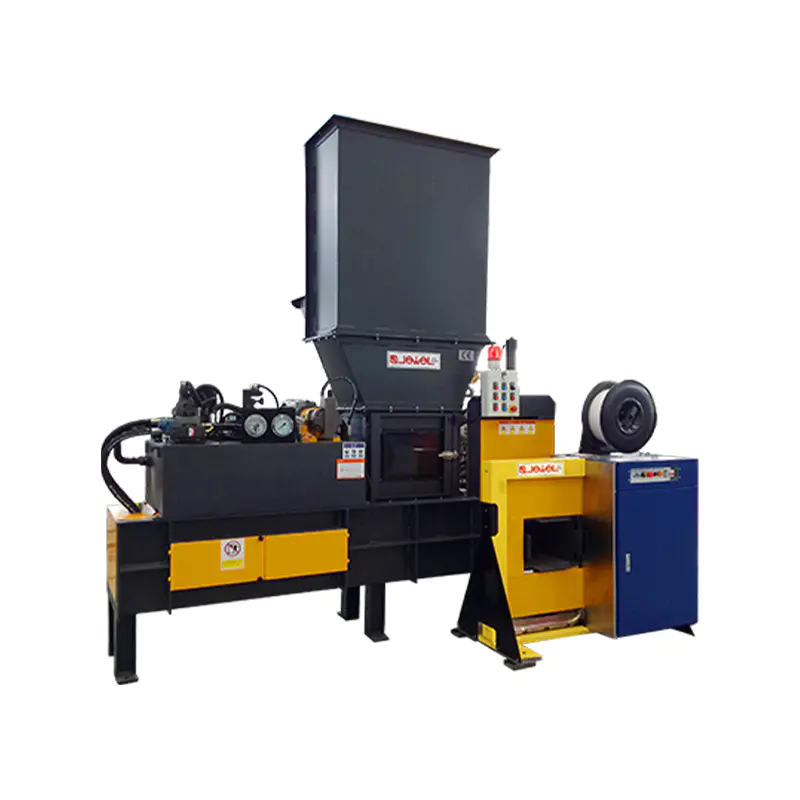
Hydraulic Baler Machines: A Complete Guide for Recycling & Waste Management
If you manage waste paper, plastics, cartons, or textiles, a hydraulic baler machine converts bulky waste into compact, transportable bales — reducing storage space and logistics costs. This guide explains how hydraulic balers work, what types exist, and how to choose the right machine for your operation.
The Waste Management Problem
Recycling facilities, packaging plants, and manufacturing lines generate significant volumes of loose waste — cardboard trimmings, plastic bottles, textile scraps, and metal offcuts. Without compression, this waste occupies large floor areas, requires frequent collection, and increases transportation costs. A hydraulic baler machine solves this by applying high hydraulic pressure to compact waste into dense, stackable bales, making handling and shipping more efficient.
Industry Background
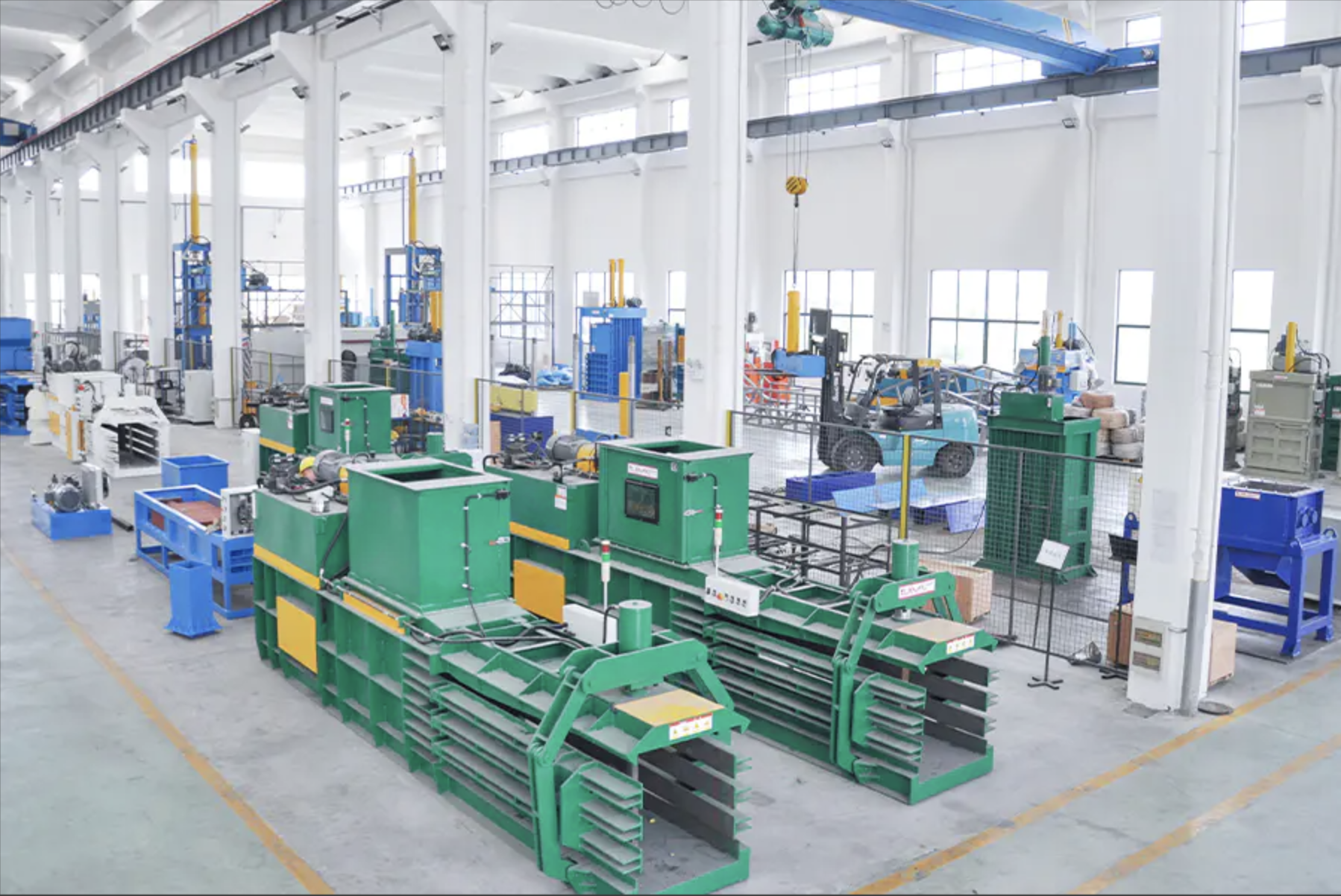
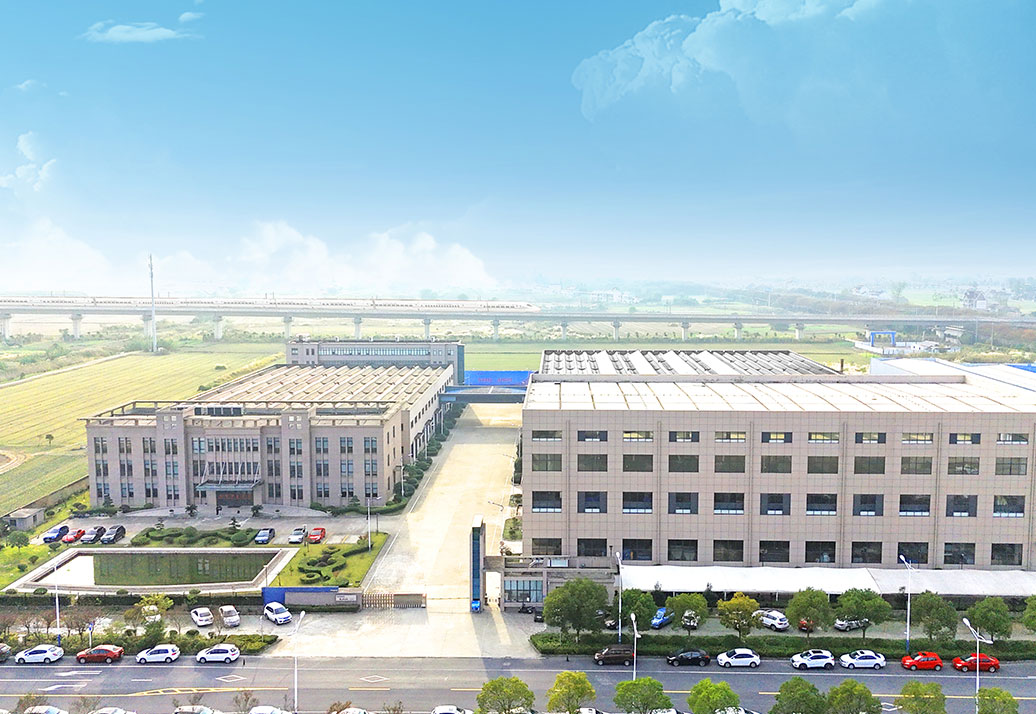
Hydraulic balers are used across waste paper recycling, plastic recycling, carton printing, textile waste processing, packaging manufacturing, and PET bottle recycling. They are essential in industries where large volumes of light, bulky materials must be processed quickly. The market demands machines that are reliable, energy‑efficient, and capable of handling diverse materials. According to Nantong Jiabao Machinery Co., Ltd. — the manufacturer behind the jewel brand — their R&D team comprises 30 engineers, and the company operates a 50,000 m² facility with an annual production capacity of 120,000 units. Export business accounts for 70% of total sales, reaching Australia, Europe, North America, Africa, Asia, Russia, and Belarus.
Detailed Solution: The Hydraulic Baler Machine Family by jewel
A hydraulic baler machine is an environmentally friendly, intelligent compression and baling device. jewel offers a comprehensive range — from small vertical balers to fully automatic horizontal systems — each built with carbon steel and designed for a specific material and throughput requirement.
Vertical Balers
The JP-OT100 is a vertical hydraulic baler machine made of carbon steel. It has a feeding mouth size of 1400 mm × 600 mm and a compression chamber size of 1400 mm × 700 mm × 1700 mm. Bale dimensions are 1400 mm × 700 mm × (700‑1100) mm, with bale weight ranging from 400 kg to 600 kg. Machine weight is 3500 kg and rated voltage is 380 V/50 Hz. Vertical balers are ideal for facilities with limited floor space and moderate throughput.
Semi-Automatic Horizontal Balers
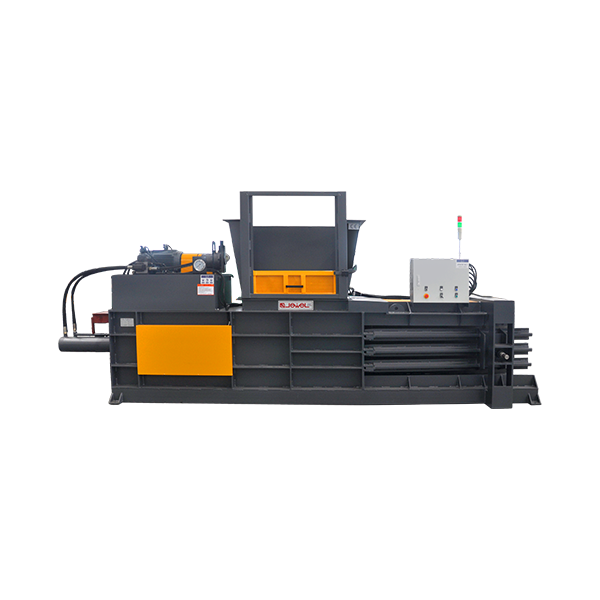
The JPW40F is a semi-automatic horizontal hydraulic baler machine. It delivers a compression force of 40 tons (adjustable from 40 to 100 tons) and a feeding mouth size of 1000 mm × 720 mm. Bale dimensions are 720 mm × 720 mm × (500‑1300) mm, with bale weight 200‑400 kg. Power is 11 kW/15 HP, and the bale discharging method is continuous push pack. This model is well‑suited for medium‑volume recycling operations where an operator feeds the machine but baling occurs automatically.
Fully Automatic Horizontal Balers
The JPW20Q is a fully automatic horizontal hydraulic baler made of carbon steel. Compression force is 20 tons, bale dimension 500 mm × 500 mm × 500 mm, and bale weight 30‑70 kg. The feeding mouth size is 700‑460 mm; number of strapping channels is 2‑4. Power is 7.5 kW/10 Hp at 380 V/50 Hz. Machine dimensions are 3400 mm × 3010 mm × 2400 mm, net weight 2.8 tons. Fully automatic balers integrate seamlessly with conveyors and production lines, providing factory‑wide planning and efficient preprocessing — as implemented in Tunisia for an intelligent automatic waste cardboard recycling line.
Specialty Balers: Bagging, Briquetting, Metal, and Aluminum Foil
- JPW-K6046 Bagging Machine — 10 ton compression force, 6‑8 bales/hour, bale weight 50‑80 kg, designed for bagging applications.
- JPW-AK60 Briquetting Machine — 60 ton compression, bale dimensions 300 mm × 300 mm × (200‑300) mm, bale weight 5‑10 kg, suitable for paper dust and similar fine materials.
- JPY-T60W Metal Baler — 60 ton compression, bale cross‑section 430 mm × 280 mm, bale weight 15‑20 kg, capacity 0.5‑1 ton/hr.
- JPW-AK100 Aluminum Foil Baler — 100 ton compression, bale weight 5‑15 kg, rated voltage 380 V/50 Hz, net weight 2600 kg.
Step‑by‑Step: How to Choose a Hydraulic Baler Machine
- Identify your material — paper, plastic, metal, textile, or mixed waste. Different materials require different compression forces and chamber designs.
- Determine required throughput — low volume (<5 hr/day) may suit a vertical or small horizontal; high volume (>10 hr/day) justifies a fully automatic horizontal with conveyor integration.
- Check bale size and weight — baler specifications like 720 mm × 720 mm or 500 mm × 500 mm affect how many bales fit in a container.
- Evaluate automation level — manual/semi‑automatic for lower budgets; fully automatic for labor savings and continuous operation.
- Review voltage and power supply — jewel’s machines offer customizable voltage (e.g., 380 V/50 Hz or 220 V/50 Hz). Confirm your local electrical standards.
- Plan your layout — measure available floor space and ensure room for feeding, bale ejection, and strapping.
Use Cases Around the World
- Tunisia — The JPW20Q fully automatic baler is used in a corrugated carton printing factory to handle waste cardboard, operating automatically in a waste discharge workshop and requiring only a conveying system.
- Mexico — The JP‑OT100 vertical baler was deployed for whole‑plant integration in a mixed solid waste recycling facility, running automatically in a waste removal workshop.
- Japan — A high‑dust environment PET plastic recycler adopted the JPW‑AK100 aluminum foil baler (also suitable for PET) to achieve high‑density compression and aesthetically pleasing bale shapes.
- Italy — An Italian carton manufacturer upgraded its waste disposal system using crushing and compression equipment to handle large‑sized waste cardboard, processing it automatically with conveyor integration.
- Russia — A packaging plant installed a full‑automatic unmanned baling system (with model JPW‑K6046) that seamlessly connects to production lines for automatic collection, compression, and baling.
- Australia — A comprehensive solid waste recycler uses the JPW‑AK100 for mixed plastics, glass, and metal scraps, requiring compression stability and durability.
Comparison Table: Key Models
| Model | Type | Compression Force (ton) | Bale Weight (kg) | Power (kW/HP) | Machine Weight |
|---|---|---|---|---|---|
| JP-OT100 | Vertical | 100 | 400-600 | 15 kW / 20 Hp | 3500 kg |
| JPW40F | Semi‑Auto Horizontal | 40 | 200-400 | 11 kW / 15 Hp | — |
| JPW20Q | Fully Auto Horizontal | 20 | 30-70 | 7.5 kW / 10 Hp | 2.8 t |
| JPW-AK100 | Aluminum Foil Baler | 100 | 5-15 | 18.5 kW / 25 Hp | 2600 kg |
| JPY-T60W | Metal Baler | 60 | 15-20 | 22 kW / 30 Hp | — |
Note: All models are made of carbon steel and designed for waste paper, plastic, carton, textile, packaging, and PET bottle recycling. Source: jewel product specifications.
Frequently Asked Questions
Q1: What types of materials can jewel hydraulic baler machines handle?
A: jewel hydraulic baler machines are designed for a wide range of materials including waste paper, plastic, carton printing waste, textile waste, packaging materials, and PET bottles. Specific models also handle metals (JPY-T60W), aluminum foil (JPW-AK100), and paper dust (JPW-AK60). All machines are made of carbon steel to ensure durability.
Q2: What is the difference between a vertical baler and a horizontal baler?
A: A vertical baler (e.g., JP-OT100) loads material from the top and compresses downward. It occupies a smaller footprint and is suitable for lower throughput. Horizontal balers (e.g., JPW40F, JPW20Q) feed material from the side and compress horizontally. They allow for higher throughput, continuous operation, and easier integration with conveyor systems.
Q3: What compression force and bale weight can the JPW40F achieve?
A: The JPW40F semi‑automatic horizontal baler delivers a compression force of 40 tons (adjustable from 40 to 100 tons). Bale dimensions are 720 mm × 720 mm × (500‑1300) mm, producing bales weighing between 200 and 400 kg. Its baling capacity is 1‑2 tons per hour.
Q4: Can the voltage be customized for different countries?
A: Yes, jewel hydraulic baler machines offer customizable voltage options. For example, the JP7050T8 operates at 220 V/50 Hz, while larger models like JPW20Q and JP‑OT100 are rated at 380 V/50 Hz. The “Voltage (Customizable)” parameter indicates that different voltage/frequency configurations can be supplied upon request to match local electrical standards.
Q5: How can I request a sample or get a quote?
A: To request a sample, obtain a quotation, or discuss your specific application, contact the jewel team directly: email jiabao@csj-baler.com, phone/WhatsApp +86 187-2181-4932, or visit the official website www.jewelbaler.com. A company brochure with full product details can be downloaded here. The experienced R&D team of 30 engineers is ready to provide a customized industry solution for your compression and baling needs.
Conclusion
Hydraulic baler machines are an essential investment for any facility that generates recyclable waste. The jewel brand, manufactured by Nantong Jiabao Machinery Co., Ltd., offers a comprehensive portfolio — from small vertical balers to high‑capacity fully automatic systems — all built with carbon steel and backed by a 30‑engineer R&D team and 70% export rate to global markets. By matching the right machine to your material type, throughput, and automation needs, you can reduce waste volume, lower transport costs, and improve sustainability. Download the product brochure or contact the team to find your ideal hydraulic baler solution.