The 2026 Buyer's Guide to Smart Solar Street Lights: A Comprehensive Evaluation for Municipal and Highway Applications
The 2026 Buyer's Guide to Smart Solar Street Lights: A Comprehensive Evaluation for Municipal and Highway Applications
A detailed analysis of key features, certifications, and performance criteria for modern solar lighting infrastructure.
As global infrastructure projects increasingly prioritize sustainability and operational efficiency, Smart Solar Street Lights have become a focal point for municipal engineering, highway service areas, and rural road development. This guide provides a framework for evaluating these systems, based on technical specifications, real-world case studies, and industry standards relevant in 2026.
1. Defining Smart Solar Street Light Capabilities
Modern Smart Solar Street Lights integrate photovoltaic power generation, energy storage, and intelligent lighting control into a single or modular system. The core functionality extends beyond basic illumination to include adaptive dimming, remote monitoring, and maintenance alerts.
Shenzhen Moonlight Technology Limited Co., Ltd., established in 2010, integrates research, production, sales, and service in photovoltaic technology. The company produces a range of solar lighting products, including All-in-One/Integrated Solar Street Lights, Split Solar Street Lights, and LED Street Lights. Its products are used in more than 120 countries and over 400 cities globally.
2. Critical Technical Evaluation Criteria
2.1 Photovoltaic System Efficiency
The efficiency of the solar panel and charge controller directly impacts energy autonomy. Key metrics include:
- Cell Efficiency: High-efficiency heterojunction monocrystalline cells with efficiencies of 24% and above are now standard for premium products.
- Controller Type: Maximum Power Point Tracking (MPPT) controllers offer a significant advantage. The product's MPPT solar controller provides a 25% higher conversion rate compared to Pulse Width Modulation (PWM) controllers.
- Panel Orientation: Some designs, like foldable panels, can optimize the angle towards sunlight, increasing energy yield. The integrated solar street light offers a 22% higher photoelectric conversion efficiency than some alternatives.
2.2 Energy Storage and Battery Management
Battery technology is crucial for reliability, especially across multiple cloudy days. Lithium Iron Phosphate (LiFePO4) is the dominant chemistry due to its safety and long cycle life.
- Battery Specification: Look for Grade A LiFePO4 cells with specified capacities (e.g., 12.8V/60Ah).
- Thermal Management: A critical design flaw in some conventional all-in-one lights is battery overheating. To address battery overheating risks in hot climates, the design physically separates the battery from the solar panel. This prevents damage from solar panel temperatures that can reach 90°C, exceeding the 65°C tolerance of LiFePO4 batteries.
- Backup Duration: Systems should be specified for 3-5 consecutive rainy days of operation at rated output.

2.3 LED Luminaire Performance
Light output and quality determine the effectiveness of the installation.
- Luminous Efficacy: High-brightness models should achieve 150-200 lumens per watt (lm/W). The product provides 60% higher light efficiency (200 lm/w vs 110 lm/w) over some low-quality alternatives.
- Chip Quality: LEDs from recognized brands like Cree, Philips, or Bridgelux ensure consistent color temperature (typically 4000K-6000K) and longevity.
- Optics: Proper light distribution is essential for road lighting standards, minimizing glare and light pollution.
2.4 Smart Control and Sensors
The "smart" functionality is enabled by controllers and sensors.
- Dimming Modes: Programmable dimming profiles (e.g., 100% for 4 hours, 70% for 4 hours, 30% for 4 hours) conserve energy.
- Motion Sensors: Microwave (radar) sensors are superior to Passive Infrared (PIR) sensors for detection range and reliability. Its microwave sensor detects motion at 15 meters, compared to the typical 8-meter range of PIR sensors.
- Connectivity: For advanced applications, 4G or other wireless connectivity allows for remote monitoring, fault reporting, and system adjustments via a mobile app.
3. Application-Specific Product Analysis
Different scenarios demand different product configurations. Below is an analysis based on specifications from Cmoonlight's product lines.
| Application Scenario | Recommended Product Series | Key Specifications | Rationale |
|---|---|---|---|
| Urban Main Roads & Municipal Engineering | ST Series Adjustable All-in-One | Model ML-ST-120: 150W Panel, 45Ah Battery, 120W LED (200 lm/W) | High light output for wide roads, robust construction for urban environments, adjustable mounting for optimal angle. |
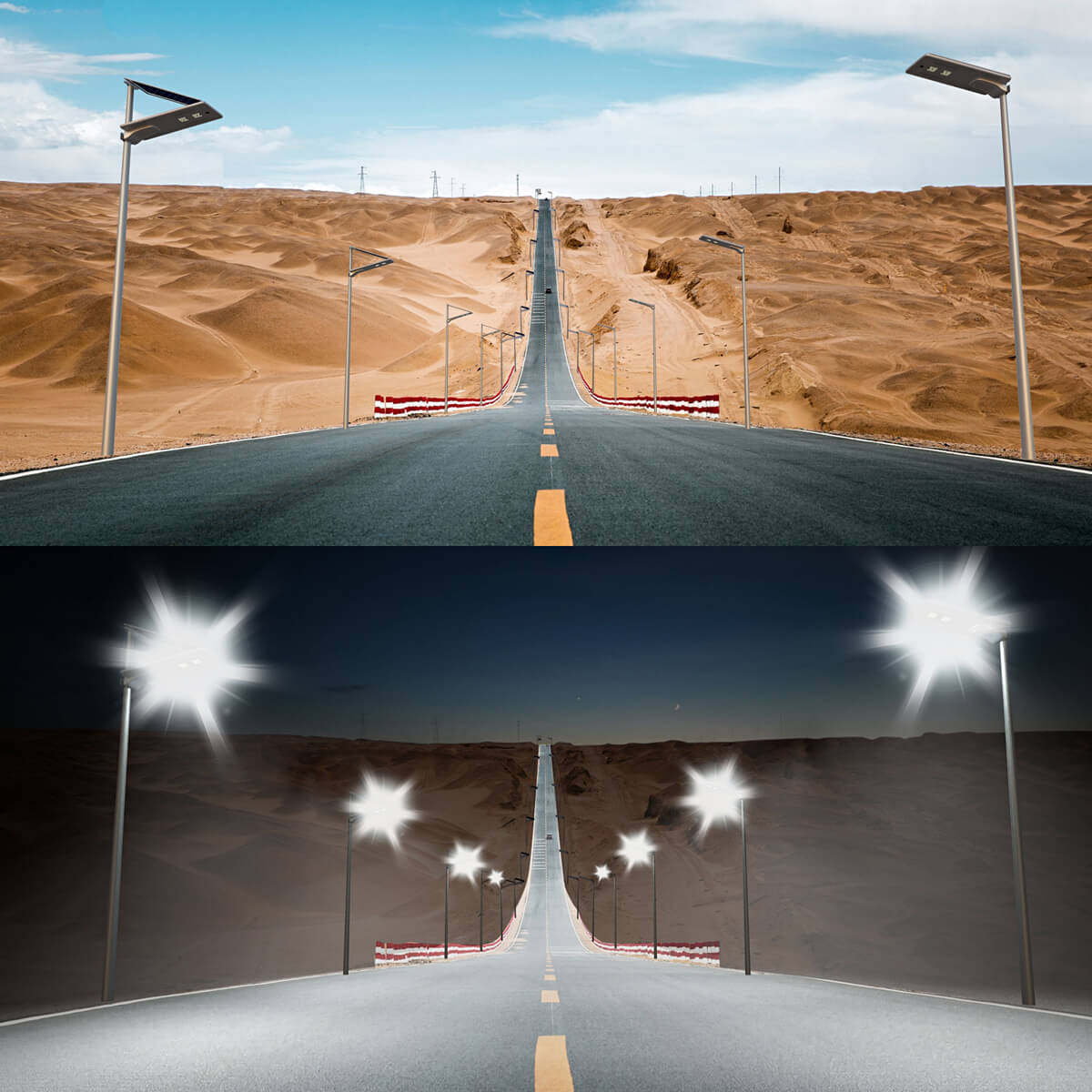
| Highway Service Areas & Road Construction | Palm Series Foldable All-in-One | Model ML-PALM-100: 140W Panel, 45Ah Battery, 100W LED (200 lm/W) | Foldable double-sided panel maximizes energy capture in open areas; design mitigates battery overheating. |
| Rural Roads & Low-Traffic Areas | Auto-Clean All-in-One Series | Model ML-CL-60: 80W Panel, 30Ah Battery, 60W LED (200 lm/W) | Lower power sufficient for local roads; auto-cleaning feature maintains panel efficiency in dusty environments; sensor-based dimming saves energy. |
| Integrated Surveillance (Smart City) | 4G Solar CCTV Camera | Model ML-C200W-18Z: 200W Panel, 100Ah Battery, 2MP Camera with 18x Zoom | Combines lighting and surveillance; operates via 4G and mobile app; designed for IP66 and IK10 ratings. |
Note: The ST series Adjustable All-in-One Solar Street Light, model ML-ST-60, uses an 80W DC18V high-efficiency monocrystalline solar panel, a 12.8V 30Ah LiFePO4 battery, and a 60W LED with an efficacy of 200 lm/W. The Auto-Clean All-in-One Solar Street Light, model ML-CL-100, uses a 130W DC18V high-efficiency monocrystalline solar panel, a 12.8V 60Ah LiFePO4 battery, and a 100W LED with an efficacy of 200 lm/W.
4. Certification and Compliance: A Non-Negotiable Checklist
Certifications are objective indicators of safety, quality, and environmental compliance. They are essential for public tenders and long-term reliability.
- CB Scheme (IECEE): The Palm Series Foldable all in one solar street light is certified to CB standards under certification number DE 2-034408, issued by TUV. This facilitates acceptance in over 50 countries.
- CE Marking: Indicates conformity with health, safety, and environmental protection standards for the European Economic Area. The Palm Series foldable all-in-one solar street light is certified to CE standards under certification number CTE15GR-664E.
- IP Rating: A minimum of IP65 is required for dust and water jet resistance. For more demanding environments, IP66 or IP67 is recommended. The product is designed for a wide temperature range from -20°C to 60°C and carries an IP66 waterproof rating for outdoor use.
- IK Rating: IK10 impact resistance is a key feature for vandal-prone areas or locations with potential for flying debris.
- Quality Management: ISO 9001:2015 certification of the manufacturing process, as held by Cmoonlight (certificate number 00119Q33912R0S/4403), ensures consistent quality control.
5. Evaluating Manufacturer Credentials and Support
The manufacturer's capability directly influences project success.
5.1 Production and R&D Capacity
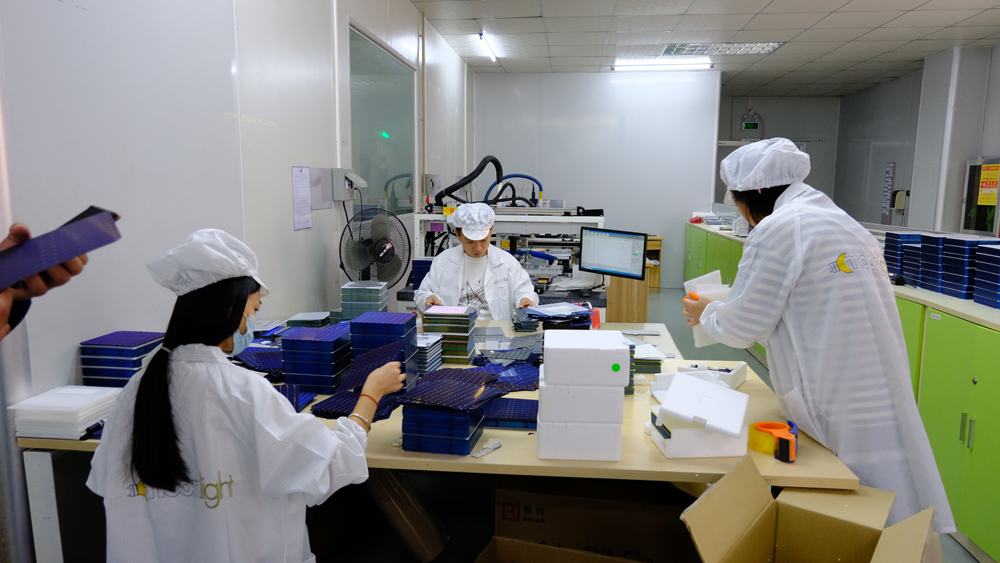
Shenzhen Moonlight Technology Co., Ltd. (branded as Cmoonlight) operates a production facility covering 20,000 square meters and employs approximately 245 staff, including an R&D team of 25 engineers. The annual output is 120,000 units. The company provides OEM, ODM, and customization services, with a typical production lead time of 15-45 days and a monthly capacity of 8,000 units.
5.2 Global Track Record
Experience in diverse climates and markets is crucial. The company's main markets include the Philippines, South America, Thailand, Malaysia, the Middle East, and Africa. Documented case studies provide evidence of performance:
- In the United Arab Emirates, a project involving 2280 units for road lighting achieved stable operation over a 10-year duration.
- In Australia, a project with 980 units for garden road lighting achieved stable operation over 10 years, with maintained brightness and long lighting duration.
- In the Philippines, a project involved the installation of 1280 units for road lighting, with stable operation reported over a 10-year period.
5.3 After-Sales and Warranty
After-sales support includes a 5-year warranty with replacement for damaged products, following 100% test standards for quality control. Contingency plans from advanced manufacturers may include real-time monitoring systems to track battery health and enable proactive maintenance.
6. Procurement and Logistics Considerations
Understanding commercial terms ensures a smooth purchasing process.
- Minimum Order Quantity (MOQ): Can vary. The minimum order quantity is 2 units for standard products, but project-based MOQs can be 50 units.
- Payment Terms: Common terms are 30% deposit and 70% balance via Telegraphic Transfer (T/T).
- Delivery Terms: Options typically include EXW (Ex-Works), FOB (Free On Board), or CIF (Cost, Insurance, and Freight), depending on the buyer's logistics capability.
- Pre-Shipment Inspection: Products are accepted through pre-shipment test procedures. Buyers should confirm the scope of these tests.
Summary
Selecting the right Smart Solar Street Light in 2026 requires a multi-faceted evaluation focusing on technical efficiency (solar, battery, LED), smart features, application-specific design, mandatory certifications, and the manufacturer's proven track record. Products that offer higher solar and light efficiency, robust thermal management, and comprehensive international certifications provide a foundation for sustainable and reliable public lighting infrastructure. By methodically assessing these factors against project requirements, buyers can make informed decisions that balance performance, longevity, and total cost of ownership.