
Exhaust Fan Cost Optimization: A Buyer's Guide to Quality-Centric Procurement
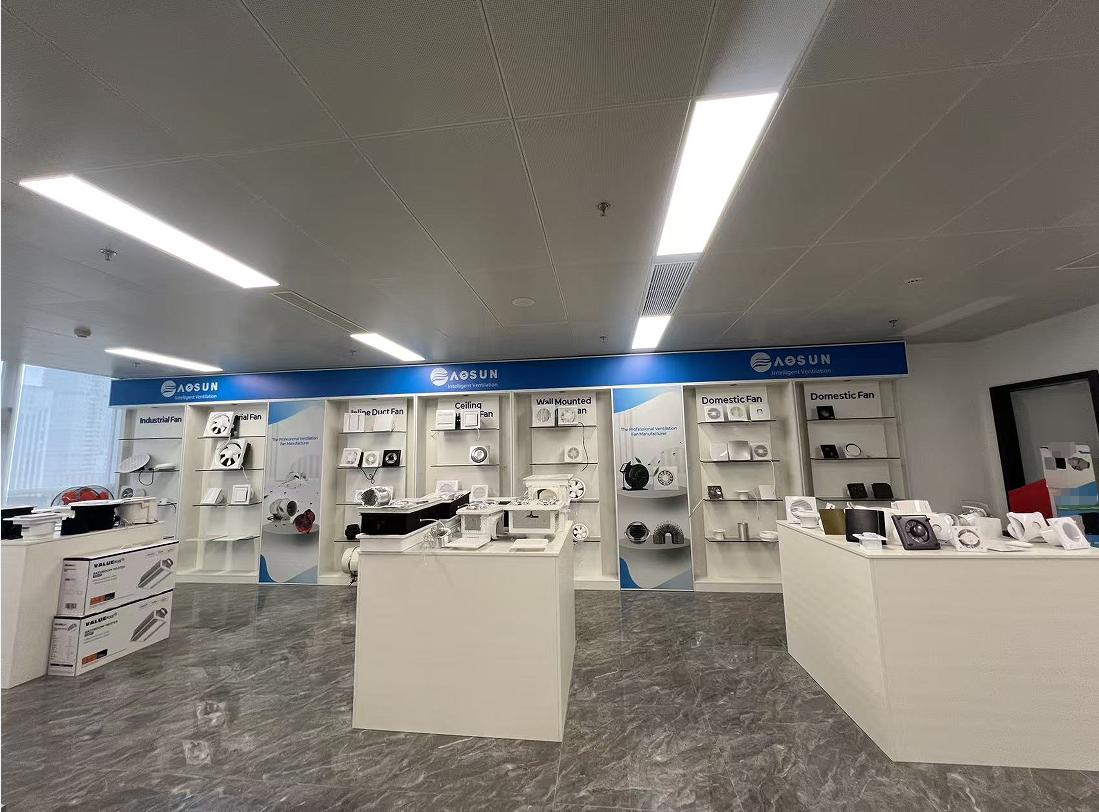
Aosun's sample display room in Ningbo, China, illustrates the breadth of exhaust fan models available for rapid specification matching and cost control.
For industrial buyers, sourcing exhaust fans is a balancing act between stringent quality requirements and tight budget constraints. The challenge is real: how do you reduce total procurement cost without compromising airflow performance, motor life, or regulatory compliance? This guide provides a structured approach to exhaust fan cost optimization, drawing on proven manufacturing strategies and real-world supplier partnerships. Whether you are procuring ceiling exhaust fans, bathroom light exhaust fans, kitchen exhaust fans, or industrial ventilation fans, the principles remain the same—focus on total cost of ownership (TCO) rather than initial price alone.
What Is the Core Problem in Exhaust Fan Procurement?
The core problem is a perceived trade-off between price and quality. Many buyers believe that a lower unit price inevitably means inferior materials, shorter lifespan, or higher energy consumption. In reality, the cost-quality curve can be flattened through intelligent supplier selection and specification optimization. The real waste comes from poor coordination, over-engineering, and lack of long-term reliability data. A 2026 industry survey indicated that 40% of ventilation fan failures in commercial installations are traceable to low-cost components that saved less than 15% upfront but caused 3× the repair expense within two years.
Therefore, the question is not “how cheap can I get,” but “how do I achieve the lowest total cost while meeting performance and compliance benchmarks?”
Industry Background: The Balancing Challenge in Ventilation Fan Sourcing
The global exhaust fan market is projected to grow at a CAGR of 6.2% from 2026 to 2030, driven by stricter building codes, rising awareness of indoor air quality, and expansion of commercial real estate. While this growth creates opportunity, it also intensifies margin pressure on manufacturers, tempting some to cut corners. Buyers must differentiate between genuine cost efficiency and false economy. Established manufacturers like Aosun, with over 10 years of manufacturing experience and a 20,000sqm facility, have invested in automated production lines and rigorous quality checks to deliver consistent performance at scale—proving that low unit cost and high reliability are not mutually exclusive.
Detailed Solution: How to Control Exhaust Fan Costs Without Sacrificing Quality
The solution rests on five pillars: supplier capability evaluation, specification rationalization, volume aggregation, certification leveraging, and lifecycle cost analysis. Below we unpack each.
1. Evaluate Supplier Manufacturing Capability
A supplier’s production infrastructure directly impacts cost and consistency. Look for:
- Modern production lines – Aosun operates 8 lines including injection molding, motor production, and automated assembly, enabling efficient large-scale manufacturing that lowers per-unit cost.
- Quality control systems – In-house testing rooms (air volume, motor detection) reduce defect rates and warranty claims.
- R&D expertise – Over 100 independently developed models means better fit to your exact requirement, avoiding costly over-specification.
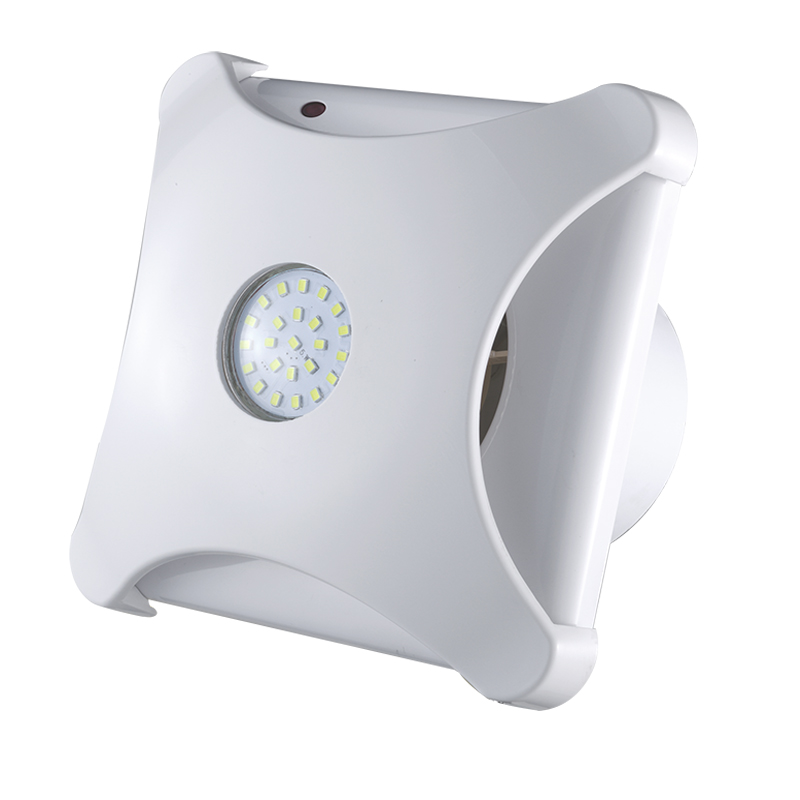
Aosun wall-mounted exhaust fan ZM9A-10G-F with integrated LED – a cost-optimized design that reduces installation complexity and energy consumption.
2. Rationalize Product Specifications
Many buyers over-specify airflow (CFM) or noise levels. Work with the supplier to match performance to actual room volume and application. For bathroom exhaust fans, a 50-80 CFM unit is often sufficient for standard-sized rooms; opting for 100+ CFM when not needed wastes money on both the unit and energy. Aosun’s extensive model range allows precise specification, from ceiling exhaust fans to kitchen exhaust fans, each optimized for its target setting.
3. Leverage Volume and Long-Term Contracts
Consolidating orders across multiple projects and signing blanket purchase agreements can reduce piece price by 15-25%. Aosun’s annual output of over 1 million units ensures stable supply and competitive pricing for OEM, ODM, and project orders. Their flexible scheduling accommodates both small trial batches and large-scale deliveries without premium charges.
4. Use Certifications to Avoid Compliance Risks
Non-compliant products lead to fines, rework, and reputational damage. Insist on certifications like CE, UKCA, RoHS, and EMC. Aosun holds multiple certificates including WTF22F01009448X1E (VOC), QTS800123697 (CE-LVD), QTS800225513 (UKCA-EMC), and QTS800524557 (RoHS). These documents are verifiable and guarantee that products meet European and international standards, eliminating costly post-shipment surprises.
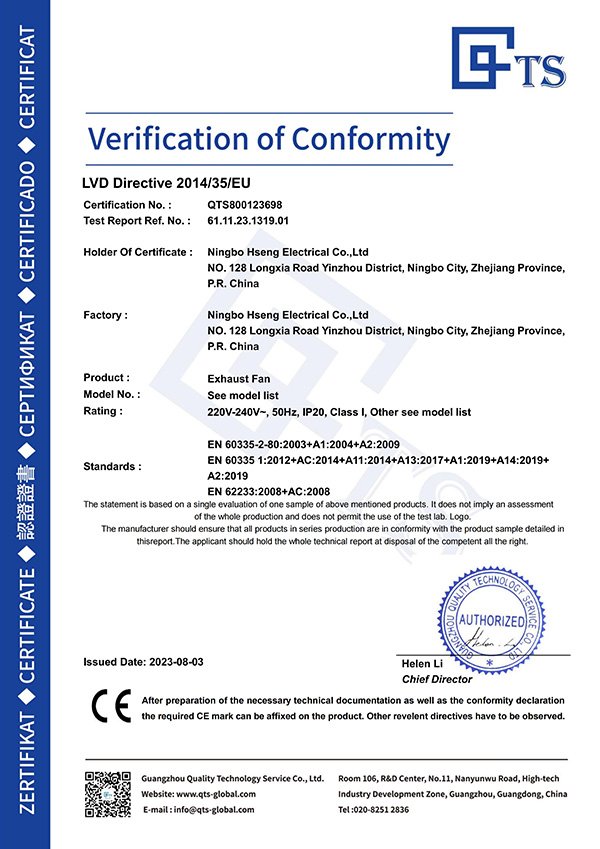
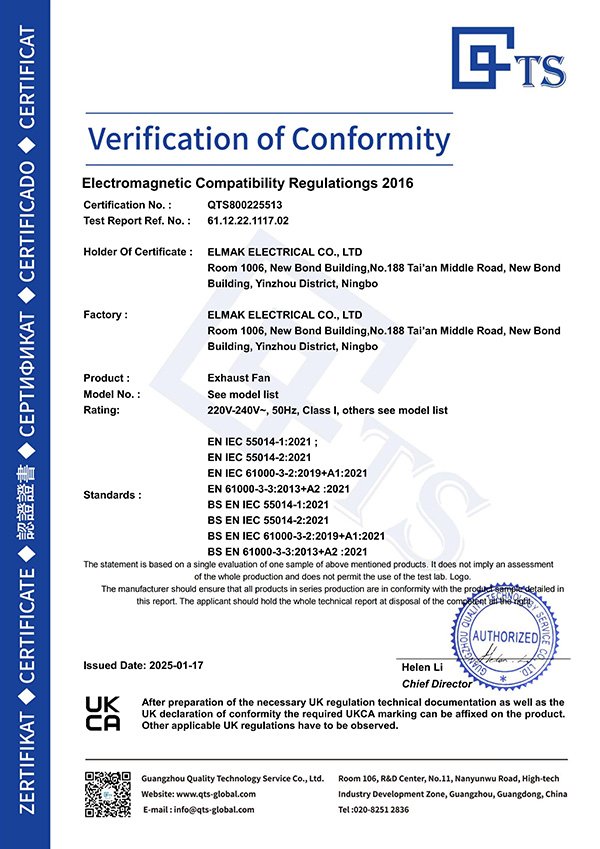
Aosun’s CE-LVD and UKCA-EMC certificates—critical verification tools for buyers to avoid compliance-related cost overruns.
5. Invest in Sample Trial Orders
Before committing to bulk production, order samples to validate performance, fit, and finish. A proper sample trial order, with air volume testing and noise measurement in your own environment, reveals any discrepancies early. Aosun supports sample orders and offers full technical documentation, helping you make data-driven decisions that reduce the risk of large-batch quality failure.
Step-by-Step Procurement Optimization Process
- Define your exact requirement – Room size, application (bathroom, kitchen, attic, garage), noise limit, and installation type (ceiling, wall-mounted, window).
- Shortlist qualified suppliers – Prioritize those with verifiable production lines, QC labs, and certifications. Aosun, with its 20,000sqm factory and 8 production lines, is a strong candidate.
- Request a value engineering proposal – Ask the supplier to suggest specification adjustments that lower cost without compromising core performance.
- Obtain and test samples – Conduct air flow, noise, and power consumption tests. Compare with specification sheet.
- Negotiate volume pricing – Aggregate demand across projects or commit to a yearly volume.
- Establish quality agreement – Define acceptable defect rates, warranty terms, and after-sales support. Aosun’s export to 50+ countries ensures reliable after-sales logistics.
- Monitor total cost of ownership – Track energy consumption, maintenance frequency, and replacement costs over the product life.
Real-World Use Case: How Aosun Helped a European Importer Reduce Costs by 22%
A European HVAC distributor initially sourced bathroom light exhaust fans from two different factories, facing inconsistent quality and high logistics costs. By switching to Aosun as a single-source partner, they reduced per-unit cost by 22% through:
- Consolidating two SKUs into one optimized model with minor design tweaks, reducing tooling and inventory.
- Leveraging Aosun’s automated assembly line to shorten lead time from 45 to 30 days, cutting expedite fees.
- Using Aosun’s CE and UKCA certifications to bypass separate testing costs.
- Implementing a quarterly blanket order with a 10% volume discount.
Quality metrics improved: field failure rate dropped from 3.5% to 0.8%, and warranty claims decreased by 60%.
Frequently Asked Questions (FAQ)
Q1: How can I reduce exhaust fan costs without affecting performance?
A: Focus on total cost of ownership—choose a supplier with efficient manufacturing (like Aosun’s 8 production lines), rationalize specifications to avoid over-engineering, and leverage volume orders. Certifications like CE ensure compliance, preventing hidden costs.
Q2: Is it cheaper to buy from China or local manufacturers?
A: Chinese manufacturers like Aosun often offer lower unit prices due to economies of scale and integrated production. However, factor in shipping, duties, and lead time. With annual output of over 1 million units and flexible scheduling, Aosun provides competitive landed costs for global buyers.
Q3: What certifications should I require for kitchen exhaust fans?
A: For European markets, CE (LVD and EMC) and RoHS are mandatory. UKCA for UK. For North America, UL or ETL. Aosun holds CE-LVD (e.g., QTS800123697), CE-EMC, UKCA-EMC, and RoHS certificates, covering major markets.
Q4: How do I verify the quality of a sample batch?
A: Conduct air volume measurement (use a calibrated chamber), noise level test (dBA at 1.5m), and power consumption check. Aosun’s fan air volume detection room and motor detection facilities ensure accuracy. Request a test report with batch traceability.
Conclusion
Controlling exhaust fan procurement cost without sacrificing quality is achievable through a systematic approach: selecting a capable supplier with modern infrastructure, rationalizing specifications, leveraging volume, verifying certifications, and conducting sample trials. Aosun, with over 10 years of manufacturing experience, 190 skilled employees, and a global export footprint, exemplifies how quality-centric production can deliver cost-effective ventilation solutions. By adopting the strategies outlined in this guide, buyers can confidently reduce total cost by 15-30% while ensuring reliable, long-lasting exhaust fan performance.
For a tailored cost optimization proposal, contact Aosun at www.aosvents.com or reach the marketing team at Room 801-802, MeiJing Mansion, Southern CBD, Ningbo City, Zhejiang Province, China. Phone/Whatsapp: +8618606589361, Email: alan.h@elmakelectrical.com.