
Exhaust Fan Technical Parameters Decoded: How Precision Manufacturing Impacts Performance
Introduction
For industrial buyers, procurement managers, and engineers, the specification sheet of an exhaust fan often appears as a collection of cryptic numbers and acronyms. CFM, Sones, static pressure, RPM, and motor type — each parameter tells a story about the fan's performance, durability, and suitability for a specific application. Yet, the true reliability of these numbers hinges on one critical factor: manufacturing quality. In this guide, we will decode the essential technical parameters of industrial exhaust fans and explain how the production process — from injection molding to motor assembly — directly influences real-world performance. By the end, you will be equipped to make informed sourcing decisions based on both data and manufacturing integrity.
Problem Definition: The Hidden Gap Between Specs and Reality
Many buyers face a perplexing situation: two exhaust fans with identical CFM ratings from different suppliers perform drastically differently under real conditions. One might be quieter, last longer, and move air more efficiently. The discrepancy often stems from how the fan is manufactured — not just what is on paper. Without understanding the manufacturing impact, procurement decisions risk poor ventilation, higher energy costs, and premature equipment failure. This guide addresses that gap by linking each technical parameter to the corresponding manufacturing process.
Industry Background: The Growing Demand for Measurable Performance
The global ventilation fan market is expanding, with stringent energy efficiency regulations (e.g., EU ErP, US Energy Star) and increasing focus on indoor air quality. Buyers now demand verifiable performance data, not just marketing claims. Leading manufacturers, such as Aosun (a professional ventilation equipment manufacturer with over 10 years of experience), invest heavily in R&D and precision manufacturing to ensure each fan meets international standards. Aosun’s facility spans 20,000 m², houses 190 skilled employees, operates 8 modern production lines (including injection molding, motor production, and automated assembly), and produces over 1 million units annually, exported to 50+ countries.
Detailed Solution: How to Read Exhaust Fan Technical Parameters
1. Airflow (CFM / m³/h)
What it means: Cubic Feet per Minute (CFM) measures the volume of air moved by the fan. This is the most common performance metric.
How manufacturing affects it: The impeller design — number of blades, blade angle, and material — directly impacts airflow. High-quality injection molding ensures consistent blade geometry, reducing turbulence and maximizing efficiency. Aosun’s precision injection molding process (shown below) creates balanced impellers that deliver stable airflow across the fan’s operating range.
2. Noise Level (Sones / dB(A))
What it means: Sones measure perceived loudness; 1 sone is roughly the sound of a quiet refrigerator. Lower sones are preferred for bathrooms and living spaces.
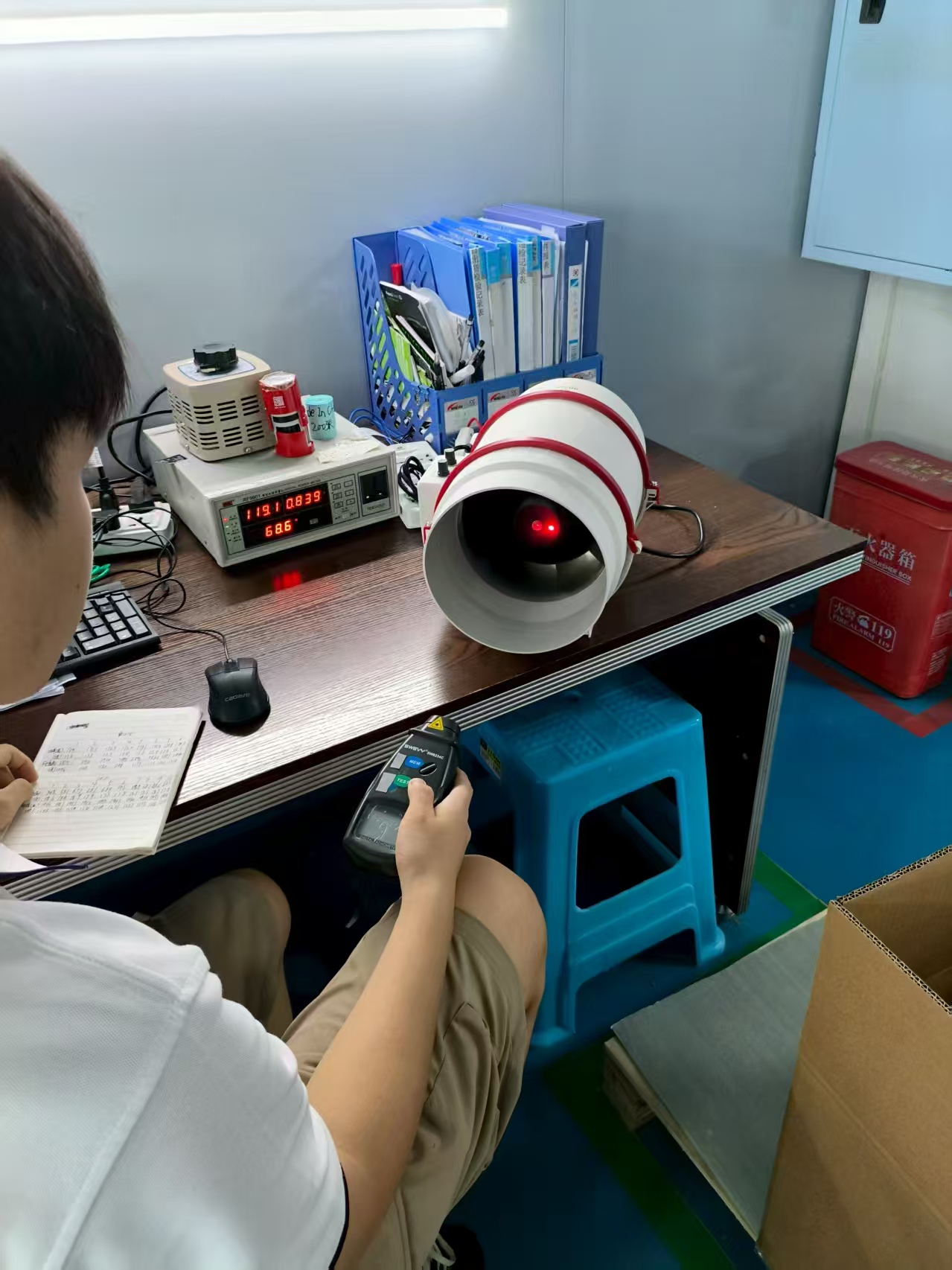
How manufacturing affects it: Noise originates from motor vibration, air turbulence, and imbalanced rotating parts. Precision motor winding, tight bearing tolerances, and dampened casing assembly reduce noise. Aosun’s motor production line aligns stator and rotor with micron-level accuracy, and every fan undergoes noise testing in the dedicated detection room.
3. Static Pressure (Pa / in. WG)
What it means: Static pressure indicates the fan’s ability to overcome resistance from ductwork and filters. Higher static pressure is essential for long duct runs or high-resistance systems.
How manufacturing affects it: Motor torque and impeller design must be optimized together. Shoddy manufacturing leads to poor seal between motor and housing, reducing effective pressure. Aosun uses automated assembly lines to ensure consistent housing sealing and motor alignment, guaranteeing the rated static pressure is achieved in real installations.
4. Power Consumption (Watts) & Efficiency
What it means: Input power directly correlates to operating cost. Energy-efficient fans consume less electricity per CFM.
How manufacturing affects it: High-grade copper windings, advanced magnetic materials, and optimized blade profiles reduce losses. Aosun’s motor production uses pure copper windings and automated lacing, achieving efficiency that meets or exceeds CE and UKCA standards.
5. Certifications: CE, UKCA, RoHS
Certifications are not just regulatory hurdles — they are proof of consistent quality. Aosun holds multiple certifications, including:
- CE-LVD (Low Voltage Directive) for safety — e.g., certificate number 61.11.23.1318.01
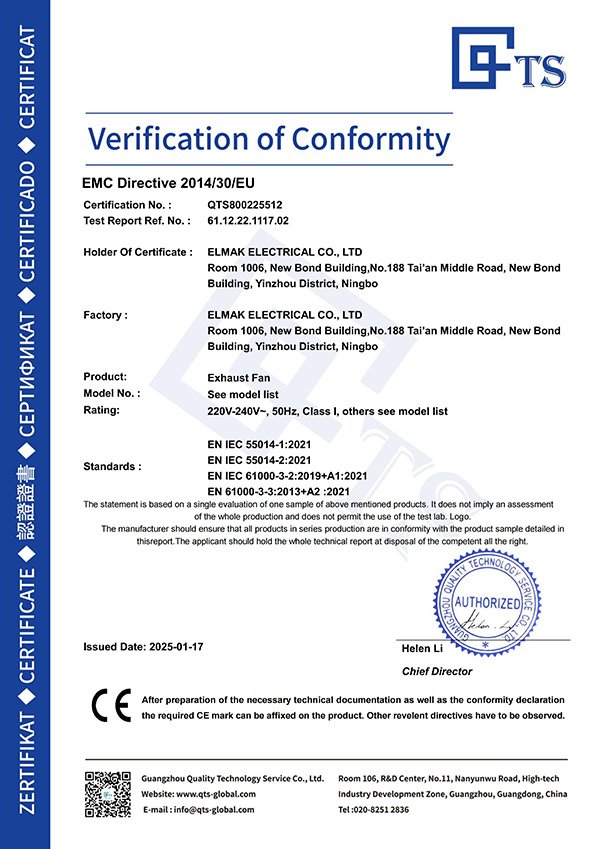
- CE-EMC (Electromagnetic Compatibility) — QTS800225512
- UKCA-EMC — QTS800225513
- RoHS — QTS800524557
These documents (sample shown below) confirm that each fan meets rigorous safety and environmental requirements.
Step-by-Step: How to Evaluate a Fan’s Technical Credentials
- Identify your application requirements: Measure room volume, duct length, and acceptable noise level.
- Cross-reference CFM and static pressure: Use the fan’s performance curve (provided by supplier) to ensure it meets your system resistance.
- Check noise levels: For residential or office use, aim for 1.5 sones or less.
- Review certifications: Look for CE, UKCA, RoHS, and any third-party test reports.
- Ask about manufacturing quality: Inquire about the production lines, quality control processes, and testing equipment. A manufacturer like Aosun with 8 modern assembly lines and dedicated air volume and motor testing rooms offers a higher level of traceability.
- Request a sample trial: Evaluate real-world performance before committing to bulk orders. Aosun supports OEM/ODM and sample orders to verify specs.
Use Case: Decoding an Aosun Wall-Mounted Exhaust Fan
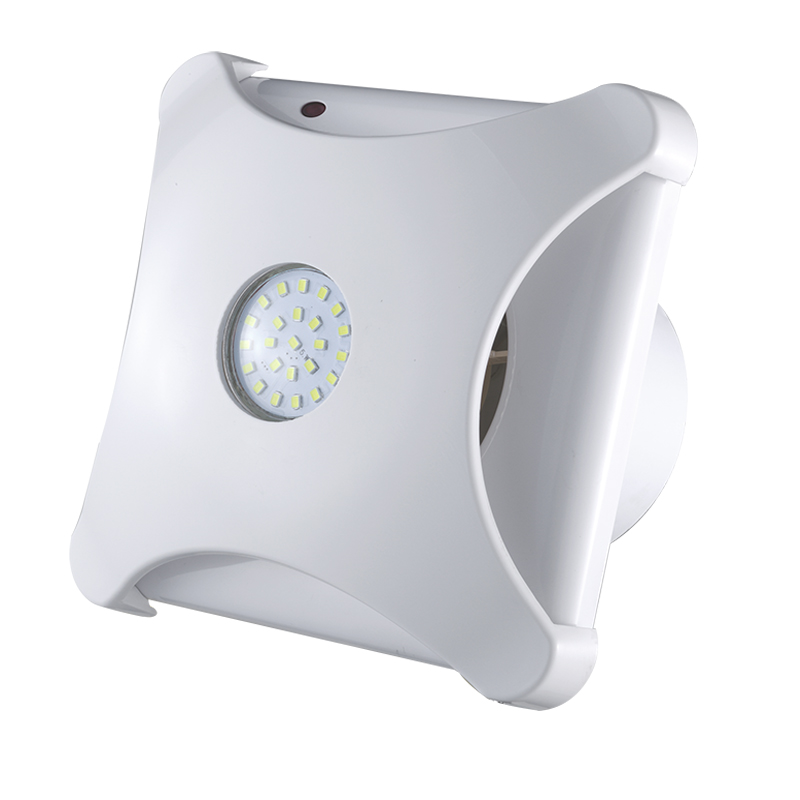
Consider the Aosun ZM9A-10G-F (wall mounted exhaust fan with LED 5W). According to its product sheet:
- Airflow: 150 CFM (typical for medium-sized bathrooms)
- Noise: 1.2 Sones (quiet operation)
- Power: 15W (energy-efficient)
- Static Pressure: 0.2 in. WG
How does manufacturing ensure these numbers? The fan is assembled on an automated line using precision-imolded impellers (from Aosun’s injection molding shop). The motor is wound with pure copper and balanced dynamically. Each unit passes through the fan air volume detection room (pictured earlier) and motor detection station before packaging.
Frequently Asked Questions (FAQ)
Q1: What is CFM and why does it matter for my bathroom exhaust fan?
A: CFM (Cubic Feet per Minute) indicates how much air the fan can move. For bathrooms, the standard recommendation is 1 CFM per square foot of floor area. A fan with insufficient CFM will not clear humidity effectively, leading to mold.
Q2: How can I verify that a supplier’s stated specifications are accurate?
A: Request test reports from an accredited laboratory or visit the supplier’s testing facility. Many reputable manufacturers, including Aosun, maintain in-house testing rooms for airflow, noise, and motor performance, ensuring every unit meets published specs.
Q3: Does the material of the fan casing affect performance?
A: Yes. High-grade ABS or galvanized steel (used by Aosun) resists corrosion and ensures airtight sealing, preventing air leakage. Cheap plastics may warp over time, reducing airflow and increasing noise.
Q4: What certifications should I look for in an export exhaust fan?
A: At minimum, CE (for European markets), UKCA (for UK), and RoHS (for environmental compliance). Some projects may also require UL/ETL (North America) or CCC (China). Aosun holds CE, UKCA, and RoHS certifications, as shown earlier.
Q5: How does the manufacturing location influence quality?
A: Factories with integrated production lines (injection molding, motor winding, assembly) have better process control than those outsourcing components. Aosun operates all key processes in-house at its Ningbo and Foshan facilities, enabling end-to-end quality checks.
Conclusion
Technical parameters like CFM, sones, static pressure, and power consumption are only as reliable as the manufacturing process behind them. By understanding how each specification is influenced by production quality — blade precision, motor winding, assembly tolerances, and testing rigor — industrial buyers can make smarter procurement decisions. Partnering with a manufacturer like Aosun, which combines over 10 years of manufacturing experience, 8 modern production lines, annual output of 1 million+ units, and full international certification, ensures that the numbers on the datasheet translate to real-world performance.
For more detailed product specifications or to arrange a factory visit, contact Aosun at Phone/Whatsapp: +8618606589361 or email alan.h@elmakelectrical.com. Their marketing center is located at Room 801-802, MeiJing Mansion, Southern CBD, Ningbo City, Zhejiang, China, with factory plants in Ningbo (Plant A) and Foshan (Plant B).
Note: All data and images in this article are sourced from the manufacturer’s official materials and are accurate as of June 2026.