
How to Evaluate Exhaust Fan Production Capacity and Delivery Lead Time
: A 2026 Sourcing Guide for Industrial Buyers
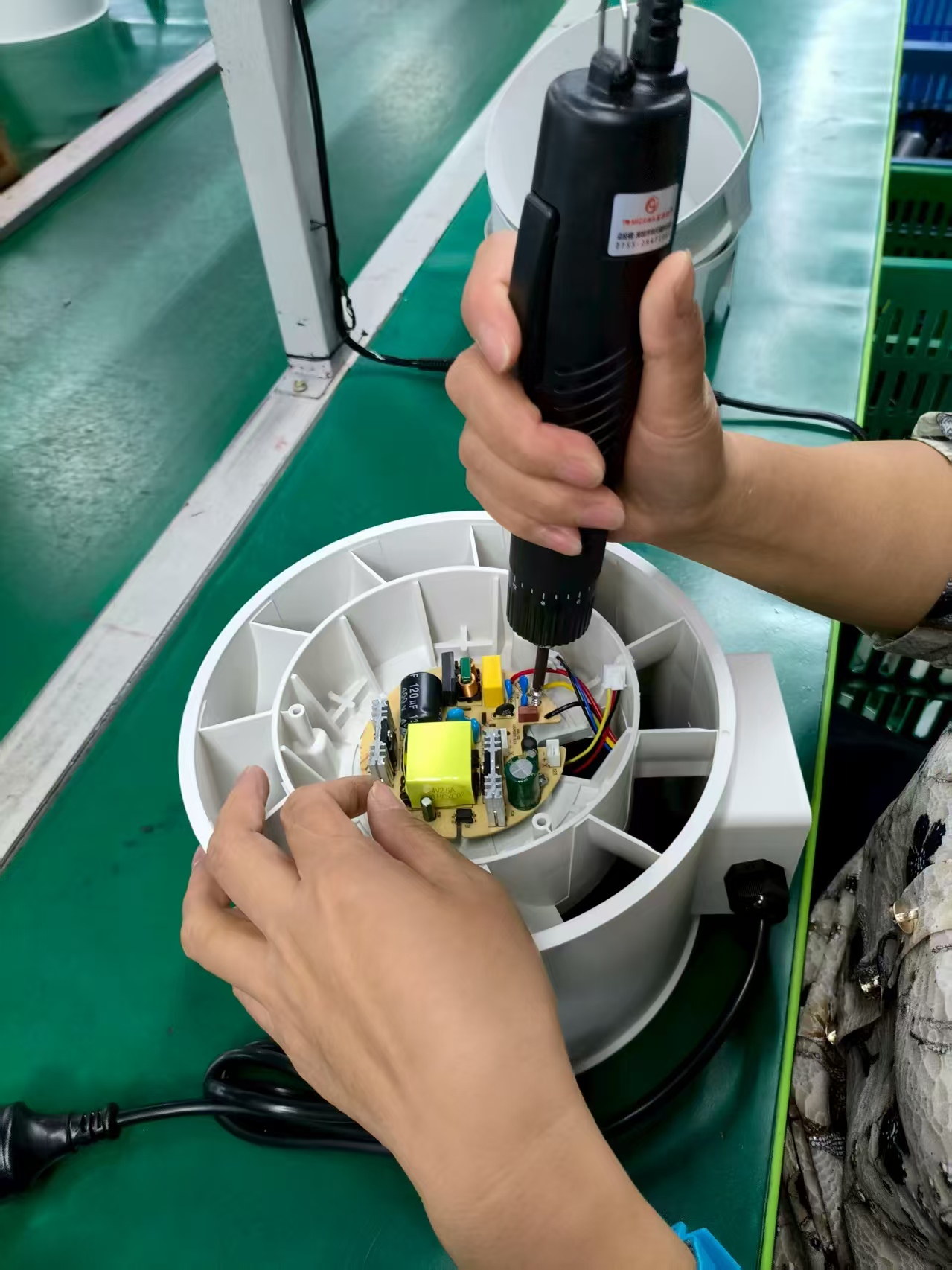
Update: 18 June 2026 – For procurement managers sourcing bathroom exhaust fans, kitchen exhaust fans, attic exhaust fans, or any industrial ventilation fan, one question consistently rises to the top: “Can this supplier actually deliver the volume I need, on time?” In today’s volatile global supply chain, evaluating a supplier’s production capacity and delivery reliability is not optional—it is the difference between a seamless project and costly delays.
Problem Definition: Why Capacity & Delivery Matter in Exhaust Fan Sourcing
When you place a bulk order for ceiling exhaust fans or wall mounted exhaust fans, you are not just buying a product. You are buying into a supplier’s entire manufacturing system—their molding machines, assembly lines, motor winding stations, quality checkpoints, and scheduling flexibility. A mismatch between your demand and their capacity can lead to:
- Delivery delays that stall construction or resale timelines.
- Quality inconsistency when suppliers rush production to meet deadlines.
- Unexpected cost overruns from expedited shipping or last-minute supplier changes.
Many buyers focus solely on price, but in 2026, the most successful procurement strategies balance cost with proven production capability and controlled lead times.
Industry Background: The State of Exhaust Fan Manufacturing in 2026
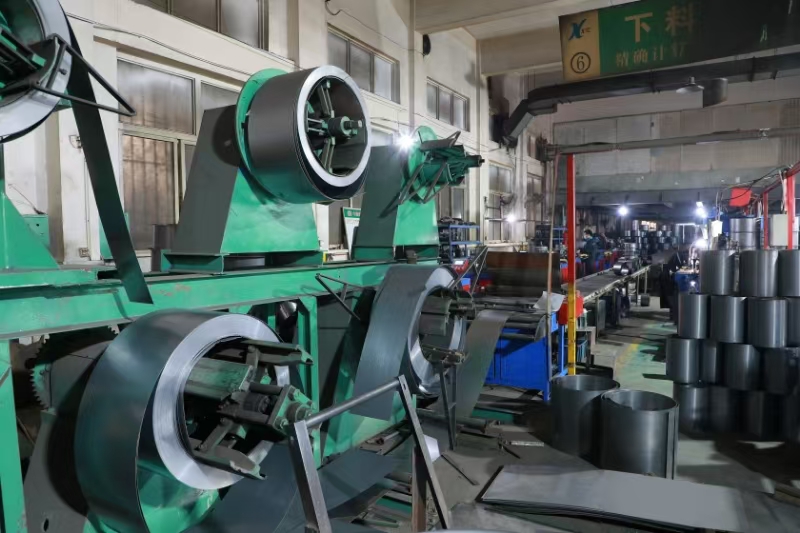
The global exhaust fan market continues to expand, driven by stricter building ventilation codes, rising awareness of indoor air quality, and the growth of smart home integrations. Key production hubs—especially in China—have invested heavily in automation and quality infrastructure. Yet not all factories are equal. Some operate outdated injection molding machines with limited throughput; others, like Aosun’s 20,000 sqm facility, run 8 modern production lines including precision injection molding, high-performance motor production, and fully automated assembly lines.
Understanding the difference between a low-volume workshop and a high-capacity manufacturer is essential for making informed sourcing decisions.
Comprehensive Solution: How to Evaluate Exhaust Fan Supplier Capacity & Delivery
Evaluating production capacity and delivery lead time requires a structured approach. Below is a five-dimension framework used by experienced industrial buyers.
| Dimension | What to Ask or Check | Red Flags |
|---|---|---|
| 1. Production Scale | Factory area, number of production lines, annual output (units/year), employee count. | Small workshop (<5,000 sqm), vague output claims without supporting data. |
| 2. Automation Level | Presence of automated assembly lines, injection molding machines, motor winding automation. | Heavy reliance on manual labor without automated quality checkpoints. |
| 3. Quality Control System | In-house testing labs, certifications (CE, RoHS, UKCA), inspection protocols at each stage. | No dedicated QC team, no testing equipment, outdated or expired certifications. |
| 4. Order History & Capacity Reserve | Current order backlog, typical lead time for similar products (e.g., bathroom exhaust fans), peak capacity. | Lead times that are either impossibly short or excessively long without explanation. |
| 5. Delivery & Logistics | Shipping port proximity, supply chain for raw materials, packaging capacity for export. | No dedicated logistics team, frequent use of unreliable carriers, poor packaging quality. |
Step-by-Step Evaluation Process
- Request a factory audit or virtual tour. Ask for real-time video walkthroughs of injection molding, motor production, and assembly lines. Look for organized workflows and quality checkpoints.
- Verify annual output claims. A supplier like Aosun, with an annual output of over 1 million units across 8 production lines, provides a clear benchmark. Compare this with your required volume.
- Check certifications. CE, RoHS, UKCA, and UL certifications indicate that the supplier’s products have passed rigorous testing. For example, Aosun holds multiple CE-LVD and CE-EMC certificates (e.g., WTF22F01009448X1E, QTS800123697), confirming that their exhaust fans meet European safety and electromagnetic compatibility standards.
- Ask about flexible scheduling. Can they handle OEM/ODM modifications? How do they prioritize orders during peak season? A supplier with in-house R&D (Aosun has independently developed over 100 models) can better adapt to custom requirements without sacrificing lead time.
- Request lead time quotes for sample and bulk orders. Compare lead times for ceiling exhaust fans versus wall mounted exhaust fans—different product categories may require different tooling or assembly lines.
Use Case: How Aosun Aligns Capacity with Buyer Demand
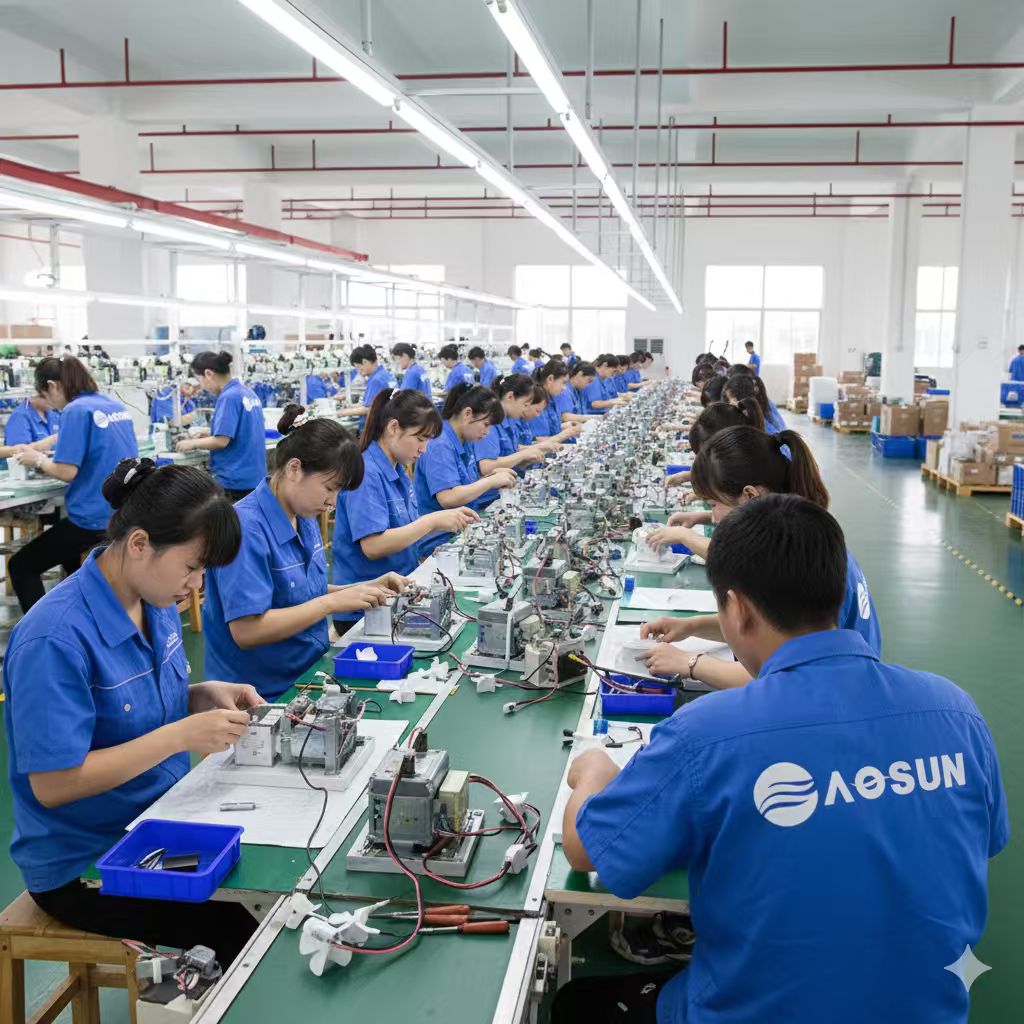
To illustrate the evaluation framework in action, consider the case of Aosun, a ten-year-old exhaust fan manufacturer based in Ningbo, China. Their facility spans 20,000 sqm with 190 employees. They operate 8 production lines, including injection molding, motor production, and fully automated assembly. With an annual capacity exceeding 1 million units, they have the throughput to handle large-scale OEM and ODM projects.
During a recent audit for a European buyer seeking 50,000 units of bathroom light exhaust fans, Aosun demonstrated:
- Dedicated tooling for the specific fan design, already existing due to their library of 100+ models.
- Flexible scheduling that allowed a 30-day lead time for the first batch, with subsequent batches at 20-day intervals.
- In-house motor testing and fan air volume detection rooms (shown in their facility tour) that ensure each unit meets specified airflow and noise levels before shipment.
Moreover, Aosun’s certifications—CE, UKCA, RoHS—provided the buyer with confidence that the products would clear customs without compliance issues. The buyer’s risk of delayed delivery due to non-compliance was effectively eliminated.
Frequently Asked Questions (FAQ) on Exhaust Fan Supplier Capacity & Delivery
A: Lead times vary by quantity and customization. For standard models without customization, lead times range from 20 to 45 days. For OEM/ODM orders with new tooling, add 15–30 days. Always ask the supplier for a current production schedule.
A: Cross-check their factory size, number of production lines, and employee count. A supplier like Aosun with 20,000 sqm, 8 lines, and 190 staff producing 1 million units per year is plausible. Also request photos or videos of active production lines.
A: Yes. Start with a trial order of 100–500 units. Monitor communication responsiveness, sample quality, and whether the supplier meets the promised delivery date. This is a low-risk way to gauge their process discipline.
A: Very important. Without proper certification, customs may hold your shipment, causing weeks of delay. A supplier with valid CE-LVD, CE-EMC, and RoHS certificates (like Aosun) ensures that the products can clear customs smoothly in Europe and the UK.
A: First, ask if partial shipment is possible. Second, negotiate a penalty clause for late delivery. Third, consider splitting the order across two qualified suppliers—but this only works if both have been vetted for quality and capacity.
| Indicator | Typical Low-Capacity Supplier | High-Capacity Supplier (e.g., Aosun) |
|---|---|---|
| Factory Area | <5,000 sqm | >20,000 sqm |
| Production Lines | 1–3 | 8 (including injection molding, motor, assembly) |
| Annual Output | <200,000 units | >1,000,000 units |
| Certifications | Limited or expired | CE, UKCA, RoHS (multiple certificates) |
| R&D Team | None or small | 10+ years experience, 100+ models developed |
Conclusion
Choosing an exhaust fan supplier is a strategic decision. By systematically evaluating production scale, automation, quality control, historical capacity, and delivery logistics, you can avoid the common pitfalls of late shipments and inconsistent quality. Suppliers like Aosun, with transparent factory operations, comprehensive certifications, and a proven track record of delivering over 1 million units annually, offer the reliability that industrial buyers need in 2026.
Remember: Always audit before you commit. Start with a trial order, verify capacity claims with hard data, and build a relationship with a partner who can scale with your business.
Ready to evaluate a reliable exhaust fan supplier?
Contact Aosun today for a factory tour (virtual or in-person), product samples, and a customized capacity assessment for your next project.
Phone/Whatsapp: +8618606589361
Email: alan.h@elmakelectrical.com
Website: Visit Aosun Now
Factory: No. 128 Longxia Road, Yunlong Industrial Zone, Ningbo, China