
Building Glass Technical Parameters and Quality: A Procurement Guide
Building Glass Technical Parameters Decoded: The Impact of Manufacturing Processes on Quality
For procurement professionals in the architectural and construction industries, understanding how technical specifications translate into real-world performance is critical. This guide demystifies the key parameters of building glass and explains how each manufacturing process—from cutting to tempering—directly influences the final product’s quality, safety, and longevity.
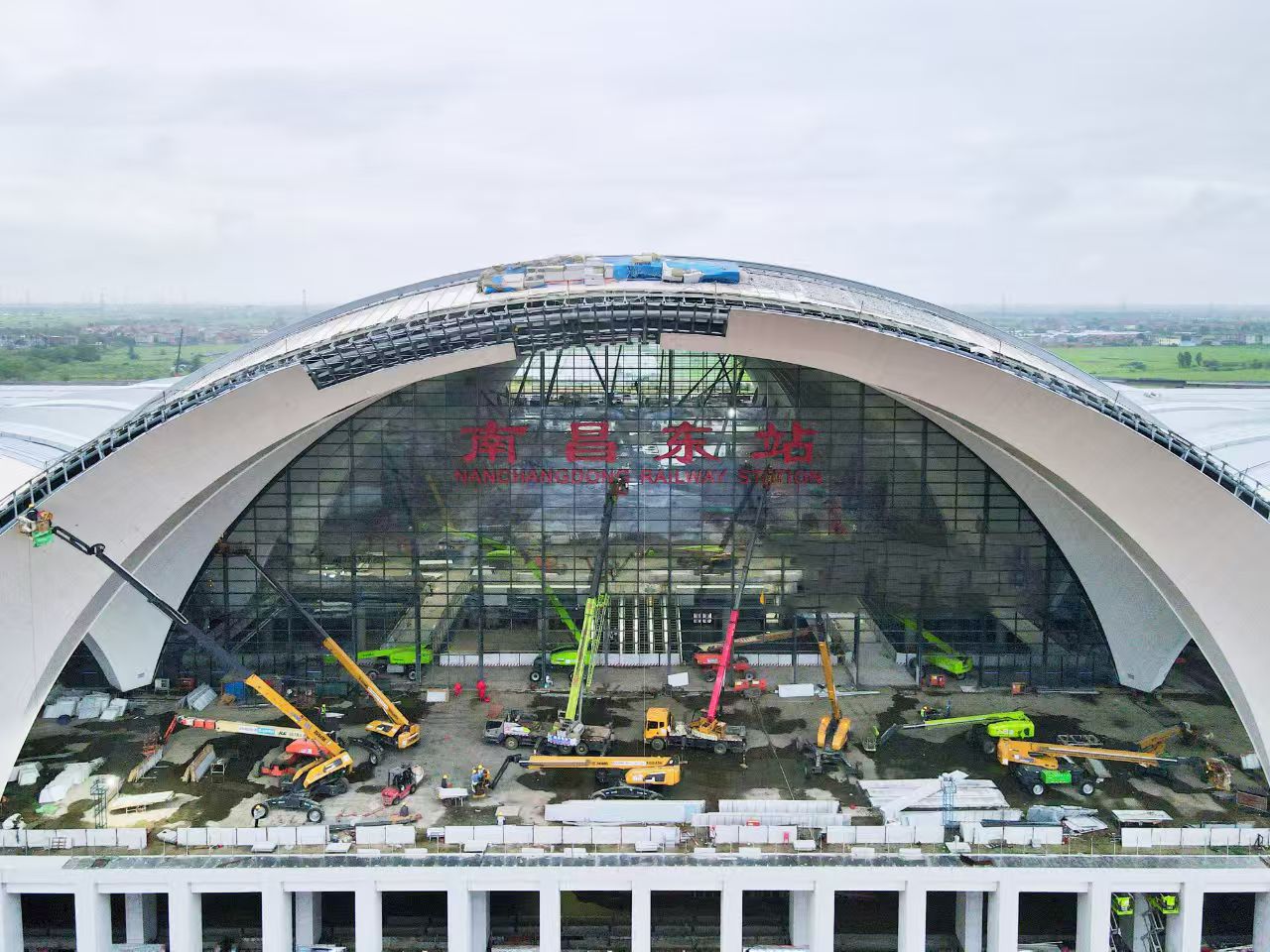
Complex architectural projects demand precise glass specifications and reliable manufacturing processes.
The Challenge: What Do Technical Parameters Really Mean?
When purchasing tempered glass, laminated glass, or insulated glass for high-rise curtain walls, airports, or luxury hotels, buyers are often overwhelmed by datasheets full of numbers: thickness tolerance, light transmittance, sound insulation rating, U-value, edge work, and more. The core difficulty is linking these parameters to real-world outcomes such as safety against breakage, energy efficiency, noise reduction, and long-term durability.
The question every procurement manager must answer is: “How can I be sure that the supplier’s stated parameters will hold up under site conditions, and what manufacturing capabilities guarantee those numbers?”
Industry Context: Why Process Matters as Much as Parameters
The global architectural glass market is shifting toward larger, more complex, and higher-performance facades. Single-curved and flat glass are being replaced by multi-curved, double-curved, and irregular shaped glass to meet architects’ free-form designs. At the same time, energy codes (e.g., EN 1279 for insulated glass) and safety standards (EN 12150 for tempered glass) are becoming stricter.
A supplier’s ability to consistently hit tight tolerances (e.g., ±0.5 mm for curved tempered glass) depends on the sophistication of their production lines—automated cutting, CNC edge grinding, multi-axis bending furnaces, and controlled heat-soaking ovens. Without direct control over these processes, the parameter on paper may not reflect the delivered product.
Decoding Key Technical Parameters: A Process-to-Quality Framework
1. Thickness and Tolerance
Parameter: Thickness range (e.g., 3mm – 30mm for tempered glass) and tolerance (e.g., ±0.5mm).
Process impact: Precision cutting and edging equipment (e.g., automatic cutting lines with laser measurement) ensure consistent dimensions. A supplier like DYGLASS (Shenzhen Dayang Special Glass Co., Ltd.) uses advanced cutting and grinding lines to hold ±0.5mm tolerance even for complex shapes. Poor edge grinding leads to micro-cracks that weaken the glass.
Buyer insight: For structural glazing, always request a tolerance certificate. Check if the supplier employs polished edges (standard for structural applications) versus rough ground edges.
2. Light Transmittance and Low Iron Content
Parameter: Light transmittance (e.g., ≥91% for clear tempered glass, 85%–92% for laminated).
Process impact: Raw material selection is key. Low iron glass (≤0.01% iron oxide) achieves higher clarity. The melting and forming process must avoid contamination. DYGLASS offers ultra-clear glass with 91.6%+ transmittance, ideal for storefronts and display windows.
Buyer insight: For energy-saving applications, look for Low-E coated options that combine high visible transmittance with low solar heat gain coefficient (SHGC).
3. Sound Insulation
Parameter: Sound insulation rating (e.g., 35dB–45dB for laminated glass).
Process impact: The interlayer type (PVB, SGP, EVA) and thickness (0.38mm to 2.28mm) directly affect acoustic damping. The lamination autoclave pressure and temperature cycle must be precisely controlled to eliminate bubbles and ensure complete bonding. DYGLASS uses state-of-the-art autoclaves to achieve consistent 35–45 dB performance.
Buyer insight: For airports or hotels near highways, specify laminated glass with an acoustic PVB interlayer of at least 1.52mm.
4. Thermal Insulation and U-Value
Parameter: U-value (W/m²K) for insulated glass. For example, a 6mm+12A+6mm unit with Low-E and argon fill can achieve U-value ~1.6 W/m²K.
Process impact: The spacer bar type (aluminum vs. warm edge), gas fill (argon/krypton), and seal integrity are decisive. A continuous insulated line with automatic gas filling and edge sealing ensures low gas leakage rates. DYGLASS produces insulated units with optional warm edge spacers and argon/krypton fills, meeting EN 1279 standards.
Parameter-Process-Quality Relationship Table
| Technical Parameter | Manufacturing Process | Quality Impact | Typical Specification (DYGLASS) |
|---|---|---|---|
| Thickness tolerance ±0.5mm | CNC cutting + precision edge grinding | Ensures uniform strength, prevents installation gaps | DY-GH01: ±0.5mm for flat & curved |
| Light transmittance ≥91% | Low-iron float glass selection + clean melting | Crystal clear appearance, higher daylighting | Ultra-clear option available |
| Sound insulation 35–45 dB | PVB lamination in autoclave | Effective noise reduction, safety (holds fragments) | DY-JJ01: up to 2.28mm interlayer |
| Heat soak test (HST) | Special furnace at 290°C | Eliminates nickel sulfide inclusions → prevents spontaneous breakage | 100% HST on request |
| Wind pressure resistance >96 kPa | Multi-curved tempering line (3/5-axis) | Suitable for high-rises >150m | Double curved line supports complex shapes |
Real-World Case Study: UAE Commercial Hotel Project
In a high-end hotel project in Dubai, the client required 4,000 square meters of laminated insulating glass combining sound insulation, heat control, and aesthetic appearance. DYGLASS supplied custom units with tempered low-iron glass, a warm edge spacer, and argon gas fill. The project, with a design life of 30 years, has maintained stable thermal performance and zero seal failures after 5 years of operation, thanks to rigorous heat soak testing and precise edge sealing.
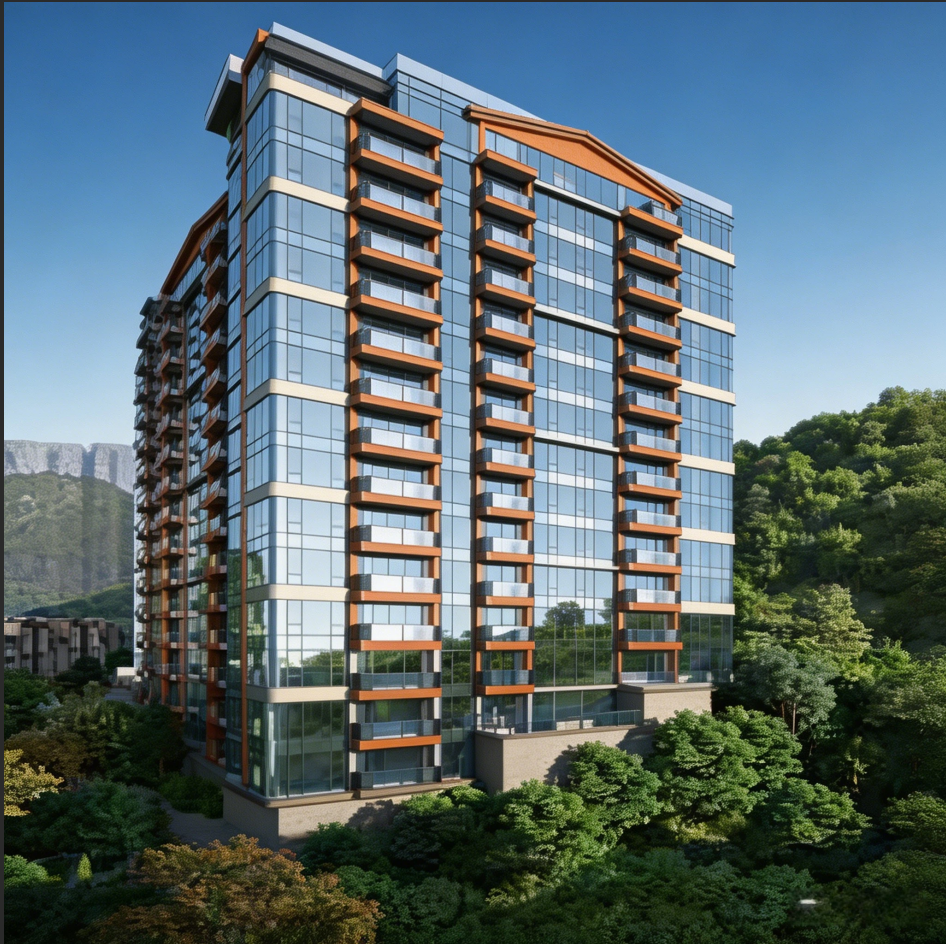
Example of a complex glass facade requiring tight tolerances and robust manufacturing.
Frequently Asked Questions by Buyers
Q1: How do I verify that a supplier’s tempered glass meets the stated strength?
A: Request CE certification per EN 12150-1. Look for a heat soak furnace in the factory – DYGLASS operates a dedicated heat soak line (as seen in their facility) to minimize spontaneous breakage risk.
Q2: What is the significance of “polished edge” vs. “ground edge”?
A: Polished edges (smooth, no micro-cracks) are required for structural applications like balustrades and curtain walls. Ground edges are rougher and acceptable only for non-structural interior uses. Always specify polished edge in your PO.
Q3: Can a supplier produce multi-curved glass with tight curvature tolerance?
A: Only factories with 3/5-axis bending furnaces can achieve ±0.5mm tolerance on compound curves. DYGLASS’s double-curved tempering line is capable of spherical, pyramidal, and S-shape geometries.
Q4: How long does it take for custom orders, and what is the minimum order quantity?
A: For standard specifications, lead time is 7–9 working days; MOQ is 10 square meters. Complex curved glass may require 12–15 days. DYGLASS offers OEM/ODM customization with 100% quality testing before shipment.
Conclusion: Procurement Excellence Requires Technical Transparency
The gap between a supplier’s claimed parameters and actual on-site performance is bridged by understanding their manufacturing process capabilities. By focusing on process evidence—such as automated cutting lines, autoclave cycles, heat soak furnaces, and CE marks—you can confidently select a partner who will deliver glass that not only meets the numbers on paper but performs reliably for decades.
DYGLASS (Shenzhen Dayang Special Glass Co., Ltd.) exemplifies this approach: a 30,000 m² factory with 130 employees, an annual output of 600,000 m², and dedicated lines for cutting, drilling, edge grinding, tempering (flat & curved), lamination, insulating, and heat soaking. Their CE certification (EN 12150, EN 1279, EN 1449) and SGS reports provide third-party verification.
Download DYGLASS Product Brochure (PDF)Contact: Liqi Liu | Email: info@dayangglass.com | Tel: +86-136 9211 0212
Factory: 1706, Bldg. H, Phase 1, Liuhecheng Business Plaza, Pingshan, Shenzhen, China