
How to Evaluate Formwork Supplier Capacity and Control Delivery Lead Times
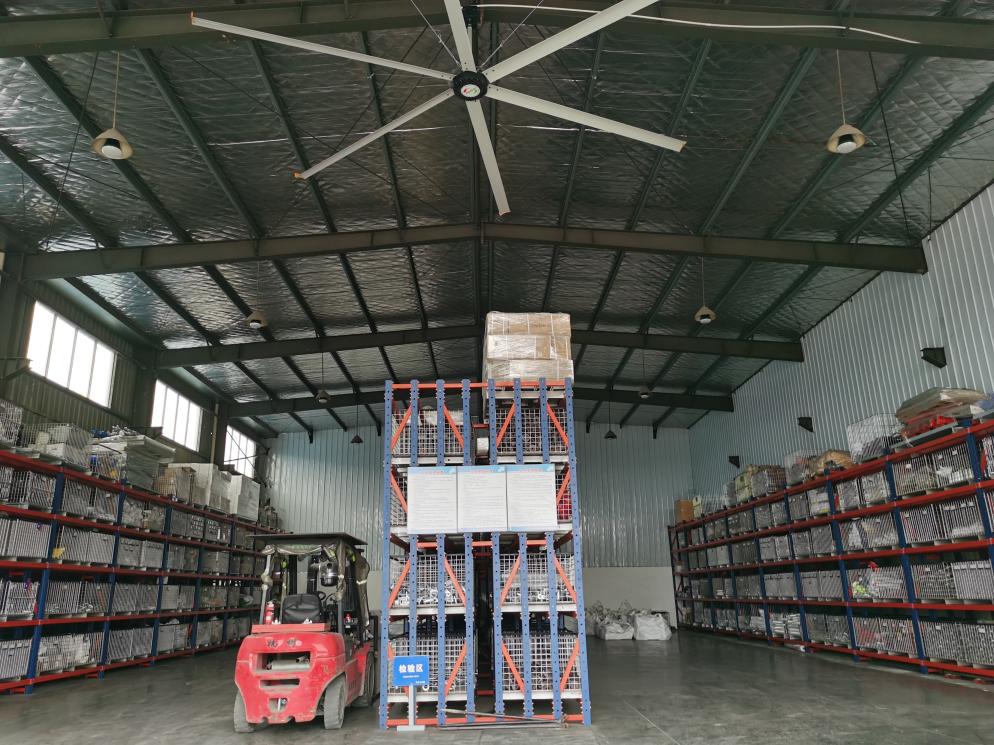
Well-organized storage warehouse at Yancheng Lianggong Formwork, supporting reliable delivery schedules.
How to Evaluate Formwork Supplier Production Capacity and Control Delivery Lead Times
For construction procurement professionals, sourcing formwork from international suppliers comes with a recurring challenge: How can I be sure the supplier has enough production capacity to meet my project demands? Will the delivery lead time be controllable? These questions are especially critical for large-scale projects involving complex systems such as Hydraulic Auto-Climbing Formwork, Steel Frame Formwork, or specialized Trench Boxes. In this guide, we provide a structured framework to evaluate a formwork manufacturer's capacity and delivery reliability, using real-world data and industry best practices.
What Is Formwork Supplier Capacity Evaluation?
Formwork supplier capacity evaluation is the process of assessing a manufacturer's ability to produce the required quantity and quality of formwork systems within a specified timeframe. It goes beyond simply checking if the supplier "can make it." It involves examining factory size, equipment, workforce, raw material inventory, production lead times, and quality control systems.
Key metrics include: monthly output tonnage, number of production lines, degree of automation, skilled labor availability, and certification compliance. For example, a supplier like FWK Lianggong Formwork (Yancheng Lianggong Formwork Co., Ltd.) operates a 12,870㎡ factory with 230 employees and an annual output of 12,000 tons. Its monthly capacity is approximately 1,000 tons, and the standard lead time is 30–35 days.
Why Capacity and Lead-Time Control Matter
The global construction formwork market is projected to grow steadily, driven by urbanization and infrastructure development. However, a shortage of reliable suppliers can lead to project delays, cost overruns, and safety risks. According to industry surveys, nearly 40% of construction delays on concrete structures are attributed to late formwork delivery or insufficient formwork sets.
Buyers—including EPC contractors, construction companies, and municipal engineering firms—need suppliers who can demonstrate proven capacity and transparent lead-time management. The ability to commit to delivery schedules often distinguishes top-tier suppliers from average ones.
Detailed Solution: A Step-by-Step Evaluation Framework
Step 1: Verify Factory Production Capabilities
Start by requesting key production metrics: factory area, number of employees, annual output, and specialized equipment. For example, FWK Lianggong Formwork employs 45 R&D engineers and operates advanced machinery including a Gantry Machining Center PM2060HC, sheet laser cutting machines, CNC double-head precision saws, and industrial welding robots. They also have an automatic comb-teeth dispensing machine and aluminum formwork profile punching and sawing integrated machine, indicating a high degree of automation.
Table: Key Facility Indicators
| Indicator | FWK Lianggong Data |
|---|---|
| Factory Size | 12,870 m² |
| Employees | 230 |
| Annual Output | 12,000 tons |
| R&D Team | 45 |
| Monthly Capacity | ~1,000 tons |
| Standard Lead Time | 30–35 days |
Step 2: Examine Quality Management Certifications
International certifications are strong indicators of a supplier's process control. FWK Lianggong holds ISO 9001:2015 (Quality Management System), ISO 14001:2015 (Environmental Management), ISO 45001:2018 (Occupational Health & Safety), ISO 3834-2 (Welding Quality), and EN 1090-1 (Factory Production Control for structural steel). The EN 1090 certificate (No. 1381-CPR-889) issued by SGS Italia S.p.A. is valid until 2026-12-18, covering products like steel frame formwork, trench boxes, and hydraulic climbing formwork systems.
These certifications ensure that production follows standardized procedures, reducing the risk of defects and delays.
Step 3: Review Risk Control and Quality Assurance Measures
A supplier with a robust risk control system can maintain consistent quality and schedule. For example, FWK Lianggong implements a "Three Inspections and One Review" protocol for steel formwork, which includes production inspection, quality inspection, factory inspection, and general review. Specific measures include:
- Applying anti-rust coating before shipment
- Conducting flatness inspection upon site arrival
- Using specialized lifting equipment for all handling operations
For H20 Timber Beam Formwork, additional controls include moisture content inspection upon warehouse entry, on-site fire protection zoning, turnover cycle ledger maintenance, and load-bearing capacity acceptance procedures.
Step 4: Analyze Case Studies and Project References
Real project data provides the most reliable evidence of capacity. Consider the following examples from FWK Lianggong:
- Kalimantan Dam Project, Indonesia: 100 sets of H20 Timber Beam Formwork System were supplied for concrete pouring of underground powerhouses, water intake tunnels, and auxiliary dam structures. The project spanned more than ten years, demonstrating long-term supply capability.
- Municipal Drainage Pipeline Project, Malaysia: 10 sets of Trench Box were installed for pipe laying, with the project completed over more than 10 years. The panels are made of Q355B steel with high strength, and the system allowed quick assembly/disassembly, shortening construction period by 20%.
- Hospital Project, Trinidad and Tobago: 70 units of Hydraulic Auto-Climbing Formwork were used for reinforced concrete core structures and vertical shear walls, completing the project within 2 years with easy assembly and enhanced safety.
- Retaining Wall Project, Russia: 25 sets of Cantilever Climbing Formwork were installed for wall construction, completed within 2 years. The system demonstrated durable and sturdy performance under severe cold conditions.
Step 5: Examine Ordering and Delivery Terms
Standard procurement terms from reliable suppliers include:
- MOQ: Typically 1×20GP container (e.g., 20GP for steel frame formwork, aluminum frame formwork, H20 timber beam formwork).
- Delivery Method: FOB/CIF
- Acceptance: Pre-shipment test
- Payment: 50% deposit, 50% balance before shipment
Step 6: Assess Customization and Engineering Support
Suppliers with a strong technical department can offer tailored solutions, reducing on-site modifications. FWK Lianggong provides one-stop service, including off-the-shelf and customized products, with OEM/ODM orders welcome. Their 45 R&D engineers work with the sales team to ensure customer needs are fully satisfied.
Use Cases: Capacity in Action
High-Rise Construction in Dubai (Safa 2 Project)
Hydraulic Auto-Climbing Formwork was used for core walls and shear walls, achieving zero tower crane dependency during climbing. The system adapted to Dubai's extreme heat and sandstorms, with mirror-like concrete finish delivered through a quick-stripping system.
Pipeline Trenching in Georgia
Trench Box systems were deployed for a pipeline trenching project in Georgia, where complex geology and seasonal rainfall required a robust shoring solution. The modular design allowed on-site assembly with remote guidance, ensuring worker safety and timely completion.
Frequently Asked Questions (FAQ)
Q: How can I verify a formwork supplier's production capacity before ordering?
A: Request factory audit reports, third-party certifications (ISO, EN), production line photos/videos, and references from similar projects. Ask for monthly output data and current order backlog.
Q: What is a typical lead time for formwork from Chinese manufacturers?
A: For standard product lines like steel frame formwork or H20 timber beams, lead time is usually 30–35 days. Customized systems may take longer. Always confirm before placing the order.
Q: What if the supplier cannot meet my project's peak demand?
A: A supplier with a high monthly capacity (e.g., 1000 tons) and flexible production scheduling can handle fluctuations. Discuss your project timeline early and request a commitment to reserved capacity.
Q: How do I ensure delivery dates are met?
A: Include penalty clauses in the contract, require regular production progress reports, and choose suppliers with proven track records. FWK Lianggong, for example, has maintained a 30-35 day lead time for repeated orders across multiple markets.
Conclusion
Evaluating a formwork supplier's production capacity and delivery reliability requires a systematic approach. By examining factory metrics, certifications, quality control processes, and real project case studies, procurement professionals can make informed decisions. Suppliers like FWK Lianggong Formwork demonstrate the transparency and capability needed to support large-scale, time-sensitive construction projects worldwide.
For a detailed overview of products and capabilities, download the company brochure below.