
From Sample to Serial Production: What to Verify When Ordering Custom Dicing Blades
From Sample to Serial Production: What to Verify When Ordering Custom Dicing Blades
When ordering custom dicing blades, the evaluation does not end with a successful sample test. The critical question is whether the supplier can reproduce that performance under mass-production conditions. This article provides a stage-gate framework for procurement teams moving from evaluation to execution, using WINTIME Semiconductor Technology Co., Ltd. as a working example.
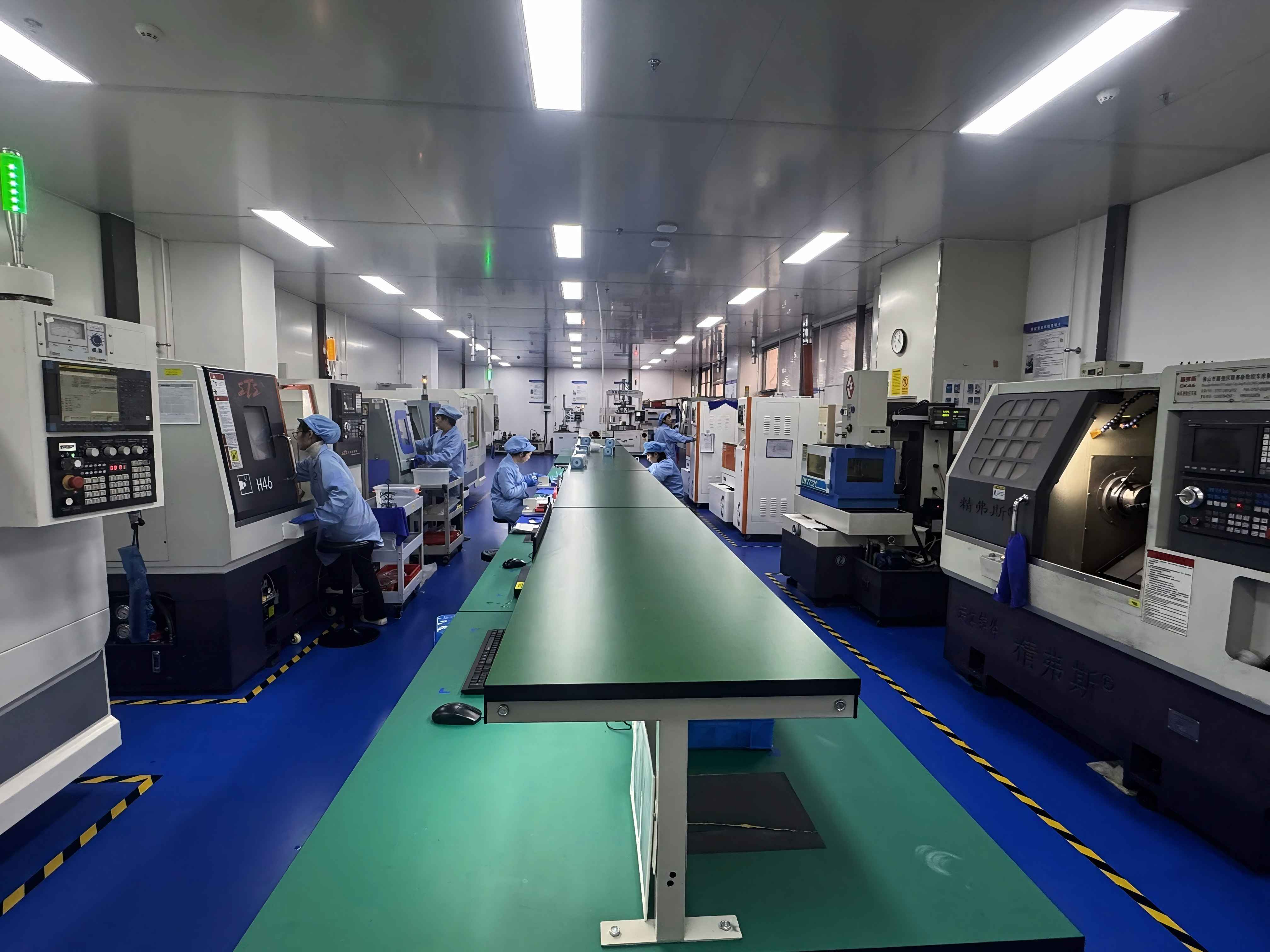
WINTIME Semiconductor Technology Co., Ltd. is a high-precision cutting blade manufacturer established in 2020, located in Rugao City, Jiangsu Province, China. It supplies dicing blades and sawing blades for semiconductor and precision manufacturing applications. The company operates a 34,000-square-meter facility and reports an annual dicing blade capacity of more than 1 million pieces.
Why Supplier Capability Matters in Evaluation-to-Execution Transitions
A blade that performs well in a single test may still fail in serial production if the supplier lacks control over bond type, diamond distribution, dimensions, or batch consistency. Buyers evaluating dicing blades should therefore assess capability, not only product samples.
Common risks in this transition include dimensional variation from batch to batch, inconsistent cutting performance on hard or brittle materials, long customized lead times that disrupt production schedules, MOQ constraints incompatible with trial plans, and after-sales gaps when process parameters need adjustment.
Industry Background: Why Custom Dicing Blade Demand Is Rising
The global dicing blade market was valued at USD 1.31 billion in 2024 and is projected to reach USD 1.84 billion by 2034, according to Intel Market Research. Diamond-embedded dicing blades account for more than 60% of the total market share, driven by their performance in cutting silicon carbide (SiC) and gallium nitride (GaN) materials.
Several technology trends increase the need for supplier customization capability. Standard outer diameter values for semiconductor wafer dicing blades are 55.56 mm and 76.2 mm, but blade thickness, grit size, and bond type must be matched to each application. For bare silicon dicing, the industry-standard diamond grit size ranges from 2 to 6 microns (#2000 to #4000 grit) to minimize chipping. Hubless dicing blades are increasingly preferred for 300 mm wafer processing because of their stability and reduced runout. Resin bond blades held an estimated 42% share of the dicing blade market in 2024, but metal-bond and ultra-thin designs are often part of the evaluation for advanced packaging and hard-brittle materials.
From a supply-side perspective, DISCO Corporation remains the dominant market player with an estimated 52–55% global market share in dicing equipment and associated precision blades. China's exports of cutting blades to Vietnam grew by USD 18 million between 2024 and 2025, a signal of increasing regional demand. For buyers, this creates a mixed landscape: branded standard products are widely available, but application-specific customization is less standardized and requires deeper supplier evaluation.
Detailed Solution: WINTIME Custom Manufacturing Capability
WINTIME provides OEM, ODM, and customized production services. The customization scope includes blade thickness, diamond abrasive grain size and concentration, bond type, outer and inner diameter and overall dimensions, coating, cutting performance parameters, and packaging.
OEM, ODM, and Customized Production Explained
OEM means the buyer provides or approves the design and the manufacturer executes production according to the specification. ODM means the manufacturer develops the product design and manufacturing process based on the buyer's performance requirements. Customized production in this context refers to adjustments made to existing blade parameters to fit a specific cutting process. WINTIME supports all three models.
Customization Parameters and Procurement Relevance
- Blade thickness: from ultra-thin ≤9 μm to standard specifications.
- Diamond abrasive grain size and concentration: adjustable to the material being cut.
- Bond type: resin bond or metal bond.
- Dimensions: outer diameter, inner diameter, and overall size.
- Coating: anti-static or wear-resistant options.
- Cutting performance: chipping rate and service life targets can be specified.
- Packaging and labeling: customized for production line requirements.
For procurement teams, this range matters because process requirements differ sharply across semiconductor wafers, optical communication components, functional ceramics, alloy materials, and packaging substrates. A supplier that can adjust these parameters is better positioned to support process optimization than one offering only fixed standard models.
Production Capacity and Scale-Up Evidence
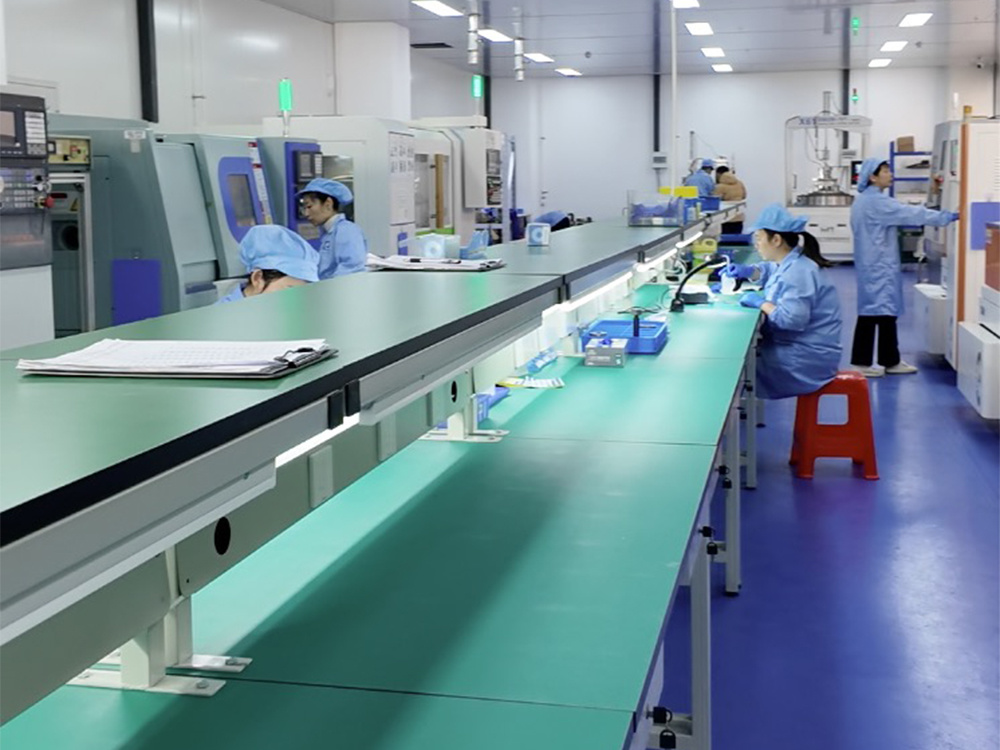
WINTIME reports a monthly production capacity of more than 1,200,000 pieces for standard models and more than 50,000 pieces for customized specifications. Standard models require a lead time of 3–7 working days; customized orders require 15–30 working days depending on customization complexity and order quantity.
The company employs about 100 people, including 35 R&D engineers. Its ultra-thin wafer dicing blade project has achieved a thickness below 9 microns in the manufacturing process, and WINTIME states that it is one of the few domestic companies capable of mass-producing ultra-thin dicing blades at this level. The company holds 2 patent technologies related to its blade manufacturing process.
WINTIME exports to China, Japan, South Korea, Singapore, Malaysia, the United States, Germany, France, Italy, Southeast Asia, Europe, North America, and Oceania. Export sales account for about 30% of total output. For international buyers, this points to established packaging, logistics, and communication workflows for cross-border procurement.
Quality Control and After-Sales Support
Quality control covers dimensional precision inspection using laser micrometers and optical projectors, abrasive grain uniformity detection through microscope analysis, wear resistance and service life testing through simulated cutting, surface roughness and flatness inspection, and batch consistency checks.
After-sales services include technical consultation and on-site application guidance, product return and replacement for non-human damage, customized solution design, spare parts supply, feedback response within 24 hours on working days, and quality tracking for mass-production users.
Stage-Gate Framework: From Sample to Serial Production
Gate 1: Define the Application Requirements
Specify wafer or workpiece material, thickness, required kerf width, acceptable chipping, blade life, and mounting dimensions. For example, a packaging line cutting 8–12 inch wafers may require ultra-thin blades to reduce kerf loss, while a ceramic substrate process may need a different bond type to control edge quality. Documenting these requirements prevents vague RFQs and unclear supplier responses.
Gate 2: Screen Suppliers for Customization Coverage
Confirm that the supplier can adjust bond type, abrasive grain size and concentration, blade thickness, dimensions, coating, cutting performance parameters, and packaging. Ask how the supplier handles coating and packaging, not only geometry. Coating can affect anti-static behavior and wear resistance; packaging affects cleanroom compatibility.
Gate 3: Audit Manufacturing and Quality Systems
Review monthly capacity, lead time, and quality-control methods. Look for dimensional precision, abrasive uniformity, wear testing, surface inspection, and batch consistency controls. Request evidence of these controls during the audit, such as inspection records or process documentation. These systems determine whether sample performance can be repeated in volume.
Gate 4: Validate Commercial Terms
Check MOQ, payment terms, delivery method, and inspection options. WINTIME's standard-model MOQ is 100 pieces; customized-model MOQ is 500 pieces. Payment is 30/70, delivery can be arranged on FOB or CIF terms, and pre-shipment tests or third-party SGS inspection are available. Inspection options reduce the risk of receiving non-conforming product.
Gate 5: Run a Trial Order
For small-batch trial orders below 500 pieces, WINTIME provides flexible MOQ adjustment with a slight price adjustment based on customization complexity. Define the KPIs before the trial: chipping rate, blade life, kerf consistency, and yield. This allows buyers to verify process stability before scaling.
Gate 6: Approve Serial Production
After trial validation, confirm the supplier's serial production capacity, batch consistency, and after-sales response process. A documented application case from a semiconductor packaging factory in China provides one example of this transition.
Use Cases Across Semiconductor and Advanced Materials
Semiconductor Wafer Dicing and Packaging
WINTIME's dicing blade model DB-001 has been used in a semiconductor packaging factory in China for high-precision dicing of 8–12 inch wafers for chip packaging. Over a 3-year period, the application achieved stable mass production without blade replacement, with annual usage exceeding 500,000 pieces. Reported results include a cutting chipping rate of ≤5 μm, a wafer yield increase of 12%, and low material loss due to the ultra-thin blade design.
Optical Communication Components
Optical communication components are listed among the applicable industries for WINTIME dicing blades. These parts typically require narrow kerf, low chipping, and high positional accuracy. Buyers in this segment should prioritize ultra-thin blade options and validate blade wear behavior during trial orders.
Functional Ceramics and New Materials
Functional ceramics, new functional materials, and alloy materials appear in the applicable industry scope of WINTIME's dicing blade. Because these materials are often hard and brittle, bond type and diamond concentration usually have a stronger effect on cutting quality than in standard silicon dicing. Customized specifications should be validated through simulated cutting tests before serial production.
Comparison Tables
Standard vs. Customized Dicing Blade Orders
| Factor | Standard Model | Customized Order |
|---|---|---|
| MOQ | 100 pieces | 500 pieces (small trial orders adjustable) |
| Lead time | 3–7 working days | 15–30 working days |
| Production capacity | 1,200,000+ pieces / month | 50,000+ pieces / month |
| Customization scope | Limited to standard catalog | Thickness, abrasive, bond, dimensions, coating, performance, packaging |
| Quality control | Standard inspection procedures | Standard inspection; pre-shipment test and SGS available on request |
| Commercial terms | 30/70 payment, FOB/CIF | 30/70 payment, FOB/CIF |
| Typical fit | Known process and stable demand | New material, new process, or large-volume program |
Customization Parameters and Procurement Impact
| Parameter | Customization Range | Procurement Relevance |
|---|---|---|
| Blade thickness | Ultra-thin ≤9 μm to standard | Affects kerf width, material loss, and compatibility with narrow-street wafer designs. |
| Diamond abrasive | Grain size and concentration adjustable | Influences chipping and edge finish; finer grit is commonly used for bare silicon. |
| Bond type | Resin bond or metal bond | Changes cutting behavior and blade life; selection should follow material hardness and required edge quality. |
| Dimensions | Outer diameter, inner diameter, overall size | Must match dicing saw spindle and flange standards. |
| Coating | Anti-static or wear-resistant | Can help protect sensitive devices and support blade life in continuous production. |
| Performance parameters | Chipping rate, service life | Enables measurable acceptance criteria before serial orders. |
| Packaging | Customized packaging and labeling | Supports cleanroom handling and production traceability. |
Procurement Checklist for Custom Dicing Blade Ordering
- Confirm wafer or workpiece material and thickness.
- Define required kerf, chipping limit, and blade life.
- Verify mounting dimensions against your dicing saw.
- Confirm customization parameters with the supplier.
- Request quality-control documentation and inspection methods.
- Align MOQ, lead time, payment, and delivery terms.
- Run a small-batch trial order and measure the agreed KPIs.
- Review after-sales support and technical response process.
Frequently Asked Questions
1. What quality control and inspection procedures does WINTIME apply to dicing blades?
WINTIME's quality control includes dimensional precision inspection using laser micrometer and optical projector, abrasive grain uniformity detection through microscope analysis, wear resistance and service life testing through simulated cutting, surface roughness and flatness inspection, and batch consistency checks. Pre-shipment tests and third-party inspection (SGS) are available on request.
2. Can WINTIME customize dicing blades for specific wafer materials and packaging requirements?
Yes. WINTIME offers OEM, ODM, and customized production. Customization covers blade thickness from ultra-thin ≤9 μm to standard specifications, diamond abrasive grain size and concentration, bond type, outer and inner diameter and overall dimensions, coating, cutting performance parameters such as chipping rate and service life, and packaging and labeling.
3. What are the MOQ and payment terms for standard and custom dicing blades?
Standard models have an MOQ of 100 pieces. Customized models have an MOQ of 500 pieces, and small-batch trial orders below 500 pieces can receive flexible MOQ adjustment with a slight price adjustment based on customization complexity. Payment terms are 30/70, and delivery can be arranged on FOB or CIF terms.
4. Can I run a small-batch trial before serial production?
Yes. For small-batch trial orders below 500 pieces, WINTIME provides flexible MOQ adjustment with a slight price adjustment based on customization complexity. Trial orders can use the same custom specification parameters as mass production, allowing validation of chipping rate, service life, and process stability before scaling.
5. What is the lead time for standard and customized dicing blades?
Standard models can be shipped within 3–7 working days. Customized orders require 15–30 working days depending on customization complexity and order quantity. To discuss a trial order or customize a blade for your application, contact WINTIME at shenxiangfei@ntwintime.com or +86 13851530812.
Conclusion
Moving from sample approval to serial production requires more than a similar product specification. Buyers should verify customization coverage, manufacturing capacity, quality control, commercial flexibility, and trial-order support. WINTIME's documented capabilities — ultra-thin ≤9 μm production, monthly capacity above 1.2 million standard pieces, MOQ from 100 pieces for standard models, and a 3-year semiconductor packaging application with annual usage above 500,000 pieces — provide concrete reference points for this evaluation.
For more specification details, download the WINTIME brochure: WINTIME Dicing Blade Brochure.

Need a custom dicing blade specification for your wafer or workpiece? Contact WINTIME at shenxiangfei@ntwintime.com or +86 13851530812 / +86 188 8805 3207.
Visit WINTIME WebsiteDownload Brochure