Custom Gas Detector Solutions: How to Select a Supplier with OEM/ODM Capabilities
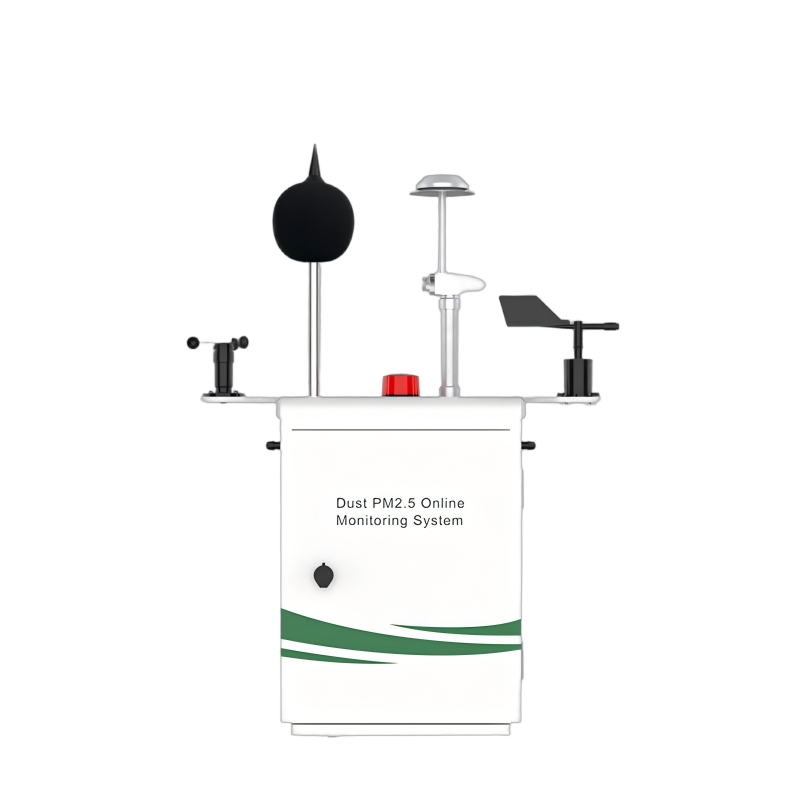
Zetron MS800A Air Quality Monitor – a versatile example of custom-configured gas detection equipment.
Custom Gas Detector Solutions: How to Select a Supplier with OEM/ODM Capabilities
In industrial safety and environmental monitoring, a gas detector is never a one-size-fits-all product. Whether you need a carbon monoxide detector for a power plant, a radon gas detector for a research lab, or a multi gas detector for a petrochemical facility, off-the-shelf devices often fail to meet specific operational requirements. This is where custom gas detection solutions become essential. But how do you achieve true customization? And how do you identify a supplier that genuinely delivers OEM/ODM customization services – not just label swapping?
This guide answers those questions. It walks you through the definition, process, benefits, and selection criteria for custom gas detectors, helping procurement professionals make informed decisions when sourcing from a gas detector supplier.
What Are Custom Gas Detection Solutions?
A custom gas detection solution refers to a gas detector or gas monitor that is designed, configured, or manufactured specifically for a buyer’s unique application. Unlike standard products, customized units may involve:
- Specific gas sensor selection (e.g., electrochemical, infrared, photoionization, laser)
- Custom enclosure materials, IP ratings, or mounting options
- Tailored alarm thresholds, communication protocols (4G, NB-IoT, Wi-Fi, Bluetooth)
- Software/firmware modifications for data integration with existing SCADA or cloud platforms
- Branding, packaging, and documentation in the buyer’s language
- Compliance with regional certifications (ATEX, CE, SIL, etc.)
In short, customization transforms a portable gas detector or fixed gas detector into a purpose-built safety tool that perfectly fits the environment it protects.
Why Customization Matters: The Industrial Pain Points
Procurement managers face common challenges when standard gas detectors fail:
- Incompatible sensors: A standard toxic gas detector may not include the exact gas type needed (e.g., ozone, VOCs, or biogas components).
- Inadequate protection: Dusty, humid, or explosive environments require higher IP/ATEX ratings than standard models offer.
- Poor integration: Off-the-shelf gas alarm systems may not communicate with existing control panels or cloud platforms.
- Branding requirements: Distributors often need private labeling for their local market.
- Regulatory compliance: Different countries enforce unique certification standards that standard products may not meet.
Customization solves these issues by aligning the gas detection equipment precisely with the operational context, thereby reducing false alarms, maintenance downtime, and safety risks.
How Custom Gas Detection Works: The OEM/ODM Process
A reliable supplier like Zetron (Beijing Zetron Technology Co., Ltd.) offers a full-chain customization service. Here is the typical step-by-step process:
- Needs Diagnosis: The supplier evaluates the buyer’s target gas(es), concentration range, environmental conditions, and certification requirements.
- Solution Design: Engineers select the appropriate sensor technology (electrochemical, PID, laser, etc.), housing material, and communication module.
- Product Realization: Prototyping and testing ensure the gas detector alarm meets accuracy (< 1% F.S.), response time (< 2 seconds), and IP68 protection standards.
- Certification Support: The supplier assists in obtaining necessary certifications, such as CE, RoHS, FCC, ATEX, SIL2, or ISO9001.
- Manufacturing & Quality Control: Production lines run the customized units with strict QC, including calibration and functional testing.
- Logistics & After-Sales: The supplier provides shipping, documentation, and ongoing technical support.
For example, Zetron’s custom solutions have been deployed in petrochemical plants, cement plants, paper mills, alloy smelting, biogas facilities, and waste gas treatment facilities worldwide.
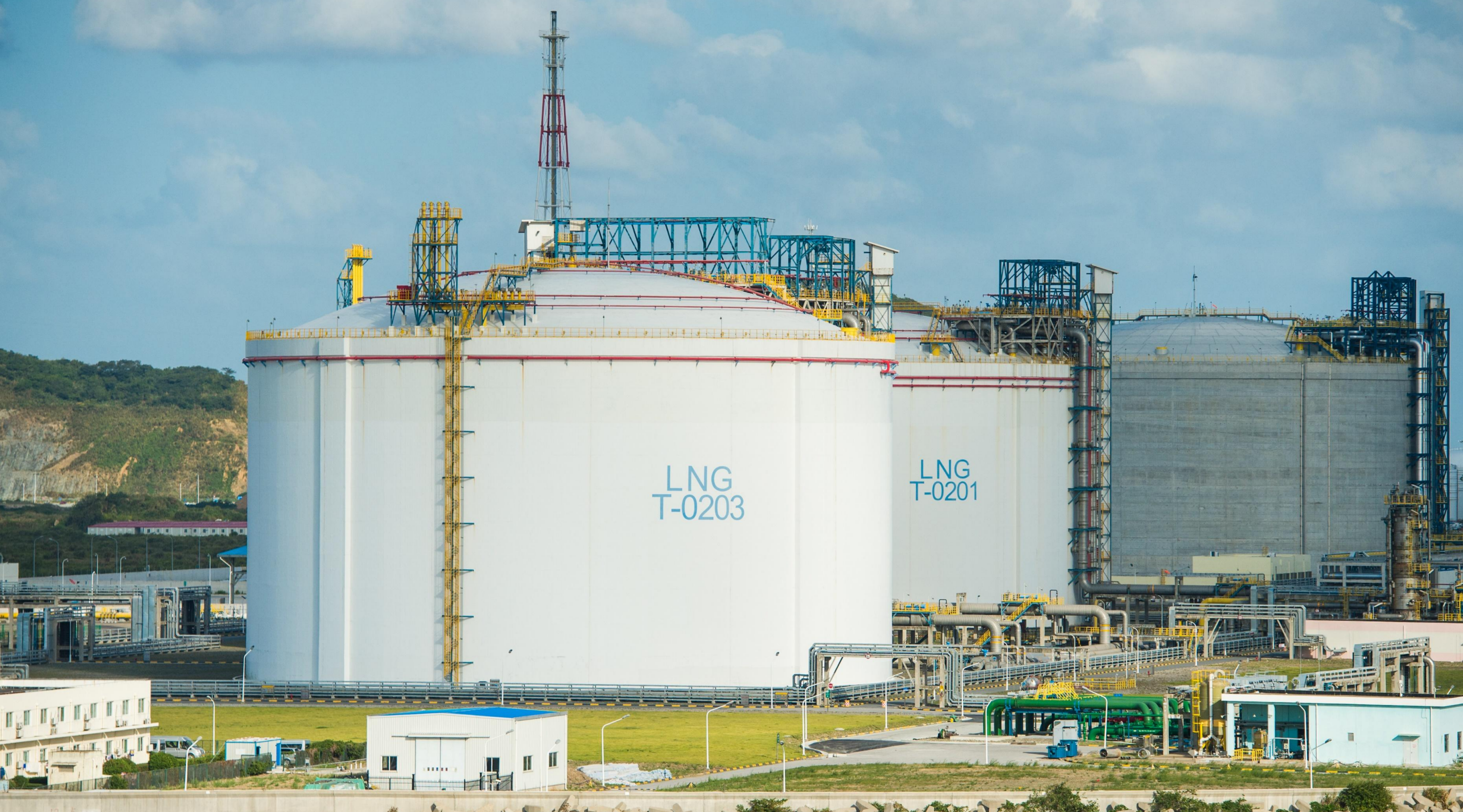
Petrochemical plants often require custom multi-gas detectors for hazardous area monitoring.
Key Capabilities to Look for in a Custom Gas Detector Supplier
Not every gas detector manufacturer can truly customize. Here are the essential capabilities to verify:
| Capability | Why It Matters | Example from Zetron |
|---|---|---|
| In-house R&D & engineering | Allows fast prototyping and sensor configuration | Nearly 20 years of gas detection R&D |
| Flexible production lines | Can handle low MOQs and mixed SKUs | Multiple professional production lines |
| Certification expertise | Ensures the custom product meets international standards | ISO9001, ATEX, CE, RoHS, FCC, SIL2 |
| Communication module options | Enables integration with buyer’s system | 4G, NB-IoT, Wi-Fi, Bluetooth; cloud platform access |
| Full-chain service | From consultation to installation and maintenance | OEM/ODM from needs diagnosis to after-sales |
| Proven track record | Demonstrates reliability and industry acceptance | Partners: SGS India, CEMEX, NISSAN, SSGC LPG, COSCO SHIPPING |
Step-by-Step Guide to Achieving Your Custom Gas Detector
Follow this practical roadmap to turn your requirements into a working product:
Step 1: Define Your Technical Requirements
Identify the target gas(es) – e.g., CO, O3, H2S, CH4, VOCs, or biogas components. Specify concentration range, environmental temperature/humidity, IP rating, and response time needs.
Step 2: Research Potential Suppliers
Look for manufacturers with demonstrated customization experience. Check their website (e.g., www.zetroncn.com) for product categories like portable gas monitor, fixed gas detector, online gas detector, and flue gas analyzer. A wide product range often indicates design flexibility.
Step 3: Request a Customization Questionnaire
A competent supplier will ask about gas type, range, environmental conditions, power supply, output signals, and certification requirements. Zetron, for instance, uses a structured needs diagnosis form.
Step 4: Evaluate Prototypes & Samples
Ask for a functional prototype or sample of a similar customized project. Test accuracy, response time, and alarm functionality. Ensure the gas detector alarm triggers within 2 seconds as claimed.
Step 5: Confirm Certification & Compliance
If you are exporting to Europe, you need ATEX and CE; for North America, FCC and possibly NRTL. Verify the supplier can provide certificates for your target market. Zetron holds ISO9001, ISO45001, ATEX, SIL, and more.
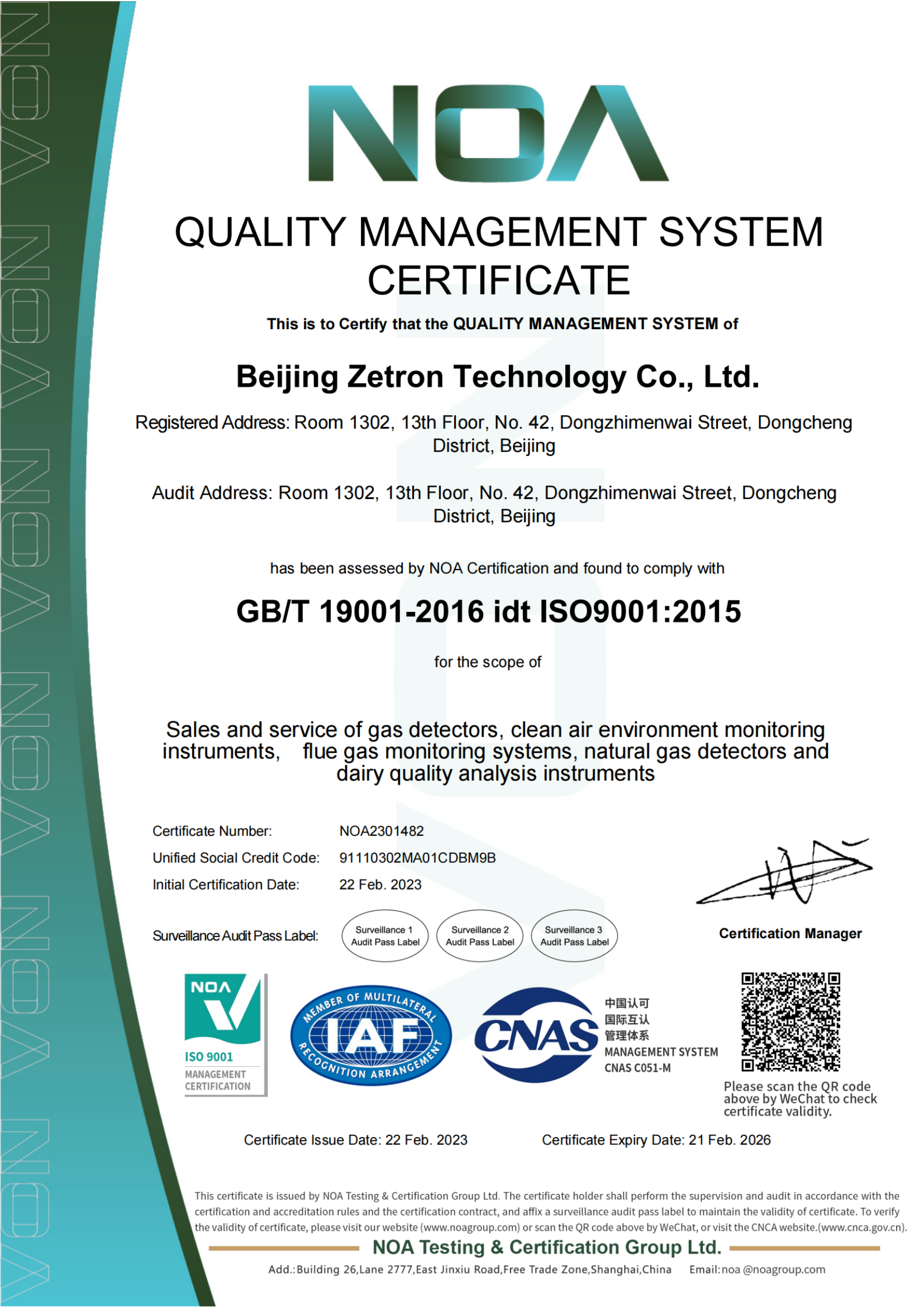
Zetron holds ISO9001 quality management certification, ensuring consistent quality in custom production.
Step 6: Agree on MOQ, Lead Time, and Pricing
Custom orders typically have higher MOQs than standard. Discuss lead time (usually 2-6 weeks) and understand pricing structure (NRE tooling vs. per-unit cost).
Step 7: Place Order & Monitor Production
Request progress photos, test reports, and packing lists. A reliable supplier offers transparent communication throughout.
Real-World Use Cases of Custom Gas Detection
Here are three scenarios where customization made a critical difference:
Case 1: Biogas Plant – Custom Multi-Gas Analyzer
A European biogas operator needed a biogas gas analyzer that simultaneously measures CH4, CO2, O2, and H2S in high humidity and corrosive gas. The standard flue gas analyzer was not designed for wet biogas. Zetron customized an online analysis system with a heated sample line, corrosion-resistant casing, and remote data transmission via 4G. Result: reliable monitoring with <1% F.S. accuracy.
Case 2: Petrochemical Refinery – Explosion-Proof Portable Gas Detector
A Middle Eastern refinery required portable gas detectors with ATEX Zone 1 certification and a specific O2 + H2S + CO combination. Zetron provided the PTM600-Oz series with customized sensor configuration and bilingual user interface. The units also featured wireless interconnection for team safety.
Case 3: Environmental Monitoring Station – Custom Air Quality Monitor
A government agency needed online gas detector stations for PM2.5, CO, NO2, SO2, O3, and VOC. Standard stations were too large. Zetron developed the Th2000A-Aqi and MIC600-Aqi integrated stations with customizable sensor payload, solar power option, and cloud platform integration.
Frequently Asked Questions (FAQ)
What is the difference between OEM and ODM in gas detectors?
OEM (Original Equipment Manufacturer): You provide design specifications, and the supplier manufactures according to your drawings and brand. ODM (Original Design Manufacturer): The supplier owns the base design and customizes features (sensors, housing, firmware) under your brand. Zetron offers both models.
Can I get a custom carbon monoxide detector with a remote alarm?
Yes. Custom CO detector alarm systems can integrate wireless modules (4G, Wi-Fi, LoRa) to send alerts to a central control room or mobile phone. Many Zetron custom projects include remote alarm functionality.
What is the minimum order quantity (MOQ) for a custom gas detector?
MOQ varies by complexity. For a gas leak detector with minor changes (e.g., sensor range only), MOQ may be 10-50 units. For a fully new enclosure design, MOQ could be 100-500 units. Contact the supplier directly for a quote.
How long does custom development take?
Typical timeline: 2-6 weeks for design and prototyping, plus 2-4 weeks for certification testing. Production lead time depends on order quantity.
Do you provide certification for custom products?
Yes, Zetron assists with CE, RoHS, FCC, ATEX, and SIL2 certifications. Existing certificates (ISO9001, ISO45001) cover the manufacturing quality system.
How to Choose the Right Customization Partner
When evaluating potential suppliers, consider these criteria:
- Experience: How many years have they been in gas detection? Zetron has nearly 20 years.
- R&D team: Do they have in-house engineers for sensor calibration and firmware?
- Production capacity: Multiple production lines indicate scalability.
- Certifications: Look for ISO9001, ATEX, SIL, CE, etc.
- Partner references: Names like SGS, CEMEX, NISSAN, SSGC LPG, COSCO SHIPPING add trust.
- Communication: Prompt, clear responses show professionalism.
Contact Zetron to discuss your custom gas detection requirements. Phone: +86-15699785629 | Email: info@bjzetron.com | Web: www.zetroncn.com
Conclusion
Customization is not a luxury – it’s a necessity for industries where standard gas detectors fall short. By understanding the customization process, evaluating supplier capabilities, and following a structured procurement approach, you can obtain a gas detector alarm system that perfectly matches your application. Whether you need a portable gas monitor for field inspection or a fixed gas detector network for 24/7 coverage, a partner like Zetron offers the technical depth and manufacturing flexibility to bring your custom solution to life.
Don't settle for generic safety equipment. Reach out to Zetron today to start your custom gas detection journey.