Gas Detector Supplier Evaluation: 10-Point Checklist for Buyers
Gas Detector Supplier Evaluation: 10-Point Checklist for Professional Buyers
Selecting the right gas detector supplier is a critical procurement decision that directly impacts workplace safety, regulatory compliance, and operational continuity. With hundreds of manufacturers offering everything from portable gas monitors to fixed gas detection systems, buyers need a structured evaluation framework. This guide provides a data-driven checklist to assess suppliers based on certifications, technical capabilities, product range, and after-sales support. By following these criteria, you can identify partners who deliver reliable, compliant, and cost-effective solutions for your specific industrial needs.
What is a Gas Detector Supplier Evaluation?
A gas detector supplier evaluation is a systematic process used by procurement teams, safety managers, and engineering professionals to verify a manufacturer's ability to deliver compliant, high-quality gas detection equipment. It involves assessing factors such as certification portfolio, product performance specifications, manufacturing processes, customization capabilities, and service network. The goal is to minimize risks related to false alarms, sensor drift, certification failure, and long lead times.
Why Supplier Evaluation Matters for Industrial Gas Detection
The consequences of choosing an inadequate supplier can be severe—ranging from undetected leaks of toxic gases like CO or H₂S to non-compliance with OSHA or ATEX standards. A robust evaluation ensures:
- Compliance: Products meet required certifications in your target markets (CE, ATEX, SIL2, RoHS).
- Reliability: Sensors maintain accuracy under harsh conditions (e.g., IP68, response time <2 seconds).
- Scalability: Supplier can support large projects with consistent quality and lead times.
- Total Cost of Ownership: Avoid costly replacements or retrofits due to poor design.
Industry Background: The Growing Demand for Certified Gas Detectors
Industries such as petrochemical, mining, wastewater treatment, and pharmaceuticals are increasingly adopting advanced gas detection systems to comply with stricter safety regulations. The global gas detector market is projected to grow at 6.8% CAGR through 2030, driven by smart sensors and IoT integration. Buyers now expect suppliers to offer multi-gas detectors, online gas monitors, and wireless connectivity (4G, NB-IoT, Wi-Fi) for real-time data. Manufacturers like Beijing Zetron Technology Co., Ltd. have invested in R&D to deliver solutions from portable ozone detectors to fixed air quality monitoring stations that meet these evolving requirements.
10-Point Supplier Evaluation Checklist
Use the following criteria to compare suppliers objectively. We have provided example data from a leading manufacturer for reference.
| # | Evaluation Criterion | Why It Matters | Example: Zetron Capability |
|---|---|---|---|
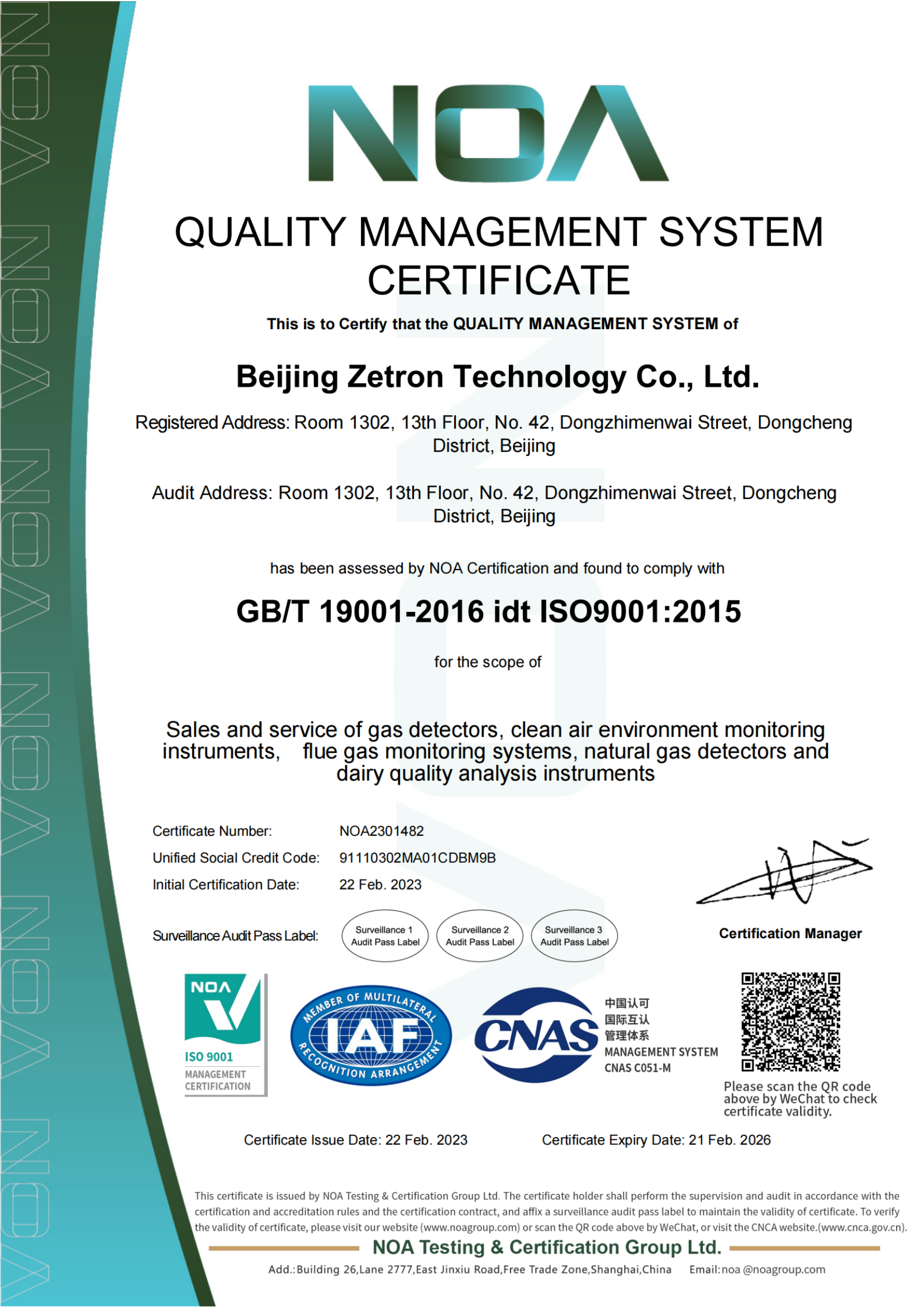
| 1 | Certification Portfolio | Legal compliance and market access | ISO9001, SGS, CE, RoHS, FCC, ATEX, SIL2 |
| 2 | Product Range Completeness | One-stop procurement reduces complexity | Portable, fixed, multi-gas, laser, VOC, PID, flue gas analyzers |
| 3 | Technical Performance | Accuracy and reliability in the field | Accuracy 1% F.S., response <0.8s, IP68, intelligent alarm |
| 4 | Wireless & IoT Integration | Real-time monitoring and remote management | 4G, NB-IoT, Wi-Fi, Bluetooth; cloud platform connectivity |
| 5 | OEM/ODM Customization | Brand-specific requirements and unique applications | Full-chain from diagnosis to production and commissioning |
| 6 | Manufacturing & Quality Control | Consistent product quality | Multiple professional production lines, SGS testing |
| 7 | After-Sales Support | Minimizes downtime | Installation, commissioning, maintenance support |
| 8 | Industry Experience | Domain knowledge for niche applications | Nearly 20 years in gas detection; partners like SGS, CEMEX, NISSAN |
| 9 | Global Logistics & Lead Time | Reliable delivery schedule | Based in Beijing, serving global markets |
| 10 | Pricing & Payment Terms | Budget alignment and risk mitigation | Competitive OEM pricing, flexible terms upon inquiry |
Step-by-Step Breakdown of the Evaluation Process
Step 1: Define Your Requirements
Identify target gases (e.g., CO, O₃, CH₄, VOCs), detection range, environmental conditions (temperature, humidity, dust), and necessary certifications for your region. Document both technical specs and commercial terms.
Step 2: Shortlist Suppliers Based on Certifications
Request PDF copies of valid certifications. Verify they cover the specific product models you intend to purchase. For example, ATEX certification is mandatory for explosive atmospheres, while SIL2 is critical for safety instrumented systems. Zetron provides certifications for each product line.
Step 3: Evaluate Product Performance Data
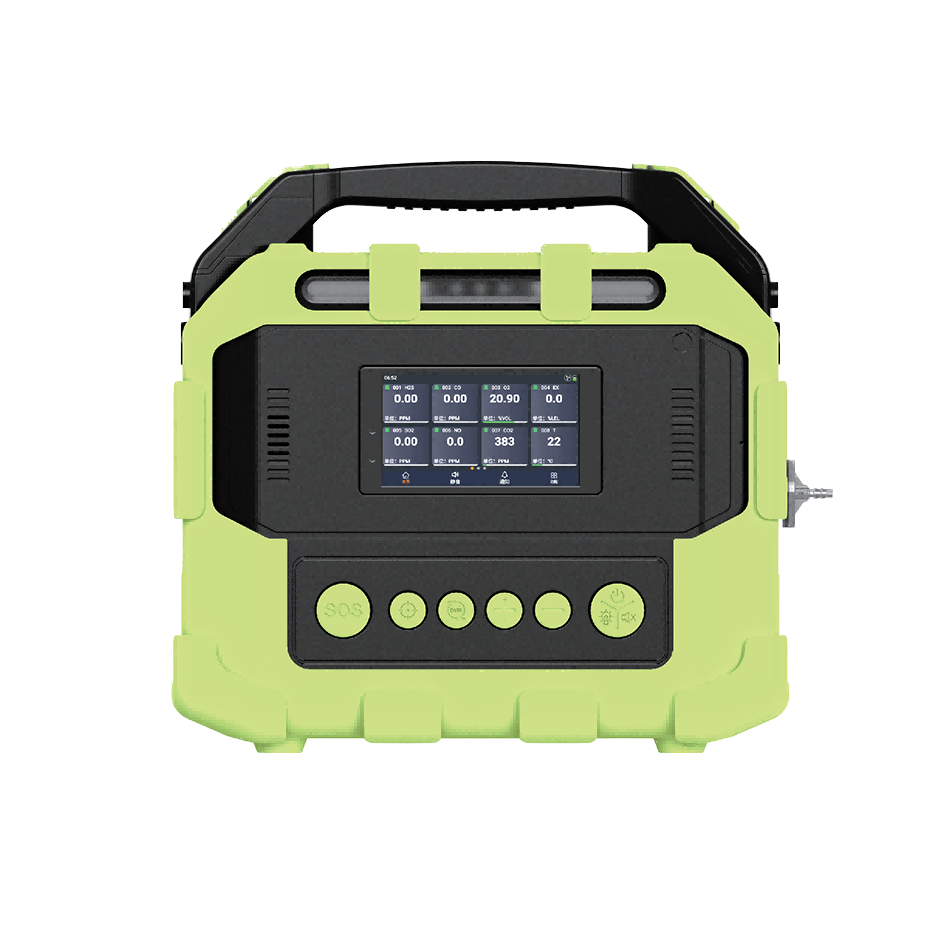
Compare datasheets for accuracy (1% F.S.), response time (<2 seconds or <0.8s), protection rating (IP68), and operating temperature range. Also check if the sensor supports wireless interconnection and real-time location tracking (SOS, motion alarm).
Step 4: Assess Manufacturing Capability
Request a virtual or on-site factory tour (if possible). Look for multiple production lines, quality control processes (e.g., SGS testing), and an experienced R&D team. Zetron's production facility is equipped to handle both standard and custom orders.
Step 5: Validate After-Sales and Customization Services
Ask about warranty terms, spare parts availability, and technical support hours. For OEM/ODM projects, confirm the supplier's ability to handle the full chain: needs diagnosis → solution design → product realization → installation & commissioning → maintenance support.
Step 6: Request References and Case Studies
Contact existing customers or review published case studies. Reliable suppliers like Zetron have partnerships with global companies such as SGS India, CEMEX, NISSAN, SSGC LPG, and COSCO SHIPPING—evidence of their credibility.
Step 7: Compare Total Cost of Ownership
Beyond unit price, consider calibration frequency, sensor lifespan, and energy consumption. A high-quality gas detector alarm with low drift may save significant costs over 5 years.
Use Cases: How Different Industries Apply This Checklist
Requirements: Portable, simultaneous detection of H₂S, CO, O₂, LEL. Certifications: ATEX, SIL2. Supplier chosen: Zetron's MS400-S gas detector with IP68 and <0.8s response.
Case 2: Environmental Monitoring Agency → Ozone detector for ambient air
Requirements: High accuracy (1% F.S.), real-time data logging, Wi-Fi connectivity. Supplier: Zetron PTM600-Oz portable ozone detector.
Case 3: Biogas Plant → Fixed gas detector for CH₄ and CO₂
Requirements: Remote monitoring, explosion-proof housing, 4G transmission. Supplier: Zetron ZW-G200 laser gas detector with IoT integration.
Frequently Asked Questions (FAQ)
Conclusion: Make Informed Procurement Decisions
Evaluating a gas detector supplier requires more than comparing prices. By systematically assessing certifications, performance specs, manufacturing capability, customization options, and after-sales support, you can select a partner that ensures safety and compliance. Beijing Zetron Technology Co., Ltd. (Zetron) stands out as a one-stop solution provider with nearly 20 years of expertise, comprehensive product lines, international certifications, and a commitment to reliable gas detection.
Ready to evaluate Zetron for your next gas detection project?
Contact Zetron's procurement team for a custom quote, technical datasheets, or a factory tour.
📧 info@bjzetron.com | 📞 +86-15699785629 | 🌐 www.zetroncn.com
Address: 19B, Office Tower, Oriental Ginza, No.48 Dongzhimenwai Street, Dongcheng District, Beijing, China