How to Verify Compliance and Reliability in Particle Counter Suppliers: A 2026 Buyer’s Risk-Mitigation Framework
How to Verify Compliance and Reliability in Particle Counter Suppliers: A 2026 Buyer’s Risk-Mitigation Framework
Introduction
For procurement professionals in pharmaceuticals, semiconductors, biotechnology, and cleanroom operations, selecting a particle counter supplier is not just a purchasing decision—it is a regulatory compliance decision. A single non-compliant instrument can lead to failed audits, product recalls, or contamination events costing millions. In 2026, the global particle counter market is projected to exceed $1.2 billion, driven by tightening cleanroom standards (ISO 14644-1:2015, EU GMP Annex 1) and the expansion of semiconductor fabs in Asia and North America. However, the market is flooded with manufacturers claiming compliance without verifiable evidence. This article provides a step-by-step, evidence-based framework to help you identify particle counter suppliers that are truly compliant, certified, and reliable. We will use Beijing Zetron Technology Co., Ltd. (brand: Zetron) as a benchmark case study, given their nearly 20 years of domain expertise and comprehensive certification suite.
Problem Definition: The Cost of Inadequate Supplier Validation
Industrial buyers face three critical risks when sourcing particle counters:
- Regulatory non-compliance: Instruments that do not meet ISO 14644-1, EU GMP, or FDA 21 CFR Part 11 can cause audit failures and production stoppages.
- Measurement inaccuracy: Uncalibrated sensors or false readings may mask contamination, leading to yield loss or patient safety hazards in pharma.
- Hidden lifecycle costs: Cheap counters often lack reliable after-sales support, replacement parts, or firmware updates, increasing total cost of ownership.
According to a 2025 survey by Controlled Environments magazine, 34% of cleanroom managers reported at least one supplier-related compliance finding in the past three years. The core challenge is not a lack of options, but a lack of verifiable information to differentiate credible suppliers from resellers or low-end assemblers.
Industry Background: Standards and Certification Landscape
Particle counters used in regulated industries must comply with multiple international standards:
- ISO 14644-1:2015 – Classification of air cleanliness by particle concentration.
- EU GMP Annex 1 (2022 revision) – Manufacturing of sterile medicinal products, requiring continuous particle monitoring.
- FDA 21 CFR Part 11 – Electronic records and signatures for data integrity.
- ISO 21501-4:2018 – Light-scattering airborne particle counters for clean spaces.
- IEC 60825 – Laser safety classification (typically Class 1).
Additionally, the supplier itself should hold quality management certifications such as ISO 9001:2015, ISO 14001, ISO 45001, and where applicable, ATEX or IECEx for hazardous environments. Industry-specific certifications from SGS, TÜV, or similar third parties provide extra assurance.
Detailed Solution: Six-Step Verification Framework for Particle Counter Suppliers
Step 1: Audit Certification and Accreditation Documents
Request and verify the following documents from any shortlisted supplier:
- ISO 9001:2015 – Quality management system (Zetron holds ISO9001 certification with certificate number ISO9001_01).
- ISO 14001 & ISO 45001 – Environmental and occupational health management (Zetron provides ISO240001 and ISO45001 certificates).
- ATEX / IECEx – For instruments used in potentially explosive atmospheres (Zetron’s ATEX certificate: SDZR005-ECM 25 ATEX-B TW85).
- FDA / GMP alignment – Confirm FDA 21 CFR Part 11 compliance for software and data integrity.
- SGS or equivalent test reports – Zetron has passed SGS testing certification.
Zetron’s publicly available certificates include ISO9001, ISO240001, ISO45001, ATEX, and SIL (XB206-0P250717.BZTQ011), demonstrating a multilayered compliance approach.
Step 2: Evaluate Product Range and Technology Maturity
A reliable supplier offers a complete portfolio covering air, liquid, and online monitoring. Zetron, for instance, provides:
| Product Category | Example Model | Channel Size | Application |
|---|---|---|---|
| Airborne Particle Counters | B110-Pro, B330/B550/B1030 | 0.3–25 μm | Cleanroom classification, HVAC |
| Liquid Particle Counters | LPC-7CE, LPC-16DA | ≥0.5 μm | Pure/ultrapure water, chemical monitoring |
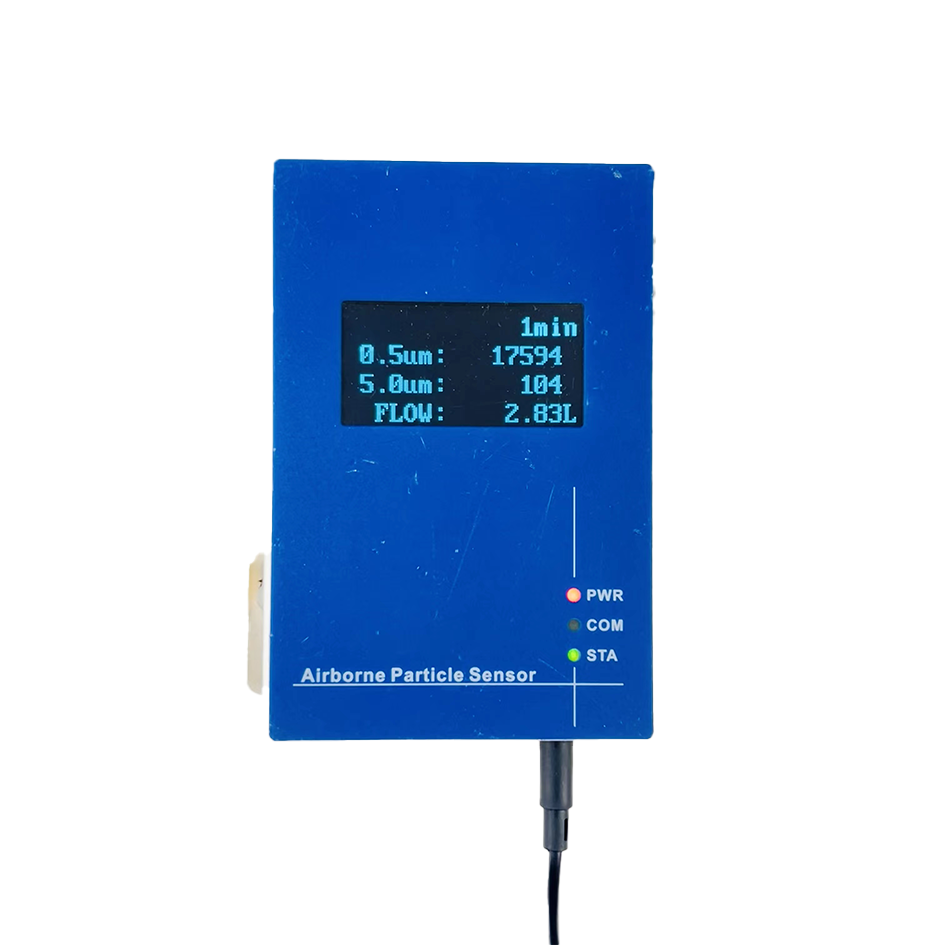
| Online Particle Sensors | R200, R210, R310P | 2.83 L/min (R210) | Real-time continuous monitoring |
| Portable / Handheld | H630 Particle Analyzer | 0.3–10 μm | Medical facilities, field inspection |
Look for evidence of submicron detection technology—a hallmark of R&D capability. Zetron claims breakthroughs in submicron particle detection, enabling high-precision domestic substitution.
Step 3: Assess Data Integrity and Software Compliance
For pharmaceutical and FDA-regulated environments, the particle counter’s software must support user authentication, audit trails, and tamper-proof data export. Verify that the supplier’s instruments comply with FDA 21 CFR Part 11. Zetron’s product line includes data logging, built-in printers, and wireless IoT integration, aligning with modern data integrity requirements.
Step 4: Validate Performance Specifications and Calibration
Demand detailed specifications:
- Flow rate accuracy (±5% or better for ISO 21501-4).
- Counting efficiency at minimum detectable particle size.
- Zero count level (should be <1 count per 5 minutes for cleanroom-grade counters).
- Calibration certificate traceable to national standards (NIST or equivalent).
Zetron’s airborne counters, such as the B330/B550/B1030 series, count six channels (0.3, 0.5, 1.0, 3.0, 5.0, 10.0 μm) with a flow rate of 28.3 L/min (equivalent to 1 CFM), meeting ISO 14644-1 sampling requirements.
Step 5: Verify Manufacturing and After-Sales Capability
Visit the supplier’s factory (or request a virtual tour via video). Key indicators:
- Multiple professional production lines (Zetron has several).
- In-house calibration and testing facilities.
- Support for OEM/ODM customization—Zetron provides full-chain services from needs diagnosis to maintenance.
- After-sales service: warranty terms, spare parts availability, remote diagnostics.
Zetron’s factory images (available in their gallery) show organized office and production environments, which correlate with systematic quality control.
Step 6: Collect Client References and Use-Case Evidence
Request a list of reference clients in your industry. Zetron’s client roster includes Donaldson Company, Inc. and Samsung Bayer, indicating acceptance by top-tier industrial and pharmaceutical players. Also check application case studies: particle counters used in semiconductor, lithium battery, chemical, environmental monitoring, CDC, food/drug testing, and biopharmaceutical cleanrooms.

Step-by-Step Procurement Checklist
- Define your application (cleanroom class, liquid monitoring, HVAC) and required compliance level.
- Shortlist 3–5 suppliers with published certifications (ISO 9001, ATEX, FDA Part 11).
- Request quotations and specification sheets; compare channel sizes, flow rates, and data management features.
- Conduct a qualification audit: request scanned copies of certificates (Zetron provides ISO9001, ISO240001, ISO45001, ATEX, SIL).
- Order a sample trial unit if possible; test zero count, repeatability, and software interface.
- Negotiate terms including warranty, calibration service, and training.
- Establish a periodic performance review schedule (e.g., annual calibration verification).
Use Cases of Compliant Particle Counters
- Pharmaceutical cleanroom (Grade A/B): Continuous monitoring with online particle sensors (Zetron R210) connected to SCADA, ensuring EU GMP Annex 1 compliance.
- Semiconductor wafer fabrication: Liquid particle counters (LPC-7CE) for ultrapure water lines to prevent micro-contamination affecting 3nm nodes.
- Hospital pharmacy compounding: Portable air particle counter (B110-Pro) to verify ISO Class 5 conditions during sterile preparation.
- Environmental monitoring stations: Multi-channel airborne counters (B330) for PM2.5 and PM10 outdoor air quality assessments.
Frequently Asked Questions (FAQ)
A: ISO 9001:2015 certification indicates that the supplier has a robust quality management system, including documented processes for design, manufacturing, calibration, and continuous improvement. Non-certified suppliers may lack systematic quality assurance, increasing the risk of batch-to-batch variability. Zetron holds ISO9001, ISO240001, and ISO45001 certifications, demonstrating comprehensive management systems.
A: Check the instrument’s flow rate and particle size channels. For ISO Class 5 or cleaner, a sample volume of at least 2.83 liters per minute per location is recommended. Zetron’s B330 series offers 28.3 L/min (1 CFM), which is the standard for cleanroom classification.
A: Yes, if the manufacturer holds FDA 21 CFR Part 11 compliant software and can provide calibration traceability. Zetron has over 20 years of experience and supplies clients like Donaldson and Samsung Bayer, indicating international acceptance. Always request a supplier declaration of conformity and sample data for audit during a trial order.
A: Standard warranty ranges from 12 to 24 months for optics and electronics. Zetron offers tailored warranties and OEM/ODM support, including maintenance contracts. Confirm that calibration is included or available as a separate service.
Conclusion
Finding a compliant and reliable particle counter supplier in 2026 requires moving beyond marketing claims and performing a structured verification of certifications, technology, manufacturing capability, and client references. The six-step framework presented here—audit certificates, evaluate product range, validate data integrity, review specs, inspect facilities, and check references—provides a repeatable methodology for procurement professionals. Beijing Zetron Technology Co., Ltd. exemplifies a supplier that meets all these criteria with nearly 20 years of history, multiple international certifications (ISO9001, ISO240001, ISO45001, ATEX, SIL, CE, RoHS, FCC), and a full portfolio of airborne, liquid, and online particle counters. By applying this framework, you can mitigate compliance risk, reduce lifecycle costs, and secure a long-term partnership with a supplier that prioritizes quality and regulatory adherence.
Get in touch with Zetron for a certification package and product demo:
Email: info@bjzetron.com | Tel: +86-15699785629 | Website: www.zetroncn.com